Art Therapy MA

You are viewing Course summary
Course Summary
Art therapy enables expression, beyond words, and promotes psychological well-being. This HCPC-approved Art Therapy course is suitable for those working with a variety of client groups in health, social care, education counselling and community settings. The course will enable you, on completion, to practise as a registered Art Therapist/Art Psychotherapist.
The course is rooted in current practice with visiting art therapy practitioners throughout the course. We offer a specific placement preparation module which provides the bridge between theory and practice.
With a key focus on practical applications on this course, problem-solving skills will be targeted by authentic coursework, and you will build a careers portfolio with help from a designated personal tutor. Tasks such as grant application writing, evaluative reports, oral and poster presentations are both engaging and highly applicable to a range of employment opportunities.
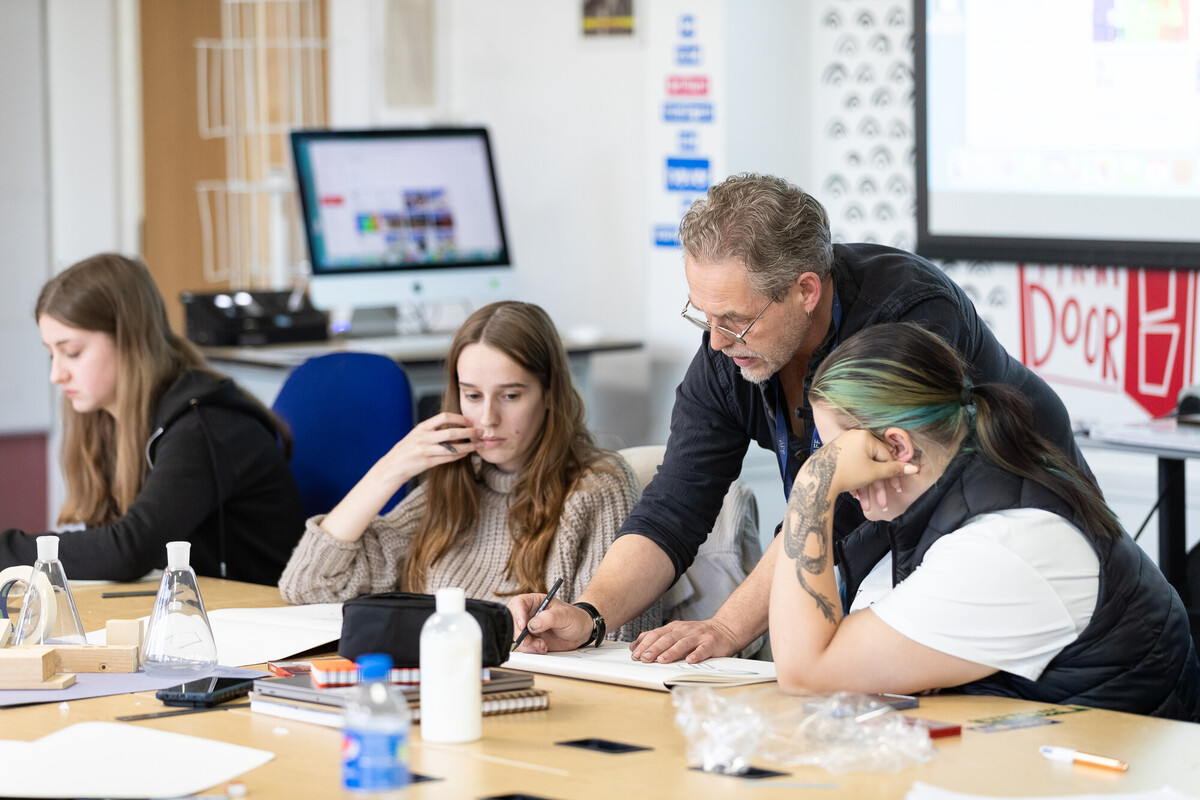
Lectures by leaders in their field
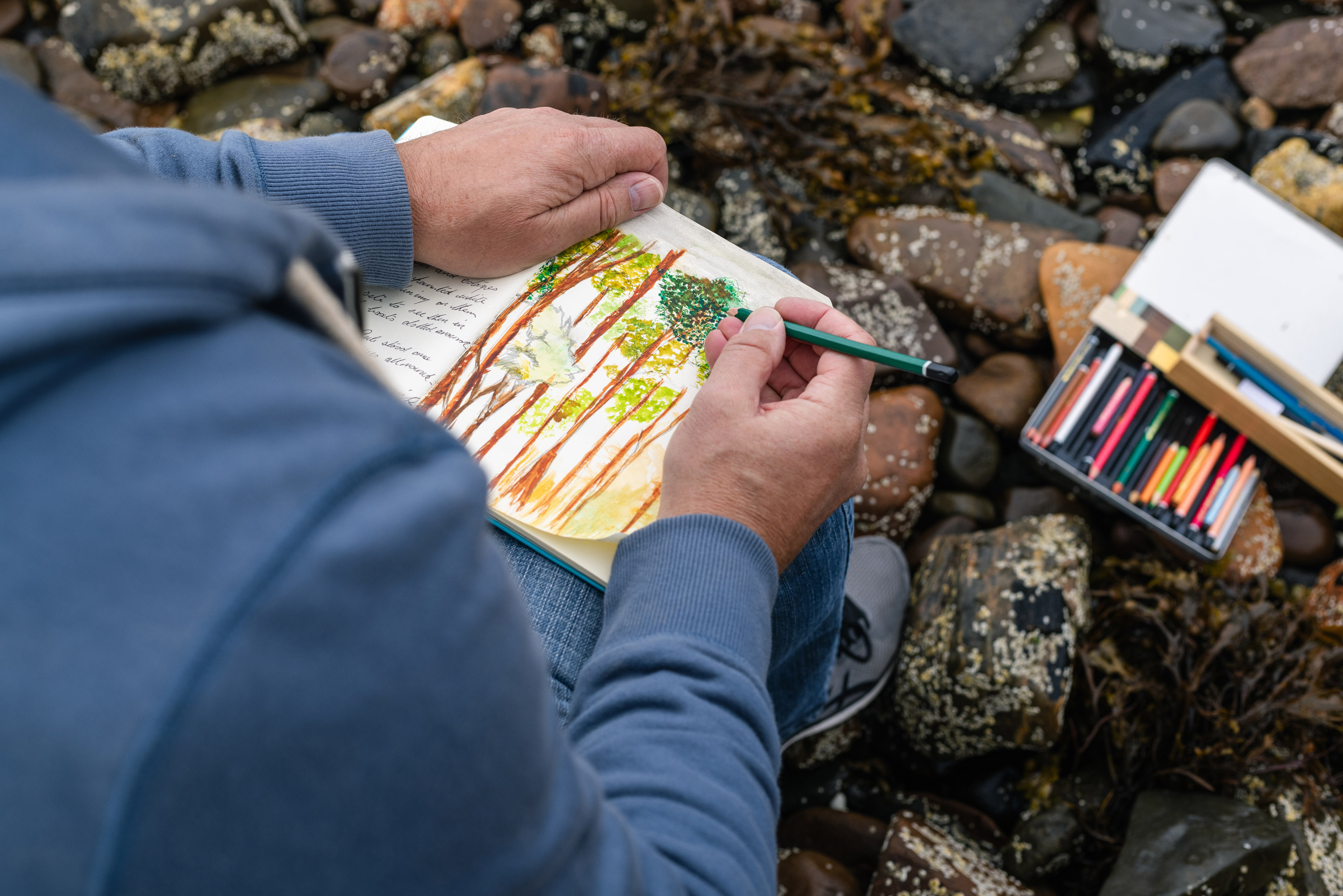
Explore a wide variety of mediums
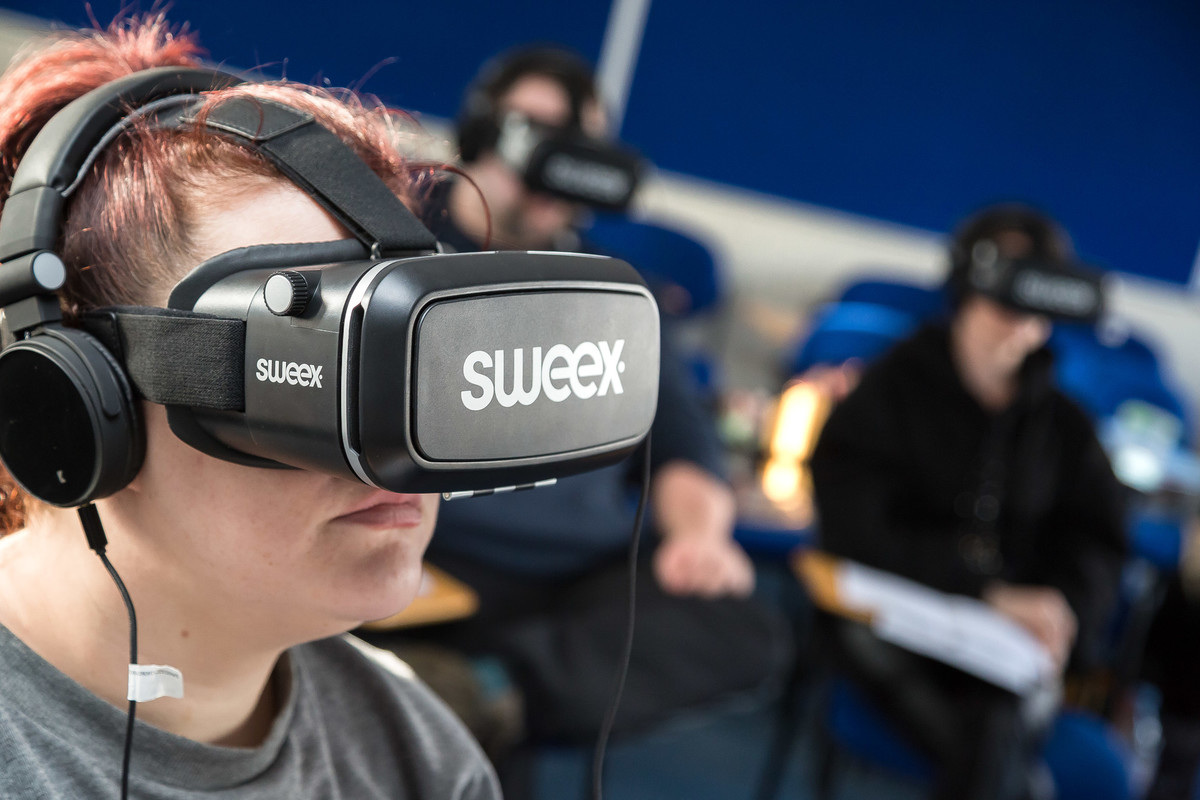
Cutting-edge technology
What you'llStudy
You will look at the theory of art therapy plus development and communication models. Learning is underpinned by the principles and practices of psychodynamic practice, with particular focus on the Object Relations school and Winnicott model. Integrating theory and practice is covered through case study material and visiting practising Art Therapists. Experiential training groups are a core to the theoretical content, as well as a Practice Placement module, which is enhanced by supervision groups.
Module content:
Module content will include:
- Research and professional practice: evidence-based practice, being a critical consumer of research, practice development and research.
- Key concepts and issues in social research: research topics and research questions, answering questions with data, validity and reliability of data, qualitative and quantitative data, description, exploration, finding connections, formulating and testing hypotheses, populations and sampling, interpretivism and positivism.
- Research traditions and designs: ethnography, survey, experiment, mixed method, research process.
- Gathering and analysing data: Observation, questionnaires, interviews. Data analysis and drawing conclusions.
- Literature review: searching, locating, reading and summarising, reviewing and critiquing, organising, synthesising, and using the literature.
- Preparing the research proposal: Identifying research questions or hypothesis for chosen topic. Designing a study to address the question(s). Data gathering and recording, data analysis. Considering alternative approaches: critical analysis of alternative methods of research to the chosen approach. Knowledge transfer and strategies for dissemination.
- Ethical frameworks, constraints, data protection, confidentiality and human rights.
- Preparing an application for ethical approval.
Module aims:
The aims of the module include:
- To provide a comprehensive introduction to social research with regard to key concepts, approaches, and techniques.
- To facilitate the preparation of a research proposal for the dissertation.
- To enable students to identify the strengths and weaknesses of different approaches to their research topic.
Module content:
Module content will include:
- Contemporary and original research exploring a range of psychodynamic theories and their relevance to art therapy
- Historical and contemporary perspectives on art psychotherapy; theorists; models of art therapy; psychotherapeutic interventions; symbolic imagery.
- The role of the image and its application in practice.
- Experiential learning; different approaches to the use of visual art; practice and process of image-making; group dynamics in action.
Module aims:
The aims of the module are:
- To enable students to gain a historical and contemporary understanding of theoretical perspectives of art therapy.
- To develop students’ skills in being able to engage in, analyse and evaluate the art-making process and its value in art therapy.
- To enable students to experience art-making processes and explore aspects in relation to art therapy theories.
Module content:
Module content will include:
- Utilising experiential learning; working to the HCPC Standards of Proficiency; understanding of how therapeutic frame is applied with particular client group/setting and more widely vulnerable clients; observation and practice of professional standards and values. Articulating Art Therapy.
- Working within a team; understanding of organisational policies and local implementation of government drivers; understanding of professional limits and referral procedures; maintenance of a safe environment. Engagement with assessment, care planning and evaluation; record keeping; experience of supervision.
- The role of supervision; giving and receiving feedback; establishing boundaries; beginnings, middles and endings; recording supervision.
Module aims:
The aims of the module are:
- To enable students to practise the skills of art therapy within a professional setting: identify the skills to work within a multi-disciplinary team, articulating art therapy to both service users and other professionals.
- To develop students’ skills in being able to analyse and evaluate appropriate image-making techniques, for use with clients, in order to achieve a therapeutic outcome.
- To enable students to develop the skills to understand supervisory and reflective processes in practice.
Module content:
Module content will include:
- Emerging issues in current Art Therapy theory and practice.
- Creative expression of theory & practice
- Searching of databases and other sources, literature review, reading, critiquing, organisation of found materials.
- Methodologies appropriate to Art Therapy; research design; data collection. Ethical frameworks; ethical approval process; protection of data.
Module aims:
The aims of the module are:
- To enable students to demonstrate their understanding of the principles and practice of Art Therapy by exploring an issue relevant to the students' professional Art Therapy practice.
- To enable students to gather data and use evidence to develop practice and to contribute to the developing body of knowledge of Art Therapy and Art Therapy practice.
- To enable students to explore and develop visual methodologies and encourage use of innovative creative methods.
We use a variety of assessment methods, including written essays, PowerPoint presentations, reflective models, portfolio and visual logs.
Most modules operate over 15 weeks with up to 40 contact hours per module. You will also be expected to undertake an approximate minimum of seven hours’ self-study time per week, per module.
Beyond the Classroom
On this course, you’ll spend time out on placement where you’ll apply what you have learnt to real scenarios in the workplace, giving you genuine experience and insight that will prepare you for your future career.
Entry Requirements
- A maturity of personality and self-awareness.
- An undergraduate degree in art and design or other relevant subject.
- A minimum of one year’s work experience (paid or voluntary) within a relevant support/care setting gained prior to the application date. E.g. support work, care work, social work, nursing, teaching, teaching assistant work and wellbeing workshop facilitation.
- Evidence of a current portfolio or active involvement in art making.
- IELTS Level 7 for students whose first language is not English.
- You will be required to submit a 500-word written piece with the title 'What is Art Therapy?' on application. Your application will not be considered without this. This is to allow you the opportunity to demonstrate your knowledge of the field and your ability to write at Master's degree level.
- A satisfactory occupational health check.
Safeguarding / Suitability
All successful candidates who receive an offer of a place for this course and choose the University of Chester as their Firm choice will be required to undergo checks with regards to their suitability to practice.
A couple of months prior to admission to this course, the University will contact you to request that you complete a self-declaration form detailing any relevant convictions or other information that you believe may have an impact upon your ability to undertake work with children or vulnerable adults. You will also receive instructions on how to complete an online application for a Disclosure and Barring Service (DBS) check through the University as a registered body, there will be a charge for this.
Please note that the University does not accept previous DBS checks from other registered bodies or the update service.
For details about the cost of the DBS and for further information please visit our DBS web pages.
- A maturity of personality and self-awareness.
- An undergraduate degree in art and design or another relevant subject.
- A minimum of one years’ work experience (paid or voluntary) within a relevant care setting gained prior to application.
- Evidence of a current portfolio or active involvement in art making.
- You will be required to submit a 500-word written piece with the title 'What is Art Therapy?' on application. Your application will not be considered without this. This is to allow you the opportunity to demonstrate your knowledge of the field and your ability to write at Master's degree level.
- A satisfactory occupational health check.
See below for your country specific requirements. Please note, some programmes have special entry requirements and if applicable, these are listed below.
English Language Requirements
Please note, applicants whose first language is not English must demonstrate they can meet the following English language criteria for this programme:
- IELTS Academic: 7.0 (minimum 6.5 in each band) for students whose first language is not English.
For more information on our English Language requirements, please visit International Entry Requirements.
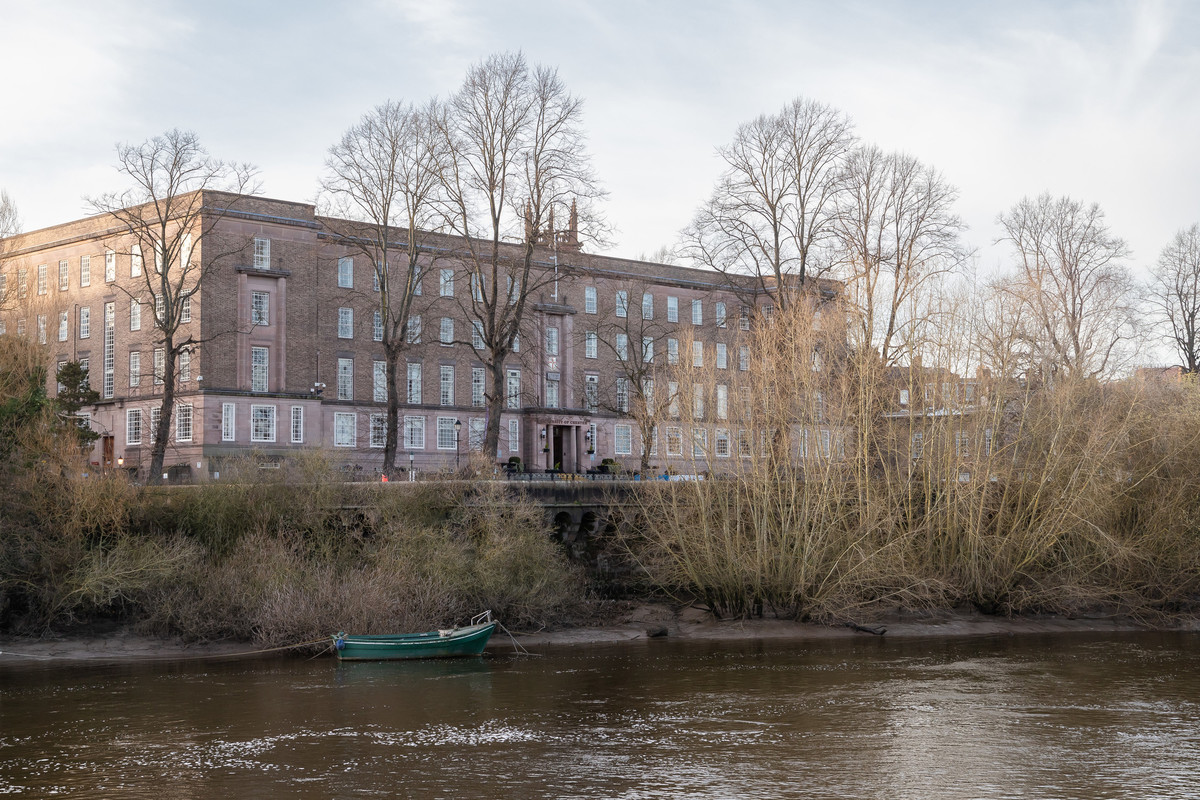
City centre location
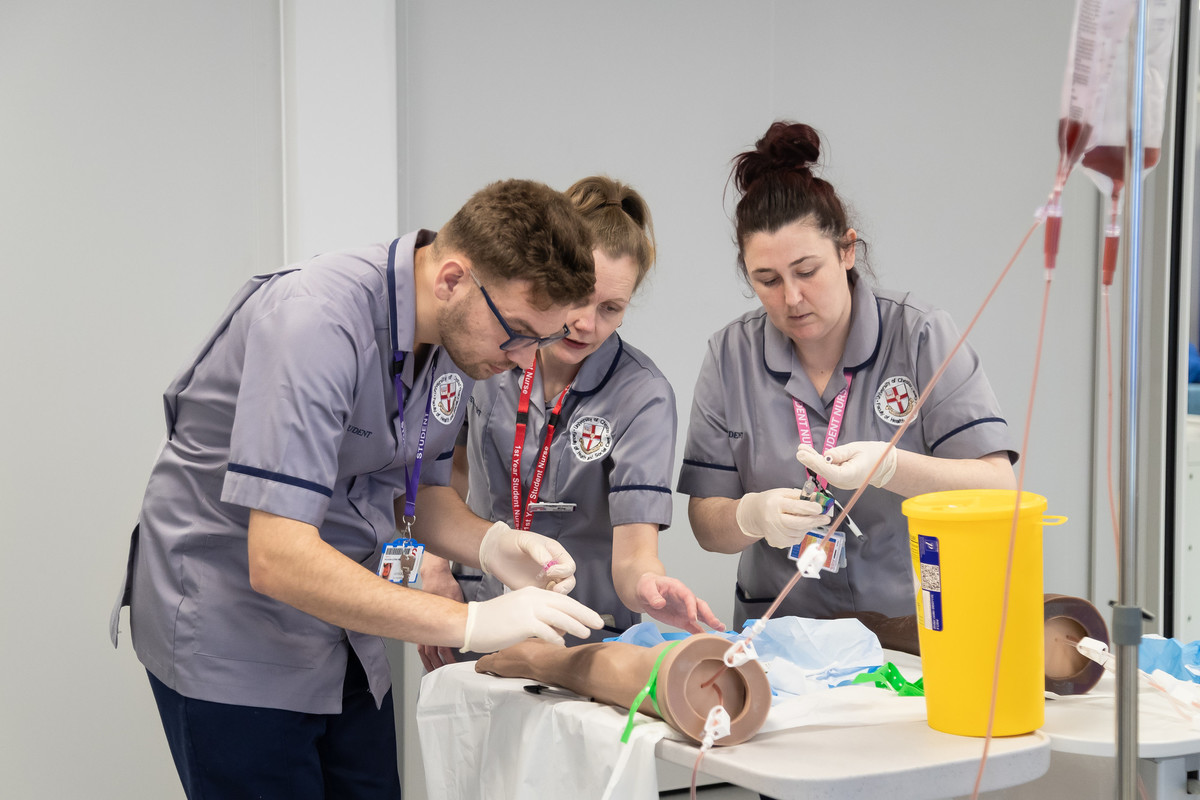
Health and Social Care simulation suite
On-site library

Social spaces

Fees and Funding
£9,360 per year (2024/25)
Guides to the fees for students who wish to commence postgraduate courses in the academic year 2024/25 are available to view on our Postgraduate Taught Programmes Fees page.
£14,750 per year (2024/25)
The tuition fees for international students studying Postgraduate programmes in 2024/25 are £14,750.
The University of Chester offers generous international and merit-based scholarships for postgraduate study, providing a significant reduction to the published headline tuition fee. You will automatically be considered for these scholarships when your application is reviewed, and any award given will be stated on your offer letter.
For more information, go to our International Fees, Scholarship and Finance section.
Irish Nationals living in the UK or ROI are treated as Home students for Tuition Fee Purposes.
Your course will involve additional costs not covered by your tuition fees. This may include books, printing, photocopying, educational stationery and related materials, specialist clothing, travel to placements, optional field trips and software. Compulsory field trips are covered by your tuition fees.
If you are living away from home during your time at university, you will need to cover costs such as accommodation, food, travel and bills.
Course specific additional costs
Students will also be expected to have access to their own private personal therapy during the course. This aspect of the course provides a personal support structure for students engaged in psychological processes as well as an avenue for personal development. This is an additional cost which is self-funded and not included in the course fees. Approximate costs range from £2000 but this is arranged via your personal therapist.
The University of Chester supports fair access for students who may need additional support through a range of bursaries and scholarships.
Full details, as well as terms and conditions for all bursaries and scholarships can be found on the Fees & Finance section of our website.
Your Future Career
Job Prospects
Graduating Arts Therapists obtain work often in areas where placement opportunities are available. Placement Providers are able to assess service and individual needs and introduce art therapy into the service where appropriate. Education, health & social care services, community practices, NHS and independent sectors all employ art therapists.
The BAAT (British Association of Art Therapists) is the Professional Body for Art therapy.
Careers service
The University has an award-winning Careers and Employability service which provides a variety of employability-enhancing experiences; through the curriculum, through employer contact, tailored group sessions, individual information, advice and guidance.
Careers and Employability aims to deliver a service which is inclusive, impartial, welcoming, informed and tailored to your personal goals and aspirations, to enable you to develop as an individual and contribute to the business and community in which you will live and work.
We are here to help you plan your future, make the most of your time at University and to enhance your employability. We provide access to part-time jobs, extra-curricular employability-enhancing workshops and offer practical one-to-one help with career planning, including help with CVs, applications and mock interviews. We also deliver group sessions on career planning within each course and we have a wide range of extensive information covering graduate jobs and postgraduate study.