Politics BA (Hons)


Available with:
-
Foundation Year
You are viewing Course summary
Course Summary
Politics at Chester looks behind media headlines and explores the underlying political issues of both past and present, as you question how we structure our society, and how it structures us.
Our Politics degree is both theoretical and applied, it is about decision-making, conflict resolution and power, and explores the role of the state, government and institutions. Politics at Chester presents opportunities to engage with and critique the key political ideas, processes and institutions both domestically and in the world today.
We look behind the media headlines and assumptions that surround power politics. We explore the underlying political issues and ask age old questions such as ‘How do we achieve the good society?’; ‘Do the strong do as they please, while the weak suffer?’; and ‘Is the point of politics to change the world?’.
The teaching team brings a wealth of experience and knowledge. We may also invite guest lecturers to provide specialist sessions and where appropriate, facilitate visits to political institutions and events with regional MPs and local authorities.
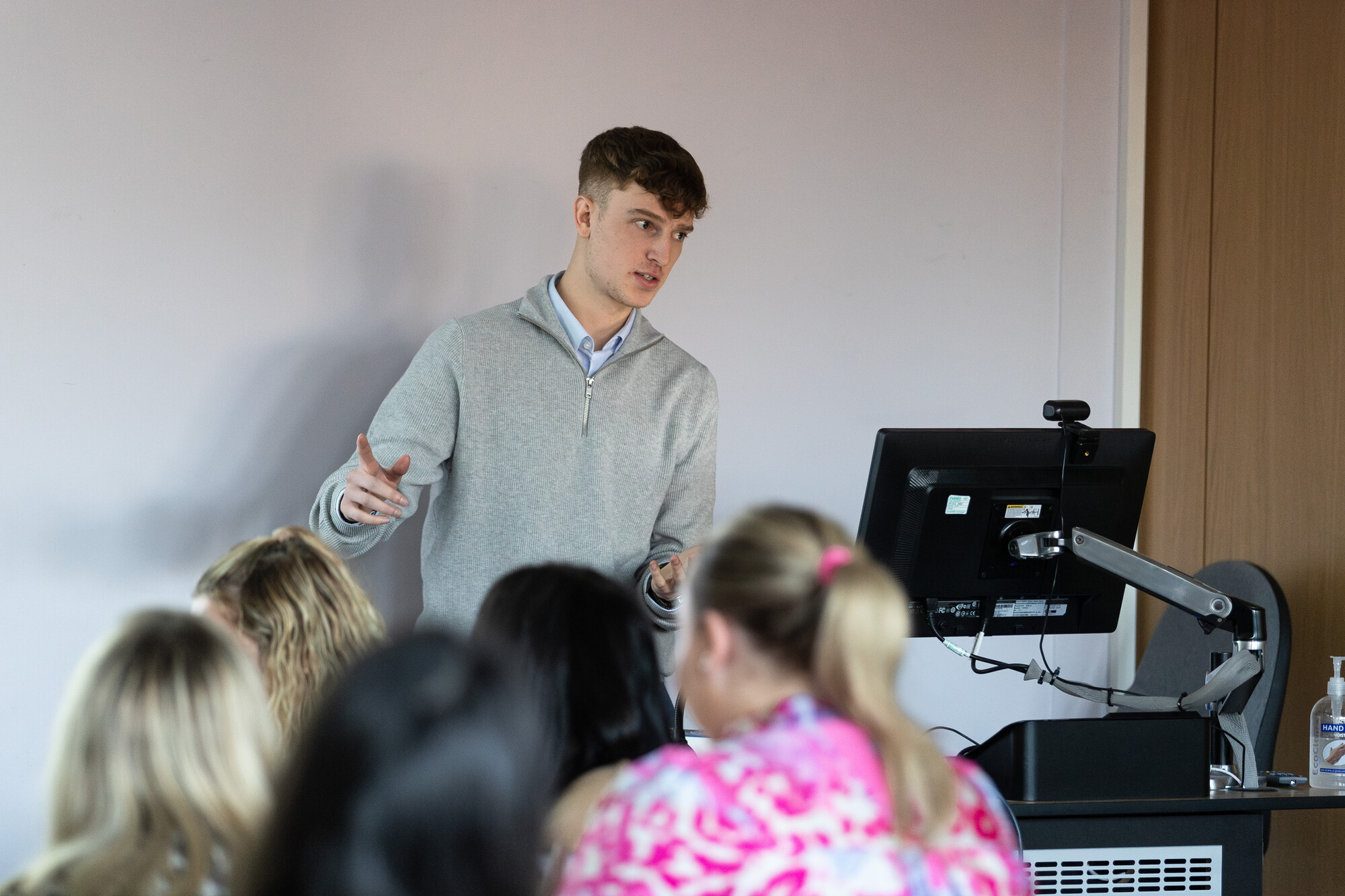
Our course has taken students out of the traditional classroom and into a wide variety of field trips, even visiting the EU parliament in Brussels in the past. We have also arranged activities such as voter registration drives.
Global Comparative Politics

Data-Driven Political Analysis

Interdisciplinary Approach
What you'llStudy
Module content:
- Reading and writing critically.
- Constructing and evaluating an argument.
- Note-taking techniques for reading and listening.
- Understanding plagiarism and academic integrity.
- Introduction to reflective practice.
- Preparing for, and delivering, powerpoint presentations.
- Referencing and citation.
- Summarising and paraphrasing written sources.
- Literature searching.
- Report writing.
- The culture and expectations of higher education.
- The assessment process including the role of assessment criteria and feedback.
- The nature of research journal publishing.
Whilst much of the content above is generic, students will be encouraged to situate skills within the context of the undergraduate discipline they are entering, which leads to some variation in emphasis for certain skills.
Module aims:
1.To raise awareness of the range of study skills required for successful higher education studies, including the process of academic writing, reading strategies, seminar skills, organisation of time and materials, planning for and meeting deadlines, understanding and responding to feedback.
2. To introduce students to concepts such as plagiarism, academic integrity and appropriate use of artificial intelligence tools.
3. To facilitate an effective transition into higher education by exploring, and providing guidance in, the key elements of successful undergraduate studentship including students' understanding of taking responsibility for their own learning.
4. To teach students how to undertake a literature, visual or data review for their discipline and be able to differentiate between a valid, reliable source and an unsubstantiated or irrelevant source.
Module content:
- Research and planning skills.
- Becoming familiar with topics that comprise their undergraduate degree subject.
- Developing a knowledge base for a discipline of study.
- Identifying areas of interest.
- Application and development of critical analytical skills.
- Development of self-directed study.
- Use of learning resources.
Module aims:
1. To develop students' skills in planning and writing an essay.
2. To familiarise students with the process of tutor supervision for a written piece of work.
3. To give students an opportunity to focus on a topic within their undergraduate degree subject.
4. To write a piece of work that allows the student to broaden and deepen knowledge on a topic of their choice.
5. To prepare and deliver an academic poster presentation outlining the student's research topic.
Module content:
- Society, social structures and socialisation
- Social scientific ideas, theories and ‘lenses’ on society
- Social scientific research and basic research methods
- Digitalisation of society, smartphone technology and social media platforms
- Consumerism and consumer culture – definitions, impacts and debates
- Inequalities related to gender, social class, ‘race’ and ethnicity, and LGBTQ+ communities
- Social issues and problems related to knife crime, riots and uprisings, prostitution and sex work
- Social justice, power and movements for social change
Module aims:
1. To examine contemporary society from some key perspectives of social science.
2. To introduce students to research in the social sciences.
3. To introduce students to contemporary themes and issues in the social sciences.
Module content:
- Introduction to fundamental principles and basic structure of the English Legal System
- Sources of law
- Key legal personnel
- Concepts of criminal law and the Criminal Justice System
- Principles of the Tort of negligence and bringing an action in a civil court
Module aims:
- To introduce students to the fundamental principles and basic structure of the English Legal System
- To enable students to develop awareness of key principles, legal institutions and areas of law in the English Legal System
- To gain an understanding of the role of legal personnel
- To develop basic knowledge of areas of legal learning, namely criminal law and the law of negligence
- To begin to develop key skills in the context of legal research, critical evaluation and legal problem solving
Module content:
- The 'global student' and the ‘global graduate’
- Introduction to theories of globalization
- Perspectives on economic, political and cultural globalization
- Globalized media, the internet & digital tech.
- Global economy & transnational corporations
- International organisations & social movements
- Migration, multiculturalism and interculturalism
- Introduction to decolonisation & education
- International security and security issues
- Introduction to international relations theory
Module aims:
1. To explore issues of global significance.
2. To develop and apply skills in critical thinking, research and communication and apply these to debates within the module's topics.
3. To deconstruct and reconstruct arguments by researching global issues.
4. To develop an awareness of global justice debates.
Module content:
- An introduction to creative and critical thinking concepts
- Considering credibility; belief and truth
- Identifying how language is used for persuasion
- Identifying how image is used for persuasion
- Recognising how media is used for manipulation
- An introduction to advertising and marketing techniques
- Representation and misrepresentation of data
- Applying critical thinking skills to contemporary media and technology
Module aims:
1. To introduce approaches to analytical and critical thinking.
2. To develop an understanding of critical thinking when applied to language, image, traditional and online media.
In Year 1, students are provided with a comprehensive foundation for the study of politics.
Module content:
This module examines the history, development and functions of the European Union. It provides an introduction to and critical discussion of the European Council, Parliament, Commission, and Council of Ministers. The module engages students in discussion of the economic, social and political philosophy of the EU, as well as the institution's aims and deficiencies. The module also takes a close look at the UK's relationship with the EU, from its applications to join in the 1960s to the Brexit referendum of 2016, and the post-Brexit relationship between the UK and the European bloc today.
Module aims:
- To foster knowledge and understanding of the history, development and aims of the EU, the institutions of and processes in the European Union.
- To enable students to evaluate the powers and responsibilities of the institutions of the EU.
- To develop students’ ability to discuss knowledgeably issues and concerns of the EU and to develop a critical point of view on issues of the EU.
- To foster the analytical skills of understanding, analysis and evaluation through discussion of the UK's complex relationship with the EU.
- To increase awareness and application of key transferable skills relating to working with others, presentations and discussions and debates and independent research.
Module content:
This module is designed with both theoretical and applied approaches. The first part introduces students to the way economic thought and theories have been developing in relation to historical change, giving students the ability to situate the development of Economics as a discipline in relation to social and historical changes associated with industrialization and modernity and how those developments have influenced political relationships between countries across time. It will provide students with the critical and reflective skills to be able to appreciate the social, political and ideological nature of contemporary debates within Economics.
The second part will situate students into the political interactions that different economic systems have nowadays and they will undertake the analysis of different countries with regard to how their view of economic policies have been affecting their relationships with other economies.
To these ends students will be introduced to some of the most renowned thinkers in the history of economic thought and the more up to date debates on international politics and economic policies:
- Mercantilism, the Physiocrats and early modern economic thought
- Political Economy and modern economic thought: Adam Smith, David Ricardo, Karl Marx, John Stuart Mill, Jeremy Bentham, Thomas Malthus,
etc - World War I and the Great Depression
- Explanations for (and solutions to) the crisis of the 1920s/30s – Schumpeter, Keynes, Neoclassical Economics, The New Deal
- Post WWII - Keynesian consensus, Marshall Plan, US hegemony
- The Bretton Woods system
- Crises of the 70s, Monetarism, from neo-classical economics to neoliberalism
- The current international economic crisis and post-crash/post-growth economic thought - Joseph Stiglitz, Paul Krugman, Neo-Keynesianism
etc - Different economic systems (Anglo-saxon, European, Asian) in practise (UK, US, Japan, China, Soviet Command)
- The opposition of capitalism and socialist/communist economic ideals. Examples of current countries
- Austerity and interventionism in times of crisis vs. free market. France and Germany.
- The end of Western economic domination. BRIC countries and new ways of dealing with economic issues
Module aims:
The aims of the module are to:
- Understand the reasoning behind different currents of economic thought
- Appreciate the relevance of early contributions to economic analysis
- Evaluate the extent to which the contributions of the past influence those of the present
- Reflect on contemporary economic and political situations in light of earlier positioning towards economic policy views
- Ensure an appreciation of interdisciplinarity and start building critical thinking
- Reflect on current debates within the existing economic and political systems
Module content:
Block 1: Origins and underpinning ideas
- Emergence of Industrial Society
- Political Discourse
- Welfare and Inequality
- Components of Welfare: Housing, Health, Education and Labour
- Liberal Solutions
- Public health, Private concerns
- Women, Children and Work
- Philanthropy
- The War Economy and Welfare
- The Beginnings of State Intervention
Block 2: Late 20th century
- Formation of the Welfare State
- Welfare state and limitations of State provision
- Breakdown of consensus
- Privatisation and Free Market solutions
- The search for a 'third way'
[N.b. these themes are broadly indicative of module lecture content]
Module aims:
This module is a core module in the Sociology programme. It provides an historical background to the development of the welfare state, including its foundation and subsequent development under the market rationale. The module introduces a broad-based theoretical framework, which prepares students for more specialised study in subsequent years of the course.
- To locate the development of social policy within the context of major social, economic and political changes occurring during the nineteenth, twentieth and early twenty-first centuries.
- To introduce the main traditions of sociological thought influencing the development of social policy during this period.
- To develop a basic understanding of a range of theoretical perspectives drawn from sociology and politics.
- To apply these theoretical perspectives in the critical analysis of historical welfare policy developments.
- To examine the changing role of the state in welfare policy and provision.
Module content:
The module covers both the core ideas in politics and IR that will be needed at higher levels of study and the skills required to evidence this knowledge. It focuses on the key question “what are political ideas, and where do they come from?”. Skills and employability materials are embedded within the module content and through the assessments. Module content includes:
- Introduction to key political theorists and theoretical traditions
- Introduction to key theories and concepts in International Relations
Module aims:
This modules aims to:
- Introduce political theory as the basis for the further study of politics and IR at Levels 5 and 6 through enabling students to acquire knowledge and understanding in appropriate areas of theory and analysis (benchmark 4.12).
- Introduce students to IR theory and to illustrate the links with political theory.
- Embed academic study skills, critical thinking, communication skills and employability as integral to the discipline
Module content:
This module is designed to introduce students to the concepts, theories, and practices of globalisation through an internationalized overview of world political, cultural, social, and economic history, and to refocus contemporary debates on globalisation to the edges of the world system. This provides a critical approach to understanding globalisation as an historical process, and not a relatively new phenomenon. The module will introduce students to critical analysis of key phases in the evolution of world history in how human development over time has contributed to broader societal change through the discovery of new improving technologies on the one hand but has been a highly uneven process characterised by the unequal distribution of power, violence, discrimination and oppression on the other. The module questions Western and universalized approaches to understanding globalization through an examination of Eastern and Southern-led processes and experiences. It provides an historical and contextually driven approach to contemporary questions surrounding issues of underdevelopment and global inequality, key features in understanding politics and international relations. Students will gain an understanding of global forces that are historically inscribed and approach globalisation through multiple lenses and perspectives. Content will include:
- Key theories of globalisation – World systems theory, dependency theory, and the use of multiple and layered international relations theories to understand globalisation
- Three key approaches to globalisation: Hyper-globalists, integrationists, transformationalists, regionalists
- World economic history: colonialism, colours and early capital
- Silk routes, fur trade, slave trade and early global transformation: Who paid for industrialisation?
- Industrialisation and deindustrialisation: the start of the ‘Great divide’
- South Pacific encounters with globalisation: the persistence of the gift in Polynesian globalisation
- Chinese globalisation: Confucian, communism, and copper
- Indigenous peoples in global perspective: On the margins of the world system
- South Asian forces of globalisation: sweatshops of the world or manufacturing centre of the world?
- Latin American perspectives on globalisation: coffee, Chavez and communism
- International institutions, governance and globalisation
Module aims:
The aims of the module are to:
- Introduce students to the political, social, cultural, and economic historical events and processes that structure and characterize contemporary globalization and global relationships.
- Embed an internationalized, contextually, and historically rooted understanding of the world in approaches to thinking about multiple perspectives and theories in politics and international relations.
- Stimulate students to critically reflect on the complexity of global relationships.
- Facilitate an understanding of the changing nature of international relations over time.
- Enable the development of research, writing, analytical and reflective skills commensurate with level 4 study.
Module content:
Introductory concepts and theories of comparative government
Comparative methods in political science and challenges of comparison
Comparing systems, and their ability to confront internal and external crises (such as corruption or climate change)
Relationships between branches of government and how bills are made
Comparing political institutions and systems
Electoral systems and their impact
Voting behaviours
Overt and covert systems of power
Participating in and resisting politics
Political cultures and sub-cultures
Supranational structures within which states operate
The course also considers international elements such as the role of key players in supranational organisations such as the U. N. ; election monitoring and democracy promotion
Module aims:
The overall aim of the module is to introduce scholars to the methodological and theoretical foundations of comparative approaches to political studies to provide the basis for the further study of these and related subjects at Levels 5 and 6. This module allows students to acquire knowledge and understanding in appropriate areas of comparative government and politics, as well as make elementary critiques.
In Year 2, you will debate the nature and distribution of power and the importance of social, economic, historical and cultural contexts.
Module content:
Part A:
Preparation for Experiential Overseas Learning will take place at the university of Chester during level 5 and will include:
- The multiple facets of Global citizenship
- Ethical engagement and practice
- Cross-cultural issues and sensitivity
- Intercultural communication
Theories, models and strategies of learning
- Theories and models Intercultural competence
- Theories and models of Integration and Multiculturalism
- Critical thinking skills and models of Reflection
- Experiential learning models
- Self-directed experiential learning
Personal and placement-related skills
- Enhanced independence
- Improved command of multicultural behaviour
- Increased knowledge and confidence in their individual facets of personal identity
- Effective time management and organisational skills
- Project management – working away from University and independent study
- Self-management and personal development
- Team building and team work
Part B: Overseas
Students will engage in experiential learning activities overseas for at least 150 hours
Module aims:
The purpose of this module is to enhance students’ prospects of completing an overseas placement to the best of their ability consequently it aims to:
- To equip participants with appropriate knowledge and skills to study or work in a different cultural, linguistic and/or social environment; enhancing ethical, cultural and intercultural awareness.
- To enhance students understanding of the ethical issues related to living and working abroad.
- To increase students Global Citizenship skills
- To provide an opportunity for students to reflect critically on their experience of living and learning within an unfamiliar culture, to their 'home' culture or ethnic group.
To challenge students to learn about themselves as global citizens in terms of life skills, career choices and academic development outside the classroom.
Module content:
Preparation for the year abroad will take place in Chester during level 5 and will include:
- Cross-cultural issues and sensitivity
- Host-country orientation, study methods– economic, political and social reality of the country
- Orientation specific to exchange – health, education, gender issues
- The United Nations Sustainable Development Goals
- Practical matters relating to living and studying in the wider world
Theories, models and strategies of learning
- Critical thinking skills, experiential learning and models of reflection
Personal and placement-related transversal skills
- Effective self-motivation and independent resourcefulness
- Effective time management and organisational skills
- Project management – working away from University and independent study
- Self-management and personal development
Whilst abroad:
Students will undertake study at one of UoC’s partner universities; it is expected that students will choose a series of modules at the university abroad, which equal a full-time study load. This must be agreed by the host institution and the International Tutor. Students must supply details of their courses/modules on a learning agreement within 4 weeks of arrival at the host university, note students who fail to supply this within 4 weeks may have the opportunity withdrawn.
Module aims:
- To experience academic life in country outside of the EU, enhancing cultural and intercultural awareness and increasing transversal skills.
- To reflect on the impact of the experience in their destination on one’s own personal, academic and professional development.
- To engage with the experience of study at a partner university to gain extensive first-hand knowledge and understanding of the relevant society from the perspective of the resident.
- To further develop independent learning techniques.
- To foster critical evaluation.
Module content:
At its heart this is a political theory module. It draws on some of the dominant ideas that have flowed through Western political philosophy; namely concepts like human nature, the social contract, power, rights, freedom, justice, obligation, and the redistribution of wealth.
The module approaches these diverse themes by considering the dynamic relationship between the individual and the state. It is a relationship that is contingent on time and place and, for the purpose of this module, is articulated through changing understandings of citizenship, liberty and freedom. Following the introductory sessions, which explore some of the fundamental concepts listed above, two principle methods are used to explore these themes.
First, the emergence and impact of modern thought on the relationship between government and the citizen is explored. This section traces the movement from autocracy through to civic republicanism and liberal individualism. Radical traditions, offering alternative visions of the individual and the state, are then traced. The middle ground of compromise, between conservative and radical traditions (concepts like the welfare state and democratic socialism), is examined. Where this middle ground now sits in respect to the dominance of neoliberalism is a question students will be asked to grapple with. The final element of the historical study concerns the emergence of both 'right' and 'left' nationalisms; that the state and the citizen are constructs that cannot escape the notion of community.
Second, the module focuses on reform and revolution. Indeed, it is the tension between the two that poses the most interesting questions. Illustrations are taken from a wide range of historical and contemporary events. The important element, however, is that in each instance the relationship between individual and state has been challenged and subject to some level of change. On the revolutionary front, examples range from large-scale ‘traditional’ revolutions, right down to citizen- directed change via various means of direct action. The module concludes by looking at reformist approaches to transformation through welfare programmes, social inclusion and models of participatory democracy.
Module aims:
The aims of the module are to:
- Develop a sophisticated and nuanced understanding of the role and importance of political theory.
- Build on a student’s understanding of core political ideas, practices and institutions acquired in Level 4 through developing their capacity to think critically and independently about contemporary developments in state governance.
- Embed the concept of citizenship within shifting historical, social-economic and technology-communication contexts and trends.
- Develop an appreciation for the tension between reform and revolution, linking theoretical traditions with historical events.
- Explore competing concepts of political emancipation and how they relate to differing theoretical and historical contexts.
Module content:
This module develops critical engagement with international affairs by drawing together the multiple theoretical lenses of international relations with the practice in global politics, enabling a deeper consideration of how the world might be understood, explained (and possibly transformed). The core issues, concepts and theories of the discipline are approached through a series of questions. These questions are used to draw out many other challenging and complex questions and perspectives about global politics, to examine the historical context in which they are located, to consider the broader assumptions that underlie them and the theoretical approaches that structure the many possible responses. In so doing, students are encouraged to think about why the question is important, who is affected and how, and what is at stake in global politics and international relations. Indicative content includes:
- Perspectives on the creation of the discipline of International Relations.
- Realism and Neo-Realism; Liberalism and Neo-Liberalism.
- Critical Theory; Marxism and Gramscianism; Constructuctivism; Feminist international relations; post-structuralism; and Postcolonialism.
- Key questions include: How do we begin to think about the world? How might we conceptualise the world? How might we critique the world? Does the nation-state work? Is democracy a good idea? Does colonialism belong to the past? Why does violence exist? Can we move beyond conflict? What happens if we don't take nature for granted? Can we save the planet? Why are some people better off than others? How is the world divided economically? Who has rights, and what rights do they have? Why is people's movement restricted? Why does gender inequality exist? What can we do to change the world?
- The state of the discipline of global politics and international relations.
Module aims:
This module aims to:
- Introduce students to the methodological and theoretical foundations for the study of Global Politics and International Relations.
- Enable students to apply theories and concepts to historical and current global events, from multiple world perspectives.
- Develop the capacity of students to formulate theoretically sound arguments and to critically engage with the subject content.
Module content:
This module examines (how) gender matters in global politics. In this module, students will consider different feminist theoretical debates over the meaning, subject and aims of gender politics. Students will also learn to apply different feminist perspectives and gendered lenses to diverse areas including states and nationalism, and sex and money. Some of the questions this module will explore are: Where do we see gender in politics? What work is gender doing? How does taking gender seriously complicate our understanding of what counts as ‘political’? This module also highlights the intersectionality of gender with race and sexuality, and the importance of everyday practices in constructing our understandings of masculinity and femininity.
Indicative content includes:
- Feminist theories of gender, sex and the body
- Intersectional understandings of gender, race and sexuality.
- Gender, masculinity and politics.
- Feminist activism, women’s movements and gender mainstreaming.
- Key sites of gender politics such as the home, family, state, military, factory, tourist resort, refugee camps and political institutions.
- Case studies will change year on year, but indicative case studies may include: gender politics of military bases, women as agents of political violence, feminisation of labour, gendering the global financial crisis, international relations of sex tourism; and gender and sexuality in the making of the nation state.
Module aims:
- To understand key ideas and debates in gender politics
- To contrast feminist perspectives and approaches to politics and international relations
- To apply feminist and gender analyses to contemporary issues and examples in global politics
- To develop skills of research, writing, analysis and argument commensurate with level five study
Module content:
This module provides an understanding of the sub-discipline of public policy in political science by drawing connections between public policy theory and practice. Students will learn how to make links between public policy theory and its application in practice in a given state, through substantive case studies that are woven through the module relating to the theory. This module enables students to critically understand the different theories and models of public policy making, management, and analysis; provides effective tools and skills for employability; and illuminates the way in which governments decide upon, create and deliver the policies that impact people as well as the contestations around them.
Indicative content includes:
- Theories and models of public policy-making
- Tools and skills in the practice of public policy
- Evidence-based public policy
- The public policy context
- Agenda-setting and issue identification in public policy
- Public policy cycles and processes
- Public policy formulation and decision-making
- Public policy actors, including the public service or bureaucracy, in public policy
- Public policy analysis
- Public policy implementation
- Public policy monitoring and evaluation
- New public management
- Comparative public policy
Module aims:
- Introduce the theoretical foundations for the study of public policy
- Develop awareness of the policy process and complexities of policy-making
- Evaluate contemporary public policy issues and identify practical solutions to policy problems
- Facilitate the development of public policy-related employability skills
Module content:
This module will introduce students to a range of theories, ideas and processes related to international trade from several perspectives: economic, historical, political and international. Students are shown how international trade and commercial relationships impact, alter and create political and social connections. Student learn how political, social and cultural institutions play a large role in facilitating these arrangements, and how relationships develop and change over time. The exercise of power in international relationships, ad its impact on trade and through the form of economic diplomacy is explored through the module.
The content will include topics such as:
- The origins of international trade
- The creation and role of the World Trade Organisation and other international organisations
- Barriers to trade (tariffs and quotas, political)
- International Trade Agreements and disagreements
- Regional integration areas
- The role of currencies and exchange rates
- Globalisation and finance
- Global crisis and their effects on trade
- Economic diplomacy and trade
- Economic destabilisation and trade
- Changing power in international trade: The rise of China, India, Brazil
- Effects of and constraints of international trade on development and environment
Module aims:
The aims of the module are to:
- Enable student appreciation of the role and relevance of international trade and international politics and their relationship to one another.
- Facilitate student understanding of the economic rationale behind the existence of international trade.
- Ensure student appreciation of the complexity of commercial relationships and their inter-relationship with political systems and with power in the international arena.
- Facilitate an appreciation of the changing nature of international trade over time and in terms of institutions, instruments, agreements and countries' roles.
- Enable application of theory to practice.
Module content:
This module introduces students to the field of peace and conflict studies in international relations through the study of critical approaches to the study of violence, war, conflict, security and peace. It traces the evolution of the field from orthodox approaches originally rooted in Western political analysis; those developed and practised through international organisations and institutions in international relations; to critical questions about war and militarism; to alternative and indigenous approaches concerned with peace-building, sustainable peace, structural transformation and restorative and reconciliatory justice. In-depth case studies are woven through the module drawn upon from various international relations contexts including the Middle East, Europe, Latin America, North America, Africa and East Asia in order to apply concepts, approaches and theory to practice.
Indicative content includes:
- Key concepts and theories of violence, war, conflict, security and peace.
- Critical approaches to security, violence, conflict and peace.
- the origins of peace-building as a synergetic process: peacemaking, diplomacy, peacekeeping and peacebuilding
- the seven pillars in security and peace-building through the institutional remit of the UN, UNDP, WHO, UNESCO, UNICEF and UNHCR
- key theoretical approaches of conflict management, conflict resolution and conflict transformation
- concepts and theories of negative, positive and sustainable peace-building
- structural transformation; reconciliation; restorative justice; inclusivity; rights
Module aims:
The aims of the module are:
- To introduce students to the study of violence, war, conflict, security and peace in international relations.
- To provide in-depth understanding of key concepts, theories and approaches in the study of conflict, security and peace.
- To develop the capacity of students to directly apply these key concepts, theories and approaches to real world examples.
- To facilitate understanding of how conflict and peace is practised.
- To stimulate and facilitate critical engagement of the embodiment of conflict, violence, war, security and peace in global politics.
Module content:
Pre-placement:
- Structured approaches to researching, selecting and securing a suitable work placement relevant to the student’s interests and career aspirations*.
- Writing an effective CV. Constructing a letter of application.*
- Interview skills.*
*Note: Students are required to undertake these pre-placement tasks during term 1 level 5, as part of the placement acquisition process and will be supported by the Work Based Learning team and the Careers and Employability department.
Induction Programme and Placement:
- The organisational context: research-informed analysis of the placement organisation’s aims, structure, culture.
- Self- assessment of needs: identification of the range of transferable skills, competencies and attitudes employees need and employers expect graduates to possess. (Employability Skills: e.g. verbal and written communication, analytical / problem solving capabilities; self-management; team working behaviours; negotiation skills; influencing people; positive attitude, resilience, building rapport).
- Devising a strategy for integrating into the workplace and work based teams
- Completion of online assignment tasks covering sourcing and obtaining placement; health and safety procedures in general; general workplace integrity; placement requirements.
During and post-placement: Learning effectively in and from the workplace:-
- Devising and implementing strategies to improve own approach and performance
- Critical analysis/evaluation of approach to skill development and performance in the workplace;
- Influencing the Placement Provider’s appraisal;
- Devising an action plan to develop gaps in transferable skills based on the placement experiences;
Module aims:
This module aims to enhance students’ prospects of gaining graduate level employment through engagement with a University approved work placement**, which will enable them to:
- Develop their understanding of workplace practice and lifelong learning;
- Enhance their work readiness and employability prospects through development of transferable skills;
- Take responsibility for their own learning and acquisition of workplace employability skills;
- Articulate, in writing, their employability skills.
In Year 3, you will evaluate different interpretations of political events and issues.
Module content:
This module on International Political Economy is concerned with the (re)production of power and wealth within the contemporary world order. The module explores complex questions and global challenges that are rooted in an understanding of power, international relations and economy. Students are asked to think critically about how the politics of the international economy is governed and through an evaluation of power and inequality. Such questions include: Why and how does the politics and economics of the world take its current form? In what ways do the structural features of the world economy shape power and visa versa, and with what consequences? In what ways does the international political economy create uneven consequences and shape interactions in the international community? Case studies will be drawn from across the world and, in particular, from Latin America. Indicative content includes:
- Theoretical Approaches of IPE: Orthodox, Critical and Radical theories.
- The Subject of International Political Economy and its Methods
- The Evolution of the IPE: Empires and mercantilism; economic liberalism; the liberal economic order; Pax Britannica, industrial capitalism and imperialism; Power, Contemporary capitalism and global governance – who does the governing?; contemporary imperialism.
- Bretton Woods Institutions; the Washington Consensus, Post-Washington Consensus and Critique; Dismantling Embedded Liberalism; States, Markets and Institutions.
- Key issues, global challenges and responses in the IPE: Globalization and its discontents; North-South Relationships; International Trade, Finance and Development; Transnational Production; Global Division of Labour; Sustainable Development; International Security, Conflict and Migration; Culture, Indigeneity and IPE; Resistance to the Global norms; Climate change and energy security; the IPE of ideas and knowledge production.
Module aims:
The aims of this module are four-fold:
- To provide an in-depth understanding of the historical development of the IPE.
- To provide a critical analysis of the main institutional and structural contours of the global political economy and the effects of these.
- To offer perspectives and insights that engage with, stand in contrast to and challenge dominant paradigms about power dynamics within the global political economy.
- To provide a sophisticated understanding of global issues and challenges through mainstream, critical and radical theories of IPE.
Module content:
The module will cover the following areas:
- Political and media organisations and their relationships with one another
- Theories and practice of political marketing
- Political campaigning
- New campaigning methods
- The role of spin doctors and media managers
- The role of lobbyists and public affairs agencies
- Political representation
- Theories of media analysis, discourse analysis and visual decoding
- Implications of new and social networking media
- Political Reputation and branding
Module aims:
The overarching aim of this module is to develop in students an in-depth understanding of political and media organisations and their relationships with one another, and the ability to critically analyse and evaluate the role of communication in the political sphere.
Module content:
The indicative major thematic areas that the module will cover can be described under the following headings:
- Operational definitions and practices of sustainability
- Politics in and of the anthropocene
- Sustainability and climate change
- Green political theories
- Green parties - formation, development and change (including relationships with electoral systems)
- Alternatives, ideals and utopias; the role of active citizenship in the spread of concern with sustainability
- Sustainability Policy in practice
Module aims:
Module content:
The quest to understand the contemporary politics and international relations of the African continent often appears elusive. That this should be so is not surprising since it has frequently been driven by a need to approach the complexities of the continent from an explanatory scheme that is congruent with Westernisation and liberalism and rooted in western epistemological traditions and experience. Instead, this module explores African politics and international relations from "the inside", through the concepts, theories, paradigms and contexts in which the political, economic and social logic of Africa come together and which engage and challenge contemporary thinking and dominant discourses about politics and international relations.
Content will include reference to:
- A postcolonial "African" critique of the disciplines of politics and international relations, the international system, its origins and nature.
- Africa in, and of, the Global South and at the centre of Critical International Political Economy.
- The Political Instrumentalization of Disorder - Modernity, Tradition, Power, Progress and Legitimacy in Africa.
- The Postcolonial African State - Political Thought and Philosophical Critique; the state as a Matrix; Crisis States, Collapsed States and New States.
- Genesis of State and Society: The Fault lines of Ethnicity, Religion, Social Class and Competition over Resources.
- The Productivity of Economic and Political Failure: Migration, Trade and the Informal Economies of the African Sub-Regions.
- Conflict, Peace and Justice in Africa - Restorative, Distributory and Transitional approaches.
Module aims:
The primary aims of this module are:
- To provide a critical understanding of the historical, political and economic positionally of Africa, in and of the world, as seen through multiple paradigms, theories, concepts and contexts which shape our understanding.
- To offer perspectives and insights that engage with, stand in contrast to, and challenge, dominant paradigms about politics and international relations, as seen through the lens of 'the other'.
- To develop critical thinking amongst participants about the subject of inquiry.
- To develop research capacity appropriate to the level of study.
Module content:
Content will vary according to individual dissertation proposals.
Module aims:
The Dissertation is designed to provide an opportunity for sustained and independent study in the final year of Bachelor degree Political Science programmes. It intends to develop knowledge of, and critical insight into, a topic of the student's choice within the subject area under study. Students are enabled to undertake first-hand enquiry and encouraged to develop an analytical and reflective approach to the subject identified for study. The module aims to encourage the articulation of a critically informed perspective on the subject being studied. It also intends to enable the production of a coherent document of rigorous academic standards.

Politics BA (Hons)
Dr Michael Francis
Programme Leader and Senior Lecturer, Politics
Dr Suzanne Francis
Associate Professor of Conflict Transformation & Peace Studies; Programme Leader, International Relations
Dr Mark Bendall
Senior Lecturer, Politics and International Relations
Dr Rachel Massey
Senior Lecturer, Politics and International Relations
During your Politics degree with us you may receive a combination of lectures, workshops, guest and specialist contributors, independent learning and research, practical work-based projects, group work and e-learning.
Assessment will be in a number of different ways. Most forms of assessment will be coursework based, including essays, reports and posters. You may also be assessed via written (seen and unseen) examinations as well as presentations.
Beyond the Classroom
On this course, you have the opportunity to spend five weeks working for a host organisation via our innovative Work Based Learning module. You’ll have the chance to test-drive a future career, boost your CV and gain real work experience.
On this course, you’ll have the opportunity to undertake an Experiential Learning module, where you’ll apply what you’ve learnt on the course to real life scenarios and projects.
Our Experiential Overseas Learning module offers a unique opportunity to participate in a short-term placement around the world.
This course offers the exciting opportunity to study abroad for a full academic year at one of our bilateral exchange partners or through ISEP (International Student Exchange Programs), a network of over 300 additional higher education institutions worldwide.
Entry Requirements
112 UCAS points
| UCAS Tariff | 112 points |
| GCE A Level | Typical offer – BCC-BBC |
| BTEC | BTEC Extended Diploma: DMM |
| International Baccalaureate | 26 points |
| Irish / Scottish Highers | Irish Highers: H3 H3 H3 H3 H4 |
| Scottish Highers: BBBB | |
| Access requirements | Access to HE Diploma, to include 45 credits at level 3, of which 30 must be at Merit or above |
| T Level | T Level - Merit |
| OCR Cambridge Technicals | OCR Extended Diploma: DMM |
| Extra Information | Welsh Baccalaureate Advanced and A level General Studies will be recognised in our offer. We will also consider a combination of A Levels and BTECs/OCRs. |
Students from countries outside the UK are expected to have entry qualifications roughly equivalent to UK A Level for undergraduate study and British Bachelor's degree (or equivalent) for postgraduate study. To help you to interpret these equivalents, please click on your country of residence to see the corresponding entry qualifications, along with information about your local representatives, events, information and contacts.
We accept a wide range of qualifications and consider all applications individually on merit. We may also consider appropriate work experience.
English Language Requirements
- IELTS Academic: Undergraduate: 6.0 (minimum 5.5 in each band)
- Postgraduate: 6.5 (minimum 5.5 in each band)
For more information on our English Language requirements, please visit International Entry Requirements.
72 UCAS points
| UCAS Tariff | 72 points |
| GCE A level | 72 points overall, including grade D at A Level |
| BTEC | BTEC Extended Diploma: MMP |
| International Baccalaureate | 24 points |
| Irish / Scottish Highers | Irish Highers: H4 H4 H4 H4 H4 |
| Scottish Highers: CCDD | |
| Access requirements | Access to HE Diploma – Pass overall |
| T Level | T Level: Pass (D or E on the core) |
| OCR Cambridge Technicals | OCR Extended Diploma: MMP |
| Extra Information | Welsh Baccalaureate Advanced and A level General Studies will be recognised in our offer. We will also consider a combination of A Levels and BTECs/OCRs. If you are a mature student (21 or over) and have been out of education for a while or do not have experience or qualifications at Level 3 (equivalent to A Levels), then our Foundation Year courses will help you to develop the skills and knowledge you will need to succeed in your chosen degree. |
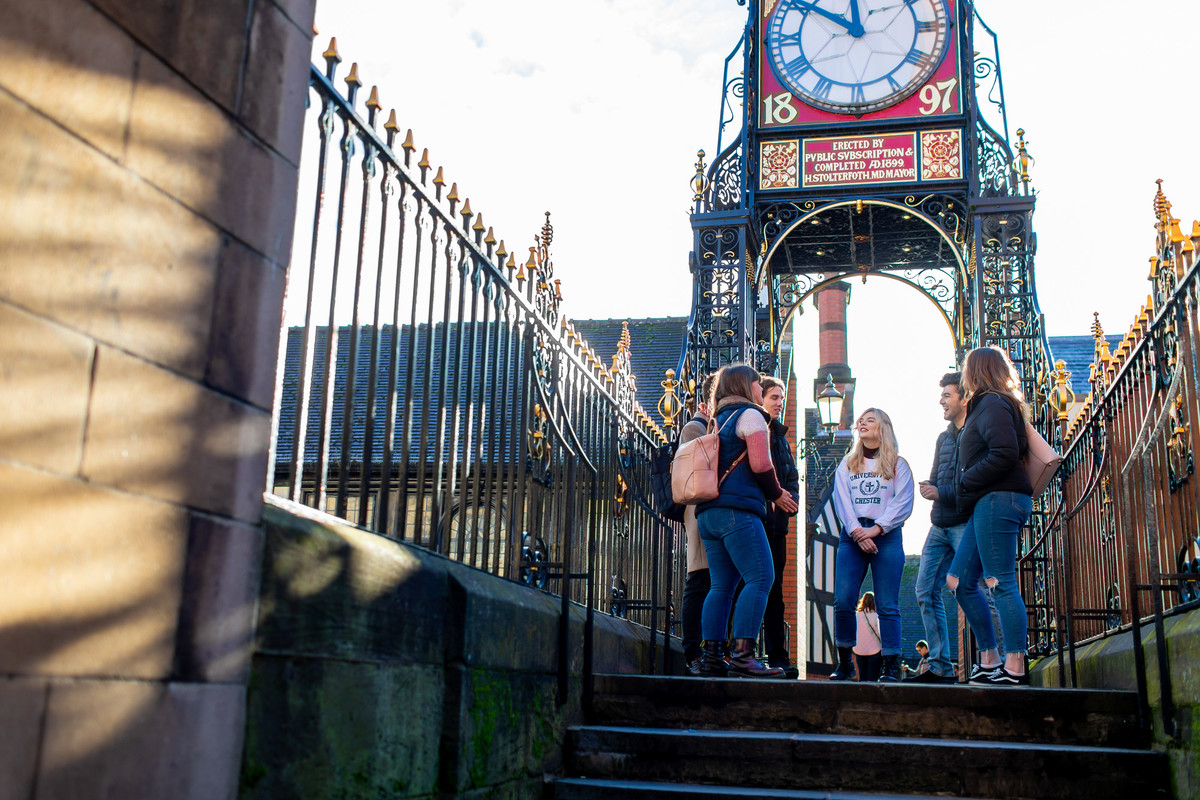
The location
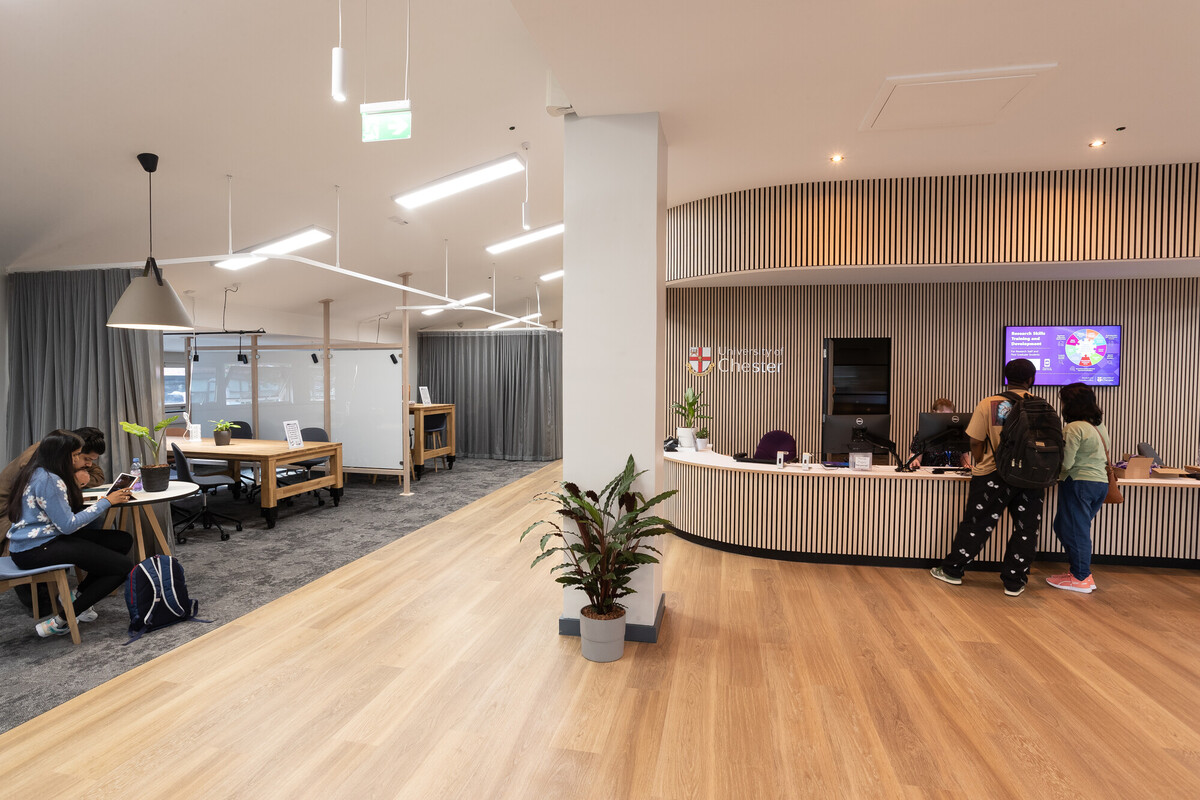
Modern learning resources and library
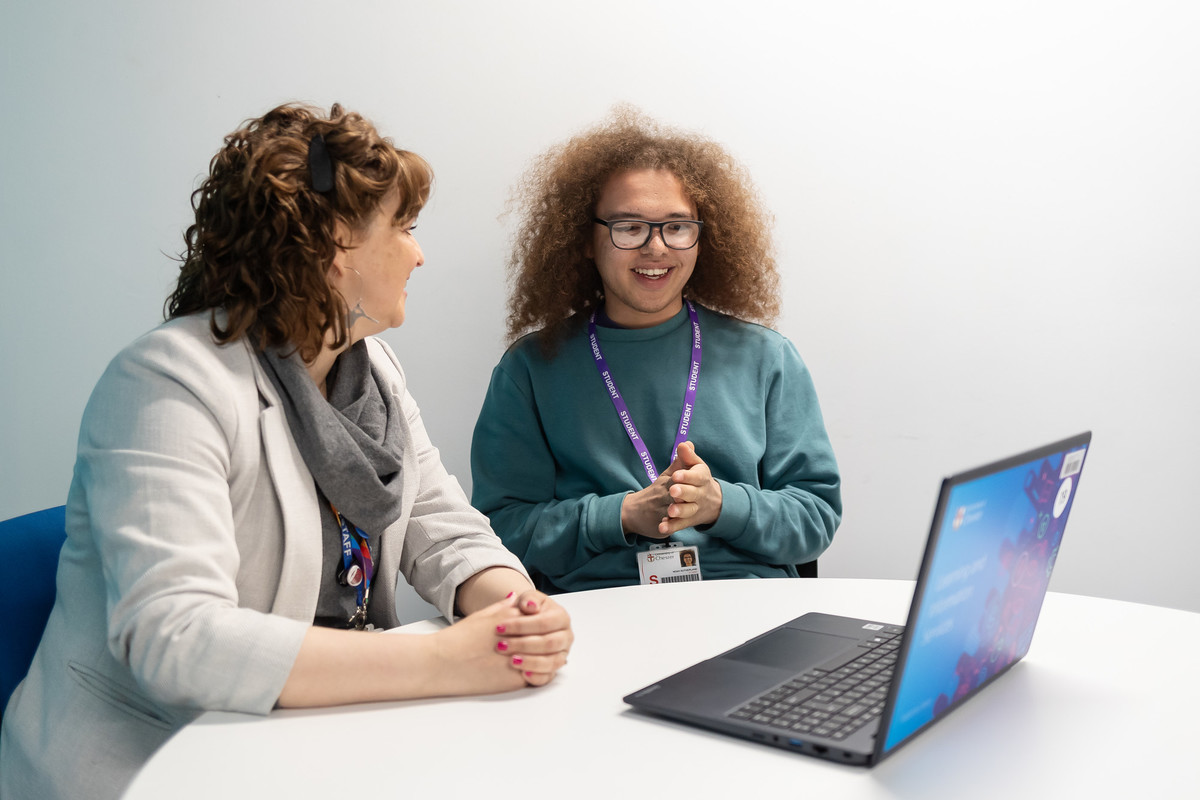
Support Services
Fitness Facilities

Chapel, Chaplaincy and Multi-Faith Spaces

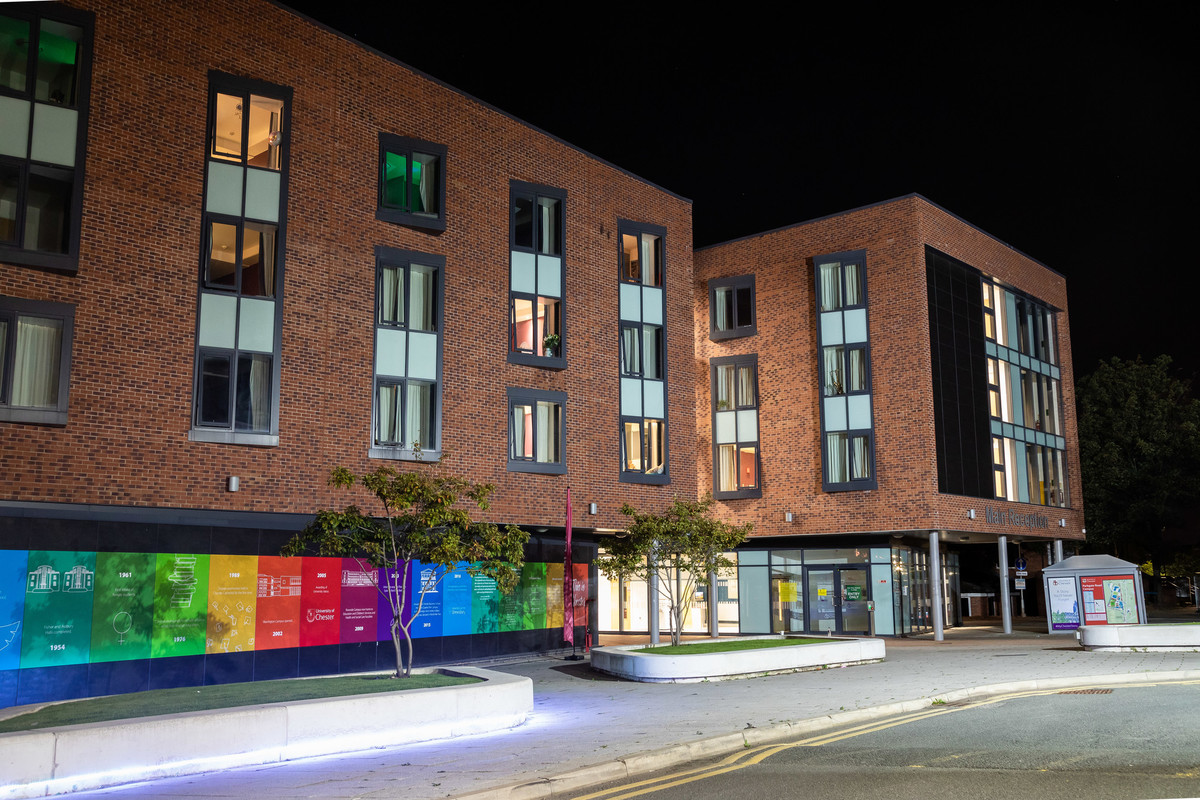
Accommodation
Catering

Fees and Funding
£9,250 per year (2024/25)
Our full-time undergraduate tuition fees for Home students entering University in 2024/25 are £9,250 a year, or £1,540 per 20-credit module for part-time study.
The University may increase these fees at the start of each subsequent year of your course in line with inflation at that time, as measured by the Retail Price Index. These fee levels and increases are subject to any necessary government, and other regulatory, approvals.
Students from the UK, Isle of Man, Guernsey, Jersey and the Republic of Ireland are treated as Home students for tuition fee purposes.
Students from countries in the European Economic Area and the EU starting in or after the 2021/22 academic year will pay International Tuition Fees.
Students who have been granted Settled Status may be eligible for Home Fee Status and if eligible will be able to apply for Tuition Fee Loans and Maintenance Loans.
Students who have been granted Pre-settled Status may be eligible for Home Fee Status and if eligible will be able to apply for Tuition Fee Loans.
Irish Nationals living in the UK or Republic of Ireland are treated as Home students for Tuition Fee Purposes.
£13,950 per year (2024/25)
The tuition fees for international students studying Undergraduate programmes in 2024/25 are £13,950.
This fee is set for each year of study. All undergraduate students are eligible for international and merit-based scholarships which are applicable to each year of study.
For more information, go to our International Fees, Scholarship and Finance section.
Irish Nationals living in the UK or ROI are treated as Home students for Tuition Fee Purposes.
Your course will involve additional costs not covered by your tuition fees. This may include books, printing, photocopying, educational stationery and related materials, specialist clothing, travel to placements, optional field trips and software. Compulsory field trips are covered by your tuition fees.
If you are living away from home during your time at university, you will need to cover costs such as accommodation, food, travel and bills.
The University of Chester supports fair access for students who may need additional support through a range of bursaries and scholarships.
Full details, as well as terms and conditions for all bursaries and scholarships can be found on the Fees & Finance section of our website.
Your Future Career
Job Prospects
Graduates of Politics at Chester will see their skill-set and knowledge highly applicable to a range of opportunities such as careers in politics, the civil service, campaign organisations, NGOs, as well as careers in business.
Careers service
The University has an award-winning Careers and Employability service which provides a variety of employability-enhancing experiences; through the curriculum, through employer contact, tailored group sessions, individual information, advice and guidance.
Careers and Employability aims to deliver a service which is inclusive, impartial, welcoming, informed and tailored to your personal goals and aspirations, to enable you to develop as an individual and contribute to the business and community in which you will live and work.
We are here to help you plan your future, make the most of your time at University and to enhance your employability. We provide access to part-time jobs, extra-curricular employability-enhancing workshops and offer practical one-to-one help with career planning, including help with CVs, applications and mock interviews. We also deliver group sessions on career planning within each course and we have a wide range of extensive information covering graduate jobs and postgraduate study.