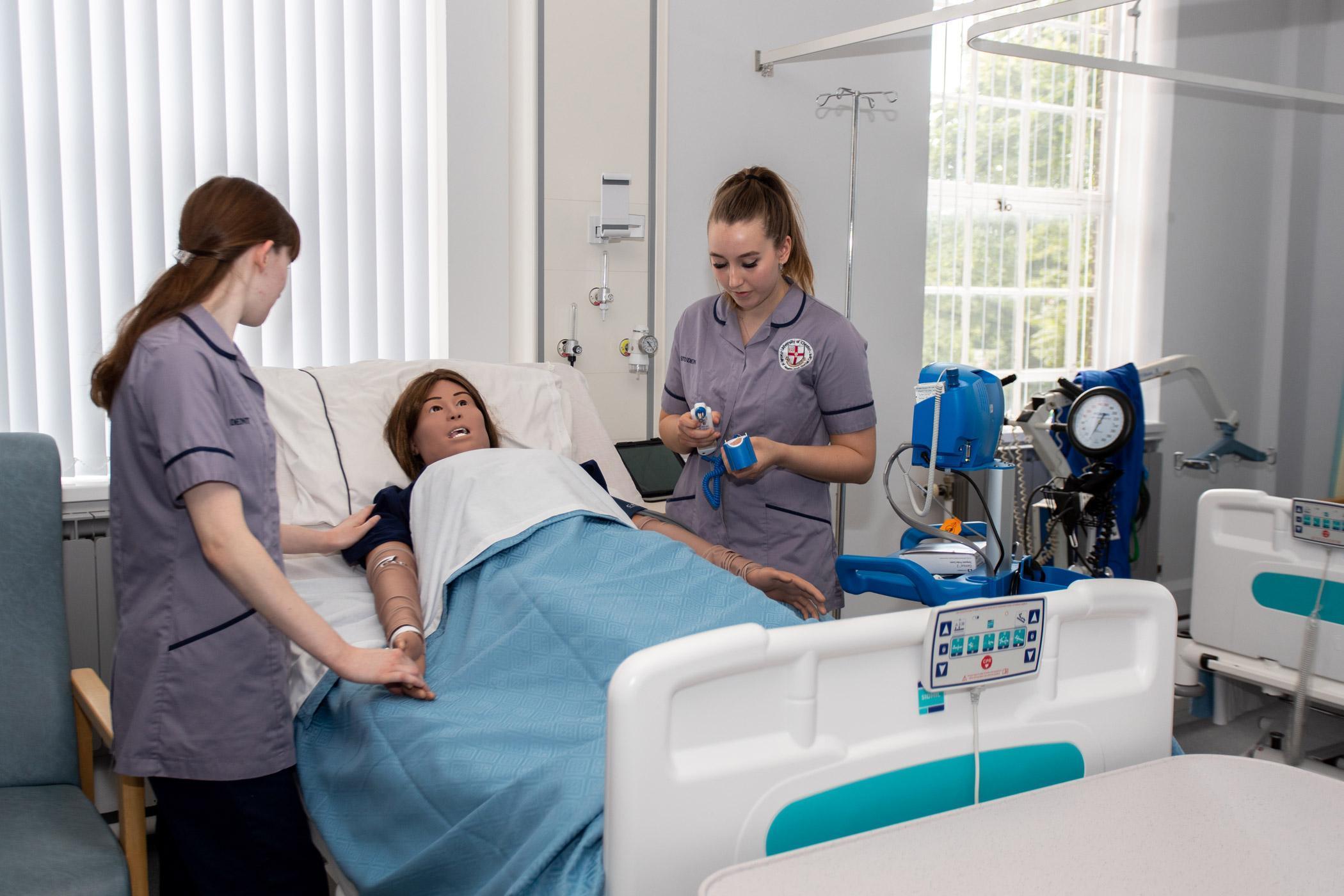


Adult Nursing MSc students practising clinical skills in a simulated hospital ward, providing bedside care to a patient and using monitoring equipment during a hands‑on training session.

The MSc Pre-registration Nursing allows you to gain a professional nurse qualification and register with the NMC. 

The course provides you with the skills and knowledge to provide person-centred compassionate care and is an exciting opportunity for graduates to undertake a professional qualification as an Adult Nurse whilst studying for a Master’s degree. 

This is a dynamic, interactive professional course which places the needs of individuals and their families at its centre. The Programme Team are committed to supporting students to realise their potential to become compassionate, competent and autonomous nurses, who are able to meet current and future healthcare demands. 

The course is delivered by experienced registered nurses who have expertise in both teaching and research and a variety of clinical specialities, including all four fields of nursing across acute and community settings. The team work closely with local acute and community providers to ensure that the course remains contemporary. 


Why You’ll Love It

What You'll Study

Year 1 explores the requirements to become a 21st century nurse, developing your skills and knowledge of field and generic nursing.

Year 2 provides you with advanced knowledge and critical skills to be able to apply to the Nursing and Midwifery Council to register as an Adult Nurse. You will enhance your leadership and care coordination skills and critically develop your knowledge and skills in caring for people with a range of complex conditions and comorbidities.

You will advance your analytical research skills through the development of an innovation project, enabling you to identify, critique and evaluate relevant research to ensure your nursing practice remains contemporary and evidence-based. During clinical placements, you will develop the skills necessary to deliver care in a range of settings and collaborate effectively as a member of a multi-disciplinary team.

Core Modules

As a student, you will be provided with practice learning opportunities which provides a range of experiences across fields. The module will build on cross-field and field-specific skills for nursing. You will actively participate in and work towards increasing confidence and competence to provide care with minimal guidance.

The cross-field content of this module is designed to enable you to meet the needs of service users and carers from all four fields of practice and as such the delivery will include application to all service user groups.

  1. Maintaining self-care including reflective practice, reasonable adjustments in practice (RAPP), emotional intelligence, resilience, healthy lifestyle choices and clinical supervision. Advocacy and challenging discrimination. Record keeping, confidentiality, privacy and dignity.
  2. Assessing lifestyle factors and supporting others to make informed choices to manage health challenges. Assessing motivation and capacity to promote wellbeing recognising the person’s capacity to be a partner in their care. Recognising and acting upon signs of deterioration in mental health and providing evidence based support and skills. Understanding the family in partnership when considering end of life care and supporting treatment and care preferences. Health needs assessments, Global practice experience.
  3. Working in partnership with service users, relatives, carers and other professionals to evaluate and monitor care effectiveness to readjust care plan goals. Using alternative communication strategies such as translator services to be able to provide people, families and carers with accurate information when providing treatment and care. Lived experience connectors. Maintaining clear and legible documentation and using digital technologies in care delivery. Initiate appropriate interventions after making informed judgements on commonly encountered presentations.  
  4. Participate in nursing procedures including assessing skin status and hygiene and providing wound care including aseptic technique, product selection and drain management; nutritional assessment and artificial hydration and nutrition including insertion and removal of nasogastric tubes; assessment and promotion of self-management in bladder and bowel continence and removal and insertion of different urinary catheters in all genders; neurological observations and seizure management, supporting mobility and managing falls; respiratory assessment including peak flow, chest auscultation and administration of oxygen via different routes. Nasal and oral Suctioning techniques, blood glucose monitoring, cardiac assessment including ECG and infection prevention and control methods. Social prescribing practice.
  5. Interpretation of normal and abnormal blood profiles and venepuncture and cannulation skills. Managing transfusion of blood components, Recognising and treating sepsis, positive risk taking and risk aversion.
  6. Safe and effective discharge planning across services and caseloads, negotiation and advocacy of people and making reasonable adjustments to aid assessment, planning and delivery of care. Leadership and management in own field of nursing including advanced leadership and political understanding of the context of practice.
  7. Medicines management, application in practice of knowledge of pharmacology. Preparation and administration of medications. Accurate documentation for medicines management. Medicines calculations. Recognising and escalating concerns of harm from medication administration and errors, reporting adverse events and incidents using appropriate reporting methods.

As part of transition to registration within this module, you will develop critical appreciation of the steps involved in developing a proposal for strategic service improvement in order to enhance the delivery of care for the 21st century.  

The cross-field content of this module is designed to enable you to meet the needs of service users and carers from all four fields of practice, and as such, the delivery will include examples and application to all service user groups. 

  1. Strategic decision making for 21st century, the political impetus for strategic change 21st century healthcare. Local and national approaches towards quality and governance, operational frameworks for the improvement agenda.
  2. Supporting innovation: preparing the culture for innovation; creative approaches to service improvement for 21st century healthcare, managing teams, the use of power and change models.  
  3. Developing leadership potential: Leadership theory and styles in order to manage group dynamics, positive and negative leadership traits and their impact upon collaborative working, using emotional intelligence to impact performance, compassionate leadership strategies.  
  4. Developing a business case for innovation, critiquing evidence to support innovation, service user and stakeholder consideration. 
  5. Using creative approaches to developing artefacts for service improvement, communication skills for pitching and promoting innovation, auditing and evaluating service improvements.

Through this module you will critically apply knowledge and skills to evidence personal and professional development for the 21st century. You will integrate learning-to-learn, reflection and professional development into a series of linked sessions leading to personal and professional development, including the following:

  1. Critically exploring contemporary compassionate care agenda: to include notions of caring, multi-ethnicity, spirituality for example in end of life care, resilience and nursing fatigue.
  2. Critically applying collaborative working strategies to provide creative current and future solutions to enhance practice through an examination of historical and contemporary nursing practice.
  3. Critically applying multiple levels of evidence and reflective practice at level 7 to inform clinical and strategic decision making. The transition to level 7 study, critical writing, study skills, academic integrity.
  4. Challenging traditional perspectives of leadership through exploration of the ethico-legal framework and socio-political contexts of nursing as a profession.

As a student, you will be provided with practice learning opportunities which provides a range of experiences across fields. The module will build on cross-field and field-specific skills for nursing. You will actively participate in and work towards increasing confidence and competence to providing care with minimal guidance.

The field content of this module is designed to enable you to meet the needs of service users and carers in their fields of practice and also deliver cross-field care all service user groups

  1. Maintaining self-care including reflective practice, reasonable adjustments in practice (RAPP), emotional intelligence, resilience, healthy lifestyle choices and clinical supervision. Advocacy and challenging discrimination. Record keeping, confidentiality, privacy and dignity, promoting professionalism in others. Mentoring and supervising others. Being a professional role model.
  2. Completing whole body assessment using different strategies and technologies to assist. Assessing capacity and making reasonable adjustments when a person lacks capacity. Referring to other health and social care professionals and services.
  3. Recognising deterioration in mental, physical, and emotional health and recognising vulnerability and reducing harm from others. Keeping accurate and legible records, symptom management with increasing complexity including pain, distress, anxiety and confusion. Working with families in partnership and using digital technologies to assist. Using advanced communication techniques and strategies.  
  4. Participate in nursing procedures including assessing skin status and hygiene and providing wound care including aseptic technique, product selection and drain management, nutritional assessment and artificial hydration and nutrition including insertion and removal of nasogastric tubes, assessment and promotion of self-management in bladder and bowel continence and removal and insertion of different urinary catheters in all genders, neurological observations and seizure management, supporting mobility and managing falls, respiratory assessment including peak flow, chest auscultation and administration of oxygen via different routes. Nasal and oral Suctioning techniques, blood glucose monitoring, cardiac assessment including ECG and infection prevention and control methods. Social prescribing practice.
  5. Interpretation of normal and abnormal blood profiles and venepuncture and cannulation skills. Managing transfusion of blood components, Recognising and treating sepsis, positive risk taking and risk aversion.
  6. Safe and effective discharge planning across services and caseloads, negotiation and advocacy of people and making reasonable adjustments to aid assessment, planning and delivery of care. Leadership and management in own field of nursing including advanced leadership, commissioning and political understanding of the context of practice.
  7. Medicines management, application in practice of knowledge of pharmacology. Preparation and administration of medications. Accurate documentation for medicines management. Medicines calculations. Recognising and escalating concerns of harm from medication administration and errors, reporting adverse events and incidents using appropriate reporting methods.

As part of your transition to registration, this module aims to prepare you to be practice ready in preparation for twenty first century nursing.  This module is designed to enable you to meet the needs of service users and carers from all four fields of practice and as such the delivery will include examples and application to all service user groups.   You will examine:

  1. Transition to registration: developing a leadership role; intelligent kindness, compassionate leadership, change management; time management; prioritisation and delegation and accountability as applied to field nursing. Compare and contrast the paradoxical nature of leadership styles and qualities Leadership styles, role modelling
  2. Preparation to become practice supervisor, understanding standards for student supervision and assessment in a leadership and supervisor context.
  3. Revision of anatomy and physiology, relevant pathophysiology, homeostasis across field specific nursing and beyond.
  4. Consolidate understanding of pharmacological principles in order to become prescribing ready, completion of personal formulary. Use of BNF. Application of how illness affects pharmacology, adverse drug reactions, polypharmacy, Drug Interactions - Pharmacokinetic and Pharmaco-dynamic Interactions, prescribing errors and management of mental health field specific issues. Individual mental health field patient variation including paediatrics and older people.
  5. Understanding the role of the nurse prescriber, developing consultation skills apply knowledge of pharmacology to the care of mental health  people, the role of generic, unlicensed, and off-label prescribing and the potential risks associated with these approaches to prescribing. Knowledge of how prescriptions can be generated, consent, concordance and adherence, duty of care in prescribing. Influences on prescribing including organisational and pharmaceutical companies. Preparation to progress to a prescribing qualification following registration.

As A student you will learn to apply knowledge of human anatomy and physiology, principles of pharmacology and how these are applied in field specific nursing practice.

  1. Relevant anatomy and physiology, pathophysiology, homeostasis and the application to field specific nursing: field genomics, respiratory, cardiovascular, neurological, musculoskeletal, skin, endocrine, gastro intestinal and renal. Epidemiology and demography of field specific manifestations. Altered pathophysiology including signs of deterioration and sepsis. Example adult: Revision of anatomy and physiology of the renal system, exploring common pathophysiology relating to this system such as acute kidney injury and chronic kidney disease.
  2. Impact of ageing on field specific groups, altered pathophysiology and psychosocial factors affecting homeostasis, including physiological and psychosocial impact of pain, anxiety, stress and discomfort, Example adult: Exploration of chronic conditions affecting the musculoskeletal system, such as osteoarthritis, and the impact this can have on emotional health and quality of life.
  3. Advancing pharmacology field specific knowledge, introduction to and the impact of poly pharmacy, medication usage and treatments, continued completion of personal formulary, knowledge of pharmacology and the ability to recognise the effects of medicines, allergies, drug sensitivities, side effects, contra-indications, incompatibilities, adverse reactions, prescribing errors and over the counter medication usage in field specific nursing. Application of mental capacity in medicines management. Example adult: Apply knowledge of pathophysiology and the ageing process to demonstrate safe administration of medication. For example, exploration of the pharmacological and non-pharmacological management of pain and symptom relief in common pathologies such as cancer.
  4. Application of the principles of pharmacology and pharmacokinetics relating to a range of field specific conditions and related to management of interventions as applied to field.

Through this module you will explore person-centred adult nursing and learn to critically evaluate strategies to work effectively across the MDT / range of settings and deliver cross-field care to all service user groups. 

You will cover:

  1. Definitions and theories of person centred care & holistic care; historical context of person centred care. Models of person centred care, barriers to person centred care. Evidence based care planning; prioritisation of care. Physical & psychological development; theories of development; developments of self-esteem; ACEs (adverse childhood experiences); identification of vulnerable groups; safeguarding. Co-morbidities; complex care; recognition and management of deteriorating patient; identify appropriate investigations and interventions.
  2. Communication – developing therapeutic relationships; communication tools and strategies; empowerment; capacity; MDT communication; appropriate relationships with service users, families, carers and MDT; documentation; handover & sharing of information; play, distraction, art & music; education. Recognition and management of risk – risk assessment tools; impact of human factors; hierarchy; role modelling; working across different clinical & professional services, integrated care.
  3. Application of public health to field and health promotion. Prevention of ill health; health inequalities; life experiences & choices. Socio-economic factors. Identification of vulnerable groups; safeguarding and abuse; lifestyle; environment. Stress and coping; resilience; use of the arts; mental capacity; advocacy; empowerment. Cross cultural perspectives & cultural competence; social policy; role models, brief interventions.
  4. Range of mental, physical, behavioural and cognitive health conditions across the lifespan and in relation to own field specific conditions
  5. Discharge and transition planning – simple and complex discharge; inter & intra hospital transfer; transfer between teams; service transition across the lifespan; interagency team work and collaboration; accurate communication and documentation.

This module aims to consolidate your prior learning in numeracy throughout the nursing programme and to support you in achieving the required level of numeracy competence for entry onto the nursing register, in accordance with the Nursing and Midwifery Council (NMC) Standards for Pre-registration Nursing Programmes (2018), Realising Professionalism: Standards for Education and Training, Part 3, Section 4.6.

The module will include the baseline skills needed to calculate medicines, measurements and other areas as required by the standards of proficiency for registered nurses (2018).

The information listed in this section is an overview of the academic content of the course that will take the form of either core or option modules and should be used as a guide. We review the content of our courses regularly, making changes where necessary to improve your experience and graduate prospects. If during a review process, course content is significantly changed, we will contact you to notify you of these changes if you receive an offer from us.

Nursing at the University of Chester video

Nursing at the University of Chester

How You'll Learn

An aerial photograph of Exton Park with the text 'How we teach at the University of Chester'

How we teach at the University of Chester

Learning occurs in both University and clinical practice. In University you will be taught using lectures, seminars, simulation, tutorials and technology enhanced learning.  50% of learning occurs in clinical practice with a range of placements to meet the NMC proficiencies. 

Assessments occur in both University and practice. A Practice Assessment Document is used in practice to measure NMC proficiencies. Examinations and coursework are used to assess theory. 

Your Future Career

Job prospects

This course prepares you to work as a registered nurse in the field of Adult Nursing and allows you to register with the NMC (an internationally recognised regulator for nursing). You will be able to work in a range of healthcare settings as a Band 5 nurse. 

Careers service

The University has an award-winning Careers and Employability service which provides a variety of employability-enhancing experiences; through the curriculum, through employer contact, tailored group sessions, individual information, advice and guidance.

Careers and Employability aims to deliver a service which is inclusive, impartial, welcoming, informed and tailored to your personal goals and aspirations, to enable you to develop as an individual and contribute to the business and community in which you will live and work.

We are here to help you plan your future, make the most of your time at University and to enhance your employability. We provide access to part-time jobs, extra-curricular employability-enhancing workshops and offer practical one-to-one help with career planning, including help with CVs, applications and mock interviews. We also deliver group sessions on career planning within each course and we have a wide range of extensive information covering graduate jobs .

Medical staff and students walking down a corridor.

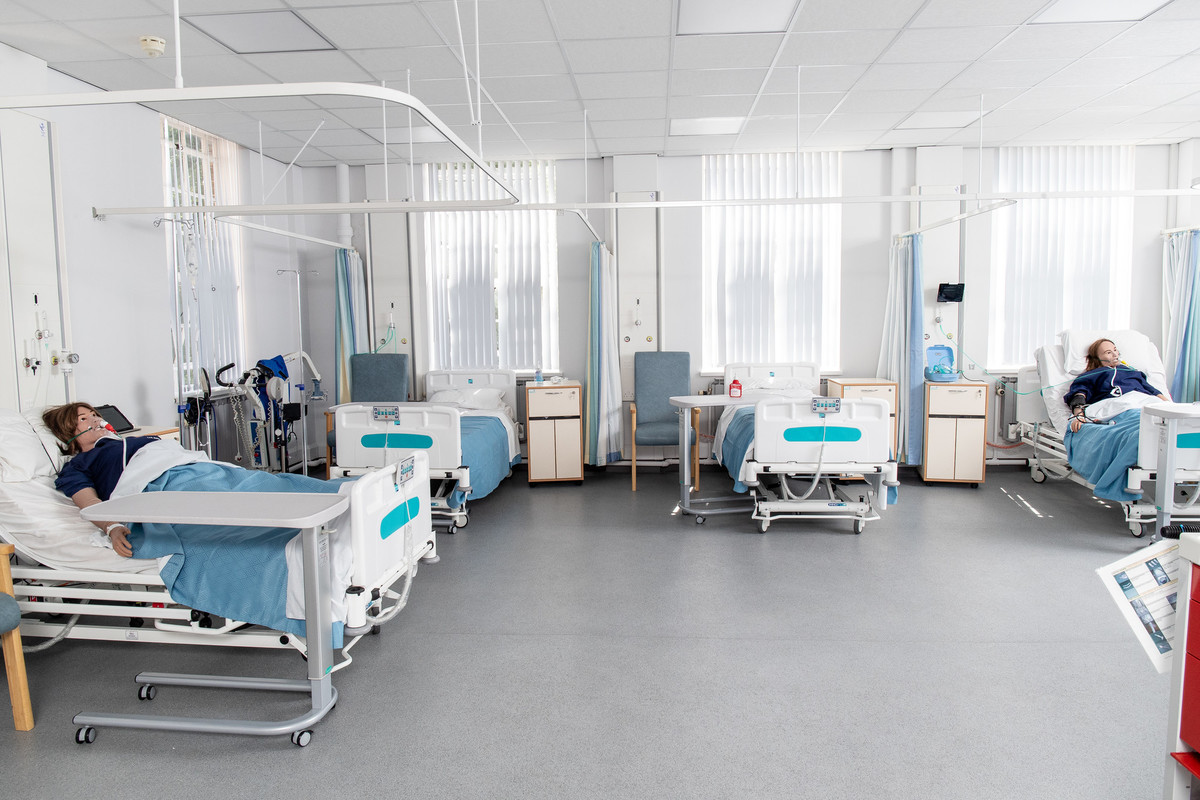
Clinical Skills and Simulation Facilities Tour

Beyond The Classroom

There is an option to undertake a three-week negotiated practice learning experience in the course where students can have the option to explore global healthcare. Many students go to Africa and Asia for these experiences. 

Entry Requirements

GCSE

Maths and English at GCSE C/4 or recognised level 2 equivalent

Honours Degree

2:2 or above

Other Admission Requirements

Evidence of 800 practice hours detailed through a portfolio.

Evidence of 300 theoretical hours detailed through a portfolio.

Prior Work/ Voluntary Experience

800 hours of practical experience

Interview

Situational judgment test

DBS Check

A DBS Check is required

Occupational Health

An Occupational Health check is required

Students from countries outside the UK are expected to have entry qualifications roughly equivalent to UK A Level for undergraduate study and British Bachelor's degree (or equivalent) for postgraduate study. To help you to interpret these equivalents, please select your country/region of residence to see the corresponding entry qualifications, along with information about your local representatives, events, information and contacts.

For more information on our English Language requirements, please visit International Entry Requirements.

IELTS

6.5 (with no less than 6.0 in all other bands)

Honours Degree

2:2 or above

Other Admission Requirements

Evidence of 800 practice hours detailed through a portfolio.

Evidence of 300 theoretical hours detailed through a portfolio.

Prior Work/ Voluntary Experience

800 hours of practical experience

Interview

Situational judgment test

DBS Check

A DBS Check is required

Occupational Health

An Occupational Health check is required

Fees and Funding

£19,070 full course fee (2026/27)

Guides to the fees for students who wish to commence postgraduate courses are available to view on our Postgraduate Fees page. Here you will also find information about part-time fees and project/placement year fees.

£15,000* per year (2026/27)

The tuition fees for international students studying this course in 2026/27 are £15,000* per year.

Irish Nationals living in the UK or ROI are treated as Home students for Tuition Fee Purposes.

For more information about International fees for Postgraduate study, go to our International Fees, Scholarship and Finance section.

Who You’ll Learn From

Dr Tracy Ross

Senior Lecturer
Dr Tracy Ross

Sean Baker

Senior Lecturer
Sean Baker

Enquire about a course