



Hooded figure typing on a computer keyboard with computer code symbols and graphics around the figure

Course Overview

Studying Applied Criminal and Forensic Investigation gives you the specialist skills, investigative mindset and practical experience needed to thrive in a wide range of modern investigative careers.

Within your first year, you build a strong foundation in investigative principles, learning how evidence is gathered, preserved and assessed in line with legislation such as the Police and Criminal Evidence Act 1984 (PACE). You will explore traditional and digital forensics, safeguarding, public protection, and offender behaviour, helping you understand how investigations unfold within a multi‑agency environment.

In your second year, you deepen your expertise in digital crime, forensic techniques and investigative strategy. You develop your ability to think critically, ethically and strategically while strengthening your academic skills in writing, research, teamwork and communication. You also benefit from specialist facilities, including the Crime Scene House, Virtual Reality Suite and Hydra Immersive Teaching Suite, where you apply theory to realistic scenarios.

In Anatomy of a Crime, you follow a full case from initial report to conclusion, developing witness, forensic, digital and intelligence strategies while applying the nationally recognised PEACE interviewing model. Industry speakers, expert practitioners and staff from the Institute of Policing ensure your learning is rooted in real investigative practice.

In your final year before graduation, you will continue developing skills in investigating Digital Crime and understanding Safeguarding and Management of Offenders. Importantly, you will learn how to manage people and the global nature of Investigations. Finally, you will complete a research project dissertation on a subject of your choice relevant to the field of study.

By the end of the course, you will have gained practical investigative experience, strong forensic and digital skills, and the critical mindset needed for roles across policing, regulatory bodies and private‑sector investigation units. You graduate as an ethical, capable and well‑rounded investigator ready for the demands of contemporary practice.

*Subject to Approval


Why You'll Love It

What You'll Study

This module introduces students to the key principles and structures of the English Legal System including contemporary debates relevant to the study of law and criminal justice. Criminological theories are explored and crime is analysed from a sociological perspective.

Indicative content:

  • Understanding the evolution of the law and legal concepts 
  • Principles and basic structure of the English Legal System
  • Sources of Law
  • Introduction to civil and criminal law and the court system
  • Key legal personnel and institutions 
  • Tort and law of negligence
  • Case studies on crime and punishment
  • Academic discipline of criminology and its scope
  • The social impact of crime 
  • Crime as a product of social inequality
  • Defining and measuring crime
  • Criminological theories of crime 
  • Investigate miscarriages of justice 
  • Learning to use and navigate a range of digital spaces specific to your subject
  • Understanding academic conduct and conventions for communicating information

The module introduces students to a range of social issues that are of concern across the social sciences, including for sociological, psychological, criminological and legal studies, as well as for people-focussed professional courses. It also encourages students to analyse the wider social and historical contexts for various public policy, legal and criminal justice scenarios, cases and debates. Additionally, the module provides students with support to advance their academic communication and to expand their research into subject-specific literatures.

Indicative content:

  • Social scientific subjects and subject lenses, including sociological criminological, psychological, legal and professional perspectives on the social world
  • Introductory ideas and concepts including society, socialisation and social structures  
  • Introducing and applying social psychological ideas and theories to social issues
  • Introducing ideas and debates surrounding youth studies, youth crime, and youth justice, including knife crime analysis
  • Theory and debates surrounding generational categories (such as generations X, Y, Z and Alpha) 
  • Digitalisation of society and digital ‘zeitgeist’ debates (such as selfie culture and ‘brain rot’)
  • Consumerism, young people and identities
  • Equality, inequality and intersectionality: class, age, gender, ‘race’, sexuality, disability
  • Tackling inequalities, promoting equalities, power and social change
  • Introducing and applying critical social science to issues of class, gender and 'race' , including Marxist, feminist, and critical race theory
  • Riots, uprisings and collective violence
  • Sex work, legal frameworks and sex trafficking
  • Criminal justice debates including prison reform, the role and impact of Victim Offender Mediation (VOM) initiatives, ‘defunding the police’ campaigns, and the representation of crime in the media
  • Public policy, legal, and criminal justice scenarios and cases  
  • Advancing digital and academic skills introduced during Term 1
  • Developing research and information literacy in relation to your subject
  • Creating an academic poster on a chosen research paper
  • Field visit
  • Local case study

This module explores the principles and practices of leadership, coaching, and change management within diverse professional contexts, including education, social work, sports management, policing, and business. Students will build self-awareness, develop coaching and leadership skills, and learn how to manage individual, team, and organizational change effectively. By combining theory with practical application, the module prepares students to navigate real-world challenges in their chosen fields.

Module Content:

  • Self-Awareness and Leadership Development:
    • Identifying personal leadership styles and growth areas.
    • Reflecting on the role of self-awareness in influencing others.
  • Building Professional Relationships:
    • Techniques for effective communication and boundary setting.
    • Coaching and mentoring for individual development.
  • Understanding Group Dynamics:
    • Strategies for managing team change and fostering collaboration.
    • Addressing conflict and building resilience in groups.
  • Leading Organizational Change:
    • Influencing culture and driving sustained change.
    • Ethical considerations and professional boundaries in leadership.

The information listed in this section is an overview of the academic content of the course that will take the form of either core or option modules and should be used as a guide. We review the content of our courses regularly, making changes where necessary to improve your experience and graduate prospects. If during a review process, course content is significantly changed, we will contact you to notify you of these changes if you receive an offer from us.

Core Modules

This module equips you with the essential ethical, professional, and analytical foundations that underpin effective investigative practice across the criminal justice sector and related industries. You will gain a clear understanding of how investigations are structured, the academic skills required to communicate your findings, and the importance of ethics, equality, diversity, fairness, and human rights in shaping investigative decisions. By the end of this module, you will be able to apply critical thinking and academic research skills to ethically grounded investigations while developing the investigative mindset needed for your future career.

This module introduces the concept of gathering of intelligence and information in respect of investigations, whilst recognising the importance of data protection legislation and the rights of an individual. You will receive comprehensive instruction on how intelligence plays an integral part in effective investigations through tactical and strategic decision-making, problem solving and the importance of the correct handling, sharing, dissemination, storage, and retention of sensitive information. 

This module introduces the concept of forensic evidence, which underpins modern investigative practice, and your ability to collect, preserve, and interpret that evidence ethically and lawfully which is essential to professional standards across the criminal justice sector.

You will explore how forensic opportunities shape investigations, gain hands‑on experience at crime scenes, and develop the investigative mindset needed to recognise, evaluate, and manage evidence in line with national policies and best practice.

Optional Modules

This module examines the traditional forensic disciplines, for example fingerprints and DNA trace evidence, which play a crucial role in criminal investigations.


Optional Language Modules

This module is designed for students that have completed an A-Level or equivalent in Spanish. You will further develop your grammar, vocabulary and expression and apply these to real world situations. You will work with written and recorded texts on a range of cultural, personal and social topics and will develop oral and written communication skills at Post-A level.

This module is designed for students who have completed GCSE or equivalent in French. You will further develop your grammar, vocabulary and learning conventions for spelling and pronunciation. You will work with written and recorded texts on a range of cultural, personal and social topics and will develop oral and written communication skills at an intermediate level.

This module is designed for students that have completed GCSE or equivalent in Spanish. You will further develop your grammar, vocabulary and learning conventions for spelling and pronunciation. You will work with written and recorded texts on a range of cultural, personal and social topics and will develop oral and written communication skills at an intermediate level.

This module is designed for students who have completed GCSE in Chinese or equivalent. You will further develop your grammar, vocabulary and learning conventions for spelling and pronunciation. You will work with written and recorded texts on a range of cultural, personal and social topics and will develop oral and written communication skills at an intermediate level.

This module enables students with A-Level German or equivalent to further develop their grammar, vocabulary and expression and apply these to real world situations.You will work with written and recorded texts on a range of cultural, personal and social topics and will develop your oral and written communication skills at Post-A level.

This module is designed for students that have completed A-Level or equivalent in French. You will further develop your grammar, vocabulary and expression and apply these to real world situations. You will work with written and recorded texts on a range of cultural, personal and social topics and will develop your oral and written communication skills at Post-A level.

This module provides the opportunity to study a new language from scratch and introduces you to basic grammar, vocabulary and cultural contexts. You will apply the language to practical situations using both oral and written skills. 

The information listed in this section is an overview of the academic content of the course that will take the form of either core or option modules and should be used as a guide. We review the content of our courses regularly, making changes where necessary to improve your experience and graduate prospects. If during a review process, course content is significantly changed, we will contact you to notify you of these changes if you receive an offer from us.

Core Modules

This module introduces you to theoretical and practical approaches to criminality and sociology. You will examine the relationship between victims and those who commit crime. Additionally, you will learn how to critically apply these fundamental underlying theories for sociological, historical, psychological, criminal, and cultural perspectives, studying the real world impact of crime and punishment and how societies respond to such offending.

This module emphasis collaboration with other organisations Multi Agency Public Protection Arrangements (MAPPA) and global collaboration across many government NGO's and commercial bodies.

In the private sector this will include internal investigations, misconduct and disciplinary procedures.

This module continues to develop your investigative mindset developing an understanding of collaborative working and how this can be effectively used in investigations.

The purpose of this module is to provide you with the knowledge and critical understanding of how investigative practice may be delivered in the future development in the digital world and how to protect your organisation from these emerging threats.

This an incredibly important and exciting area of work.

  • You dive into the future of investigation, learning how developing technology shapes the way you solve cases. Emerging technologies are at the cutting edge of investigations that have not yet reached the mainstream digital crime arena.
  • You build problem‑solving skills to identify both opportunities and limits in new technologies.
  • You learn to apply the principles of evidence‑based investigation, making sure everything you gather is accurate and usable.
  • You explore AI, biometrics, facial recognition, vehicle telematics, drones, chat companions, the metaverse and many other new developments, and how they are used by suspects and how the traces left by these technologies can be used as evidence.
  • You gain insight into how investigators and researchers create new tools and methods.
  • You learn to preserve digital evidence and manage digital crime scenes like a professional recognising investigative opportunities and preserving evidence for further investigation.
  • This module lays strong ground work for the IP 6107 Crime in the Digital World which deals with the current threats in the digital environment and how this impacts upon the vulnerable in society and economic wellbeing.  
  • You finish with a strong investigative mindset built for a technology‑driven world.

Having a critical understanding of emerging technologies is essential to the development of the investigative mindset.

Optional Modules

This module provides a structured, university-level work placement for 4, 5 or 7 weeks as one continuous block / period with a placement provider (i.e. a local employer from the private, public, or charitable sector). It is designed to enhance your professional skills in a real-world job setting.  

The placement can either be organised by you or with support from university staff.  

All work placements within this module must be university-level; this means:  

  • Undertaking high-skilled work commensurate with level 5 study (e.g. report writing, attending meetings, delivering presentations, producing spreadsheets, writing content on webpages, social media, marketing services/products etc)  
  • Physically placed (albeit part of it can be hybrid) within an employer setting in one continuous block / period for 4, 5 or 7 weeks for a minimum of 140-147 hours over the course of the entire work placement 
  • Where applicable, your existing part-time employer can be approached/used as the placement provider, if the high-skilled work criterion above is fulfilled for the full duration of the placement.   
  • All quality assurances/agreements provided by the University are adhered to, by you and the employer.  

The work placement context may not necessarily, reflect your degree discipline per se, but rather, it will give you an enriched experience to enhance your professional skills in a real-world job setting. 

This module builds an investigation from start to finish allowing you to apply learning in a safe teaching environment and to develop employability skills as criminal investigators. The intention is for you to investigate a reported crime from initial report, up to presenting the developed case as evidence at court, bringing together the knowledge you have gained relating to critical thinking, informed decision making, communication skills, presentation skills, and public speaking.

You will both work as a team and individually through the course of this module as you gather evidence professionally and ethically to ultimately prove the case in the moot court (practice court).

This investigative journey will include an immersive digital experience, where you will receive the initial report of the crime, create a hypothesis of the cause and develop intelligence to identify a suspect. It will include practical visits to our crime scene house, taking witness statements, and planning and executing a search warrant leading to your arrest of the suspect. This will be followed by practical hands-on learning where you will interview the suspect and conclude with the preparation and presentation of your gathered evidence at a Moot Court.

Throughout this process you will be guided step by step by experienced investigators developing your investigative mindset. There are additional opportunities to visit and observe the Crown Court in action at Chester and to visit the Forensics laboratory at Cheshire Constabulary.

Whilst conducting your own investigation you will be preparing your case file ready for the time you present it as evidence in the moot court. This will allow students to apply learning and develop skills of investigation, teamworking, public speaking and communication skills in a safe supportive learning environment.

Optional Language Modules

The module will provide the opportunity to further develop your language skills, building on your previous learning at intermediate level. The first half of the module includes intensive taught sessions in interactive workshop mode which will prepare you for placements abroad or self-directed language development. The second half of the module includes an placement abroad or, alternatively, a project on a business or tourism issue in a target language country. Students of more than one language may take one language in the first half of the module and spend their time abroad developing a different language. 

The module will provide the opportunity to further develop your language skills, building on your previous learning at advanced level. The second half of the module includes a placement abroad or, alternatively, a project on a sustainability issue in a target language country. The first half of the module will prepare you for placements abroad where appropriate as well as a deeper understanding of sustainability in target language contexts. Students of more than one language may take one language in the first half of the module and spend their time abroad developing a different language. 

The module will provide the opportunity to further develop your language skills, building on your previous learning at beginner level. The first half of the module includes intensive taught sessions in interactive workshop mode which will prepare you for placements abroad or self-directed language development. The second half of the module includes a placement abroad or, alternatively, a project on a cultural issue in a target language country. Students of more than one language may take one language in the first half of the module and spend their time abroad developing a different language. 

  • The multiple facets of global citizenship
  • Ethical engagement and practice
  • The United Nations Sustainable Development Goals
  • Cross-cultural issues and sensitivity
  • Intercultural communication
  • Culture shock
  • Cultural adjustment
  • Self- assessment of needs: identification of the range of transferable skills, competencies and attitudes employees need and employers expect graduates to possess-with a strong focus on understanding the intercultural competencies (ICC) needed to live and work abroad.
  • Critical analysis/evaluation of individual requirements in relation to culture/cultural adjustment/culture shock/visas/medical.
  • Critical analysis/evaluation of skills already acquired in relation to key skills related to ICC.
  • Devising strategies to improve one’s own prospects of working abroad in the future.
  • Devising an action plan to address gaps in transferable skills based on organisational analysis and sector opportunities.

Part A:      

Preparation for Experiential Overseas Learning will take place at the University of Chester during level 5 and will include:  

  • The multiple facets of Global citizenship
  • Ethical engagement and practice
  • Cross-cultural issues and sensitivity
  • Intercultural communication

Theories, models and strategies of learning

  • Theories and models Intercultural competence
  • Theories and models of Integration and Multiculturalism
  • Critical thinking skills and models of Reflection
  • Experiential learning models
  • Self-directed experiential learning

Personal and placement-related skills

  • Enhanced independence
  • Improved command of multicultural behaviour
  • Increased knowledge and confidence in their individual facets of personal identity
  • Effective time management and organisational skills
  • Project management – working away from University and independent study
  • Self-management and personal development
  • Team building and team work

Part B:            Overseas

Students will engage in experiential learning activities overseas for at least 150 hours 

The information listed in this section is an overview of the academic content of the course that will take the form of either core or option modules and should be used as a guide. We review the content of our courses regularly, making changes where necessary to improve your experience and graduate prospects. If during a review process, course content is significantly changed, we will contact you to notify you of these changes if you receive an offer from us.

Core Modules

In this module, you build on everything you’ve learned so far to understand how digital investigations are conducted and how as investigator you can preserve this evidence effectively. You learn how digital evidence (data from phones, computers, or online activity) will enable you to investigate what happened in an investigation.

You’re shown, in an easy‑to‑understand way, how to research, identify, and track suspects online, and how to collect evidence from various digital sources, from devices, communications data, or cloud storage investigations and many others. You will be able to critically evaluate these sources and their value as evidence. 

You will learn how to trace suspects via their IP addresses and how this relates to almost every online activity. You will receive hands on teaching in the PC Lab on how to research and identify the evidence needed for you to support your investigation. You will also learn about the laws, national policies, and specialist teams that will support these digital investigations. 


This module will bring together all you previous learning on this course and introduce you to the concept of managing complex investigations. As crime has become globalised it is important to understand that the reach of offending behaviour is not restricted by borders, but has a global impact. 

This module explores the need to recognise the global reach of offending activity along with the need to collaborate effectively with other organisations and countries, recognising the diverse evidential needs of various other legal systems, and the demands of multi-national commercial organisations with offices in numerous regions worldwide.

Many such enquires are complex by their very nature and need to be effectively managed. This module will provide you with the knowledge to develop and critically evaluate your own performance in managing these investigations, and leading teams of investigators in highly dynamic environments. You you will be able to critically express underlying key theories in relation to leadership and management skills, evaluating how those skills can be applied to investigation leadership nationally and globally.

This module builds upon previous modules developing the investigative mindset, particularly relating to research methods, ongoing development of academic skills, and evidence based investigations. This provides you with an opportunity to carry out an in-depth study of a topic, major project or issue based in, or closely allied to, law enforcement by independent study. The module will continue to develop your investigative skills in the role of research. You will examine some of the main theories and methodologies used in social science and develop and critically evaluate the application of these theories and methodologies as they relate to research practice.

You will then develop your ability clearly define a problem for research or area for further study. You will develop the ability to extract relevant material from an in depth literature review using primary and secondary sources and to design and undertake an original investigation using acceptable research methodologies. Finally, you will critically analyse and interpret the results of your research, to present a coherent and critical account of the work developing time management skills and achieving a measure of independence, demonstrating proficiency in academic writing/referencing.

This will assist you to demonstrate your learned skills of critical thinking, informed decision making communication skills all very important skills to those who wish to become an effective investigator.

The information listed in this section is an overview of the academic content of the course that will take the form of either core or option modules and should be used as a guide. We review the content of our courses regularly, making changes where necessary to improve your experience and graduate prospects. If during a review process, course content is significantly changed, we will contact you to notify you of these changes if you receive an offer from us.

How You'll Learn

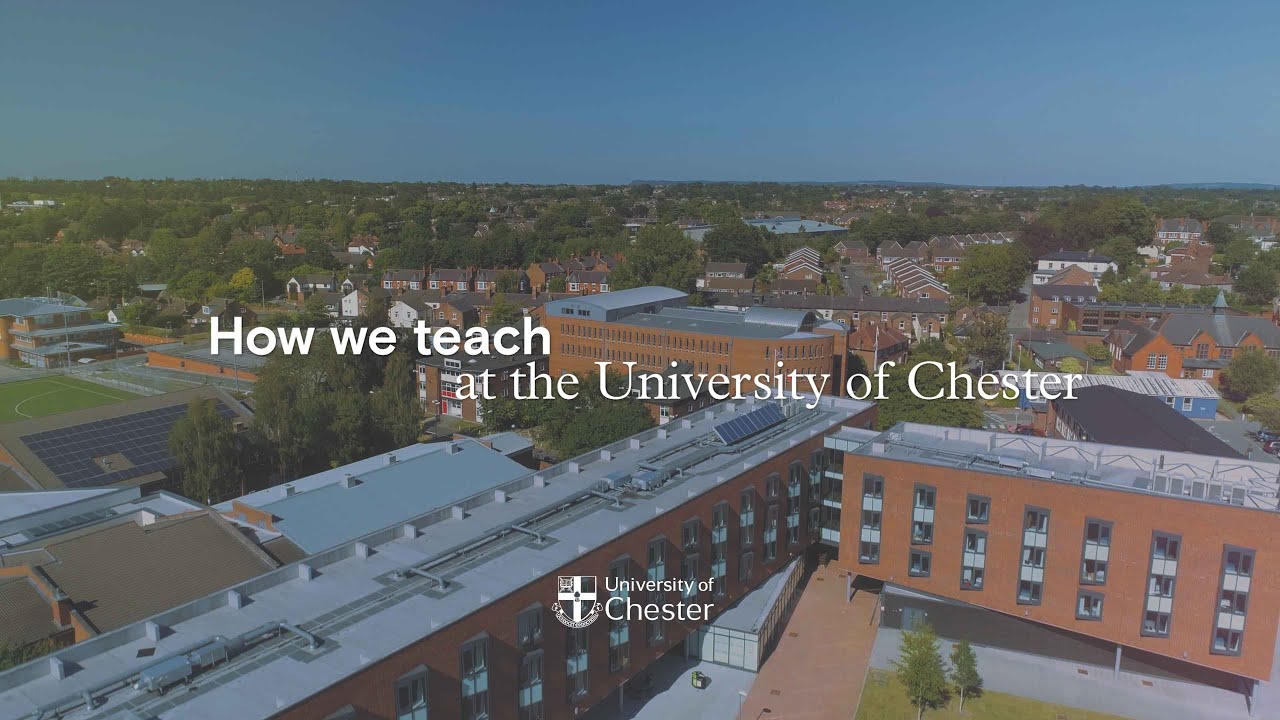
An aerial photograph of Exton Park with the text 'How we teach at the University of Chester'

How we teach at the University of Chester

Studied over three years full-time, the course is split into modules, each designed to provide step-by-step learning, giving you the skills required to become an investigator. There is a focus within this course on responding in a non-technical way to Cybercrime, Digital Investigations, and their impact upon society, developing an understanding of the evidence available from digital and forensic sources.

Teaching is without assuming any science or computer science background, teaching is through face-to-face lectures, seminars, workshops, presentations, and role play scenarios, which will be supplemented by self-learning and private study. The lecturing staff are experts within their fields, mostly former police officers who have extensive practical experience in their specialities.’

Modular in structure, this course contains three 40-credit modules each year. Each with 80 hours of face-to-face teaching over 10-week terms, with 320 hours of self-directed study. Assessments per module will vary, but will include a podcast, an academic poster, essays and other academic submissions, for example, a decision policy file.

You will be supported with various teaching methods used on this course, including live in-person classroom learning, independent study, in-person small group activities, experiential practical learning and problem-based learning. The 40-credit modules are designed to use role-play activities together with specialist facilities such as the Hydra Immersive Suite and Crime Scene House to provide you with authentic activities and assessments relevant to the role of an investigator.

Your academic journey through this degree course will provide you with many opportunities to apply your newfound skills in a practical, supportive environment, allowing you to develop the necessary skills to become an investigator.

All teaching is delivered by experienced academics and practitioners, with the fundamental principles of the Chester Future Skills Curriculum at its core – building your subject competence, confidence, and key transferable skills to shape you into a world-ready Chester graduate.

Your Future Career

Job Prospects

The Applied Criminal and Forensic Investigation BSc Hons is an exciting opportunity for those of you who want to become a criminal investigator. This could involve working in public or private sectors, or regulatory services such as:

  • Police Force
  • National Crime Agency
  • Border Force
  • Health and Safety Executive
  • Department of Work and Pensions
  • Banks
  • Insurance agencies
  • Internal investigations in commercial organisations

Employment opportunities offered by the completion of this degree are many and incredibly varied.

Progression Options

Upon graduation, you can progress to a Master's Degree at the University of Chester on the Policing Law Enforcement and Security MSc, Advanced Cyber Security MSc or Applied Artificial Intelligence MSc.  The skills learned in this course are very transferable to many fields.

Careers Service

The University has an award-winning Careers and Employability service which provides a variety of employability-enhancing experiences; through the curriculum, through employer contact, tailored group sessions, individual information, advice and guidance.

Careers and Employability aims to deliver a service which is inclusive, impartial, welcoming, informed and tailored to your personal goals and aspirations, to enable you to develop as an individual and contribute to the business and community in which you will live and work.

We are here to help you plan your future, make the most of your time at University and to enhance your employability. We provide access to part-time jobs, extracurricular employability-enhancing workshops and offer practical one-to-one help with career planning, including help with CVs, applications and mock interviews. We also deliver group sessions on career planning within each course and we have a wide range of extensive information covering graduate jobs and postgraduate study.

Entry Requirements

112 UCAS points

UCAS Points

112

GCE A Level

Typical offer – CCC-BCC

BTEC

DMM

International Baccalaureate

26

Irish/Scottish Highers

H3 H3 H3 H4 H4

Scottish Highers - BBBB

Access requirements

To include 45 credits at level 3, of which 30 must be at Merit or above

T Level

Pass (C or above on the core)

OCR Cambridge Technicals

OCR Extended Diploma: DMM

Extra Requirements

Welsh Baccalaureate Advanced and A Level General Studies will be recognised in our offer. We will also consider a combination of A Levels and BTECs/OCRs.

Students from outside the UK are expected to hold qualifications broadly equivalent to UK standards - typically A Level for undergraduate study.

To help you interpret these equivalents, please select your country/region of residence. This will provide details on equivalent entry requirements, as well as information about local representatives, events, and key contacts.

We accept a wide range of qualifications and assess all applications on an individual basis. Relevant work experience may also be taken into consideration where appropriate.

For more information on English entry requirements, including accepted qualifications, please visit International Entry Requirements.

English Language Requirements

IELTS

6.0 (minimum 5.5 in each band)

72 UCAS points

UCAS Points

72

GCE A Level

72 points overall, including grade D in A level

BTEC

MMP

International Baccalaureate

24

Irish/Scottish Highers

H4 H4 H4 H4 H4

Scottish Highers - CCDD

Access requirements

Pass overall

T Level

Pass (C or above on the core)

OCR Cambridge Technicals

MMP

Extra Requirements

Welsh Baccalaureate Advanced and A Level General Studies will be recognised in our offer. We will also consider a combination of A Levels and BTECs/OCRs.

Fees and Funding

£9,790 per year for a full-time course (2026/27)

The full-time tuition fees for Home students entering in 2026/27 are £9,790 a year, or £1,590 per 20-credit module for part-time study.

You can find more information about undergraduate fees on our Fees and Finance pages.

Students from the UK, Isle of Man, Guernsey, Jersey and the Republic of Ireland are treated as Home students for tuition fee purposes.

Students from countries in the European Economic Area and the EU will pay International Tuition Fees.

Students who have been granted Settled Status may be eligible for Home Fee Status and if eligible will be able to apply for Tuition Fee Loans and Maintenance Loans.

Students who have been granted Pre-settled Status may be eligible for Home Fee Status and if eligible will be able to apply for Tuition Fee Loans.

£14,950 per year for a full-time course* (2026/27)

The tuition fees for international students studying courses in 2026/27 are £14,950 per year for a full-time course. This fee is set for each year of study.

For courses with a Foundation Year, the tuition fees for Year 1 are £11,250 and £14,950 for Years 2-4 in 2026/27.

The University of Chester offers generous international and merit-based scholarships, providing a significant reduction to the published headline tuition fee. You will automatically be considered for these scholarships when your application is reviewed, and any award given will be stated on your offer letter.

For more information, go to our International Fees, Scholarship and Finance section.

Irish Nationals living in the UK or ROI are treated as Home students for Tuition Fee Purposes. 

Tuition fees for Home students for the Foundation Year in 2026/27 will be £5,760 (subject to Parliamentary approval) for the first foundation year of a four-year course. Tuition fees for subsequent years will be charged at the standard undergraduate tuition fee rate for that academic year. Standard undergraduate tuition fees for Home students for the academic year 2027/28 will be £10,050 for full-time students and £7,530 for part-time students (subject to Parliamentary approval). Fees for subsequent years may be subject to increase in line with the Government fee cap

  Foundation (First) Year Second Year onwards per year
Home Students £5,760 full-time fee for the first foundation year (2026/27) £10,050 full-time fee per year from the second year onwards (2027/28)
International Students * £11,250 full-time fee for the first foundation year (2026/27) £14,950 full-time fee per year from the second year onwards (2026/27)

* For courses which accept applications from International Students

Who You'll Learn From

Chris Lewis

Subject Lead - Policing
Chris Lewis

Mike Parsons

Senior Lecturer
Mike Parsons

Guy Hindle

Senior Lecturer
Guy Hindle

Dr Stephanie Worrell

Senior Lecturer
Steph Worrell

David Metcalfe

Senior Lecturer
David Metcalfe