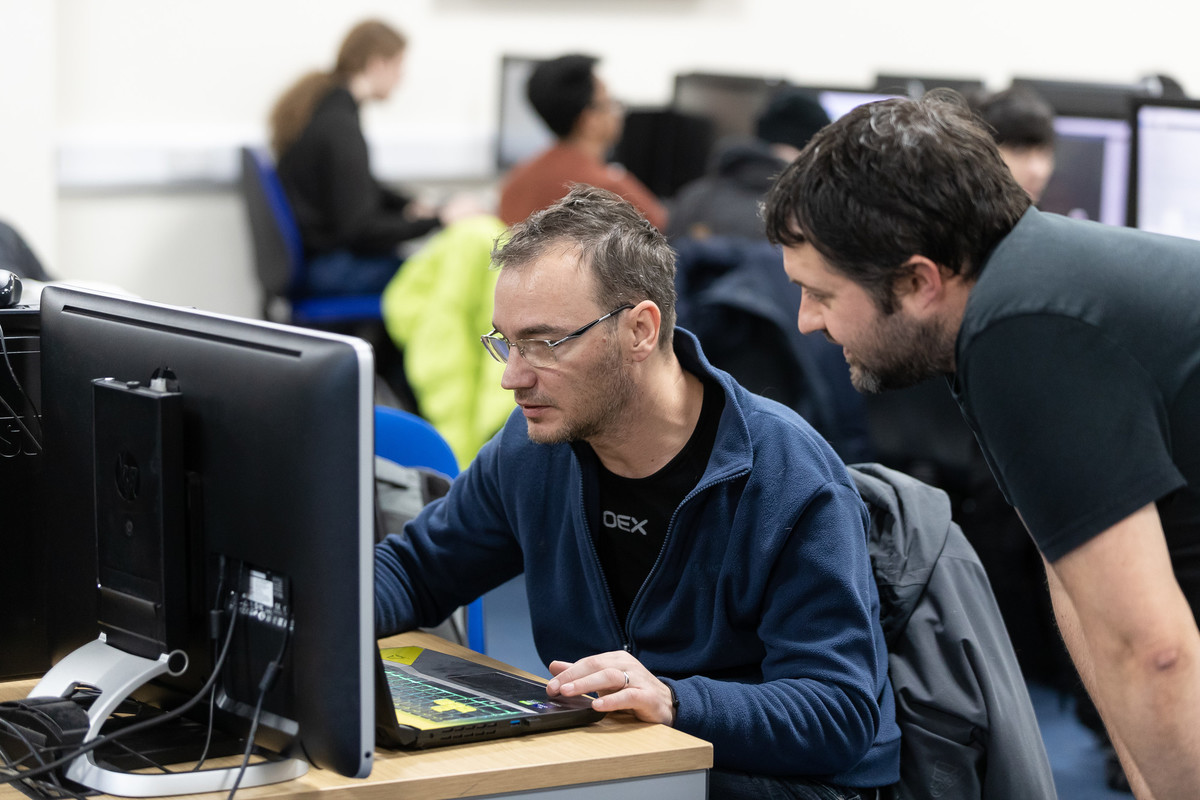

Two people at a computer

This Master’s by Research offers a unique opportunity to immerse yourself in a substantial, independent research project within the biological, physical, computing, mathematical or engineering sciences. Designed for those considering a future in research or specialist scientific careers, the course enables you to develop advanced research skills through professional experience in laboratories, fieldwork and/or computational modelling.

You will explore a research topic within your chosen discipline, working at the forefront of current scientific developments. Supported by an experienced supervisory team, you’ll build the specialist knowledge and practical expertise necessary to pursue your chosen career path. As part of the School of Natural Sciences' proactive, diverse and inclusive research community, you’ll benefit from a collaborative environment that encourages peer learning and interdisciplinary engagement.

All research projects are shaped by our expert academic staff to reflect current industrial and societal priorities, ensuring you graduate with skills that are highly valued by employers. Our research has a strong focus on areas such as sustainability and the environment, health and wellbeing, and culture and society.

Alongside your research, you will complete a taught research methods module and select a further postgraduate option aligned with your project. Over the course of the year, you’ll focus primarily on your research, culminating in the submission of a written thesis that demonstrates your ability to conduct rigorous, independent scientific inquiry.

International Applicants

The University is not currently accepting international MRes applications

Stem Research Projects

Prospective students who have a research topic they wish to pursue as their MRes project should use the search function to find relevant information.


Why You'll Love It

What You'll Study

In addition to the core module, you will also choose Research and Analytical Skills, Research Methods and ICT for Mathematics or Research Methods, AND one other option module.

Core Modules

On this module you will be supported in the design and and undertaking of an original research project. You will develop skills in research design, project management and the application of specialist research techniques relevant to your subject area. The research project subject will be agreed with an appropriate supervisor and the research project Module Leader. The agreed research project will be carried out and assessed within this module.

Optional Modules

In this module, you will unlock an advanced understanding of the amazing potential of stem cell research and regenerative medicine to transform clinical conditions. You will explore innovative topics such as cutting-edge cell lines, intricate 3D organoids, dynamic explant cultures, and the incredible diversity of invertebrate models—from vibrant fish to agile amphibians and even birds and mammals!

This module promises theoretical insights and hands-on experiences that will ignite your passion for the field. You will engage with various models (fish, amphibians, avians, mammals), shaping the future of medicine and science and setting the stage for an exciting career or advanced study. Get ready for a journey that will challenge your intellect and fuel your curiosity as you learn to harness the power of stem cells!

In this module, you will embark on a learning journey through the forefront of molecular medicine! You will learn about transformative methodologies like CAR-T therapy, RNA interference (RNAi), CRISPR gene editing, monoclonal antibodies, and small-molecule inhibitors. You will explore fascinating developmental biology and reproductive medicine applications, featuring insightful talks from experts.

Not only will you enhance your knowledge, but you will also develop essential skills in experimental design and critical assessment. Participate in a hands-on CRISPR gRNA design workshop, where you'll sharpen your technical skills and engage in a practical laboratory experience focused on bacterial transformation used within academia and industry. This is not just a course—it's a gateway to the future of medicine! Get ready to be inspired and informed!

In this module, you will learn about developmental processes that are key to the amazing phenomenon of tissue regeneration. Through hands-on laboratory sessions, you will have the thrilling opportunity to work with cutting-edge vertebrate or invertebrate models, delving into the fascinating role of signalling pathways in development and regeneration.

Prepare to be inspired as you learn how insights from human development are paving the way for groundbreaking medical advancements. Engage with experts from the Shrewsbury Assisted Conception Unit, who will share their exciting insights into tissue engineering and fertility treatments, which are impacting people's lives.

You will also unleash your creativity in the Bioreactors workshop, where cutting-edge technology meets innovative thinking in tissue engineering. With a rich mix of workshops, lectures, and hands-on laboratory experiences, you will come away with a profound understanding of developmental processes. Get ready for an adventure that combines science, innovation, and real-world applications!

In this project-based module, you will investigate a gene of interest, unlocking its role within a specific differentiation pathway or regenerative process. You will use a bioinformatics-based approach to assess the conservation of your gene of interest across animals and assess the functional changes of importance. Additionally, you will Identify regulatory elements associated with the gene in your chosen species (e.g. human, mouse, chick, zebrafish, hydra). You will also identify expression patterns during development by assessing online RNA-Seq data.

Your hard work will culminate in a thoughtfully curated portfolio consisting of an introduction and analysis of your data. This is not just an assessment—it's an opportunity to showcase your understanding of genetics and its impact on life! Join us to learn about modelling molecular interactions in a supportive and collaborative environment.

This module aims to develop your understanding of how biotechnology can be employed to help solve key environmental problems. You will be introduced to the principles employed in a biotechnology laboratory as well as in field applications. A focus in this module will be how advances in basic molecular biological research have been central to driving improvements in environmental biotechnology.

Through project-based learning, with considerable opportunities for laboratory work, the module will provide you with the theoretical knowledge and practical laboratory experience in key techniques in molecular biology, with a focus on developing laboratory skills. Techniques explored during laboratory practicals may includet, bioinformatics, DNA extractions, DNA electrophoresis, nucleic acid quantitative and qualitative analysis techniques (eg, PCR), protein preparation and purification.

Through taught classes and project-based learning, you will explore the development and use of biomimicry in biotechnology at the nanoscale. You will gain a thorough understanding in what biomimetics is as a field, and what is required to synthesise and characterise a biomimetic nanoscale surface and predict its efficacy.

In this module you will learn about key areas of forensic techniques used in the investigation of wildlife crime, including methods and procedures used in wildlife crime scene investigation,  the roles and responsibilities of individuals investigating  wildlife crime cases and wildlife crime law and enforcement agencies. You will develop an appreciation of evidence identification, packaging and storage of physical evidence as well as practical experience of wildlife crime scene investigation through simulated small group exercises.

This module will provide you with training in cutting edge conservation research and to allow you to build your experience and expertise in subjects and methods used by conservation professionals. During the course, you will be introduced to a range of ecological approaches that are currently applied to conservation problems. The module explores the importance of landscape patterns of ecological processes as well as cultural, socio-economic and political issues which are an integral part of conservation.

In this module, students will develop their knowledge of the literature within their research area by producing a topical literature review. You will develop your skills in the interpretation and critical analysis of literature in defining the relevance and novelty of your MRes Research Project.

This module will provide you with an introduction to cutting-edge genetic and genomic techniques that are used to inform conservation actions. During the course, learners will be introduced, both theoretically and practically, to the genetic approaches that are currently implemented to inform conservation management actions for species in the wild. You will explore the importance of genetic processes to species survival and how genetic techniques can be used as a tool to answered questions of conservation concern.

In this module you will advance your understanding of the impact that human knowledge, experience and behaviour have on the welfare of the animals that humans interact with. You will explore how different stakeholder groups view the same animal groups and expand your knowledge of welfare threats faced by key animal groups. You will over the course develop communication and argument skills in the field of animal welfare.

Expected topics to be covered include:

Welfare assessment advances and their practical applications from the perspectives of various stakeholders

Legal aspects and public perceptions of various animal groups and their welfare needs and status

Human-animal relationships and their impact on various groups of animals

Critical discussions on definitions of welfare and well-being

Current global threats to animal welfare including disease transmission.

This module will focus on our understanding of wild animal behaviour in a natural environment. This includes the various biotic and abiotic factors influencing behaviour, and in particular how human impacts and climate change are currently driving behavioural changes in wild populations.

Teaching will be research-informed and will cover key areas such as: behavioural plasticity, social learning, epigenetics, social dynamics, conservation behaviour and phylogenetic comparative analyses. The specialist skills of science communication and writing grant applications will also be taught within specific workshops during this module.

The module aims to:

  1. To critically discuss how behavioural ecological principles can be used to solve real-life problems within the fields of conservation and wildlife management.
  2. To develop students' understanding of modern research methods and approaches that can be used to effectively study animal behaviour in wild habitats.
  3. To appreciate how human impacts/climate change can affect wild animal behaviour and how these effects can be mitigated by appropriate strategies.
  4. To develop key communication skills targeting both academic and non-academic audiences.

Numerical Linear Algebra is a cornerstone of scientific computing, with applications spanning data science, artificial intelligence, engineering, physics, and finance. In today's data-driven world, vast amounts of information are generated continuously, whether from our actions online or by real-time scientific experiments. When analytical solutions are impractical and naive computational methods prove inefficient or unstable, how can we extract meaningful insights?

This module provides a rigorous introduction to numerical techniques for solving linear algebra problems efficiently and reliably. You will explore foundational concepts, algorithmic approaches, and real-world applications, and be equipped with essential tools for tackling large-scale computational challenges.

Topics may include:

  • Norms, limits, and condition numbers
  • Errors, accuracy, and floating-point arithmetic
  • Methods for solving linear systems
  • LU and Cholesky decomposition
  • Eigenvalues and eigenvectors
  • QR and Singular Value Decomposition (SVD)
  • Principal Component Analysis (PCA)
  • Least Squares Problems
  • Non-negative Matrix Factorization (NMF) and dimensional reduction techniques
  • Applications in Data Science, Machine Learning, and AI

Ordinary differential equations (ODEs) play a crucial role in modelling many problems in science and engineering.  Despite their significance, finding analytic solutions for these differential equations is often challenging. In this module, we will study the methods for numerically solving ODEs, analysing their behaviour, and gaining practical experience in their application. Our focus will be on first-order ODEs, examining a variety of algorithms such as forward and backward Euler, the family of Runge-Kutta methods, and multistep methods. We will discuss the zero stability, absolute stability, and convergence of the proposed numerical methods. To implement these methods in practice, we will utilise computational ODE solvers in, for example, MATLAB and Python, to address different types of differential equations. Additionally, we will consider the finite difference method for solving the boundary value problems and the heat equation.

  • Concepts of convergence, consistency and zero stability of the numerical methods.
  • Forward Euler method, backward Euler method, Runge-Kutta method
  • Multistep methods
  • Absolute stability
  • Finite difference method for solving boundary value problem
  • Finite different methods for solving heat equation
  • Discussion of examples drawn from: difference equations; non-linear equations; ordinary differential equations; partial differential equations.

Functional analysis is a field with widespread applications throughout applied mathematics and science.  It provides the fundamental underpinnings which allows us to analyse and find approximate solutions for many challenging problems in ordinary and partial differential equations, such as the heat equation, wave equation and various quantum phenomena.

In this module students will discover that the formal notions and techniques developed in analysis can be applied more generally to infinite-dimensional spaces endowed with notions of distance that generalise the properties of Euclidean distance. Throughout the module, students will gain familiarity with the definitions of these more general spaces, including Metric Spaces, Normed Spaces and Inner Product Spaces. We will explore examples where the points in these spaces are functions, sequences or even operators between spaces, rather than vectors of real or complex numbers.

In this module, you will be introduced to scientific research. You will explore various types of research (descriptive, analytical & experimental), including pure versus applied ways of problem-solving. You will learn about the building blocks of scientific research: scientific language, ethical considerations and experimental design. You will also learn how research is funded. You will cover the following topics:

  1. Research and data collection methods with an emphasis on experimental research (developing hypotheses, variables, controls, sample selection, design, validity)
  2. The nature of the knowledge base and how research is communicated.
  3. Advanced literature searching.
  4. Critical appraisal of literature - primary and secondary literature
  5. Developing a research project: identifying a topic area, devising specific questions, discovering what is already known (reviewing the literature), identifying gaps in knowledge, determining feasible ways to answer the questions.
  6. Data analysis for research.

Functional analysis is a field with widespread applications throughout applied mathematics and science.  It provides the fundamental underpinnings which allows us to analyse and find approximate solutions for many challenging problems in ordinary and partial differential equations, such as the heat equation, wave equation and various quantum phenomena.

In this module students will discover that the formal notions and techniques developed in analysis can be applied more generally to infinite-dimensional spaces endowed with notions of distance that generalise the properties of Euclidean distance. Throughout the module, students will gain familiarity with the definitions of these more general spaces, including Metric Spaces, Normed Spaces and Inner Product Spaces. We will explore examples where the points in these spaces are functions, sequences or even operators between spaces, rather than vectors of real or complex numbers.

Stochastic differential equations (SDEs) model evolution of systems affected by randomness. They offer a beautiful and powerful mathematical language in an analogous way to what ordinary differential equations (ODEs) do for deterministic systems. SDEs have found many applications in diverse disciplines such as biology, physics, chemistry and the management of risk. Replacing the classical Newton-Leibnitz calculus with (Ito) stochastic calculus, we are able to build a new and complete theory of existence and uniqueness of solutions to SDEs. Ito's formula proves to be a powerful tool to solve SDEs. This leads to many new and often surprising insights about quantities that evolve under randomness. This module provides the student with the necessary language and methods for investigating applications of and solutions to stochastic differential equations.

  • Review of probability spaces, random variables & stochastic processes.
  • Brownian Motion, Weiner Processes.
  • The Ito stochastic integral & Ito’s formula.
  • Other stochastic integrals.
  • Linear Stochastic Differential Equations & methods of solution.
  • Weak & strong solutions to SDEs.
  • Existence & uniqueness of solutions.
  • Applications – topics may be chosen from, for example, mathematical finance, stochastic control, boundary value problems.
  • Introduction to numerical methods.
  • Markov property.
  • Stopping times, optimal stopping.

Mathematical ecology harnesses advanced models and analytical tools to understand and describe the dynamics of individual species, ranging from the propagation of COVID-19 to the spread of wildfires, as well as the relationships between different species and their environment in ecosystems, for example in predator-prey dynamics and the invasive behaviour of cancer cells. Mathematical ecology can also help us to understand natural patterns, such as the arrangement of leaves on plants and the markings on animal coats, by employing models such as reaction-diffusion systems. So we can finally answer: "How the Leopard got its spots?"

Topics include:

  • Continuous models for a single species; analysis of models using linear stability theory, discrete models and cobwebbing; and discrete logistic growth.
  • Two-dimensional models; introduction to simple phase plane analysis; realistic models for various cases (e.g. predator-prey interactions, predator-prey competition).
  • Bifurcation: how the behaviour of dynamical systems such as ODEs and maps changes when parameters are varied.
  • Mutualism: where two species benefit from their association with each other.
  • Reaction-diffusion problems and biological waves; the Fisher equation; Turing instabilities and diffusion-driven instabilities in two-component systems; generation of patterning by domain geometry; minimal domains for stable pattern formation.

Partial differential equations (PDEs) serve as mathematical models for a wide range of physical, biological, and economic phenomena and are foundational tools across various branches of pure and applied mathematics. In 1822, Fourier provided uniform solutions for significant PDEs, such as the wave and heat equations, along with Laplace's equation. This course will concentrate on these three equations, considering auxiliary initial or boundary conditions.  Throughout the course, we will explore diverse techniques, including separation of variables, Fourier methods, Laplace transform methods, among others, to effectively solve various types of partial differential equations.

  • Mathematical techniques relevant to the solution of PDEs; e.g. Fourier series, Laplace Transforms.
  • Introduction to partial differential equations. First order partial differential equations (linear and quasi-linear). Well-posedness.
  • Linear partial differential operators: characteristic curves and surfaces.
  • Classification of second order partial differential equations. Canonical form and reduction to canonical form.
  • Initial value and boundary value problems.
  • Existence and uniqueness of solutions.
  • Laplace's equation; The Heat equation; The Wave equation; The Diffusion equation.
  • Methods for solving PDEs: e.g. separation of variables, difference methods, transform methods, Fourier's method, Green's functions.
  • Applications of partial differential equations.
  • Systems of first-order partial differential equations.
  • An introduction to the numerical solution of PDEs.

This module facilitates the study of biological processes and their ability to produce adaptive, dynamic solutions to complex problems. The focus is on naturally occurring systems capable of producing emergent phenomena based on simple rules of interaction between entities and their environment. Techniques such as evolutionary computing, swarm intelligence, cellular automata and neural networks are viewed as digital realisations of these natural processes. The related topics of iterated functions, chaos, complexity and fractals are introduced to motivate the application of such techniques in the computing discipline.

The databases and security module involves the development of databases and their querying through the use of SQL. Databases will be discussed both theoretically and in practice. Students will have opportunities to develop and practice database creation and development. Database security will be discussed and shown how to apply in practice.

This module provides an in-depth exploration of penetration testing, active defence, digital forensics, and incident response to provide a comprehensive approach to organizational security. Students will explore the methodologies attackers use to exploit systems and the tools and techniques which ethical hackers/penetration testers use to identify threats, the module also seeks to investigate and respond to security incidents. Emphasizing practical skills, this module covers penetration testing, active defence strategies, anti- and counter-forensics, malware analysis, and cyber threat intelligence. Through the coverage of these key concepts, the module enables students to understand key security vulnerabilities, allows threats to be thoroughly understood and enables students to recognise key security challenges enabling them to propose and design secure systems to respond to cyber threats.

This module investigates tools and techniques to extract, transform and load (ETL) data for further analyses or analytical processing (OLAP). Students will be guided step-by-step through the ETL process using Python, API's and SQL to show visualisation and analysis. The module will also discuss the ethical implications of data, data processing, laws and standards. 

This module covers the related topics of computational complexity, optimisation and algorithm design in depth and detail. Learners will become familiar with the concepts and techniques required to classify problems and develop the ability to apply associated algorithmic approaches wherever possible. Some of the most important open questions in computer science will be addressed both from a theoretical and practical context.

This module investigates different types of machine learning algorithms to find patterns in data. Each algorithm will be discussed in theory and practice, discussing: its data pre-processing requirements, pseudo-code, and evaluation metrics, e.g., Dunn index for clustering. Detailed demonstrations will show how to apply these algorithms to data using specified libraries in Python. Students will be required to investigate the merits of each algorithm for various types of data in both theory and practice.

The Robotics module provides an introduction to the foundational principles of robotics, exploring the theoretical aspects that underpin the design, application, and ethical considerations of robotic systems.

You will begin by examining the fundamental question: What is a robot? This includes understanding the diverse applications of robots across industries and their role in society. The module also delves into the ethical implications of robotics, such as their impact on employment, privacy, and safety.

Key technical topics include an overview of mechatronics, which integrates mechanical, electronic, and computer engineering; sensors, which enable robots to perceive their environment; and control systems, which ensure robots can perform tasks accurately and autonomously.

The purpose of this module is to provide a solid foundation in programming for students with a range of academic backgrounds. It provides a solid foundation in computer programming for students from a variety of academic and professional backgrounds. It is designed to equip students with the essential skills to become a proficient coder. From the fundamental building blocks of programming, including a deep dive into object-oriented programming, to advanced concepts, students are guided each step of the way. As part of the learning experience, students will learn how to create efficient and well-structured code that solves real-world problems. By the end of this module, students will have a solid foundation in programming and be equipped to tackle various coding challenges.

The main weakness in systems is often the software they run, including software on devices and networked systems. This module provides learning to students on how to understand, and practice the state-of-the-art technique for gaining entry, i.e. 'exploitation', of software across a variety of systems and platforms.  With this understanding, the student will in parallel study and understand various counter-measures employed in system software against these attacks, the limitations of both the attacks and counter-measures, and counter-counter-measures.  Understanding this cycle will give the student an appreciation of the exploitable vulnerabilities and the need for and way to architect and design a secure system.

Furthermore, the student will gain an understanding of and experience in a number of tools and techniques in order to perform vulnerability and penetration tests on new software.  The module content includes:

  • Software attack techniques, approaches, and methodologies.
  • Exposure to exploitation techniques, including for example, buffer overflow, stack overflow, heap attacks, and UAF (Use After Free), amongst others.
  • Attack methods including system, host, network, and web-based attacks.
  • Tools and techniques; use of existing tools and development of new tools.
  • Software Protection Methods and principles of secure software and system design.

This module is designed to provide students with a hands-on, immersive experience in software development, mirroring the real-world practices of a professional software development studio.

Students will work in teams within the studio to respond to one or more client briefs that require production of a software-based solution by using their technical and soft skills. Student teams will analyse the brief, design and develop tangible solutions, and test their efficacy and suitability. Contemporary, industry-relevant, working practices and digital tools are employed throughout the studio’s journey.

The module introduces the basic concepts of programming for the purpose of statistical analysis. It explores data structures such as lists, dictionaries, and arrays and functions to calculate min, max, mean, and standard deviation.

The mathematical and statistical skills include statistics and probability, multivariate calculus, linear algebra and optimisation methods.

The topics covered include:

Programming Concepts

  • Data structures: lists, dictionaries, arrays.
  • Functions: min, max, mean, standard deviation.
  • Programming logic and debugging.
  • Data visualization: Creating visualizations using tools like matplotlib, ggplot2, and seaborn.
    Big data concepts: Basics of working with large datasets and addressing scalability challenges.

Statistics

  • Descriptive statistics.
  • Probability theory.
  • Inferential statistics.
  • Exploratory data analysis.
  • Probability distributions: Understanding normal, binomial, and Poisson distributions and their applications.
  • Time series analysis: Introduction to time series methods such as moving averages and ARIMA.Linear Algebra

Linear Algebra

  • Vectors and matrices.
  • Eigenvalues and eigenvectors.
  • Linear systems.

Optimisation Methods

  • Unconstrained optimisation.
  • Constrained optimisation.
  • Applications in statistical modelling and machine learning.

There is a huge demand for interactive technologies that satisfy task requirements whilst at the same time being highly usable and accessible. Such demand means that businesses and organisations place great importance on their digital products and services facilitating positive user experiences. This module facilitates the development of advanced and professional knowledge, skills, and behaviours in the field of user-centred design to meet this aim. As such, the module features coverage of the following topics:

  • User-centred design principles and ISO standard 9241-210
  • Information architecture
  • User interface design patterns and practices
  • Design sprint processes and practices
  • Low and high fidelity interactive prototyping
  • Multidisciplinary design activities, problem-solving, and design iteration
  • Advanced usability testing and evaluation
  • Contemporary issues and emerging technologies in user experience

This module provides students with the knowledge and skills required to select and develop appropriate manufacturing processes and systems for components and products while being informed by critically appraised existing and emerging knowledge.

This module is based on the practice of finite element methods with the use of commercial FEA software to provide students more realistic FEA experience in relation to real world practical engineering problems. This module will allow students to gain an understanding of modern concepts of Structural Integrity and Dynamics of engineering components using analytical, numerical and experimental technique with practical examples of using FEA.

Alternative and Renewable Energy Sources
This module aims to develop a comprehensive understanding of the complexities inherent in energy provision and the resultant environmental implications of different energy-sourcing decisions. Particular emphasis is placed on design considerations related to conventional renewable energy systems and strategies for integrating renewable energy technologies into existing electrical power infrastructures.

Sustainability and Energy Systems
In this module, students will examine the future trajectory of energy technologies, enabling them to make informed decisions regarding the generation, conversion, transportation, and utilization of energy. They will also critically evaluate the environmental and socio-economic challenges arising from global energy consumption, and investigate policy frameworks and strategic mechanisms intended to mitigate adverse effects on both ecological and societal systems.

Embedded Systems and Field Programmable Gate Array (FPGA) Technology

  • Concurrent assignment statements and unintended memory
  • Adopting proper hardware description language (HDL) coding style and taking a divide and conquer approach for code development
  • The need for design simplification.
  • Regular sequential circuit block system and registers 
  • Building test-benches for sequential circuits
  • Timing, clocking, operating frequency and clock tree considerations
  • The Finite-state machine (FSM), its representation and FSM HDL code development
  • The Finite-state machine with data path (FSMD), its representation and FSM HDL code development

Internet of Things (IoT)

  • Automatic Identification Technology and Radio-frequency identification (RFID)
  • Wireless Sensor Network
  • Location System
  • Internet and Mobile Internet
  • Wireless Access Technology
  • Big Data, IoT & Cloud Computing
  • Information Security for IoT
  • IoT Application Case Studies
  • Arduino Opla, Espressif System on Chip (SoC) & Raspberry Pi IoT technologies

Power Conversion

  • AC-DC power conversion: thyristor converters, rectification, inversion, HVDC and drive applications, harmonic analysis.
  • DC-AC power conversion: inverter types, managing output waveform distortion, and application in drives, reactive-power compensation and power-flow control.

High-Power Semiconductor Devices

  • Characteristics, performance and application requirements.

Machines and Drives

  • Induction machines: operation as motors and generators; space harmonic effects, and dynamic model.
  • Large synchronous machines; operating characteristics, dynamic model, and introduction to vector control.

Power System Protection

  • The protection overlay: protection and metering transducers. Fuses.
  • Overcurrent protection: relay types, operating characteristics and equations, grading, applications.
  • Differential protection: voltage balance and circulating current schemes, biased characteristics and high impedance schemes. Applications to the protection of transformers, feeders and busbars.
  • Distance protection: basic principle, block average comparator, zones of protection, residual compensation, power swing blocking.
  • Digital protection: relay hardware. digital signal processing in protection relays. Digital distance protection. Digital differential protection.

Simulation

Practical workshops will be provided at the computer to design and simulate electrical systems, including the representation of components.  Students will design, test and evaluate different electrical machines, methods of protection for specified applications.

Control Systems Engineering and Design

  • System Network Diagrams and input/output port types and causality, Functional Analysis, Function Means Trees, Working Principles and the Feedback Servomechanism Principle in detail. Impact of design constraints.
  • Introduction to functional design view of controllers with Tracking, Stabilisation and Prediction (TSP) approaches and the use of Relative Degree in Conceptual Controller Design.
  • Controller Design with Phase and Gain Compensation, Phase Advance, Notch Filtering and Digital Filtering using z-transforms

Multi-input Multi-output (MIMO) State-Space Controller Design Methods

  • Continuous-time MIMO State-space controller design using full and partial state feedback
  • Discrete-time MIMO State-space controller design using full and partial state feedback
  • MIMO Inverse Dynamics in Continuous and Discrete-Time
  • MIMO PI, Pseudo Derivative Feedback (PDF) control and Robust Inverse Dynamics Estimation in state-space and the role of integrator in inverse dynamics
  • MIMO functional TPS algorithms

Nonlinear systems

  • Use of State-Space Design for Nonlinear Control e.g. Variable Structure Control
  • Nonlinear Inverse Dynamics
  • Stability of Nonlinear Inverse Dynamics using Small Perturbation Linearisation with State-Space Modelling.

Intelligent Control and Optimisation

  • Deterministic Methods to design and Tune MIMO linear and nonlinear control algorithms.
  • Stability of Nonlinear Inverse Dynamics using Small Perturbation Linearization with State-Space Modelling.
  • Use of optimisation methods (e.g. gradient-based methods) and nonlinear system modelling and simulation to tune MIMO controllers
  • Introduction to Neural networks and their design for use in MIMO control systems for learning algorithms.
  • Introduction to Machine Learning

This module introduces MSc students to the fundamentals and applications of artificial intelligence, particularly in engineering and real-world problem-solving. It covers key AI techniques, including machine learning algorithms, data-driven decision-making, and their applications in cybersecurity, financial predictions, and multimedia analysis. The module emphasizes both theoretical understanding and hands-on implementation through programming exercises, group projects, and open-source datasets. Ethical and legal considerations in AI are also explored, ensuring responsible application. By the end of the course, students will be equipped to design, implement, and evaluate AI models for a variety of modern use cases.

The module introduces key cyber security concepts and their associated techniques. The modules introduces the analysis of computer programming from a cyber security perspective. The module introduces a variety of different cyber security threats and possible resolutions to them. In addition the module provides a fundamental introduction to implementing secure computing systems.

In this module, you will be introduced to scientific research. You will explore various types of research (descriptive, analytical & experimental), including pure versus applied ways of problem-solving. You will learn about the building blocks of scientific research: scientific language, ethical considerations and experimental design. You will also learn how research is funded. You will cover the following topics:

  1. Research and data collection methods with an emphasis on experimental research (developing hypotheses, variables, controls, sample selection, design, validity)
  2. The nature of the knowledge base and how research is communicated.
  3. Advanced literature searching.
  4. Critical appraisal of literature - primary and secondary literature
  5. Developing a research project: identifying a topic area, devising specific questions, discovering what is already known (reviewing the literature), identifying gaps in knowledge, determining feasible ways to answer the questions.
  6. Data analysis for research.

Programming and computational techniques are all pervasive in today's society: the increasing use of AI techniques, the applications of data science to interrogate and understand all aspects of our lives, communicating with your bank using the next generation of quantum-secure algorithms and using mathematical computer simulations to model real-world phenomena.  As a result, possessing proficient computer and programming skills is indispensable not only in academic and scientific research but also for future-focused business and industry.

This module is designed with dual objectives. Firstly to provide an in-depth introduction to algorithms and the process of translating these into computer programs, using state-of-the-art software tools, for example Python. This will provide you with a solid foundational understanding to tackle any future computational and programming challenges. Secondly, you will develop important research and writing skills. You will learn to use LaTeX, an industry-standard typesetting system for produce professional scientific documents.

  • Introduction to algorithms and how to translate them into computer programs.
  • Introduction to computer programming software, for example Python.
  • Learn about basic programming concepts including algorithms, loops, conditional statements and functions.  Also learn about more advanced scientific functions.
  • Introduction to numerical algorithms from a variety of mathematical areas.
  • Introduction to mathematical and scientific typesetting with LaTeX and associated editors.
  • Incorporating graphs, figures, tables and bibliographic information in reports and articles, using LaTeX.
  • Referencing methodologies in the Mathematical Sciences.
  • Introduction to online search tools and research techniques.
  • Developing scientific communication skills.

An essential skill for postgraduate students is the ability to investigate topics with the objective of identifying facts , theories, ideas, methodologies, etc., that could inform the development of new insight for further research.  A major aspect of this is critical analysis of information. The module aims to develop critical reasoning in students and an understanding of other researchers’ work.  Students will learn how to use current research literature and relevant sources to gain new insight for a new research.  They will learn how to support their research report with relevant facts, theories, ideas, etc.  They will develop their ability to understand approaches and methodologies adopted in existing research toward writing a literature review and handling full research projects in their subject area.

The learning content also includes:

  • Time management, library skills and literature search
  • Evaluation of information sources
  • Ethical issues in science, technology and engineering research (including intellectual property and plagiarism)
  • Writing for research: styles and rules for presentation (including referencing standards)
  • Choosing a research area and evaluating source material
  • Hypothesis formation
  • Design and application of questionnaires & interviews
  • Quantitative and statistical tools for researchers (e.g. R, Python, SPSS)

How You'll Learn

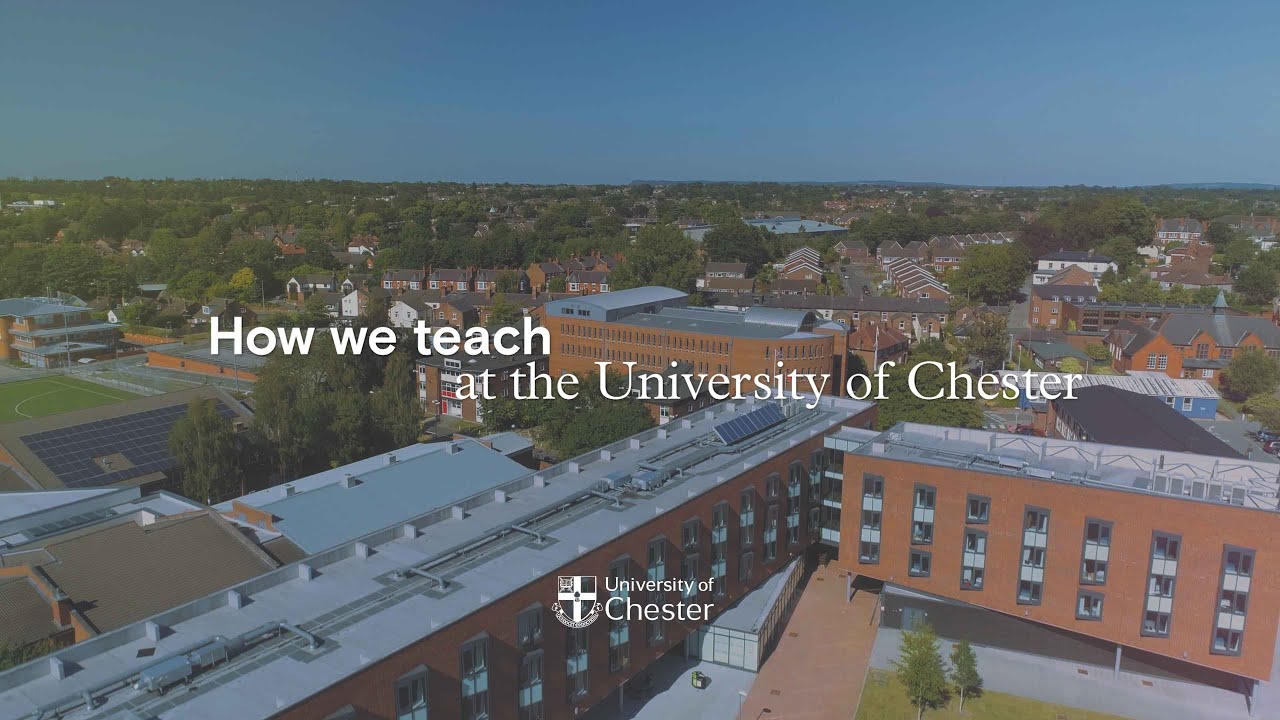
An aerial photograph of Exton Park with the text 'How we teach at the University of Chester'

How we teach at the University of Chester

This course is designed to be research focused, both in terms of the production of an extended hands-on research project, and through research-focused modules. Each year consists of four ten-week terms, with you effectively studying 40 credits per term across your module choices and your project. The course blends in-person and, where applicable, online learning. Here you will learn from a team of experienced academics, and research professionals.

Your learning will be supported through:

  • Engaging Lectures and Interactive Seminars: Knowledge-rich sessions will keep you updated with exciting novel research progress and short in-class group tasks will get you inspired to think like a research scientist.
  • Research-based learning is at the heart of this course, helping provide you with the skills necessary to empower you to become a capable and confident research scientist or engineer, and an expert in your field! Expect to immerse yourself in your project, supported by an expert academic supervisor, and direct your project.
  • Employability Skills: Beyond academic knowledge, this course is designed to equip you with the essential skills that will set you apart in the job market and help you thrive in any workplace or research qualification position. You’ll develop expertise in areas like problem-solving, teamwork, communication, creativity, and self-management. You'll also cultivate a spirit of curiosity, ensuring you're not just prepared for your career, but ready to make a lasting impact in your scientific field.
  • Student Support and Experience: Throughout the course, you will receive continuous support and feedback, and be encouraged to reflect on, learn from, and act on constructive feedback through your module tutors, supervisor, PAT, and the rest of the academic family within the Faculty.

Your Future Career

Careers service

The University has an award-winning Careers and Employability service which provides a variety of employability-enhancing experiences; through the curriculum, through employer contact, tailored group sessions, individual information, advice and guidance.

Careers and Employability aims to deliver a service which is inclusive, impartial, welcoming, informed and tailored to your personal goals and aspirations, to enable you to develop as an individual and contribute to the business and community in which you will live and work.

We are here to help you plan your future, make the most of your time at University and to enhance your employability. We provide access to part-time jobs, extra-curricular employability-enhancing workshops and offer practical one-to-one help with career planning, including help with CVs, applications and mock interviews. We also deliver group sessions on career planning within each course and we have a wide range of extensive information covering graduate jobs and postgraduate study.

Entry Requirements

Applicants should normally possess an upper second class honours degree in any relevant discipline with additional emphasis placed upon the student's preparedness for study and performance at interview which will inform the selection process. A lower second class degree may be mitigated by substantial relevant work experience. 

Decisions concerning the allocation of credit, either for admission or advanced standing, will be the responsibility of a Credit Allocation Panel. Credit value will be given for appropriate certificated or experiential learning completed within the previous five years and through which an applicant can demonstrate prior achievement of learning outcomes related to one or more programme modules. A student seeking advanced standing must apply before enrolment.

Each student will be interviewed as required in all Chester Research Degrees and the Interview record form will be completed and submitted to Postgraduate Research Admissions with the completed application.

Fees and Funding

TBCper year full time (2026/27)

The tuition fees for home students studying the MRes in Applied Science in 2026/27 are TBC.

Your course will involve additional costs not covered by your tuition fees. This may include books, printing, photocopying, educational stationery and related materials, specialist clothing, travel to placements, optional field trips and software. Compulsory field trips are covered by your tuition fees. 

An additional annual bench fee of £3,000 (pro-rata), will usually be added to Home Laboratory based/high-cost subject courses to cover the cost of consumables and specialist materials and equipment. A bench fee may be payable in respect of certain high-cost subjects for other routes. Details of any bench fee will be made clear in the interview and offer of admission. International Lab based courses do not usually attract an additional bench fee as the higher lab-based fee is expected to cover the cost of consumables and specialist materials and equipment.

The University of Chester supports fair access for students who may need additional support through a range of bursaries and scholarships. 

Full details, as well as terms and conditions for all bursaries and scholarships can be found on the Fees and Finance section of our website.

Who You'll Learn From

Dr Simon Hodgson

Senior Lecturer
Dr Simon Hodgson

Enquire about a course