

man with counsellor in office for advice, help or life coaching session

Studying the BA (Hons) Counselling degree prepares you to become a skilled, ethical and register-ready practitioner, equipped with the knowledge and practical experience required for a professional career in counselling. Aligned with British Association for Counselling and Psychotherapy (BACP) accreditation standards, this course ensures you meet recognised industry expectations while developing essential therapeutic skills.

Across four years, you will study counselling theory in depth, develop the personal awareness and reflexive practice that good counselling work depends on, learn to apply your knowledge ethically and skilfully with real clients under supervision, and complete a substantial extended placement in your final year that gives you the breadth of experience needed to begin your career.

The course takes an integrative pluralistic orientation, which means you will learn to draw responsibly and reflectively on more than one therapeutic tradition rather than committing to a single school of practice. This positions you well for the realities of contemporary counselling work, where practitioners are increasingly expected to respond flexibly to clients who present with diverse needs, backgrounds and preferences. You will also engage in detail with the equality, diversity and inclusion dimensions of practice, with online and phone therapy, and with the wider mental health context in which counselling sits.

By the end of the course, you will have completed a minimum of 100 supervised counselling hours, often exceeding this requirement, and gained the confidence, ethical awareness and professional identity needed to pursue a career in counselling. You will graduate ready to join the BACP register and succeed as a reflective, adaptable and employable counselling practitioner.

Studying BA Hons Counselling at the University of Chester: 

  • Provides you with a direct route into professional counselling
  • Is shaped by real-life employer needs
  • Gives you valuable practice training with real people
  • Creates a community of learners to share practice with
  • Prepares you for professional BACP accreditation 

Why You'll Love It

What You'll Study

In your first year, you will be introduced to the essential principles of counselling. You will explore core concepts, key theories and values that underpin the helping process, while beginning to practise your skills with peers. You will also develop your understanding of professional standards, covering areas such as confidentiality, boundaries, informed consent and working with risk, alongside reflective practice. You will also spend time focusing on your growth as a counsellor in training, building self-awareness and learning to critically reflect on your professional relationships to become an informed and reflective practitioner throughout your counselling career.

Indicative Modules

  • The Therapeutic Encounter (40 Credits)
  • Introduction to Theory and Practice of Counselling Skills (40 Credits)
  • Ethical Issues in the Helping Relationship (20 Credits)
  • Personal Development and Reflexivity (20 Credits)

The information listed in this section is an overview of the academic content of the course that will take the form of either core or option modules and should be used as a guide. We review the content of our courses regularly, making changes where necessary to improve your experience and graduate prospects. If during a review process, course content is significantly changed, we will contact you to notify you of these changes if you receive an offer from us.

The information listed in this section is an overview of the academic content of the course that will take the form of either core or option modules and should be used as a guide. We review the content of our courses regularly, making changes where necessary to improve your experience and graduate prospects. If during a review process, course content is significantly changed, we will contact you to notify you of these changes if you receive an offer from us.

In your second year, you will build strong theoretical and practical foundations. You will explore key counselling approaches, develop an understanding of person-centred, psychodynamic, and cognitive behavioural theories, and how these can be integrated in practice. Through Counselling Skills in Practice, you will begin to develop core helping skills and work with peers to apply techniques in structured sessions. You will also deepen your awareness of issues people experience throughout their lifespan, exploring themes such as loss, attachment, trauma, anger and shame. Alongside this, Experiential Learning prepares you for placement by developing your readiness, professional awareness and reflective practice.

Indicative Modules

  • Modality in Depth: Integrative Pluralism in Practice (40 credits)
  • Counselling Skills in Practice (20 credits)
  • Working with Client Issues in Counselling Skills (20 credits)
  • Experiential Learning: Pre-Placement Skills, Readiness and OPT (40 credits)

The information listed in this section is an overview of the academic content of the course that will take the form of either core or option modules and should be used as a guide. We review the content of our courses regularly, making changes where necessary to improve your experience and graduate prospects. If during a review process, course content is significantly changed, we will contact you to notify you of these changes if you receive an offer from us.

The information listed in this section is an overview of the academic content of the course that will take the form of either core or option modules and should be used as a guide. We review the content of our courses regularly, making changes where necessary to improve your experience and graduate prospects. If during a review process, course content is significantly changed, we will contact you to notify you of these changes if you receive an offer from us.

In your third year, you will extend your learning through a combination of theory, practice and research. You will critically explore the social, political and cultural factors that shape both the helping relationship and individual experience, strengthening your ability to work with diverse clients. You will have realistic opportunities to apply your knowledge, develop your skills and engage in constructive feedback within a supportive learning community through simulated practice. You will be taught advanced counselling concepts, demonstrating how they are applied in context, and be given the opportunity to practise the concepts yourself. Alongside this, you will complete a research project, equipping you with the ability to design, conduct and present independent research.

Indicative Modules

  • Personal Development and Reflexivity 2 (20 credits)
  • Developing Multicultural Competence (20 credits)
  • Clinical Practice 1 – Simulated Practice (20 credits)
  • Applied Counselling Theory and Skills (20 credits)
  • Research Methods and Major Project (40 credits)

The information listed in this section is an overview of the academic content of the course that will take the form of either core or option modules and should be used as a guide. We review the content of our courses regularly, making changes where necessary to improve your experience and graduate prospects. If during a review process, course content is significantly changed, we will contact you to notify you of these changes if you receive an offer from us.

The information listed in this section is an overview of the academic content of the course that will take the form of either core or option modules and should be used as a guide. We review the content of our courses regularly, making changes where necessary to improve your experience and graduate prospects. If during a review process, course content is significantly changed, we will contact you to notify you of these changes if you receive an offer from us.

In your final year, the focus shifts to supervised clinical experience and your transition into the profession. You will undertake a counselling placement in line with BACP requirements, completing 100 client-facing hours. Supported by individual and group supervision, you will apply your theoretical knowledge and practical skills with real clients, while developing a professional portfolio that includes supervision records, placement logs, reflective journals and case studies. Alongside this, you will also prepare yourself for BACP registration and employment, developing your understanding of ethical practice, accountability and continuous professional development, as well as introducing the fundamentals of establishing your own practice.

By the end of the course, you will be a confident, reflective and ethically grounded practitioner, with substantial clinical experience and the skills needed to begin your career in counselling.

Indicative Modules

  • Clinical Practice 2 - Placement Practice (100 credits)
  • Professional Identity, Leadership and Transition to Practice (20 credits)

The information listed in this section is an overview of the academic content of the course that will take the form of either core or option modules and should be used as a guide. We review the content of our courses regularly, making changes where necessary to improve your experience and graduate prospects. If during a review process, course content is significantly changed, we will contact you to notify you of these changes if you receive an offer from us.

The information listed in this section is an overview of the academic content of the course that will take the form of either core or option modules and should be used as a guide. We review the content of our courses regularly, making changes where necessary to improve your experience and graduate prospects. If during a review process, course content is significantly changed, we will contact you to notify you of these changes if you receive an offer from us.

How You'll Learn

An aerial photograph of Exton Park with the text 'How we teach at the University of Chester'

How we teach at the University of Chester

This course is delivered in three terms of ten weeks each. In each term, you will study 40 credits comprising either one or two modules. Scheduled contact hours range between approximately six and ten hours per week depending upon level of study and the complexity of the material being taught.  

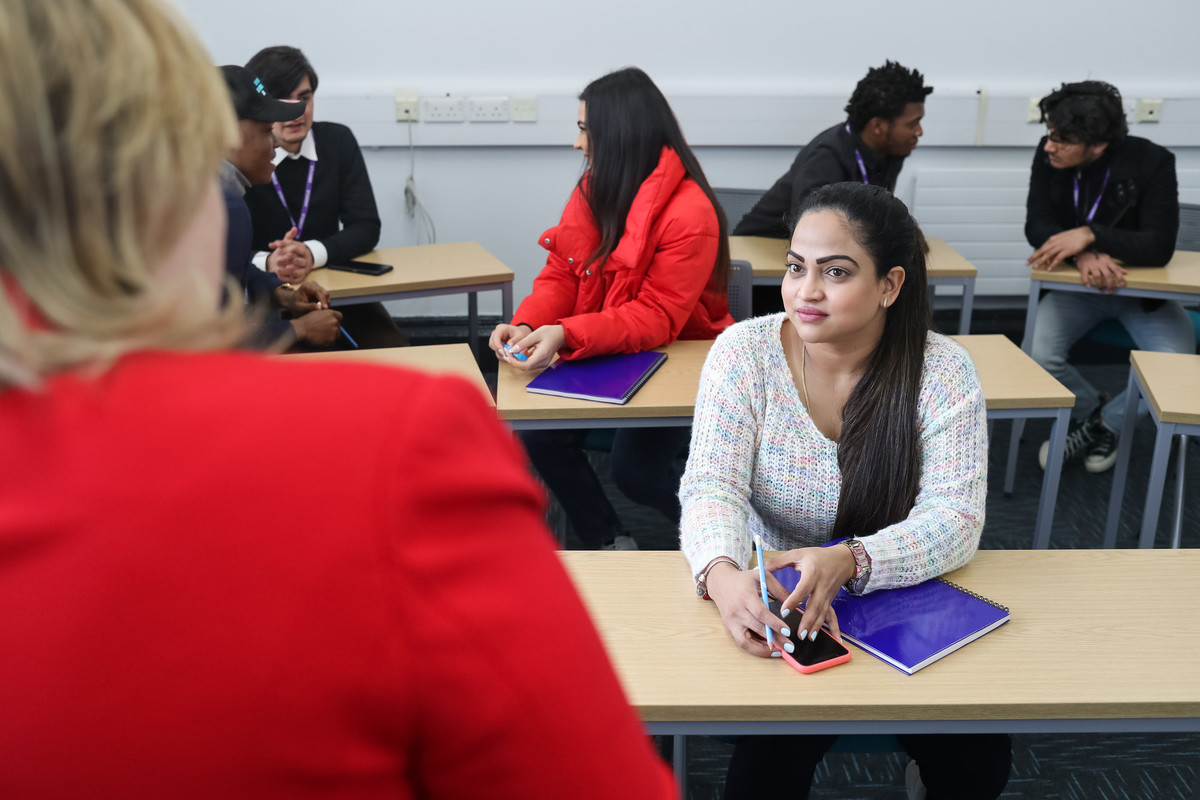
You will learn through a carefully designed mix of methods that match the developmental nature of practitioner training. Lectures and seminars give you the theoretical and conceptual grounding, but most of your learning happens in smaller, more interactive settings: skills practice in groups of six to ten, where you work directly with peers under tutor supervision and review your practice on video; personal development groups, where you explore the personal and reflexive dimensions of becoming a practitioner; and clinical supervision, where you bring your real client work to a qualified supervisor for ongoing oversight.

Across the four years, your learning becomes progressively more practice-led as your readiness develops. Direct teaching is delivered face-to-face on campus, with a small proportion of synchronous online teaching where this fits the content (for example, in the online and phone therapy training module).

You will have a minimum of 400 hours of direct teaching or instruction time, plus extensive supervised clinical placement, personal development work, supervision and self-directed study. The course follows a block-based delivery rhythm where this is compatible with practitioner training and adopts longer module shapes, where the integrated nature of clinical practice and personal development makes this necessary.

Assessment is designed to evidence both your academic progress and your developing professional competence. Graded modules carry essays, case formulations, recorded skills practice with self-evaluation, oral examinations and the practitioner inquiry project; ungraded modules use competence-based assessment to evaluate your readiness to practise, your personal development and your clinical work. You will receive regular formative feedback, an annual review of your progress, and an external examiner with BACP experience moderates the standard of assessment across the course.

All teaching is delivered by experienced academics and practitioners, with the fundamental principles of the Chester Future Skills Curriculum at its core – building your subject competence, confidence, and key transferable skills to shape you into a world-ready Chester graduate.

Your Future Career

Job Prospects

Graduates are equipped to enter the counselling profession in a range of settings. Once graduates have passed the BACP Certificate of Proficiency, they are eligible to apply for registered membership of BACP and to begin practising.

Typical careers include:

  • The third sector and charitable counselling services
  • primary care and IAPT/NHS Talking Therapies services (subject to additional service-specific training where required)
  • schools and colleges (where appropriate to the practitioner's developmental stage and additional CYP training)
  • employee assistance programmes
  • private practice
  • counselling roles within education student services

The course's design – with substantial supervised placement hours, integrative pluralistic orientation, and embedded online and phone therapy competency – positions graduates well for the contemporary counselling labour market, where practitioners are increasingly expected to be flexible across modes of delivery and modalities. Graduates also commonly progress into related professional pathways, including mental health support work, community development roles, peer support and recovery work.

Careers Service

The University has an award-winning Careers and Employability service which provides a variety of employability-enhancing experiences; through the curriculum, through employer contact, tailored group sessions, individual information, advice and guidance.

Careers and Employability aims to deliver a service which is inclusive, impartial, welcoming, informed and tailored to your personal goals and aspirations, to enable you to develop as an individual and contribute to the business and community in which you will live and work.

We are here to help you plan your future, make the most of your time at University and to enhance your employability. We provide access to part-time jobs, extracurricular employability-enhancing workshops and offer practical one-to-one help with career planning, including help with CVs, applications and mock interviews. We also deliver group sessions on career planning within each course and we have a wide range of extensive information covering graduate jobs and postgraduate study.

Entry Requirements

112UCAS points

UCAS Tariff

112 points

GCE A Level

Typical offer – BCC-BBC

BTEC

BTEC Extended Diploma: DMM

International Baccalaureate

28 points

Irish / Scottish Highers

Irish Highers - H3 H3 H3 H3 H4

Scottish Highers - BBBB

Access requirements

Access to HE Diploma, to include 45 credits at level 3, of which 30 must be at Merit or above

T Level

Merit

OCR Cambridge Technicals

OCR Extended Diploma: DMM

Extra Information

Welsh Baccalaureate Advanced and A level General Studies will be recognised in our offer. We will also consider a combination of A Levels and BTECs/OCRs.

Students from outside the UK are expected to hold qualifications broadly equivalent to UK standards - typically A Level for undergraduate study and a Bachelor's degree (or equivalent) for postgraduate study.

To help you interpret these equivalents, please select your country/region of residence. This will provide details on equivalent entry requirements, as well as information about local representatives, events, and key contacts.

We accept a wide range of qualifications and assess all applications on an individual basis. Relevant work experience may also be taken into consideration where appropriate.

For more information on our entry requirements, please visit International Entry Requirements.

Fees and Funding

£9,790per year for a full-time course (2026/27)

Tuition fees for Home students for the academic year 2026/27 will be £9,790 for full-time students and £7,335 for part-time students (subject to Parliamentary approval). Fees for subsequent years may be subject to increase in line with the Government fee cap.

You can find more information about undergraduate fees on our Fees and Finance pages.

Students from the UK, Isle of Man, Guernsey, Jersey and the Republic of Ireland are treated as Home students for tuition fee purposes.

Students from countries in the European Economic Area and the EU will pay International Tuition Fees.

Students who have been granted Settled Status may be eligible for Home Fee Status and if eligible will be able to apply for Tuition Fee Loans and Maintenance Loans.

Students who have been granted Pre-settled Status may be eligible for Home Fee Status and if eligible will be able to apply for Tuition Fee Loans.

£14,950*per year for a full-time course (2026/27)

The tuition fees for international students studying Undergraduate programmes in 2026/27 are £14,950 per year for a full-time course. This fee is set for each year of study.

The University of Chester offers generous international and merit-based scholarships, providing a significant reduction to the published headline tuition fee. You will automatically be considered for these scholarships when your application is reviewed, and any award given will be stated on your offer letter.

For courses with a Foundation Year, the tuition fees for Year 1 are £11,250 and £14,950 for Years 2-4 in 2026/27.

For more information, go to our International Fees, Scholarship and Finance section.

Irish Nationals living in the UK or ROI are treated as Home students for Tuition Fee Purposes. 

Your course will involve additional costs not covered by your tuition fees. This may include books, printing, photocopying, educational stationery and related materials, specialist clothing, travel to placements, optional field trips and software. Compulsory field trips are covered by your tuition fees. 

If you are living away from home during your time at university, you will need to cover costs such as accommodation, food, travel and bills.

Students often elect to purchase a laptop, where students choose to do so, the cost it likely to be around £800-£1000.

Most software specific to your course is available free to students through agreements we have with the software vendors. 

Occasional, optional, field trips may be offered, depending on student demand, these are typically within the UK and where chargeable the cost is likely to be under £100. Students are not required to participate in order to successfully complete the course.  

Who You’ll Learn From

Dr Emily Fozard

Senior Lecturer
Blank profile picture placeholder

Dr Liz Whelen

Senior Lecturer
Dr  Liz Whelen

Dr Amanda Mcgarry

Senior Lecturer
Amanda McGarry

Dr Janine Carroll

Senior Lecturer
Dr Janine Carroll

Dr Hayley Cooper

Senior Lecturer
Profile picture for Hayley Cooper

Dr Lindsay Murray

Associate Professor
Dr Lindsay Murray

Kate Miller

Lecturer
Kate Miller

Enquire about a course