Stonehenge sunset

How and why have the dead been treated and commemorated so differently from prehistory through to the present day? Our MA in Death and Memory is a chronologically broad course that explores the complex history of death and memory, from the treatment of the body in the earliest hunter-gatherer societies to thinking about how people dealt with the dead in twentieth-century conflict. At the heart of the course, therefore, are the complex interactions between the living and the deceased seen in cemeteries, memorials and funerary cultures.

Our course is an exciting, cross-period, postgraduate degree with global application. It will allow you to examine and gain advanced expertise in the study of death, burial and commemoration in the human past, shedding light on the debates and concerns of our present day. 

The course draws on our research expertise in archaeology and history but is unusually cross-disciplinary. You will explore debates that connect to research themes shared across the humanities and social sciences, including studies of ritual, the body, material culture, memory and mortality. Consequently, this degree will interest those with first degrees in archaeology or history, as well as those with backgrounds in other disciplines.


Why You'll Love It

MA Archaeology of Death and Memory at the University of Chester

MA Death and Memory at the University of Chester

What You'll Study

The MA Death and Memory draws upon our shared research expertise in the history and archaeology of death and memory to deliver a truly interdisciplinary approach to the study of Death and Memory in the past. It is a chronologically broad course that explores the complex history of death and memory, providing students with a foundation of knowledge and skills that are applicable to both past and contemporary practices of memorialisation, remembrance, representation and the curation of the dead.

The taught course runs across three terms with the fourth (summer) term dedicated fully to the research dissertation.

Modules

This module examines the skills and methodologies required for advanced archaeological, historical and heritage research. Students gain the opportunity to explore a range of skills and to build on their existing knowledge and expertise, including how to identify relevant resources, how to appraise and critique research publications, and how to construct and analyse historical and archaeological evidence. This module therefore lays the groundwork for larger research projects such as the dissertation. Through this module, students are afforded the opportunity to engage with the practicalities of undertaking research in the archive and in the field, considering varying approaches to active and pro-active research. Students will learn how to work with historical and archaeological practitioners, organisations and digital resources, honing their craft with cutting edge research methods and practice.

Why and how does the past matter? Why and how do academic researchers tackle the human journey and its significance in today's world? Spanning the disciplines of history, heritage studies and archaeology, this module provides an advanced-level introduction and engagement with current theoretical and applied debates on the meaning of the human past and its significance in today's world.

Each student researches and writes a 12,000-word dissertation on a historical, archaeological, museums or heritage-related topic of their choosing. This must relate to the overarching subject discipline of the pathway being followed. The topic and title is negotiated between the student and the supervising tutor; tutor approval of the topic and title is an essential requirement.  The research dissertation is based upon guided but largely independent research and upon substantial use of a range of primary source materials.

The dissertation module includes taught elements on dissertation prep and design and one to one individual supervision.

Mortality binds past and present, but how do we interrogate the deep-time story of death and memory in human societies from prehistory to the present-day? The module comprises an advanced survey and assessment of theory and method in the study of death, burial and commemoration, drawing on interdisciplinary perspectives and the application of archaeological and historical themes. The module will explore current debates and approaches in the archaeology and history of death using global and European case studies. Interdisciplinary debates in the material culture of death explored by anthropology, sociology and history will also be addressed. The public education, ethics and politics of the history and archaeology of death will also be tackled.

This module explores the role of the body in death rituals and in constructing memories and identities across cultures. It will introduce students to how the body as a concept is historically and culturally contingent and how anthropological and theoretical approaches inform and enrich our studies of death and memory in past societies. This will be explored using case studies from world, European and British history and archaeology, investigating the body’s handling, representation, adornment and transformation as well as bodily interactions with materials, architectures and landscapes. It will draw upon archaeological, historical and anthropological sources and data, examining how the body can be the locus for the study of topics such as emotion and the senses, embodiment and corporeality, health and disease, disability, gender, ethnicity and sexuality.

This module interrogates specialist approaches to a shared endeavour of history, archaeology and heritage studies: to tell the story, and to critique the stories we tell, about past worlds. In the 21st century this now encapsulates a host of digital and virtual environments as well as more traditional engagements with tangible spaces and places. Material culture studies and social memory are pivotal concepts in this innovative field, allowing us to explore how people create the past through their engagements with physical as well as digital environments. 

Tackling these critical approaches outside of traditional subject-specific silos, through this module you will engage with interdisciplinary and specialist frameworks to enhance your chosen Master’s pathway. Here you will have the opportunity to work with dedicated members of staff to explore topics in depth and to develop your skills as a professional in your particular field. The module allows you to explore a wide range of chronological and geographic landscapes and environments, virtual or physical, through one of two critical lenses, either:  

  • Tangible pasts: exploring landscape, material culture and memory in the past and present (incorporating archaeological, historical and heritage theory, method and practice) 
  • Digital pasts: evaluating and utilising digital and virtual environments for public history, heritage and public archaeology. 

Students studying the MA Death and Memory pathway will explore the rich interdisciplinary and growing research field of social memory in relation to landscapes past and present. Using case studies from different periods and places, from prehistory to the contemporary world, current debates on landscapes and memory are considered and interrogated, focusing on how people construct and reproduce their sense of history and social memory through space and place. Applications in archaeology, medieval and modern history, and heritage studies, are the primary foci. 

Students studying the MA Public Archaeology pathway will explore themes and debates in digital methods of outreach and engagement, developing the skills and knowledge to undertake participatory research in History and/or Archaeology. You will explore the use of digital 'citizen science' research methods, the application of social media and digital technologies for outreach and engagement, as well as examine history and archaeology in, and as, contemporary digital popular culture. 

Students on the MSc Museums and Heritage Practice or MA History pathways may choose either of these topics to suit their interests and professional development.  

This module offers experiential learning opportunities for students on the MA Archaeology, MSc Museums and Heritage and MA History pathways in the form of bespoke placements, experiential or research projects that are embedded in professional practice.   Projects allow students to develop applied skills in public archaeology, history, museums and heritage through a closely defined piece of work. There is considerable flexibility in the design and scope of these professional projects, but they may include digital work, placements or research projects undertaken either internally or externally. Each project will enable students to understand the demand, design, purposes, commissioning and delivery of specialist research and practice across the heritage and public engagement sectors. 

Archaeology, History, Heritage and Museum Studies all place a high value on research project work and the communication of that work to the public.  The skills and capacity to carry out and present subject research according to required professional formats, accessibly and concisely for a range of audiences is an essential skill of the researcher. Demonstrating desk-based, collection-based, heritage or public engagement research expertise is also a key aspect of professional practice.  

Projects will be arranged to reflect your interests and according to your pathway of study may reflect on: 

  • Curation and collections management 
  • Material culture studies or archives 
  • Museums and heritage learning and public engagement 
  • Digital research or development 
  • Educational resources 
  • Relationships between archaeology and the public 
  • Archaeological, museums or heritage research practices, such as display 
  • Sector research and strategy  

Each student researches and writes a 12,000-word dissertation on a historical, archaeological, museums or heritage-related topic of their choosing. This must relate to the overarching subject discipline of the pathway being followed. The topic and title is negotiated between the student and the supervising tutor; tutor approval of the topic and title is an essential requirement.  The research dissertation is based upon guided but largely independent research and upon substantial use of a range of primary source materials.

The dissertation module includes taught elements on dissertation prep and design and one to one individual supervision.

The information listed in this section is an overview of the academic content of the course that will take the form of either core or option modules and should be used as a guide. We review the content of our courses regularly, making changes where necessary to improve your experience and graduate prospects. If during a review process, course content is significantly changed, we will contact you to notify you of these changes if you receive an offer from us.

How You'll Learn

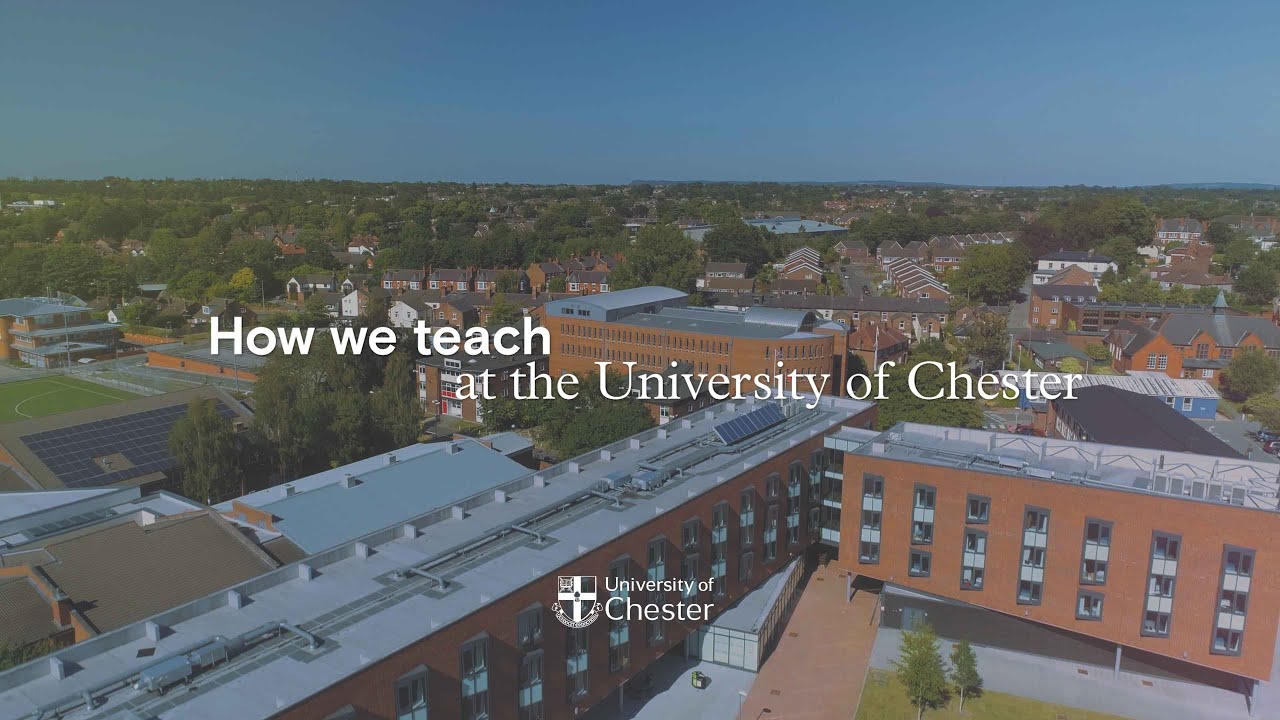
An aerial photograph of Exton Park with the text 'How we teach at the University of Chester'

How we teach at the University of Chester

The principal methods of delivery will be a mixture of lectures, seminars, and individual tutorials.

You will be assessed through coursework, written portfolios and finally a dissertation in your fourth term.

This will be a 12,000-word dissertation on a historical, archaeological, museums or heritage-related topic of your choosing.

Your Future Career

Job Prospects

Students may go on to find meaningful employment in the industry or pursue a research degree. Destinations include heritage organisations, museums, and the civil service or education sectors. 

Careers service

The University has an award-winning Careers and Employability service which provides a variety of employability-enhancing experiences; through the curriculum, through employer contact, tailored group sessions, individual information, advice and guidance.

Careers and Employability aims to deliver a service which is inclusive, impartial, welcoming, informed and tailored to your personal goals and aspirations, to enable you to develop as an individual and contribute to the business and community in which you will live and work.

We are here to help you plan your future, make the most of your time at University and to enhance your employability. We provide access to part-time jobs, extra-curricular employability-enhancing workshops and offer practical one-to-one help with career planning, including help with CVs, applications and mock interviews. We also deliver group sessions on career planning within each course and we have a wide range of extensive information covering graduate jobs and postgraduate study.

Entry Requirements

2:2honours degree

A minimum of a 2:2 honours degree in a relevant discipline, e.g. History, Archaeology, Classics, Anthropology, Geography or other arts, humanities and social science subjects, or equivalent qualification is required.

2:2honours degree

A minimum of a 2:2 honours degree in a relevant discipline, e.g. History, Archaeology, Classics, Anthropology, Geography or other arts, humanities and social science subjects, or equivalent qualification is required.

English Language Requirements

Applicants whose first language is not English must provide evidence of proficiency to IELTS 6.5 with no less than 5.5 in each band or equivalent.

For more information on our entry requirements, please visit International Entry Requirements.

Fees and Funding

£8,775for a full-time course (2025/26)

Guides to the fees for students who wish to commence postgraduate courses are available to view on our Postgraduate Taught Programmes Fees page. Here you will also find information about part-time fees and project/placement year fees.

£15,000for a full-time course (2025/26)

The tuition fees for international students studying Postgraduate programmes in 2025/26 are £15,000.

Please note: For MSc programmes where a placement or project year is undertaken there will be an additional charge of £2,750 for the placement/project year (due at the start of the second year of the course).

The University of Chester offers generous international and merit-based scholarships for postgraduate study, providing a significant reduction to the published headline tuition fee. You will automatically be considered for these scholarships when your application is reviewed, and any award given will be stated on your offer letter.

For more information, go to our International Fees, Scholarship and Finance section.

Irish Nationals living in the UK or ROI are treated as Home students for Tuition Fee Purposes.

Who You'll Learn From

Enquire about a course