



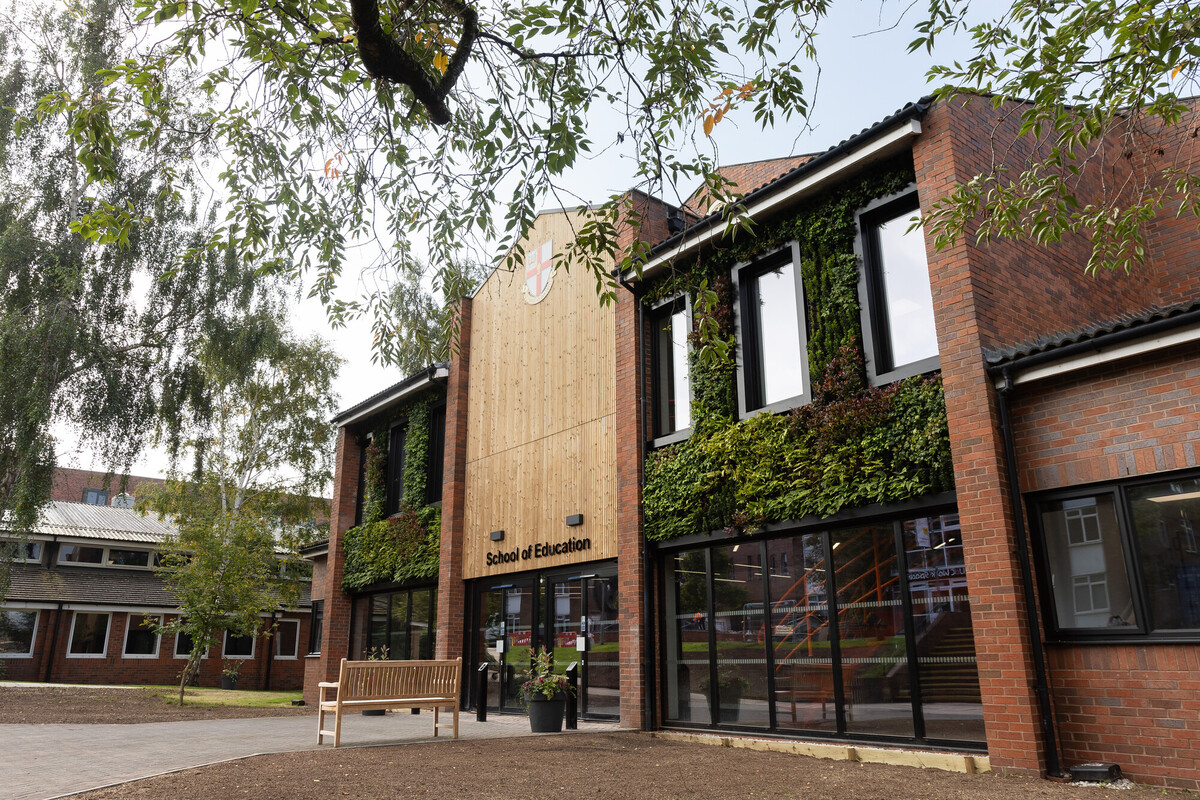


A group of students in a teaching room with colourful artwork on the wall.

Course Overview

Working with children and young people requires a great deal of knowledge and expertise from those in the sector. Our exciting MA in Education aims to support you to develop an in-depth understanding of a wide range of topics related to education.

Our MA in Education is designed to meet the interests of a wide range of participants from schools, nurseries, universities, colleges and local authorities, as well as professionals working with children and young people outside of education – for example in children's services and health and social care. The common factor for all potential participants is the desire to develop their expertise in the field of education and to make a real difference in the lives of the children and young people with whom they work.

The blend of students from different professional backgrounds enables discussion, debate and the sharing of experiences in a supportive and welcoming environment, facilitated by staff who are experts in the field of education.

Drawing on the latest policy, research and practice in education, this course will equip students with skills in critical evaluation and practitioner research, enabling them to make informed contributions to development in policy and practice in a wide range of educational settings.

Students that do not wish to study the full MA programme, can choose to study to a PGDip/PGCert level instead.


Childhood, Education and Professional Development Postgraduate Information Event

Advance your career with CEPD courses designed to refine your expertise, strengthen critical practice, and support sustained professional growth.

Book now

Why You'll Love It

CPD education video thumbnail

CPD Education

What You'll Study

The course is designed to be completed over three years on a part-time basis, with students studying three 20-credit modules in the first year, a further three 20-credit modules in the second year, and a 60-credit research project in the third year.

The course includes seven 20-credit modules in total, though not all will be available every year. Each academic year, three of the 20-credit modules will be offered, with selection based on staff expertise and availability at the time. 

The taught modules follow a two-year rolling cycle, allowing both first and second year students to study modules together. Modules can be studied in any order, enabling students to join the course at three points throughout the year, joining at the start of a new module.

Each year, students will complete two modules together before students who are ready to progress to the research project take a Research Methods and Design module in preparation. Students not yet at the stage to move on to the research project will take a shared module alongside students enrolled on the MA SEND.

Core Modules

This module offers students an opportunity to undertake an independent research project in an area related to their final award. Through this module, students will develop critical research skills by designing, conducting, and presenting a research study that addresses a significant area of professional interest. This module encourages students to make a meaningful contribution to the field while honing skills essential for research, critical thinking, and current/future professional practice.

Optional Modules

Joubert (1928) aptly noted, “It is better to stir up a question without deciding it than to decide it without stirring it up.”  In the spirit of this sentiment, this module seeks to ‘stir up’ critical discussion on some of the most pressing contemporary issues impacting children and young people today. Rather than settling on definitive answers, you will be encouraged to deeply question, analyse, and critique the multifaceted ways in which modern life and educational systems shape young people’s development, learning, and wellbeing.

Each year, the module will introduce new and relevant topics that resonate with the current educational climate.  You will have the opportunity to focus on debates closely aligned with your professional interests, allowing for a personalised exploration of how these issues impact diverse educational contexts. Through critical discussion, collaborative exploration, and research-based inquiry, you will be equipped to both understand and influence the debates shaping the future of education.

This module explores essential strategies for fostering wellbeing, and resilience in educational settings. You will examine the factors influencing student and teacher/practitioner wellbeing, analyse a range of approaches for creating supportive learning environments, and consider how resilience can be nurtured at both individual and setting levels. Through critical discussion and reflection, you will gain practical tools for promoting wellbeing and resilience, equipping you to support positive, sustainable outcomes for yourself, your setting and your learners.

This module offers students in-depth insights into both historical and contemporary views of the curriculum, recognising it as a site of tension, shaped by socio-cultural, political, and historical forces. Students will critically examine theoretical frameworks for curriculum development and explore the impact of policy-making and political ideology on curricular decisions. With an emphasis on curriculum planning, development, and change, the module provides students with opportunities to explore and implement innovative approaches to curriculum design. By engaging with diverse concepts and contexts, students will develop the skills necessary to create forward-thinking, contextually relevant curricula that respond to evolving educational needs and challenges.

This module prepares educators to thoughtfully integrate digital technology into teaching and learning, empowering them to engage and support students in an increasingly digital world while remaining critical of potential challenges. Students will explore both the opportunities and limitations of digital tools, gaining the skills to enhance teaching, student engagement, and assessment through technology. Key topics include digital literacy, the role of Artificial Intelligence in education, and innovative teaching, learning and assessment practices, along with ethical and practical considerations. Importantly, the module encourages educators to critically assess the limitations and risks of technology, such as accessibility issues, digital distraction, and data privacy, and to develop strategies for mitigating these challenges.   As technology is a rapidly advancing area, the module content will also be continually updated to reflect changes in education policy and practice, ensuring its relevance in a rapidly evolving digital world. By the end of the module, participants will be able to create meaningful, inclusive, and adaptive digital learning experiences that address the diverse needs of today’s learners.

This module aims to support students in developing skills of reflective practice and to encourage an in-depth analysis of key issues related to pedagogy in a chosen area of education.  The module will examine the value of Reflective Practice and will enable students to explore a range of pedagogical approaches relevant to their own sector of education.  There will be the opportunity to explore alternative approaches to pedagogy, and students will be encouraged to develop and justify their own personal pedagogy based on a set of personally held principles which underpin their educational practice.

This module provides a comprehensive introduction to research methods and design, equipping students with essential skills for conducting rigorous and impactful research. Students will explore a range of different approaches to conducting research, gaining practical experience in research planning, data collection, and ethical considerations. Emphasis is placed on selecting appropriate research designs for various questions and contexts.  By the end of the module, students will be prepared to independently design and execute research projects that contribute meaningfully to their field of study.

This module is designed for postgraduate students and professionals seeking to deepen their understanding of inclusive practices within diverse professional and educational contexts. It offers a critical exploration of theories, models, and policies that underpin inclusive practices, equipping learners to address systemic inequities and barriers to participation.

Students will engage in reflective practice, drawing on their personal and professional experiences to identify strengths and areas for growth. Through critical evaluation of current research and case studies, participants will examine the effectiveness of inclusive practices and identify opportunities for innovation and improvement.

The module emphasises advocacy, supporting students to develop strategies for promoting inclusive policies and practices in their own settings. By the end of the module, students will have the tools to drive meaningful change, contributing to a more equitable and inclusive environment for all.

The information listed in this section is an overview of the academic content of the course that will take the form of either core or option modules and should be used as a guide. We review the content of our courses regularly, making changes where necessary to improve your experience and graduate prospects. If during a review process, course content is significantly changed, we will contact you to notify you of these changes if you receive an offer from us.

How You'll Learn

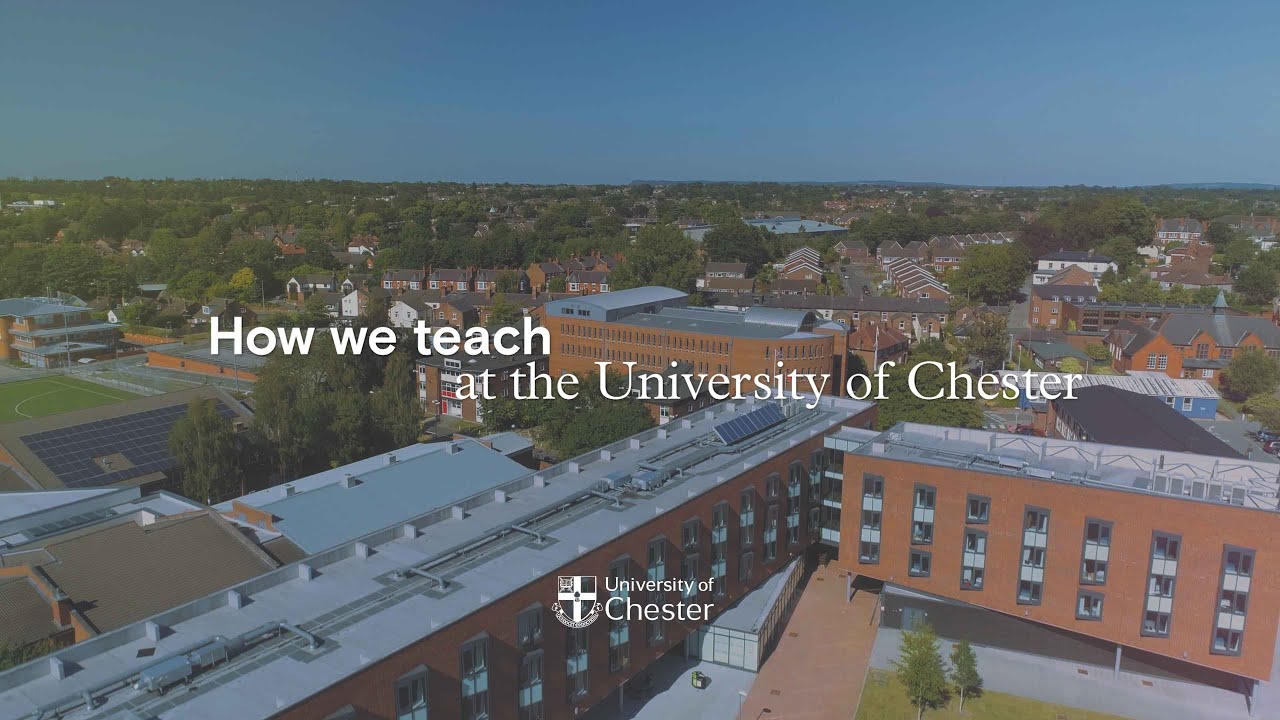
An aerial photograph of Exton Park with the text 'How we teach at the University of Chester'

How we teach at the University of Chester

Teaching methods

The course has been structured to integrate with the work patterns of busy professionals. You can choose to attend the taught sessions at the University of Chester's Exton Park in Chester, or to attend by distance learning where participants can join the classroom-based students virtually from anywhere in the world using Microsoft Teams.

As the majority of participants will be teachers or other educational professionals, the teaching is concentrated into six Saturdays each year, supplemented by six online evening seminars.

Assessment

We use a variety of assessment methods, including digital presentations, essays, projects, and critical reflections, which will enable you to apply the topics studied to your own area of interest and to the age phase or subject area in which you are working.

Your Future Career

Job prospects

Students who successfully engage in the MA in Education will become reflective practitioners and critical thinkers who can articulate their views with confidence and conviction.

The course will enhance participants' knowledge and understanding, developing skills that will support career progression in educational settings. Graduates may go on to work with children and young people in a variety of contexts; take up leadership and management roles; take on roles in further and higher education such as lecturing and research; or engage in advisory roles with local authorities or private companies.

Careers service

The University has an award-winning Careers and Employability service which provides a variety of employability-enhancing experiences; through the curriculum, through employer contact, tailored group sessions, individual information, advice and guidance.

Careers and Employability aims to deliver a service which is inclusive, impartial, welcoming, informed and tailored to your personal goals and aspirations, to enable you to develop as an individual and contribute to the business and community in which you will live and work.

We are here to help you plan your future, make the most of your time at University and to enhance your employability. We provide access to part-time jobs, extra-curricular employability-enhancing workshops and offer practical one-to-one help with career planning, including help with CVs, applications and mock interviews. We also deliver group sessions on career planning within each course and we have a wide range of extensive information covering graduate jobs .

Entry Requirements

Honours Degree

Applicants should normally hold a Bachelor's degree, 2:2 or higher, in an area broadly related to Education. Those with a degree in a different area but with experience of working in educational settings will also be considered.

Extra Requirements

Applicants for the specialist pathway in Mathematics Education must also have either a level 7 qualification related to mathematics education such as a PGCE Mathematics or a PG Cert Educational Practice in Mathematics or have completed an eligible course with the NCETM.

Prior Work/ Voluntary Experience

Applicants should have some experience working in an educational environment, as this background will enhance their understanding and engagement with the course

Students from outside the UK are expected to hold qualifications broadly equivalent to UK standards - a Bachelor's degree (or equivalent) for postgraduate study.

To help you interpret these equivalents, please select your country/region of residence. This will provide details on equivalent entry requirements, as well as information about local representatives, events, and key contacts.

We accept a wide range of qualifications and assess all applications on an individual basis. Relevant work experience may also be taken into consideration where appropriate.

Please note: This course accepts IELTS 6.0 (with no less than 5.5 or equivalent).

For more information on English entry requirements, including other accepted qualifications, please visit International Entry Requirements.

IELTS

Minimum requirement IELTS level 6.5. Please refer to the international admission requirements on the University of Chester website for more details. https://www1.chester.ac.uk/international/how-apply/entry-requirements

Honours Degree

Applicants should normally hold a Bachelor's degree, 2:2 or higher, in an area broadly related to Education. Those with a degree in a different area but with experience of working in educational settings will also be considered.

Extra Requirements

Applicants for the specialist pathway in Mathematics Education must also have either a level 7 qualification related to mathematics education such as a PGCE Mathematics or a PG Cert Educational Practice in Mathematics or have completed an eligible course with the NCETM.

Prior Work/ Voluntary Experience

Applicants should have some experience working in an educational environment, as this background will enhance their understanding and engagement with the course

Using credits towards your MA

If you have completed a PGCE, you can use the 60 credits you have achieved from it towards your MA Education. To transfer your PGCE credits directly to the MA Education, you must have completed the PGCE within the last five years. If your PGCE is older than five years, you may still be able to use the credits but you will have to demonstrate the currency of the knowledge you gained from the PGCE and pay a fee of £220 to have your knowledge assessed.

In addition, if you have completed other Level 7 courses in the area of education, you may be able to use the credits achieved from these courses towards your MA Education, for example, the following Postgraduate Certificates awarded by the University of Chester can all be used as credit towards the MA Education: Postgraduate Certificate in Attachment, Trauma and Mental Health; Postgraduate Certificate in Coaching & Mentoring; Postgraduate Certificate in Leading SEND Provision and Practice; Postgraduate Certificate in Conservation and Sustainability Education; Postgraduate Certificate in Educational Practice in Mathematics. Level 7 courses from other universities may also be accepted. To transfer these credits directly to the MA Education, you must have completed them within the last five years.  If your credits are older than five years, you may still be able to use them, but you will have to demonstrate the currency of your knowledge and pay a fee of £220 to have this assessed.

If you have completed a National Professional Qualification (NPQ) then you can use this as credit towards your MA Education, up to a maximum of 60 credits.

National Professional Qualification

Maximum number of masters credits at Level 7

What your programme will look like.


National Professional Qualification for Leading Teacher Development (NPQLTD)

40 Credits

Four taught 20-credit modules (from the list of available modules), plus the 60-credit Research Project

National Professional Qualification for Leading Teaching (NPQLT)

40 Credits

National Professional Qualification for Leading Behaviour and Culture (NPQLBC)

40 Credits

National Professional Qualification for Early Years Leadership (NPQEYL)

40 Credits

National Professional Qualification for Leading Literacy (NPQLL)

40 Credits

National Professional Qualification for Leading Primary Mathematics (NPQLPM)

40 Credits

National Professional Qualification for SENCOs (NPQ for SENCOs)

60 Credits

Three taught 20-credit modules (from the list of available modules), plus the 60-credit Research Project


National Professional Qualification for Senior Leadership (NPQSL)

60 Credits

National Professional Qualification for Headship (NPQH)

60 Credits

National Professional Qualification for Executive Leadership (NPQEL)

60 Credits

If you wish to bring more than one NPQ into the MA Education, please contact the Programme Leader to discuss if this will be possible.

To bring your NPQ into the MA Education, you need to engage in a professional discussion with the programme leader for the MA Education.  This takes place once you are registered for the course. We cannot do this before your induction.

We will ask you to explain one or both of your projects (depending on the NPQ), what you did, the theories underpinning your project, the impact and the learning you have taken from it.

Fees and Funding

£9,090 for a full-time course (2026/27)

The tuition fees for home students studying courses in 2026/27 are £9,090 per year.

Guides to the fees for students who wish to commence postgraduate courses are available to view on our Postgraduate Fees page. Here you will also find information about part-time fees and project/placement year fees.

£15,500 (2026/27)

The tuition fees for international students studying courses in 2026/27 are £15,500 per year.

Irish Nationals living in the UK or ROI are treated as Home students for Tuition Fee Purposes.

For more information about International fees for Postgraduate study, go to our International Fees, Scholarship and Finance section.

Who You’ll Learn From

Dr Heather Macdonald

Senior Lecturer and Programme Leader for the MA in Education
Heather Macdonald

Sarah Collins

Senior Lecturer
Sarah Collins

Tracey Patterson

Deputy Head of Division
Tracey Patterson

Christine Packer

Senior Lecturer
Christine Packer

Dr Sally Bamber

Senior Lecturer
Sally Bamber