




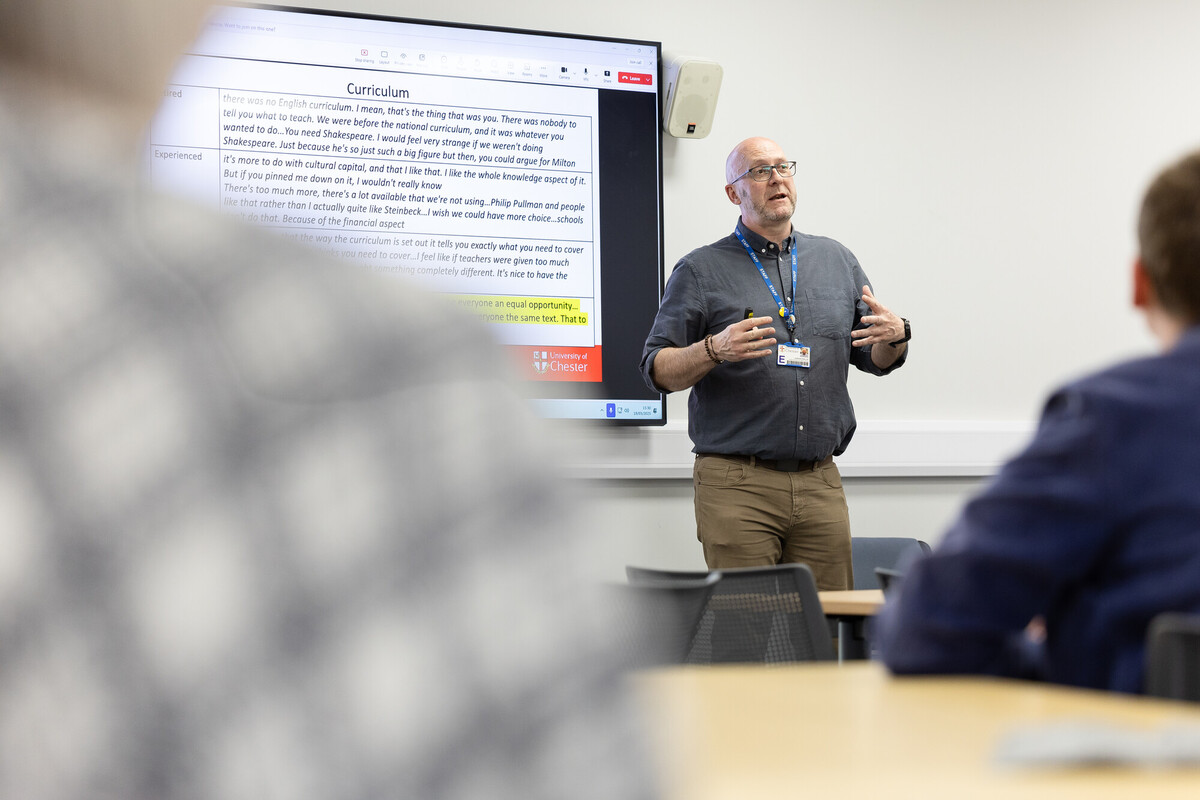

man smiling in classroom

Enhance your leadership potential and make a lasting impact in education with our MA in Educational Leadership. Designed for current and aspiring leaders across all educational settings, this course empowers you to critically engage with leadership theories and apply them to real-world challenges. With a strong emphasis on professional practice, you will refine your ability to lead with confidence, drive positive change, and shape the future of education.

Our expert staff bring a wealth of academic and sector experience, ensuring that your learning is grounded in both research and contemporary practice. You will benefit from a flexible, personalised approach, with opportunities to gain accreditation for prior learning, including National Professional Qualifications (NPQs). Whether you are looking to progress within your current role or transition into new opportunities, this MA will equip you with the knowledge and skills to advance your career.

In addition to your Master's degree, you will also achieve a prestigious Chartered Management Institute (CMI) award in Strategic Leadership. This dual accreditation highlights your expertise and enhances your professional standing, giving you a competitive edge in the field.

Part-time students can select from a range of modules in order to personalise the course based on their prior experience and career aspirations. If you are not sure that a full MA is for you, then why not start with our Postgraduate Certificate, which is achieved by completing three modules. After this, you can progress onto the Postgraduate Diploma and then the MA.

Full-time students benefit from a carefully selected range of modules that will enhance your understanding of contemporary approaches to leadership.

Our philosophy is grounded in professional practice, with theories of leadership linking directly to leadership practice. We want you to be able to apply what we teach directly to your workplace. Our curriculum is informed by a steering group comprising senior leaders from multi-academy trusts across the country, as well as policy representatives from the government and sector representative organisations. This ensures that your learning is current, applicable and up to date.

If you engage in the course you will: 

  • become a better informed and confident leader who can help shape the future of leadership
  • be able to apply theoretical frameworks to real problems in education.
  • stand out from the crowd as a leader when applying for your next career step.

You can enter the course by making a claim for previous learning through the Accreditation of Prior Experiential Learning (APEL) process and then undertake modules for the remainder of your course taking into account your setting and individual needs. Use your prior learning to accelerate your journey to gain a Master's degree. For example, if you are a headteacher or deputy headteacher with a NPQH, you could gain your MA in Educational Leadership by completing one taught module, plus a dissertation.

On successful completion of your MA in Educational Leadership you will also gain a prestigious Chartered Management Institute (CMI) award in Strategic Leadership. This additional qualification is fully embedded into your MA in Educational Leadership. It provides you foundation Chartered Manager status (fCMgr) with a route through to full Chartered Manager status. This qualification will enhance your employability and offers recognition in addition to your MA in Educational Leadership as to your leadership skills.

Childhood, Education and Professional Development Postgraduate Information Event

Advance your career with CEPD courses designed to refine your expertise, strengthen critical practice, and support sustained professional growth.

Find out more

Accreditations

Chartered Management Institute logo

Why You'll Love It

MA in Educational Leadership video thumbnail

MA Educational Leadership

What You'll Study

You will complete a series of modules which you select in order to meet your needs, interests and aspirations. The only compulsory module that you need to complete is the dissertation. Full-time students will complete six taught modules, plus the dissertation. Part-times will complete the number of modules based on your individual circumstances.

The modules will develop your understanding of leadership and your ability to be an effective leader in a constantly changing educational landscape. You will learn how to successfully lead change, how to be an effective mentor to those in leadership roles. Or how your behaviours as a leader have a profound impact on those around you.

Core Modules

This module offers students an opportunity to undertake an independent research project in an area related to their final award. Through this module, students will develop critical research skills by designing, conducting, and presenting a research study that addresses a significant area of professional interest. This module encourages students to make a meaningful contribution to the field while honing skills essential for research, critical thinking, and current/future professional practice.

Optional Modules

Leadership underpins everything that we do in education. How, as leaders, we lead is imperative to the success of our team and organisation. This module critiques contemporary approaches to leading educationally focused institutions in constant change and instability. Learning will focus on the application of a range of approaches to leadership in differing contexts. The module will focus on key topics such as different approaches to leadership, the impact that leadership has on organisational culture and effective and dysfunctional teams.

Change is one of the few constants in education. Understanding the causes of change and the way that change progresses both within educational organisations and with individuals is a key professional quality involved in the leadership of education, whether in schools or other organisations within the education sector. Leading change, from setting a vision and overcoming resistance, through implementation and consolidation, is a core skills of successful educational leaders. In this module we will consider causes of educational change, ways in which changes can and do impact organisations, a range of models of change that can be used to effectively explain change and help in planning for future change, and we will conisder effective ways in which to plan change.

Within education, people are essential. Without them, we do not have educational settings. They also account for the largest expenditure in financial terms. Therefore, as leaders we need to ensure that we understand the people that we work with. Applying psychological theories enables leaders to understand better people and the behaviour of those around them to develop more effective, resilient workplaces and support wellbeing. As part of this module, you will understand a range of the theories, concepts, and potential applications of psychology in various leadership contexts. 

Safeguarding and provision of education for children and young people with special educational needs and disabilities are a core function of every educational setting. These roles are complex and importantly transcend every aspect of an organisation's life, intersecting with the curriculum, pastoral and support provision. It is well known that effective leadership within is one of the most significant factors in improving outcomes for children and young people, and so it is within these areas that an understanding of effective leadership can enhance these roles and contribute to improved outcomes. This module does not provide training in being a safeguarding lead or a SENDCO. Its purpose is to develop the leadership capacity of those in these roles or aspiring to them and to help them become more effective. We will consider issues around SEND and safeguarding cultures in education, leadership characteristics of effective leaders, professional learning of leaders and colleagues, and tools to empower leaders to develop these areas within their organisation.

This module provides a comprehensive introduction to research methods and design, equipping students with essential skills for conducting rigorous and impactful research. Students will explore a range of different approaches to conducting research, gaining practical experience in research planning, data collection, and ethical considerations. Emphasis is placed on selecting appropriate research designs for various questions and contexts.  By the end of the module, students will be prepared to independently design and execute research projects that contribute meaningfully to their field of study.

For educational leaders, the rapidly evolving educational landscape we now operate within necessitates the development of a more purposeful ‘global literacy’ across a range of knowledge domains so we can be more agile in our leadership responses. This module focuses on the impact of globalisation on the practice of educational leadership. At the heart of this module is an exploration of the complexities of leadership practice within domestic and international contexts, underpinned by exposure to broader international learning scenarios where leaders' decisions are paramount to educational success.

Leading Governance in Education is designed for current and aspiring educational leaders who want to understand and shape governance at the institutional and system levels.

The module explores how educational institutions (schools, trusts, colleges, and universities) are governed, and how effective governance drives leadership practices, financial sustainability, accountability, and long-term strategic success. Students critically examine the relationship between governance and executive leadership, analysing how boards and senior leaders navigate policy reform, regulatory frameworks, public accountability, and complex stakeholder environments.

The information listed in this section is an overview of the academic content of the course that will take the form of either core or option modules and should be used as a guide. We review the content of our courses regularly, making changes where necessary to improve your experience and graduate prospects. If during a review process, course content is significantly changed, we will contact you to notify you of these changes if you receive an offer from us.

How You'll Learn

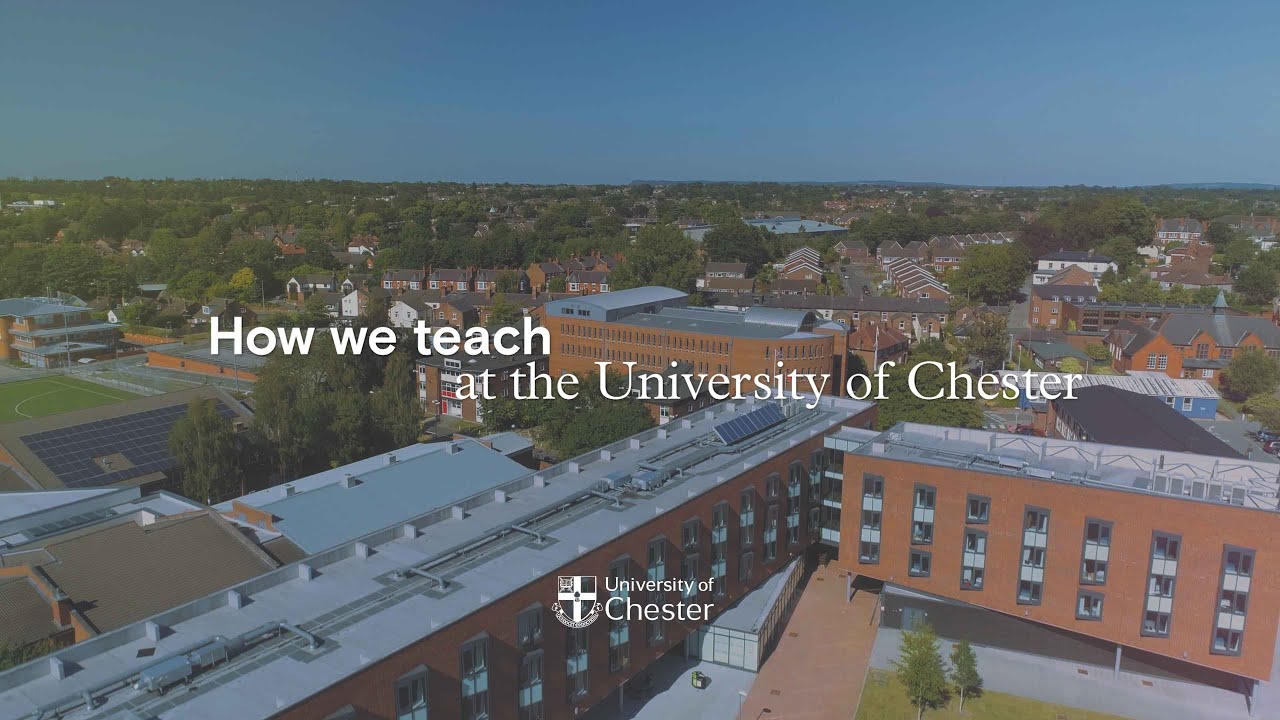
An aerial photograph of Exton Park with the text 'How we teach at the University of Chester'

How we teach at the University of Chester

Part-time students – modules are taught online. Each week you will complete a series of activities which may include video lectures, reading, completion of online tasks and reflective activities. You can complete these tasks at any point during the week, based on their individual circumstances. You will have regular contact with your Personal Academic Tutor, who will support you through your learning. You will also attend an online twilight session. Each module equates to approximately 200 hours of study and you should factor these hours into your existing work. 

You will benefit from experienced tutors with recent relevant experience in a range of education settings. 

You will also benefit from our optional dissertation Bootcamp and residential teaching sessions at Exton Park, Chester. 

Full-time (international and home) students – will study in Chester, and will have weekly lectures and seminars.  

Assessments include essays, portfolios of your own learning, academic posters and research-based projects. This course is assessed by 100% coursework, and the structure of the course means that you are only working on one assignment at any one time.

Your Future Career

Job Prospects

Many of our graduates have secured senior or promoted roles as a result of achieving their MA in Educational Leadership. We have a track record of students progressing to headship after completing their course, while others have taken on more senior leadership roles in departments within their settings. Their enhanced understanding of the leadership within education has informed their own practice as leaders, ensuring that they have a bigger impact on their own educational setting. After completion, some students have gone onto successfully complete doctoral degrees here at the University of Chester and further afield, while others are using the result of their dissertation to influence policy and practice across groups of schools.

Progression Options

Careers Service

The University has an award-winning Careers and Employability service which provides a variety of employability-enhancing experiences; through the curriculum, through employer contact, tailored group sessions, individual information, advice and guidance.

Careers and Employability aims to deliver a service which is inclusive, impartial, welcoming, informed and tailored to your personal goals and aspirations, to enable you to develop as an individual and contribute to the business and community in which you will live and work.

We are here to help you plan your future, make the most of your time at University and to enhance your employability. We provide access to part-time jobs, extracurricular employability-enhancing workshops and offer practical one-to-one help with career planning, including help with CVs, applications and mock interviews. We also deliver group sessions on career planning within each course and we have a wide range of extensive information covering graduate jobs and postgraduate study.

MA Educational Leadership students video

Educational Leadership - Hear from our students

Entry Requirements

Honours Degree

A minimum of 2:2 in education or a related field. Those without this classification will be invited to an interview to ensure their suitability.

Employment Status

Applicants will normally work in an educational environment, e.g. school, college, academy, local authority, free school or other educational setting.

Prior Work/ Voluntary Experience

In an educational environment, e.g. school, college, academy, local authority, free school or other educational setting.

Interview

Those with non-standard qualifications will be interviewed to ensure their suitability.

IELTS

6.5

Honours Degree

A minimum of 2:2 in education or a related field. Those without this classification will be invited to an interview to ensure their suitability.

Employment Status

Applicants will normally work in an educational environment, e.g. school, college, academy, local authority, free school or other educational setting.

Prior Work/ Voluntary Experience

In an educational environment, e.g. school, college, academy, local authority, free school or other educational setting.

Interview

Those with non-standard qualifications will be interviewed to ensure their suitability.

NPQ credits towards your MA

If you have completed a National Professional Qualification (NPQ) then you can use this as credits towards your MA in Educational Leadership, up to a maximum of 100 credits.


National Professional Qualification

Maximum number of Master's credits at Level 7

What your programme will look like.


National Professional Qualification for Leading Teacher Development (NPQLTD)

40 Credits

4 taught 20-credit modules, from the list of available modules plus the 60-credit dissertation

National Professional Qualification for Leading Teaching (NPQLT)

40 Credits

National Professional Qualification for Leading Behaviour and Culture (NPQLBC)

40 Credits

National Professional Qualification for Early Years Leadership (NPQEYL)

40 Credits

National Professional Qualification for Leading Literacy (NPQLL)

40 Credits

National Professional Qualification for Leading Primary Mathematics (NPQLPM)

40 Credits

National Professional Qualification for SENCOs (NPQ for SENCOs)

60 Credits

3 taught 20-credit modules, from the list of available modules plus the 60-credit dissertation

National Professional Qualification for Senior Leadership (NPQSL)

60 Credits

National Professional Qualification for Headship (NPQH)

100 Credits

1 taught 20-credit modules, from the list of available modules plus the 60-credit dissertation

National Professional Qualification for Executive Leadership (NPQEL)

100 Credits

This is the maximum number of credits available. You do not have to bring in the maximum number, you could for example, bring in 80 credits from an NPQH and do two taught modules and the dissertation.

Whatever combination you bring into the programme cannot exceed 100 credits. There is a standard fee of £220 to bring NPQs into the course, regardless of how many credits.

Fees and Funding

£9,990 for a full-time course (2026/27)

The tuition fees for international students studying programmes in 2026/27 are £9,990 per year.

£15,500 (2026/27)

The tuition fees for international students studying programmes in 2026/27 are £15,500 per year.

MA Educational Leadership student

MA Educational Leadership - University of Chester

Who You'll Learn From

Dr Steve Lambert

Associate Professor
Dr Steve Lambert

Dr Mark Whalley

Senior Lecturer
Mark Whalley

Dr Kendall Jarrett

Senior Lecturer
Blank profile picture placeholder

Enquire about a course