
Electronic and Electrical Engineering (with optional Placement/Project year) MSc

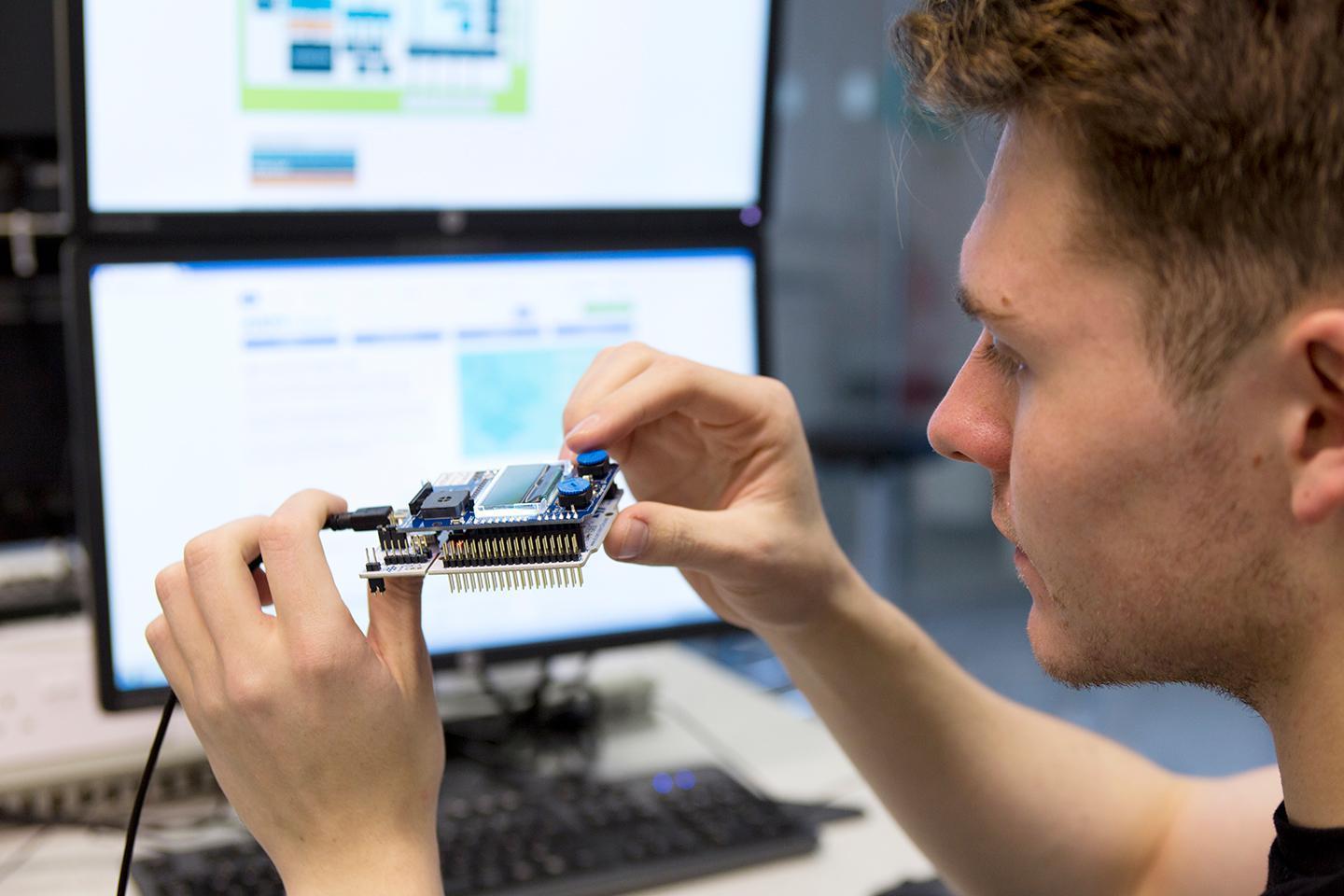
A student examining the internals of a computer

The rapid pace of technological change requires a broad educational background in order to be able to design, control and maintain smart electronic devices and IoT systems. This degree combines the core elements of electronic engineering, focusing on hardware components and software programming like sensors, embedded systems and robotics, with comprehensive exploration of AI and cyber security. This enables students to bridge the gap between hardware and software, gaining a holistic understanding of modern technology. 

Smart devices have considerable influence on how we live our lives, from the pervasive mobile phone to the emerging driverless vehicles. Intelligent systems are enabled by the Internet of Things (IoT) paradigm, a key ingredient of this MSc, with multiple sensors feeding data over networks to be processed on the cloud.

Electronic and Electrical Engineering graduates are in high demand. We’re committed to helping you meet the challenge of gaining job-oriented skills by teaching simultaneously the underpinning theory and practical engineering applications.

Our strong local links with industry will provide you with substantial opportunities for practical work experience. The Electronic and Electrical Engineering team has rich research experience and collaborations with industries; many of our Master’s students carried out their research projects with companies such as Glen Dimplex, URENCO, BRE, Arup North West, Advanced Control, Spiro Control, Passion for Life Healthcare, GHD Environment, Arvia and RFIDdirect.

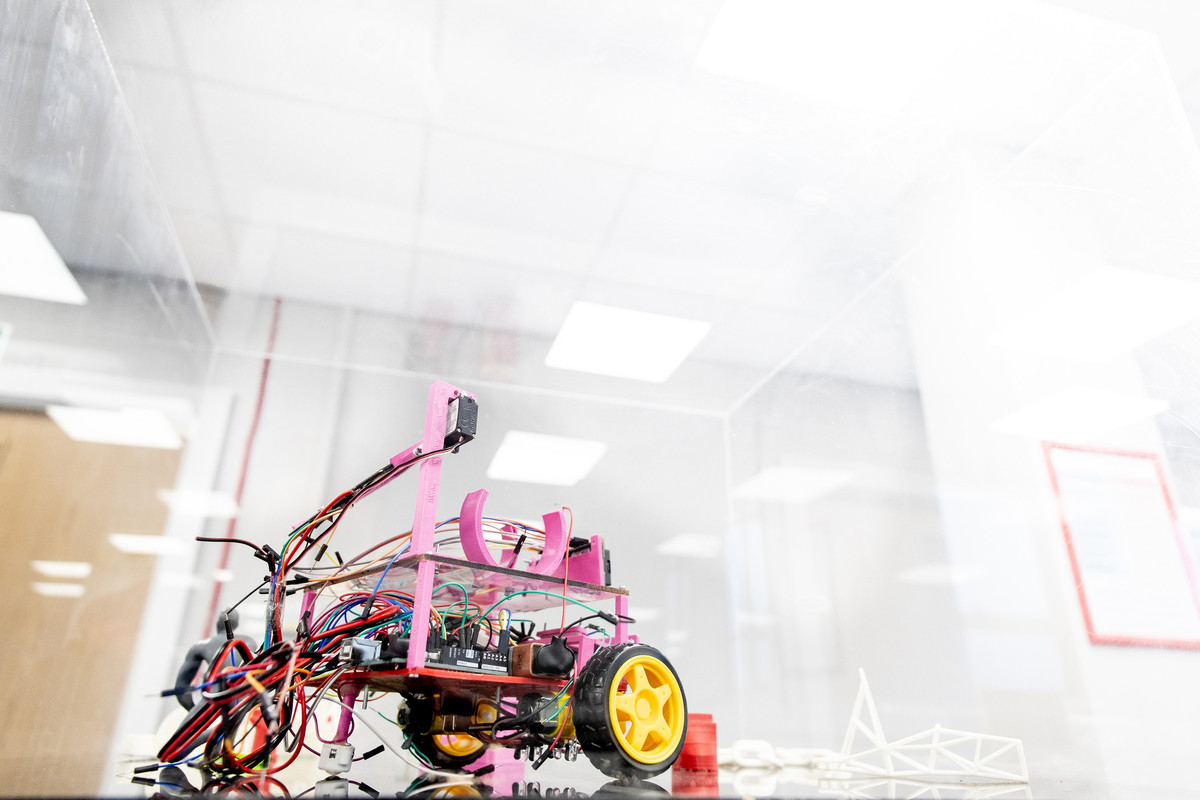
We have modern labs of embedded systems, control engineering, power electronics, electromagnetics, cybersecurity and robotics, where students are exposed to industrially-relevant software and hardware making them ready for employment.

There is an option to choose a Project/Placement year for this course, at an additional cost.


Why You'll Love It

What You'll Study

You will learn the advanced theory and practical skills in embedded systems, robotics, Internet of Things, power electronics, control systems, cybersecurity techniques and AI computing. You will be taught research methods, equipping you with techniques on how to approach research and technology development.

If you choose a placement or project year, the Research Dissertation module will be replaced by a placement or project module.

Core Modules

Embedded Systems Introduction:

  1. Embedded Architecture (ARM): Focuses on the ARM architecture, the dominant platform for modern embedded and IoT devices.
  2. C Programming & STM32 HAL: Teaches embedded C programming using the STM32 Hardware Abstraction Layer (HAL), covering I/O operations, pulse-width modulation (PWM), and interrupt handling.
  3. Digital Communication Interfaces: Details key serial and parallel communication standards for embedded systems, including UART/Serial, SPI, I2C, and CAN.
  4. Data Collection & Filtering: Covers techniques for acquiring and processing sensor data, including analog/digital filtering (low-pass, high-pass, band-pass, band-stop, notch filters) and frequency analysis via FFT.
  5. Multithreading & Real-Time Programming: Introduces concepts of concurrent execution and real-time systems, critical for developing responsive, reliable embedded applications.

IoT Fundamentals & Applications:

  1. Introduces the core principles of the Internet of Things, alongside real-world use cases and application scenarios.
  2. Electromagnetics & Sensor Design: Explores the electromagnetic principles underpinning radio-frequency design technology.
  3. Networking Fundamentals: Covers core networking components including Ethernet, web servers, and web clients, establishing the backbone for IoT connectivity.
  4. IoT Communication Technologies: Surveys a wide range of wired and wireless protocols for IoT devices, including RFID, BLE, LiFi, 6LoWPAN, ZigBee, Z-Wave, LoRa, HTTP, and WebSockets.

The module introduces key cyber security concepts and their associated techniques. The modules introduces the analysis of computer programming from a cyber security perspective. The module introduces a variety of different cyber security threats and possible resolutions to them. In addition the module provides a fundamental introduction to implementing secure computing systems.

Power Conversion

  • AC-DC power conversion: thyristor converters, rectification, inversion, HVDC and drive applications, harmonic analysis.
  • DC-AC power conversion: inverter types, managing output waveform distortion; and application in drives, reactive-power compensation and power-flow control.

High-Power Semiconductor Devices

  • Characteristics, performance and application requirements.

Machines and Drives

  • Induction machines: operation as motors and generators; space harmonic effects, and dynamic model.
  • Large synchronous machines; operating characteristics, dynamic model, and introduction to vector control.

Power System Protection

  • The protection overlay: protection and metering transducers. Fuses.
  • Overcurrent protection: relay types, operating characteristics and equations, grading, applications.
  • Differential protection: voltage balance and circulating current schemes, biased characteristics and high impedance schemes. Applications to the protection of transformers, feeders and busbars.
  • Distance protection: basic principle, block average comparator, zones of protection, residual compensation, power swing blocking.
  • Digital protection: relay hardware. digital signal processing in protection relays. Digital distance protection. Digital differential protection.

Simulation

Practical workshops will be provided at the computer to design and simulate electrical systems, including the representation of components.  Students will design, test and evaluate different electrical machines, methods of protection for specified applications.

Control Systems Engineering and Design

1.   System Network Diagrams and input/output port types and causality, Functional Analysis, Function Means Trees, Working Principles and the Feedback Servomechanism Principle in details. Impact of design constraints.

2. Introduction to functional design view of controllers with Tracking, Stabilisation and Prediction (TSP) approaches and the use of Relative Degree in Conceptual Controller Design.

3. Controller Design with Phase and Gain Compensation, Phase Advance, Notch Filtering and Digital filtering using z-transforms

Multi-input Multi-output (MIMO) State-Space Controller Design Methods

4.   Continuous-time MIMO State-space controller design using full and partial state feedback

5.   Discrete-time MIMO State-space controller design using full and partial state feedback

6.   MIMO Inverse Dynamics in Continuous and Discrete-Time

7.   MIMO PI, Pseudo Derivative Feedback (PDF) control and Robust Inverse Dynamics Estimation in state-space and role of integrator in inverse dynamics

8.   MIMO functional TPS algorithms

Nonlinear systems.

9.    Use of State-Space Design for Nonlinear Control e.g. Variable Structure Control

10.   Nonlinear Inverse Dynamics

11.   Stability of Nonlinear Inverse Dynamics using Small Perturbation Linearisation with State-Space Modelling.

Intelligent Control and Optimisation

12.   Deterministic Methods to design and Tune MIMO linear and nonlinear control algorithms.

11.. Stability of Nonlinear Inverse Dynamics using Small Perturbation Linearization with State-Space Modelling.

13.   Use of optimisation methods (e.g. Gradient based methods) and nonlinear system modelling and simulation to tune MIMO controllers

14.   Introduction to Neural networks and their design for use in MIMO control systems for learning algorithms.

15.   Introduction to Machine Learning

The Robotics module provides an introduction to the foundational principles of robotics, exploring the theoretical aspects that underpin the design, application, and ethical considerations of robotic systems.

You will begin by examining the fundamental question: What is a robot? This includes understanding the diverse applications of robots across industries and their role in society. The module also delves into the ethical implications of robotics, such as their impact on employment, privacy, and safety.

Key technical topics include an overview of mechatronics, which integrates mechanical, electronic, and computer engineering; sensors, which enable robots to perceive their environment; and control systems, which ensure robots can perform tasks accurately and autonomously.

This module introduces students to the fundamentals and applications of artificial intelligence, particularly in engineering and real-world problem-solving. It covers key AI techniques, including machine learning algorithms, data-driven decision-making, and their applications in cybersecurity, financial predictions, and multimedia analysis. The module emphasises both theoretical understanding and hands-on implementation through programming exercises, group projects, and open-source datasets. Ethical and legal considerations in AI are also explored, ensuring responsible application. By the end of the course, students will be equipped to design, implement, and evaluate AI models for a variety of modern use cases.

Optional Modules

In this module, students undertake an individual project to solve a problem requiring critically-appraised new and emerging knowledge of the engineering discipline.

The information listed in this section is an overview of the academic content of the course that will take the form of either core or option modules and should be used as a guide. We review the content of our courses regularly, making changes where necessary to improve your experience and graduate prospects. If during a review process, course content is significantly changed, we will contact you to notify you of these changes if you receive an offer from us.

How You'll Learn

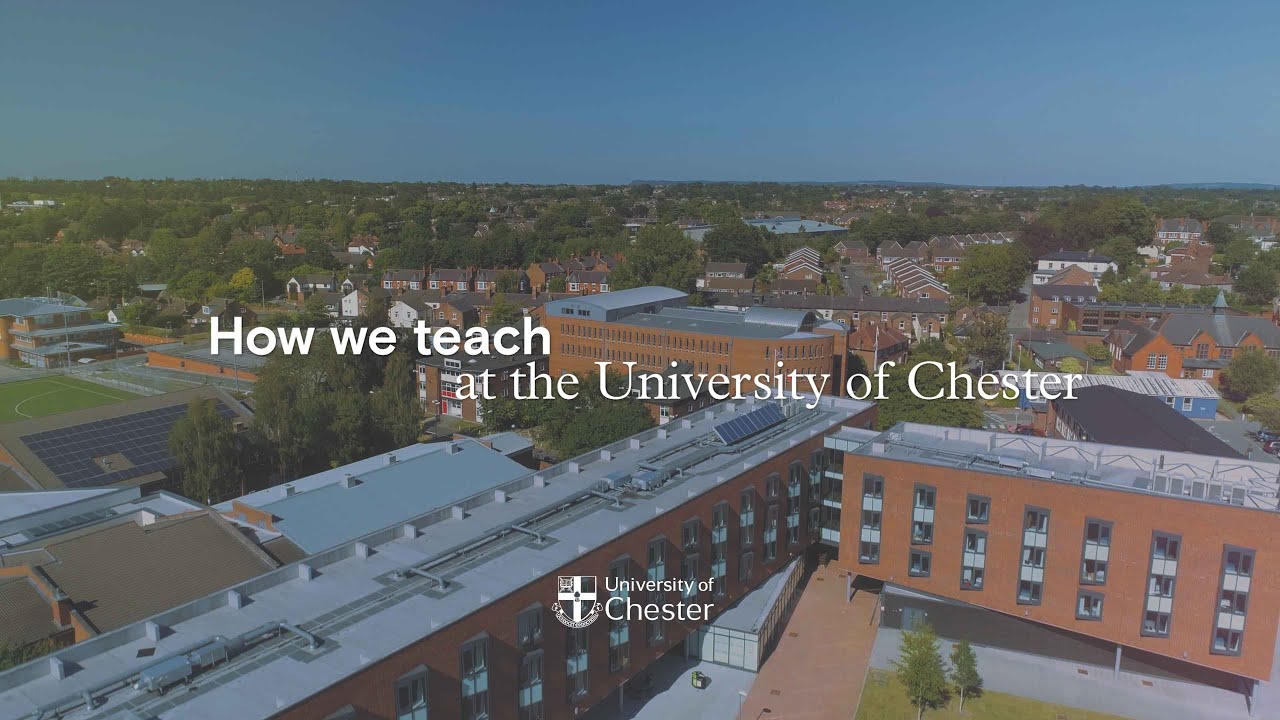
An aerial photograph of Exton Park with the text 'How we teach at the University of Chester'

How we teach at the University of Chester

Teaching

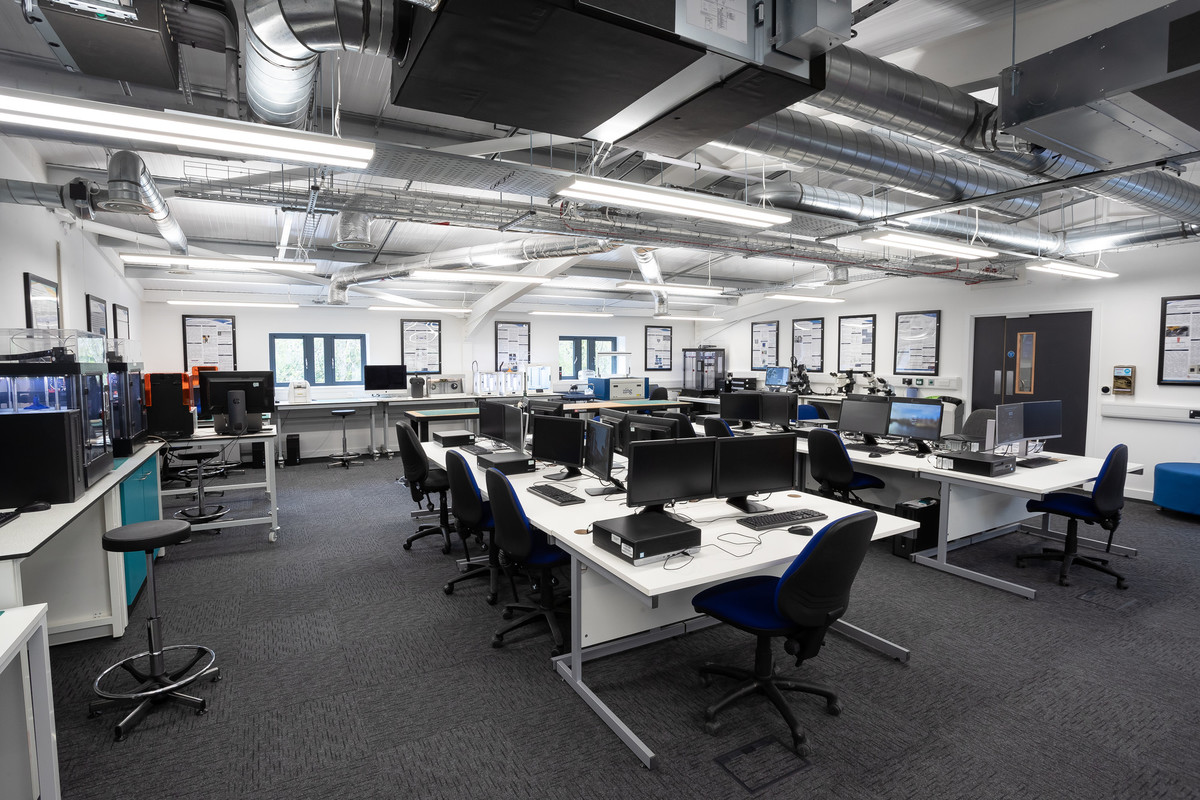
You will learn through a combination of lectures, seminars and hardware/software laboratory sessions at Exton Park’s purpose-built facilities. The School has state-of-the-art hardware laboratories for control systems, embedded systems, Internet of Things and power electronics. PC suites running a plethora of electrical and electronic engineering software applications for device, circuit and system simulation are also available.

Industrial-oriented projects will also be possible with input from an industrial supervisor, as well as the academic supervisor.

Assessment

You will be assessed via coursework assignments and written reports. The modules are assessed typically through two or three separate coursework assignments with a varied final mark weighting, for example 50%/50%, or 25%/75%, or 40%/10%/50%.

You will be guided by an experienced academic supervisor with specialist knowledge in an area of interest to you for your individual project.

Your Future Career

Job Prospects 

Graduates of this degree will be in demand by a broad spectrum of electronic, electrical, information technology and engineering organisations, particularly those within the industrial, automotive, aerospace and consumer electronics sectors.

Careers service

The University has an award-winning Careers and Employability service which provides a variety of employability-enhancing experiences; through the curriculum, through employer contact, tailored group sessions, individual information, advice and guidance.

Careers and Employability aims to deliver a service which is inclusive, impartial, welcoming, informed and tailored to your personal goals and aspirations, to enable you to develop as an individual and contribute to the business and community in which you will live and work.

We are here to help you plan your future, make the most of your time at University and to enhance your employability. We provide access to part-time jobs, extra-curricular employability-enhancing workshops and offer practical one-to-one help with career planning, including help with CVs, applications and mock interviews. We also deliver group sessions on career planning within each course and we have a wide range of extensive information covering graduate jobs and postgraduate study.

Beyond the Classroom

For the MSc Project module, there will be opportunities for students to do collaborative projects with technology-based companies that are high-tech companies in the North West of England. You will be able apply what you have learnt to real scenarios in the workplace, giving you genuine experience and insight that will prepare you for your future career.

Entry Requirements

Honours Degree

A minimum of a 2:2 honours Bachelor of Engineering (BEng) or BSc degree in either:

Electronic and Electrical Engineering
Electronic Engineering
Electrical Engineering
Control Engineering
Communications/Information Engineering

Applicants with a minimum of a 2:2 honours in a related area, such as Computing, Physics or Mechatronics will also be considered.

IELTS

6.5 (Min 5.5 in each sub-skill)

Honours Degree

A minimum of a 2:2 honours Bachelor of Engineering (BEng) or BSc degree in either:

Electronic and Electrical Engineering
Electronic Engineering
Electrical Engineering
Control Engineering
Communications/Information Engineering

Applicants with a minimum of a 2:2 honours in a related area, such as Computing, Physics or Mechatronics will also be considered.

Switch combined course content

Optional 2-year Master's To Suit Your Needs

Choosing a Professional Placement MSc is a win-win for your career, giving you the chance to get real experience, apply your cutting-edge skills in the workplace and stand out to future employers.

In the first year you will have help from the University to find a placement, whilst developing your expertise. You will then spend your second year out in industry on placement, getting the chance to work with industry professionals and grow your network of industry contacts. Bringing your university-acquired knowledge and insights to industry, you will get to make a difference to the workplace and make lasting links with your employer.

Students need to find and secure their own placement, supported by the University. A preparation module will also help you to get ready for your placement.

Please note, this course is available as a one-year master degree course, or as a Two-Year Master's Course with a Professional Placement or Project. Please carefully consider your options when applying for our one year or Two-year routes as successful international applicants will not be able to change between courses after a Confirmation of Acceptance of Studies (CAS) letter has been issued or after arriving in the UK.

Fees and Funding

£9,990 for a full-time course (2026/27)

The tuition fees for home students studying courses in 2026/27 are £9,990 per year.

The professional placement/project year will cost an additional £2,750, due at the start of the second year of the course.

£15,500 (2026/27)

The tuition fees for international students studying courses in 2026/27 are £15,500 per year.

For courses where a placement or project year is undertaken there will be an additional charge of £2,750 for the placement/project year (due at the start of the second year of the course).

Your course will involve additional costs not covered by your tuition fees. This may include books, printing, photocopying, educational stationery and related materials, specialist clothing, travel to placements, optional field trips and software. Compulsory field trips are covered by your tuition fees. 

The University of Chester supports fair access for students who may need additional support through a range of bursaries and scholarships. 

Full details, as well as terms and conditions for all bursaries and scholarships can be found on the Fees and Finance section of our website.

Who You'll Learn From

Enquire about a course