

Family and Child Psychology MSc student engaging in child-centred therapeutic interaction, exploring child development, family relationships and psychological wellbeing in a supportive learning environment. Family and Child Psychology MSc student engaging in child-centred therapeutic interaction, exploring child development, family relationships and psychological wellbeing in a supportive learning environment.

Course Overview

Our exciting course focuses on contemporary issues in family and child psychology across the lifespan, exploring critical issues as families and society become increasingly diverse. 

We offer a cutting-edge course that addresses present-day topics in family and child psychology, particularly as the dynamics of families and societies become more diverse. Furthermore, our course offers the opportunity to study the interface between family and child development, social policy and psychological practice, making its content relevant to students with diverse career ambitions. 

This course provides an excellent opportunity to study the psychology of the child and family in context across the lifespan, engaging with, and being taught by, leading experts in the field. With a heavily applied focus, you will learn, explore and examine how theory can be used to explain contemporary issues in the area, while undertaking training in research methodology, ethics and practical issues. Our course also emphasises employability skills, embedding a range of professional and practical skills across all modules. 

Students that do not wish to study the full MSc programme, can choose to study to a PGDip/PGCert level instead.


family and psychology

MSc Family and Child Psychology

Course Content

Substantive modules will explore issues such as child development and the changing family, mental health and neurodevelopmental disorders, and issues in social policy and practice. You will develop a range of practical and professional skills in the research methods and advanced skills modules, before conducting a piece of original research.

Core Modules

This module introduces you to the essentials of psychological research, and includes an introduction to qualitative methods and quantitative methods, including questionnaire / survey and experimental research methods. Overviews of qualitative methodologies are given covering both data acquisition (e.g. interview, focus group, photo elicitation) and major analysis techniques (e.g. discourse analysis, interpretative phenomenological analysis, etc.). Thematic or content analysis is covered in more detail.

The module also introduces quantitative designs (e.g. surveys and experimental studies) and key analytical techniques. Laboratory exercises provide you with hands-on activities and include training in the use of statistical software packages (e.g. SPSS). The module introduces you to the nature and philosophy of the experimental method, the design and execution of psychological experiments, descriptive statistics, frequentist and Bayesian inferential parametric and non-parametric statistical procedures (e.g. chi-square, t-tests, (factorial) ANOVA, correlation, regression, and allied analyses). The module covers the replication crisis and potential remedies.

You receive guidance on the production of qualitative and quantitative research reports.

This module will introduce students to the issues that surround the successful management and completion of research projects in professional and applied settings. The course will focus on two core strands. Firstly ethical and professional standards will be examined in detail. The course will then focus on the practical issues and skills surrounding research projects, their development and their management. An emphasis on applied research, and on research with different populations, will be made during the course. 

This module is designed to equip students with key knowledge that is at the forefront of the developmental discipline. In light of this the module will cover both classic and contemporary theories in a range of diverse areas which may include early development, the social self and the family, symbolic development and communication, parenting, relationships within and beyond the family, adolescent development and identity. The module will also explore personal and professional development

This module is designed to introduce students to a range of neuro-developmental and psychological disorders affecting children and adolescents. It will consider theoretical models and approaches which explain disorders in childhood and adolescence as well as issues relating to classification, diagnosis, assessment, intervention and treatment with a particular focus upon the role of parents, family, peers and educators. Research methods and ethics when working with children, adolescents and their families will also be considered.

This module focuses on family psychology in society, examining social and cultural influences on family functioning.The module also emphasises the practical applications of family psychology, including the interplay between psychology and social policy, and interventions for helping families in crisis. Consequently, some sessions my be delivered by outside speakers, who are practitioners in the field, depending on availability.

This module focuses on the changing family, with change conceptualised as both diversity in the family unit, and the adjustment of family members to transitions within the life cycle, such as the transition to parenthood. This will include the consideration of classic and contemporary theories and research in the area of family lifestyle and transition

The focus of this module is to enable students to further strengthen their knowledge of a specific research area in family and child psychology and further develop their research methodology skills through development of a dissertation. The module will also facilitate student's critical reflections on their skills development, relevance to employability and transferability to careers.

The information listed in this section is an overview of the academic content of the course that will take the form of either core or option modules and should be used as a guide. We review the content of our courses regularly, making changes where necessary to improve your experience and graduate prospects. If during a review process, course content is significantly changed, we will contact you to notify you of these changes if you receive an offer from us.

How You'll Learn

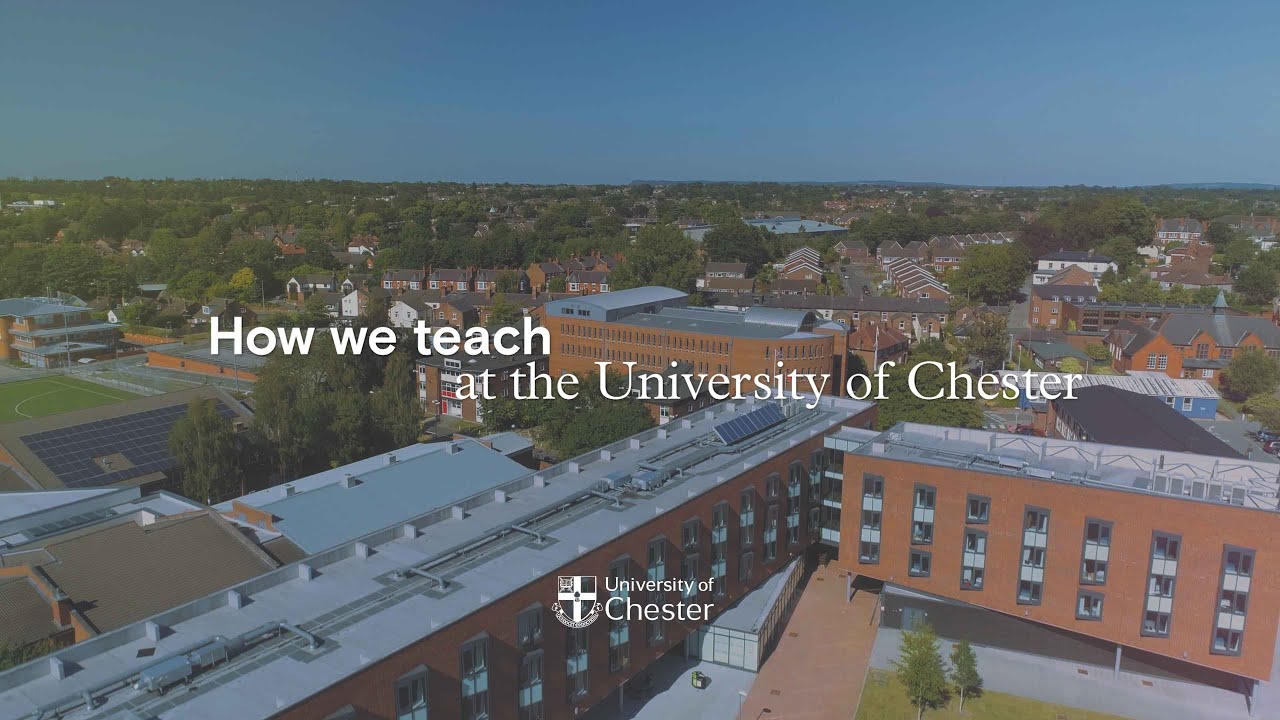
An aerial photograph of Exton Park with the text 'How we teach at the University of Chester'

How we teach at the University of Chester

Teaching  

Based in the School of Psychology, your teaching and learning will be centred around in-person study, such as workshops, seminars and practical classes that are informed by contemporary research and evidence with occasional live online sessions. Online learning materials will also be used to enhance knowledge and understanding. The learning experience can be tailored to your own areas of interest. 

Assessment 

You will be assessed entirely through coursework using a range of methods that promote applied, transferable and employability skills (e.g., through scientific reports, presentations, extended essays, etc.). Both formative and summative feedback is available to support your learning. 

Your Future Career

Job prospects

Graduates from our programme progress into a diverse range of roles working with children and their families in psychological, social work, forensic, health, and charitable settings. Graduates may also progress to further study at doctoral level.   

Careers service

The University has an award-winning Careers and Employability service which provides a variety of employability-enhancing experiences; through the curriculum, through employer contact, tailored group sessions, individual information, advice and guidance.

Careers and Employability aims to deliver a service which is inclusive, impartial, welcoming, informed and tailored to your personal goals and aspirations, to enable you to develop as an individual and contribute to the business and community in which you will live and work.

We are here to help you plan your future, make the most of your time at University and to enhance your employability. We provide access to part-time jobs, extra-curricular employability-enhancing workshops and offer practical one-to-one help with career planning, including help with CVs, applications and mock interviews. We also deliver group sessions on career planning within each course and we have a wide range of extensive information covering graduate jobs.

Entry Requirements

Honours Degree

A minimum 2.2 undergraduate degree. This degree should be in psychology or social sciences that have an acceptable component of psychology. Applications from professionals working with children and families who have degrees in other areas will also be considered on an individual basis.

Students from outside the UK are expected to hold qualifications broadly equivalent to UK standards - a Bachelor's degree (or equivalent) for postgraduate study.

To help you interpret these equivalents, please select your country/region of residence. This will provide details on equivalent entry requirements, as well as information about local representatives, events, and key contacts.

We accept a wide range of qualifications and assess all applications on an individual basis. Relevant work experience may also be taken into consideration where appropriate.

For more information on English entry requirements, including accepted qualifications, please visit International Entry Requirements.

IELTS

Postgraduate 6.5 (minimum 5.5 in each subskill)

Honours Degree

A minimum 2.2 undergraduate degree. This degree should be in psychology or social sciences that have an acceptable component of psychology. Applications from professionals working with children and families who have degrees in other areas will also be considered on an individual basis.

Fees and Funding

£9,090 for a full-time course (2026/27)

The tuition fees for home students studying courses in 2026/27 are £9,090 per year.

Guides to the fees for students who wish to commence postgraduate courses are available to view on our Postgraduate Fees page. Here you will also find information about part-time fees and project/placement year fees.

£15,500 (2026/27)

The tuition fees for international students studying courses in 2026/27 are £15,500 per year.

Irish Nationals living in the UK or ROI are treated as Home students for Tuition Fee Purposes.

For more information about International fees for Postgraduate study, go to our International Fees, Scholarship and Finance section.

Your course will involve additional costs not covered by your tuition fees. This may include books, printing, photocopying, educational stationery and related materials, specialist clothing, travel to placements, optional field trips and software. Compulsory field trips are covered by your tuition fees. 

The University of Chester supports fair access for students who may need additional support through a range of bursaries and scholarships. 

Full details, as well as terms and conditions for all bursaries and scholarships can be found on the Fees and Finance section of our website.

Who You’ll Learn From

Dr Julie Kirkham

Senior Lecturer
Dr Julie Kirkham

Dr Astrid Schepman

Associate Professor
Dr Astrid Schepman

Dr Annie Scudds

Senior Lecturer
Dr Annie Scudds

Dr Julian Lloyd

Senior Lecturer
Dr  Julian Lloyd