


Global Affairs, Politics and International Relations with History BA (Hons)

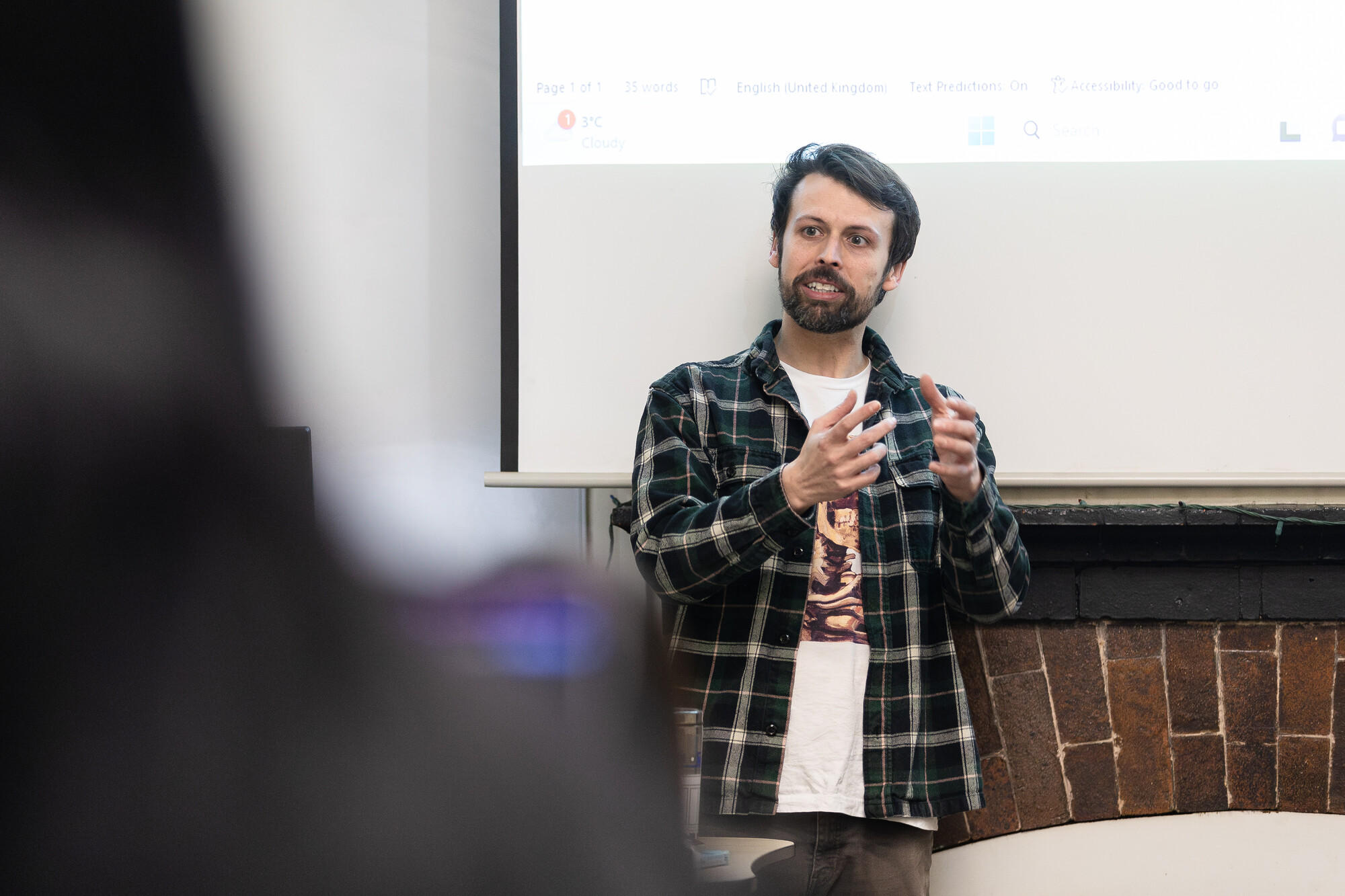
University students engaged in discussion and collaborative study, exploring key themes in global affairs, politics, and international relations with history BSc Hons degree.

Embark on a journey through time and across borders with our combined honours degree in Global Affairs, Politics and International Relations with History. This multidisciplinary course, offered at our renowned institution, is meticulously crafted to weave the rich tapestry of historical events with the dynamic complexities of today's global political landscape. 

You will dive into the pivotal moments and movements that have shaped the world. You will scrutinise the birth and evolution of nations, the formulation and fallout of treaties, and the rise and fall of empires, all while gaining an acute understanding of current international relations and global political strategies. This fusion of history with contemporary global affairs equips you with a profound perspective and the analytical skills to understand and influence the future. 

Our curriculum is designed to challenge and inspire. Through engaging lectures, stimulating seminars, and hands-on research projects, you will explore the interplay between historical events and modern-day international politics. Our distinguished staff team, renowned for their expertise and research, are not just educators but mentors dedicated to nurturing your intellectual growth and professional development. 

Beyond the classroom, the course offers experiential opportunities, study abroad options, and access to influential networks, providing a platform for real-world experience and professional exposure. This degree is not just an academic pursuit; it's a launchpad for a career in diplomacy, international organisations, academia, or any sector where an in-depth understanding of global affairs and history is paramount. 


Why You'll Love It

What You'll Study

The Law, Humanities and Social Sciences Foundation Year route offers you an important preparation year as part of your four-year degree.

Humanities and Social Science subjects, you will explore people and societies and their beliefs, cultures, power structures, stories and narratives, as well as critical inquiry into societal issues and global affairs with contemporary and historical perspectives.

The module introduces students to seismic historical developments and radical social movements that have impacted human society and culture. Additionally, it encourages the interpretation and analysis of visual materials, written texts and cultural artifacts, with exploration of their historical and social contexts. It also provides students with an introduction to academic skills relevant to the study of academic subjects within the humanities and social sciences.

Indicative content:

  • Introduction to the study of human society, culture, beliefs and language
  • Introduction to revolutionary developments and radical change in human society and culture
  • ‘Revolutions’ (such as agricultural, industrial, technological, scientific, political and social developments)
  • Concepts and debates surrounding the shifts from 'the traditional' to 'the modern' to 'the postmodern' 
  • Social movements, political activism and art for societal change
  • History, politics and literatures of class, gender, ‘race’, sexuality, and disability
  • Introduction to the interpretation of cultural texts, materials and artifacts in the humanities and social sciences
  • Exploring the historical and social contexts of visual and written materials and cultural artifacts
  • Cultural themes such as visions of science, gender representation, rebels and counterculture, and icons and heroes
  • Subject lenses and literatures on societal and cultural developments (including archaeological, historical, philosophical, religious, literary, political, geographical, and sociological perspectives)  
  • Learning to use and navigate a range of digital spaces specific to your subject
  • Understanding academic conduct and conventions for communicating information
  • Finding and using a range of academic sources relating to your subject
  • Field visit


The module introduces students to global issues that are significant concerns across the humanities and social sciences. Additionally, it encourages the interpretation and analysis of a range of texts and artifacts, and their role in shaping - and changing - understandings and representations of peoples, cultures, and places. The module also provides students with support to advance their academic communication and to expand their research into subject-specific literatures.

Indicative content:

  • Global literacy, cultural agility and the concept of the ‘global graduate’
  • Intercultural competencies in Higher Education (HE) settings
  • Migration and multiculturalism including archaeological, historical, political, literary, philosophical and religious dimensions  
  • Concepts, theories and ideologies of globalisation
  • Dimensions of globalisation including economic, political, cultural, and religious globalisation
  • English language and globalisation, and theories of cultural convergence, differentialism and hybridization
  • The expansion of world religions
  • Rise of Transnational Corporations (TNCs), globalised media industry and ‘big tech’ developments
  • Colonialism, anti-colonial resistances and their legacies and continuities
  • International Relations (IR), philosophical influences on IR theories, and international security issues
  • Cultures and texts including: writings about place; social and cultural representations through texts and artifacts; and, narratives & storytelling in shaping cultures and cultural meanings
  • Subject lenses and literatures on global and cultural issues (including archaeological, historical, philosophical, religious, literary, political, geographical, and sociological perspectives)    
  • Advancing digital and academic skills introduced during Term 1
  • Developing research and information literacy in relation to your subject
  • Creating an academic poster on a chosen research paper
  • Exploring genres of writing
  • Field visit
  • Local case study

Overall, the module will guide students to devise, plan and produce their own project about a topic relevant to their degree subject. As part of their project’s planning and research process, students will develop skills to locate, identify and review suitable and relevant literature. Additionally, the module will support students to recognise key features and techniques applied within a range of publications from across the humanities and social sciences, to include research papers, critical essays and creative texts.

Indicative content:

  • Identifying topics of interest and generating ideas for a project
  • Undertaking background research to inform a project title and project proposal
  • Formulating a project title or question
  • Devising, planning and producing a proposal for a project
  • Project development sessions to include generating ideas, research and planning, proposal and project development workshops, self-directed study, and individual tutorials with study supervisor
  • Producing a final piece of work in a relevant format
  • Recognising key stages in project development
  • Skills for developing a self-directed project, including skills for independent study and time management
  • Introduction to reflective cycles and reflective practice, and application of this to own project development experiences
  • Introduction to searching and reviewing literature for a project
  • Reading and reviewing example research papers
  • Recognising forms of research within humanities and social research
  • Recognising basic research methods and relevant terminology within published research papers
  • Reading and reviewing examples of creative publications
  • Recognising literary techniques and devices within pieces of creative writing
  • Reading and reviewing example pieces of journalism and other media texts
  • Recognising methods and styles of argument, and modes of persuasion including through written and spoken language, images, adverts and media
  • Subject lenses and literatures on research and critical inquiry (including archaeological, historical, philosophical, religious, literary, political, geographical, and sociological perspectives)   
  • Field visit

The information listed in this section is an overview of the academic content of the course that will take the form of either core or option modules and should be used as a guide. We review the content of our courses regularly, making changes where necessary to improve your experience and graduate prospects. If during a review process, course content is significantly changed, we will contact you to notify you of these changes if you receive an offer from us.

In your first year of study, you will develop an understanding of Global Affairs, the key questions and challenges in the world, why these matter and who is affected.  

You will study patterns of globalisation in the past and present, questioning Western and universalised approaches to world political, cultural, social and economic history through an examination of Eastern and Southern-led processes. Students will develop critical thinking, understanding the creation of the world system through processes of unequal power, violence and oppression contrasted with new and emerging technologies and broader change. You will interrogate the big questions in global affairs and international relations, exploring the theoretical lenses of international relations with the practice in world politics, enabling a deeper consideration of how the world might be understood and transformed. You will learn to decode global affairs, becoming empowered with the analytical and methodological tools required to comprehend how major global events are portrayed and re-presented in the media, news, documentary, film and academic texts. You will learn to unpack, and critically assess the narratives and representations surrounding significant international occurrences, doing so methodologically, and placing these in context and the valuable skills of political communication. You will explore key concepts, political ideas and key thinkers that underpin political and economic thought, enabling you to make sense of political ideas associated with industrialisation and modernity and how those developments have influenced political relationships between countries across time. It will provide students with the critical and reflective skills to be able to participate in the social, political and ideological nature of contemporary global debates. 

There are also History core modules at each level of study which give you the chance to explore the past in both breadth and depth. You will explore the past to allow them to prepare for your future through topics covering a thousand years of local, national and international history. Our inclusive curriculum means that you will challenge existing narratives about the past and will be encouraged to think critically about how and why these narratives have developed. You will also explore important themes and issues relating to race, diversity, gender, imperialism, conflict and climate change. Through the study of the past, we can make sense of our present and start to think about how to work together to shape our future.

At Level 4 you will explore historical debates about the nature and writing of history.

Core Modules

The module runs in two interrelated Streams, and students will take both.

In Stream 1, this module is designed to introduce students to the concepts, theories, and practices of Globalisation Then and Now through an internationalized overview of world political, cultural, social, and economic history, and to refocus contemporary debates on globalisation to the edges of the world system. This provides a critical approach to understanding globalisation as an historical process, and not a relatively new phenomenon. The module will introduce students to critical analysis of key phases in the evolution of world history in how human development over time has contributed to broader societal change through the discovery of new improving technologies on the one hand but has been a highly uneven process characterised by the unequal distribution of power, violence, discrimination and oppression on the other. The module questions Western and universalized approaches to understanding globalization through an examination of Eastern and Southern-led processes and experiences. It provides an historical and contextually driven approach to contemporary questions surrounding issues of underdevelopment and global inequality, key features in understanding politics and international relations. Students will gain an understanding of global forces that are historically inscribed and approach globalisation through multiple lenses and perspectives. Content will include:

  • Key theories of globalisation – World systems theory, dependency theory, and the use of multiple and layered international relations theories to understand globalisation
  • Three key approaches to globalisation: Hyper-globalists, integrationists, transformationalists, regionalists
  • World economic history: colonialism, colours and early capital
  • Silk routes, fur trade, slave trade and early global transformation: Who paid for industrialisation?
  • Industrialisation and deindustrialisation: the start of the ‘Great divide’
  • South Pacific encounters with globalisation: the persistence of the gift in Polynesian globalisation
  • Chinese globalisation: Confucian, communism, and copper
  • Indigenous peoples in global perspective: On the margins of the world system
  • South Asian forces of globalisation: sweatshops of the world or manufacturing centre of the world?
  • Latin American perspectives on globalisation: coffee, Chavez and communism.

In Stream 2, students will explore What's in the News? 

Stream 2 is designed to empower students with the analytical and methodological tools required to comprehend how major global events are portrayed and re-presented in the media, news, documentary, film and academic texts. This module explores the intricate process of decoding, unpacking, and critically assessing the narratives and representations surrounding significant international occurrences, doing so methodologically, and placing these in context. The module emphasizes understanding dominant and alternative framings, enabling students to question how and why certain perspectives are privileged.

Each week, students will engage with the theme of “What’s in the news?” to interpret, decode, and analyze current global affairs. Through this focus, students will enhance their ability to apply research methods, assess sources, and build arguments using documentary evidence, policy analysis, political speeches, and academic sources. This approach fosters essential skills in communicating ideas, critical thinking, and the broader methodological scholarship necessary for Global Affairs and International Relations. Students will learn to understand how to evaluate and use sources and foundational methods for the discipline.

Students on the Economics Pathway will undertake half of their content in Stream 2 focusing on Economics methods and materials.

History Wars will introduce you to the different ways people have conceived of History and the ongoing debates about what History is and how it should be done. During the module we will transform your perception of what History is and how we make History. By the end of the module you will be well on your way to becoming historians equipped to redefine History and who are trained in the skills and methodologies of cutting-edge, independent research.

Our Lectures will focus on key themes in the way History has been defined and on key issues at the heart of how we do History, such as the relationship between the past and History, the nature of historical truth, the status of sources, the idea of facts or events, and others, opening a wide range of perspectives.

Your Seminars will discuss focused contributions to debates on these themes and issues by particular historians, examining in depth through small group activities.

On completing this module you will emerge equipped with a broad knowledge and understanding to inform your analysis of historians writing about particular times and places on your optional modules and for your dissertation. Through the Seminars and smaller group discussions you will adjust to university, build community and lay a foundation in the transferable skills required across the course.

Optional Modules

This module is designed to introduce students to both the theory and practice of economic thought from a global perspective. In the first half of the module students will examine the history of economic thought through tracing the progress of economic ideas over time and learn about the work of some of the most influential economists that have shaped global affairs. In the second half of the module students will apply these economic ideas and thinkers to specific country case studies and compare the economic systems and approaches in different regions of the world. Indicative content will include:

  • Mercantilism, Physiocracy, Classical Economics, Marxist Economics, Neoclassical Economics, Keynesian Economics, The Austrian School
  • Adam Smith, Thomas Malthus, David Ricardo, John Stuart Mills, Jeremy Bentham, Karl Marx, John Maynard Keynes, Alfred Marshall, Joseph Schumpeter, Milton Freedman, Joseph Stiglitz
  • Market Capitalism, Communism, Transitional Economies, Developing Economies, New Traditional Economies
  • USA, Japan, France, Sweden, Germany, Russia, Poland, Hungry, Yugoslavia, Slovenia, China, India, Mexico, Iran

In this module you will examine political ideas such as freedom, equality, justice and democracy that have shaped today’s world. You will develop knowledge of the major concepts and ideas underlying political thought which primarily emerged out of and are associated with western political traditions. These ideas will be unpacked and explored through key thinkers and case studies in this module from classical to contemporary political thought. Indicative ideas may include power and freedom, democracy and rights, equality and justice, individual and state, security and militarism, gender, sexuality and queerness, race and nation, and class and capitalism. Students will learn to critically analyse and apply these ideas in both institutional and organisational analyses and through case study scenarios.

Indicative case studies rooted in the European context may include movements such as Just Stop Oil, Black Lives Matter, and the #MeToo Movement. Global Surrogacy; security approaches such as UK Immigration policy; UK National Security policy; Global tobacco control; environmental justice such as UK Climate Coalition; Just Stop Oil; or Fracking.

Indicative institutions within the European context include government and political institutions and European institutions, elections, political parties and interest groups, constitutionalism, bureaucracy and public service, policy-making, civil society and social movements.

Optional Language Modules

This module enables students with A-Level German or equivalent to further develop their grammar, vocabulary and expression and apply these to real world situations.You will work with written and recorded texts on a range of cultural, personal and social topics and will develop your oral and written communication skills at Post-A level.

This module is designed for students that have completed A-Level or equivalent in French. You will further develop your grammar, vocabulary and expression and apply these to real world situations. You will work with written and recorded texts on a range of cultural, personal and social topics and will develop your oral and written communication skills at Post-A level.

This module is designed for students that have completed a A-Level or equivalent in Spanish. You will further develop your grammar, vocabulary and expression and apply these to real world situations. You will work with written and recorded texts on a range of cultural, personal and social topics and will develop oral and written communication skills at Post-A level.

This module is designed for students who have completed GCSE in Chinese or equivalent. You will further develop your grammar, vocabulary and learning conventions for spelling and pronunciation. You will work with written and recorded texts on a range of cultural, personal and social topics and will develop oral and written communication skills at an intermediate level.

This module is designed for students who have completed GCSE or equivalent in French. You will further develop your grammar, vocabulary and learning conventions for spelling and pronunciation. You will work with written and recorded texts on a range of cultural, personal and social topics and will develop oral and written communication skills at an intermediate level.

This module is designed for students that have completed GCSE or equivalent in Spanish. You will further develop your grammar, vocabulary and learning conventions for spelling and pronunciation. You will work with written and recorded texts on a range of cultural, personal and social topics and will develop oral and written communication skills at an intermediate level.

This module provides the opportunity to study a new language from scratch and introduces you to basic grammar, vocabulary and cultural contexts. You will apply the language to practical situations using both oral and written skills. 

The information listed in this section is an overview of the academic content of the course that will take the form of either core or option modules and should be used as a guide. We review the content of our courses regularly, making changes where necessary to improve your experience and graduate prospects. If during a review process, course content is significantly changed, we will contact you to notify you of these changes if you receive an offer from us.

In your second year of study, you will be immersed in the most important contemporary challenges in global affairs, with opportunities for experiential learning throughout the year, and a placement either in the UK or abroad in the third term.

You will study global conflict, security and peacebuilding and have opportunities to engage with specialist practitioners working in protracted conflict around the world, seeing inside the missions that work on building peace and engaging with the practices that transform conflict. You will study International trade, power and diplomacy to understand the economic, cultural, political, diplomatic and societal relationships that combine to shape our world. You will explore global development considering global historical and contemporary injustices have created contemporary development inequalities, and learning about what makes a real transformational impact and how to do that through a series of professionally directed assignments. You will engage with the philosophies, theories and ethics beyond the West and the relationship of the West and non-West in geo-politics in both the past and present, learning to consider ‘whole world’ thinking as you engage with global challenges and problem-solving to create solutions that have impact.

Finally, you will engage in researcher, practitioner and professional development to enhance your theoretical, applied and professional skills in the field of global affairs. 

At Level 5 in history, on Rethinking History and Challenging History you will select historical case studies from different periods and places to explore how to rethink and challenge existing interpretations.

Core Modules

This module will introduce students to a range of theories, ideas and processes related to international trade from several perspectives: economic, historical, political and international. Students are shown how international trade and commercial relationships impact, alter and create political and social connections. Student learn how political, social and cultural institutions play a large role in facilitating these arrangements, and how relationships develop and change over time. The exercise of power in international relationships, ad its impact on trade and through the form of economic diplomacy is explored through the module.

The content will include topics such as:

  • The origins of international trade
  • The creation and role of the World Trade Organisation and other international organisations
  • Barriers to trade (tariffs and quotas, political)
  • International Trade Agreements and disagreements
  • Regional integration areas
  • The role of currencies and exchange rates
  • Globalisation and finance
  • Global crisis and their effects on trade
  • Economic diplomacy and trade
  • Economic destabilisation and trade
  • Changing power in international trade: The rise of China, India, Brazil
  • Effects of and constraints of international trade on development and environment

The aims of the module are to:

  • Enable student appreciation of the role and relevance of international trade and international politics and their relationship to one another.
  • Facilitate student understanding of the economic rationale behind the existence of international trade.
  • Ensure student appreciation of the complexity of commercial relationships and their inter-relationship with political systems and with power in the international arena.
  • Facilitate an appreciation of the changing nature of international trade over time and in terms of institutions, instruments, agreements and countries' roles.
  • Enable application of theory to practice.

This module provides students with an in-depth understanding of contemporary geopolitics, critical political ideologies, and influential leaders from a global perspective. Designed to broaden students’ knowledge of international relations and political thought beyond Western-centric paradigms, it equips them with the analytical tools and critical thinking skills needed to engage with the complex dynamics of current global affairs.

Through this course, students will explore key geopolitical theories, foundational concepts, and historical legacies, including the impact of colonialism and the Cold War. They will examine power centres and regional dynamics across various regions—such as the Middle East, Asia, and Latin America—and gain insights into security, economic, environmental, technological, and humanitarian dimensions of geopolitics. Additionally, the module presents alternative perspectives on international relations by examining non-Western political leaders, ideologies, and movements that have shaped both regional and global politics.

The content will include:

  • Introduction to Non-Western Political Thought: Overview of the module, defining key concepts, and the significance of studying non-Western political ideas.

  • Alexander Dugin and Eurasianism and Multipolarity: Explore the political ideology of Alexander Dugin and its impact on Russian foreign policy; Eurasian geopolitics and Multipolarity.

  • Hugo Chávez and Bolivarianism: Examine the political ideas of Hugo Chávez, the founder of Bolivarianism in Latin America, and their influence on regional politics.

  • Seretse Khama and African Leadership: Study the life and leadership of Seretse Khama, the first President of Botswana, and his contributions to non-violent struggle, African independence and democracy.

  • Xi Jinping and Chinese Political Thought: Analyse the political thought of Xi Jinping and its role in shaping China's domestic and international policies, multilateralism and the new global order.

  • Regional Case Studies: Investigate additional non-Western political leaders and ideas from diverse regions, such as Latin America, the Middle East, and Southeast Asia.

The Module aims are: 

- Foster a comprehensive understanding of Global Affairs and International Relations by exposing students to diverse political ideas, leaders, and ideologies from both Western and non-Western contexts, encouraging a nuanced perspective on global politics.

- Develop students' critical thinking and analytical skills as they examine the historical, cultural, and ideological contexts that shape contemporary geopolitics and international relations.

- Equip students with the theoretical knowledge and practical research skills necessary to assess the roles, strategies, and impacts of major state and non-state actors in global politics.

- Encourage students to engage in informed discussions, contrasting non-Western and Western political thought, to contribute thoughtfully to the discourse on global affairs and predict future geopolitical trends.

On Rewriting History, you study an historical subject from a specific chronological and geographical setting. You will work with a members of staff to re-evaluate what historians have argued about those subjects, and to produce your own histories.

There will be a choice of subjects from which to select your preferences, which may include the following:
• The Vikings – A Local-Global Diaspora
• Witchcraze
• Fear City: Danger, Disorder, and Culture in the Modern Metropolis
• The Holocaust

During this module you will consider how historians have defined the subject, what they have argued about the causes and consequences of the subject, what evidence they have deployed to support their arguments, and how convincing you find their approaches and conclusions.

Along the way you will hone the skills you developed from Global Histories, History Wars, Pre-Modern Movements and Modern Spaces in analysing historical arguments, and constructing your own historical answers.

By the end of the Module, you will be well on your way to becoming a historian who is chronologically aware, historiographically well-informed, and curious, and who is trained in the skills and methodologies of cutting-edge, independent research.

History at Work will introduce you to the ways in which History is employed in a range of professional contexts – schools, museums, and the media – and provide you with experience of applying History to those contexts. During the Module we will explore the professional frameworks, government legislation, professional bodies, and ethical codes which structure the application of History in these contexts. Along the way, we will meet with professional practitioners to discuss their role, career routes, and experiences of working in these contexts.

Our interactive Lectures will focus on the policy and regulatory frameworks, confronting crucial problems in the intersection between education, heritage, the media, and equality and diversity.

Your small group activities will focus on dissecting those policy and regulatory frameworks, helping you to devise your own, improved professional framework.

By the end of the Module, building on the knowledge and understanding you developed in History Wars of how definitions of history relate to contexts and audiences, you will have a foundation to become a public historian who is professionally informed and experienced, having produced a real world, authentic professional document. This will prepare you for Curious Chester, where you will work to an external brief to produce a professional public history resource and reflect on your professional experiences.

Optional Modules

This module is designed to equip students with the essential skills and knowledge required to excel in research, practice, and professional life. Emphasising a transdisciplinary approach, experiential learning and practitioner tools and approaches, the module aims to enhance critical thinking, research abilities, and practical skills essential for careers in Global Affairs, International Relations and related fields. Students will engage with theoretical concepts, practical and practitioner-based tools and applications, and professional development, with an emphasis on current global challenges and trends, enabling them to become informed, effective, and adaptable professionals. 

Indicative content includes:

  • In-depth analysis of contemporary global challenges, such as climate change, conflict resolution, humanitarian crises, and global health issues.
  • Examination of current geopolitical trends and their implications for international relations.
  • Case studies on the role of international organisations (e.g., UN, IMF, World Bank) and regional organisations in addressing global issues.
  • Analysis of real-world policy documents, international agreements, indicators and schematics.
  • Use of qualitative and quantitative tools and information eco-systems for research, practice and professional work.
  • Communication skills for effective writing, public speaking, and international negotiations.
  • Intercultural awareness and competency to navigate diverse international environments.
  • Ethical decision-making and the importance of professional ethics

This module provides a structured, university-level work placement for 4, 5 or 7 weeks as one continuous block / period with a placement provider (i.e. a local employer from the private, public, or charitable sector). It is designed to enhance your professional skills in a real-world job setting.

The placement can either be organised by you or with support from university staff.

All work placements within this module must be university-level; this means:

  • Undertaking high-skilled work commensurate with level 5 study (e.g. report writing, attending meetings, delivering presentations, producing spreadsheets, writing content on webpages, social media, marketing services/products etc)
  • Physically placed (albeit part of it can be hybrid) within an employer setting in one continuous block / period for 4, 5 or 7 weeks for a minimum of 140-147 hours over the course of the entire work placement
  • Where applicable, your existing part-time employer can be approached/used as the placement provider, if the high-skilled work criterion above is fulfilled for the full duration of the placement.
  • All quality assurances/agreements provided by the University are adhered to, by you and the employer.

The work placement context may not necessarily, reflect your degree discipline per se, but rather, it will give you an enriched experience to enhance your professional skills in a real-world job setting.

Optional Language Modules

The module will provide the opportunity to further develop your language skills, building on your previous learning at advanced level. The second half of the module includes a placement abroad or, alternatively, a project on a sustainability issue in a target language country. The first half of the module will prepare you for placements abroad where appropriate as well as a deeper understanding of sustainability in target language contexts. Students of more than one language may take one language in the first half of the module and spend their time abroad developing a different language. 

The module will provide the opportunity to further develop your language skills, building on your previous learning at intermediate level. The first half of the module includes intensive taught sessions in interactive workshop mode which will prepare you for placements abroad or self-directed language development. The second half of the module includes an placement abroad or, alternatively, a project on a business or tourism issue in a target language country. Students of more than one language may take one language in the first half of the module and spend their time abroad developing a different language. 

The module will provide the opportunity to further develop your language skills, building on your previous learning at beginner level. The first half of the module includes intensive taught sessions in interactive workshop mode which will prepare you for placements abroad or self-directed language development. The second half of the module includes a placement abroad or, alternatively, a project on a cultural issue in a target language country. Students of more than one language may take one language in the first half of the module and spend their time abroad developing a different language. 

  • The multiple facets of global citizenship
  • Ethical engagement and practice
  • The United Nations Sustainable Development Goals
  • Cross-cultural issues and sensitivity
  • Intercultural communication
  • Culture shock
  • Cultural adjustment
  • Self- assessment of needs: identification of the range of transferable skills, competencies and attitudes employees need and employers expect graduates to possess-with a strong focus on understanding the intercultural competencies (ICC) needed to live and work abroad.
  • Critical analysis/evaluation of individual requirements in relation to culture/cultural adjustment/culture shock/visas/medical.
  • Critical analysis/evaluation of skills already acquired in relation to key skills related to ICC.
  • Devising strategies to improve one’s own prospects of working abroad in the future.
  • Devising an action plan to address gaps in transferable skills based on organisational analysis and sector opportunities.

Part A:      

Preparation for Experiential Overseas Learning will take place at the University of Chester during level 5 and will include:  

  • The multiple facets of Global citizenship
  • Ethical engagement and practice
  • Cross-cultural issues and sensitivity
  • Intercultural communication

Theories, models and strategies of learning

  • Theories and models Intercultural competence
  • Theories and models of Integration and Multiculturalism
  • Critical thinking skills and models of Reflection
  • Experiential learning models
  • Self-directed experiential learning

Personal and placement-related skills

  • Enhanced independence
  • Improved command of multicultural behaviour
  • Increased knowledge and confidence in their individual facets of personal identity
  • Effective time management and organisational skills
  • Project management – working away from University and independent study
  • Self-management and personal development
  • Team building and team work

Part B:            Overseas

Students will engage in experiential learning activities overseas for at least 150 hours 

Optional International Placement Year

Preparation for the year abroad will take place in Chester during level 5 and will include:

  • Cross-cultural issues and sensitivity
  • Host-country orientation, study methods– economic, political and social reality of the country
  • Orientation specific to exchange – health, education, gender issues
  • The United Nations Sustainable Development Goals
  • Practical matters relating to living and studying in the wider world

Theories, models and strategies of learning

  • Critical thinking skills, experiential learning and models of reflection

Personal and placement-related transversal skills

  • Effective self-motivation and independent resourcefulness
  • Effective time management and organisational skills
  • Project management – working away from University and independent study
  • Self-management and personal development

Whilst abroad:

You will undertake study at one of the University of Chester's partner universities or undertake and approved work placement or virtual placement. If you are a student,  it is expected that you will choose a series of modules at the university abroad which must be agreed by the host institution and the Module Leader. you must supply details of you modules on a learning agreement within 4 weeks of arrival at the host university.

The information listed in this section is an overview of the academic content of the course that will take the form of either core or option modules and should be used as a guide. We review the content of our courses regularly, making changes where necessary to improve your experience and graduate prospects. If during a review process, course content is significantly changed, we will contact you to notify you of these changes if you receive an offer from us.

In your third year of study, you will refine your research, applied and professional skills in Global Affairs, Politics and International Relations, with opportunities to dive deep into specialised subjects and pursue an independent project aligned with your interests.

This year you will explore a range of modules including Africa in the World, where you will gain a nuanced understanding of African politics and international relations from "the inside", through the concepts, theories, paradigms and contexts in which the political, economic and social logic of Africa come together and which engage and challenge contemporary thinking and dominant thinking about politics and international relations. You will explore sustainability as a global challenge, that addresses the urgent need to balance economic wellbeing with social equity and the environment.

In Global Communication, you will critically analyse the strategies used in political communication, and their profound impact on global governance and power structures.

In International Political Economy you will investigate the intricate relationship between global politics and economics, and how power dynamics, trade policies and financial systems shape the world, offering fascinating insights into the forces that influence global prosperity and inequality and drawing on cases from Southeast Asia, the Middle East, Latin America and our own place in the world.

You will undertake a major project in the field of Global Affairs, Politics and International Relations, with guidance from specialist researchers and practitioners with the option to choose the format of this and depending on your professional aspirations. You might choose a dissertation, a policy paper or a research article ready for publication.

The year will end with a professional conference showcasing your specialist knowledge and understanding to a wider audience. 

At Level 6 in history, on History at the Cutting Edge, you will select a case study of a particular historical period or place and work to analyse this with particular reference to the original primary sources.

Core Modules

The quest to understand the contemporary politics and international relations of the African continent often appears elusive. That this should be so is not surprising since it has frequently been driven by a need to approach the complexities of the continent from an explanatory scheme that is congruent with Westernisation and liberalism and rooted in western epistemological traditions and experience. Instead, this module explores African politics and international relations from "the inside", through the concepts, theories, paradigms and contexts in which the political, economic and social logic of Africa come together and which engage and challenge contemporary thinking and dominant discourses about society, peoples, cultures, international relations and global affairs.

Content will include reference to: 

  • A postcolonial "African" critique of the disciplines of politics and international relations, the Global system, its origins and nature.
  • Africa in, and of, the Global South and BRICS and at the centre of Critical International Political Economy.
  • The Political Instrumentalization of Disorder - Modernity, Tradition, Power, Progress and Legitimacy in Africa.
  • The Postcolonial African State and Post-State - Political Thought and Philosophical Critique; the state as a Matrix; Crisis States, Collapsed States, New States, developmental and post-developmental states.
  • Being and Belonging: Origin and culture, land, ethnicity, religion, social class.
  • The Productivity of Economic and Political Failure: Migration, Trade and the Informal Economies of the African Sub-Regions; Debt, Trade and Aid; development and Post-Development.
  • Conflict, Peace and Justice in Africa - Restorative, Distributory, Reparative, Reconciliatory and Indigenous African Approaches and Practices.
  • Modernity: Africa as a critical site of modernity and legitimacy in the world.

The primary aims of this module are:

  • To provide a critical understanding of the historical, political and economic positionally of Africa, in and of the world, as seen through multiple paradigms, theories, concepts and contexts which shape our understanding.
  • To offer perspectives and insights that engage with, stand in contrast to, and challenge, dominant paradigms of the global North about politics and international relations, as seen through the lens of 'the other'.
  • To develop critical thinking amongst participants about the subject of inquiry.
  • To develop research capacity appropriate to level 6 of study and as foundational to success for postgraduate studies.

Following the seventeen sustainable development goals initiated by the United Nations in 2015, this module embedded the social, economic and environmental challenges we encounter in the next century to examine the intersection of crisis management, humanitarian action, and economic strategies for resilience and recovery. Students will explore critical themes, including disaster response, the role of humanitarian organizations, and the socio-economic challenges of recovery. It delves into how societies and international systems respond to disasters, both natural and man-made, and how these responses influence long-term recovery, peace, and economic stability. The module emphasizes the importance of sustainable and equitable recovery practices and encourages students to evaluate various international approaches to managing crises.

In this module, students will develop a deep understanding of the political, economic, and environmental factors that contribute to disasters and crisis, as well as analyse the short-term and long-term impacts of these crises on societies and global stability. They will critically assess the principles, roles, and ethical challenges involved in humanitarian responses, using real-world cases to explore the complexities and dilemmas inherent in delivering aid across diverse crisis situations.

Additionally, students will examine economic theories and development practices that promote sustainable recovery and resilience, with a particular focus on reconstruction strategies that address underlying social and economic vulnerabilities. By integrating theoretical frameworks with practical case studies, students will develop the skills needed to propose effective solutions for real-world crises, addressing both immediate humanitarian needs and the challenges of long-term resilience to crisis and economic development.

 Key Themes and Topics

  1. Understanding Crisis and Disasters

Definition and types of crises: natural disasters, economic collapses, pandemics, and political instability

 Root causes and contributing factors, including climate change, inequality, governance, and resource scarcity

The immediate and long-term impacts of crises on societies, economies, and international relations

2. Humanitarian Response and Ethics

The principles of humanitarian action: neutrality, impartiality, and independence

The role of humanitarian organisations, NGOs, and international bodies in crisis response

 Ethical dilemmas in humanitarian aid: intervention vs. sovereignty, short-term relief vs. long-term development

3. Peace Economics and Post-Crisis Recovery

 Economic theories and models for sustainable recovery

 Reconstruction and development: rebuilding infrastructure, restoring economies

 Case studies on successful and unsuccessful recovery efforts, examining factors that contribute to resilience

4. Global Challenges and Emerging Issues in Crisis Management

The role of technology, social media, and big data in disaster response and recovery

 Cross-border challenges

 Climate adaptation and resilience planning in vulnerable regions

5. Big data and analysis

Use of data sets to understand resilience, disaster responses, and policy interventions to mitigate the negative impacts of the climate and disaster to the sustainable development

6. Amartya Sen and his model

Amartya Sen's model of development, known as the capability approach, focuses on the freedom of individuals to lead the lives they value. Sen believed that development should be measured by the extent to which it increases human capabilities, rather than by economic growth or technical progress.


The Major Independent Project in Global Affairs is designed to provide an opportunity for sustained and independent study in the final year of the Global Affairs, Politics and International Relations Programme. It intends to develop knowledge of, and critical insight into, a topic of the student's choice within the subject area under study. Students are enabled to undertake first-hand enquiry and encouraged to develop an analytical and reflective approach to the subject identified for study. The module aims to encourage the articulation of a critically informed perspective on the subject being studied. It also intends to enable the production of a coherent document of rigorous academic standards.

There are three routes within this module, each producing a major piece of written work through different methodologies and formats.

Route 1: Major Independent Project in Global Affairs: Dissertation

Route 2: Major Independent Project in Global Affairs: Policy Document

Route 3: Major Independent Project in Global Affairs: Field/Archival Immersion and Publishable Research Article

Each of these routes combine scheduled teaching and learning, individual supervision, and independent research. The number of hours for each, depend upon the route taken. In addition, those on the Field/Archival Immersion route will spend dedicated hours on this. The total number of hours for the module add up to 400.

The module concludes with a Professional Conference for students to showcase their work.

History at the Cutting Edge will engage you in analysing an unsolved historical problem with which one of our staff is engaged, opening up the historiography through the Secondary Sources to ask new questions and interrogating the Primary Sources to provide new answers.

You will select an historical problem from those on offer each year, spanning the pre-Modern and Modern periods. 

Our Lectures will draw on our knowledge and understanding of the problem to help you review what has been written, break down the problem into logical steps, and identify the relevant evidence.

Your Seminars and small-group activities will involve active, critical discussion and analysis of what has been written and of the evidence to develop new ideas.

Building on your experiences in optional modules across the Course, by the end of the Module you will have advanced experience in applying the skills and methodologies of cutting-edge, independent historical research and argument.

The information listed in this section is an overview of the academic content of the course that will take the form of either core or option modules and should be used as a guide. We review the content of our courses regularly, making changes where necessary to improve your experience and graduate prospects. If during a review process, course content is significantly changed, we will contact you to notify you of these changes if you receive an offer from us.

How You'll Learn

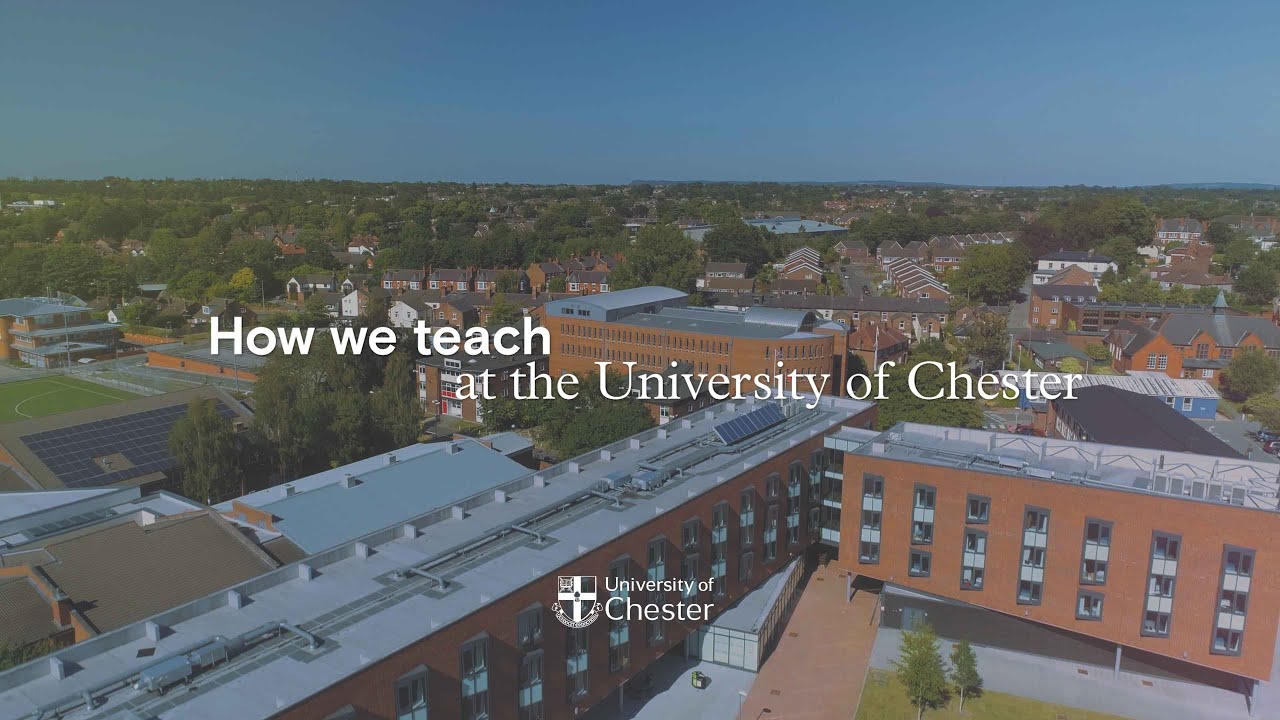
An aerial photograph of Exton Park with the text 'How we teach at the University of Chester'

How we teach at the University of Chester

This course is delivered in three terms of ten weeks each. In each term, you will study 40 credits comprised of either one or two modules. Within these modules, you will have the opportunity to specialise in areas that interest you the most.

If studied, the Foundation Year, as with the following years of study, will be taught in three 10-week blocks across an academic year. Each block will comprise of a large 40-credit subject-specific module that includes a breadth of topics and subject skills. You will have on average 12-14 hours of contact time per week during the Foundation Year. There may be variations to this where subject practical or specialist space teaching is included.

Scheduled contact hours in the classroom range between approximately six and ten hours per week per module, depending upon level of study and the complexity of the material being taught. You can expect to take part in interactive sessions comprising of lectures, seminars, workshops, and peer-led seminar discussions. The course blends theoretical, practitioner and professional development, allowing you to apply your knowledge and skills in a real-world settings and prepare you for a leadership role in the future.

In addition to timetabled sessions, you will spend an average of 30-34 hours a week on your studies which may include weekly asynchronous learning activities for each module, undertake wider reading, using the University’s library, individual tutorial time with staff, working with peers, and preparing work for summative assessments. 

Teaching is delivered by our distinguished academic team, composed of experienced professionals and renowned academics. They will provide insightful guidance, fostering critical thinking, and analytical skills. They are not just educators but mentors who are invested in your success, offering personalised attention and supporting your academic and professional aspirations. 

You will be assessed through a broad range of research, practitioner and professional coursework, that demonstrates your knowledge, skills and understanding and provides you with your career aspirations. Each assessment is comprehensively supported by specialist staff, who provide workshops around assessment. Formative feedback is provided, prior to the submission of work.

Assessments may include reading diaries, critical reviews, case analyses, portfolios, posters, podcasts, policy documents, conflict mapping exercises, resilience analysis and evaluations of projects, geo-political crisis response reports, digital scrapbooks, simulated debates, independent research and practitioner and professional based tools and applications. 

These assessment methods optimise your learning and skill development for a diverse range of learners with unique needs and preferences, and enable you to build a wide array of skills to thrive in the workplace. This will help you to ensure that you are exposed to the different types of tasks you encounter in the workplace providing you the opportunities to build on your skills and confidence to manage these effectively. 

All teaching is delivered by experienced academics and practitioners, with the fundamental principles of the Chester Future Skills Curriculum at its core - building your subject competence, confidence, and key transferable skills to shape you into a world-ready Chester graduate.

Your Future Career

Job Prospects

Graduates of a degree in Global Affairs, Politics, and International Relations with History have a diverse array of career opportunities, leveraging their deep understanding of historical context, political systems, and international relations. Potential career paths include:

  • Diplomacy and Foreign Service
  • International Organisations and NGOs
  • Public Policy and Government
  • Historical Research and Academia
  • Intelligence and National Security
  • Journalism and Media
  • Political Consulting and Lobbying
  • International Business and Trade
  • Legal Careers
  • Cultural and Heritage Organisations

These career paths benefit from the graduates' ability to critically analyse and synthesise information from a historical perspective, understand complex political and international systems, and navigate the global landscape effectively.

Careers Service

The University has an award-winning Careers and Employability service which provides a variety of employability-enhancing experiences; through the curriculum, through employer contact, tailored group sessions, individual information, advice and guidance.

Careers and Employability aims to deliver a service which is inclusive, impartial, welcoming, informed and tailored to your personal goals and aspirations, to enable you to develop as an individual and contribute to the business and community in which you will live and work.

We are here to help you plan your future, make the most of your time at University and to enhance your employability. We provide access to part-time jobs, extra-curricular employability-enhancing workshops and offer practical one-to-one help with career planning, including help with CVs, applications and mock interviews. We also deliver group sessions on career planning within each course and we have a wide range of extensive information covering graduate jobs and postgraduate study.

What Our Students Think

History Student Tour of Historical Places

Join history student Bailey for a tour of historical places discovered through her degree

Entry Requirements

112 UCAS points

UCAS Points

112 points

GCE A Level

Typical offer – BCC-BBC

History or a suitable alternative such as Classical Civilisation, English, Philosophy, Religious Studies, Government and Politics, Sociology or Law

BTEC

DMM including one of the following GCE A Level subjects: History or a suitable alternative such as Classical Civilisation, English, Philosophy, Religious Studies, Government and Politics, Sociology or Law

International Baccalaureate

28 points, including 5 in HL History or an alternative such as English, Philosophy or Social and Cultural Anthropology

Irish/Scottish Highers

Irish Highers - H3, H3, H3, H3, H4 including History or an alternative such as English, Politics & Society or Religious Education

Scottish Highers - BBBB, including History or an alternative such as English or Religious Studies

Access requirements

To include 45 credits at level 3, 30 of which must be at Merit (including 15 in History)

Extra Requirements

Welsh Baccalaureate Advanced and A level General Studies will be recognised in our offer. We will also consider a combination of A Levels and BTECs/OCRs.

Students from countries outside the UK are expected to have entry qualifications roughly equivalent to UK A Level for undergraduate study and British Bachelor's degree (or equivalent) for postgraduate study. To help you to interpret these equivalents, please select your country of residence to see the corresponding entry qualifications, along with information about your local representatives, events, information and contacts.

We accept a wide range of qualifications and consider all applications individually on merit. We may also consider appropriate work experience.

For more information on our entry requirements, please visit International Entry Requirements.

English Language Requirements

IELTS

6.0 (minimum 5.5 in each band)

72 UCAS points

UCAS Points

72 points

GCE A Level

72 points, including grade D at A Level,

History or a suitable alternative such as Classical Civilisation, English, Philosophy, Religious Studies, Government and Politics, Sociology or Law

BTEC

MMP including one of the following GCE A Level subjects: History or a suitable alternative such as Classical Civilisation, English, Philosophy, Religious Studies, Government and Politics, Sociology or Law

International Baccalaureate

24 points, including 5 in HL History or an alternative such as English, Philosophy or Social and Cultural Anthropology

Irish/Scottish Highers

Irish Highers - H4, H4, H4, H4, H4 including History or an alternative such as English, Politics & Society or Religious Education

Scottish Highers - CCDD, including History or an alternative such as English or Religious Studies

Access requirements

Pass overall (including 15 credits in History)

Extra Requirements

Welsh Baccalaureate Advanced and A level General Studies will be recognised in our offer. We will also consider a combination of A Levels and BTECs/OCRs.

Fees and Funding

£9,790 per year for a full-time course (2026/27)

The full-time tuition fees for Home students entering in 2026/27 are £9,790 a year, or £1,590 per 20-credit module for part-time study.

£14,950 per year for a full-time course* (2026/27)

The tuition fees for international students studying programmes in 2026/27 are £14,950 per year for a full-time course. This fee is set for each year of study.

For courses with a Foundation Year, the tuition fees for Year 1 are £11,250 and £14,950 for Years 2-4 in 2026/27.

Tuition fees for Home students for the Foundation Year in 2026/27 will be £5,760 (subject to Parliamentary approval) for the first foundation year of a four-year course. Tuition fees for subsequent years will be charged at the standard undergraduate tuition fee rate for that academic year. Standard undergraduate tuition fees for Home students for the academic year 2027/28 will be £10,050 for full-time students and £7,530 for part-time students (subject to Parliamentary approval). Fees for subsequent years may be subject to increase in line with the Government fee cap

  Foundation (First) Year Second Year onwards per year
Home Students £5,760 full-time fee for the first foundation year (2026/27) £10,050 full-time fee per year from the second year onwards (2027/28)
International Students * £11,250 full-time fee for the first foundation year (2026/27) £14,950 full-time fee per year from the second year onwards (2026/27)

* For courses which accept applications from International Students

Who You'll Learn From

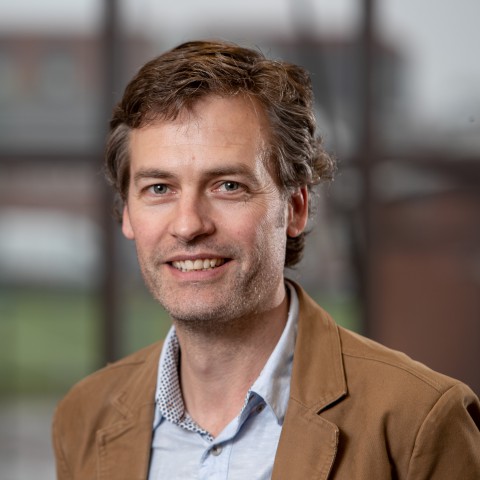
Dr Michael Francis

Programme Leader and Senior Lecturer, Global Affairs, Politics and International Relations
Dr Michael Francis

Dr Rachel Massey

Senior Lecturer
Dr Rachel Massey

Dr Kara Critchell

Senior Lecturer
Dr Kara Critchell

Dr Suzanne Francis

Associate Professor
Dr Suzanne Francis

Dr Mark Bendall

Senior Lecturer
Dr Mark Bendall

Dr Rebecca Andrew

Senior Lecturer
Dr Rebecca Andrew

Dr David Harry

Senior Lecturer
Dr David Harry

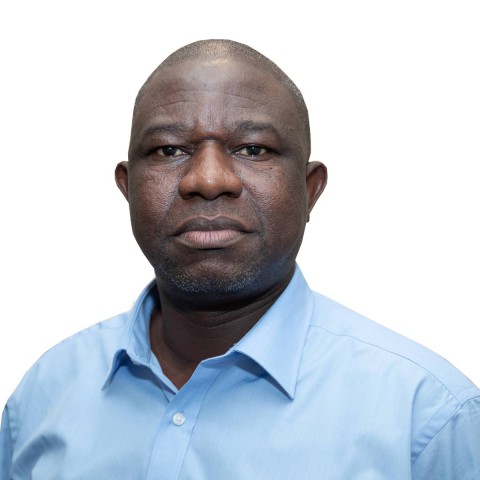
Dr Wasiu Are

Senior Lecturer
Dr Wasiu Are

Enquire about a course