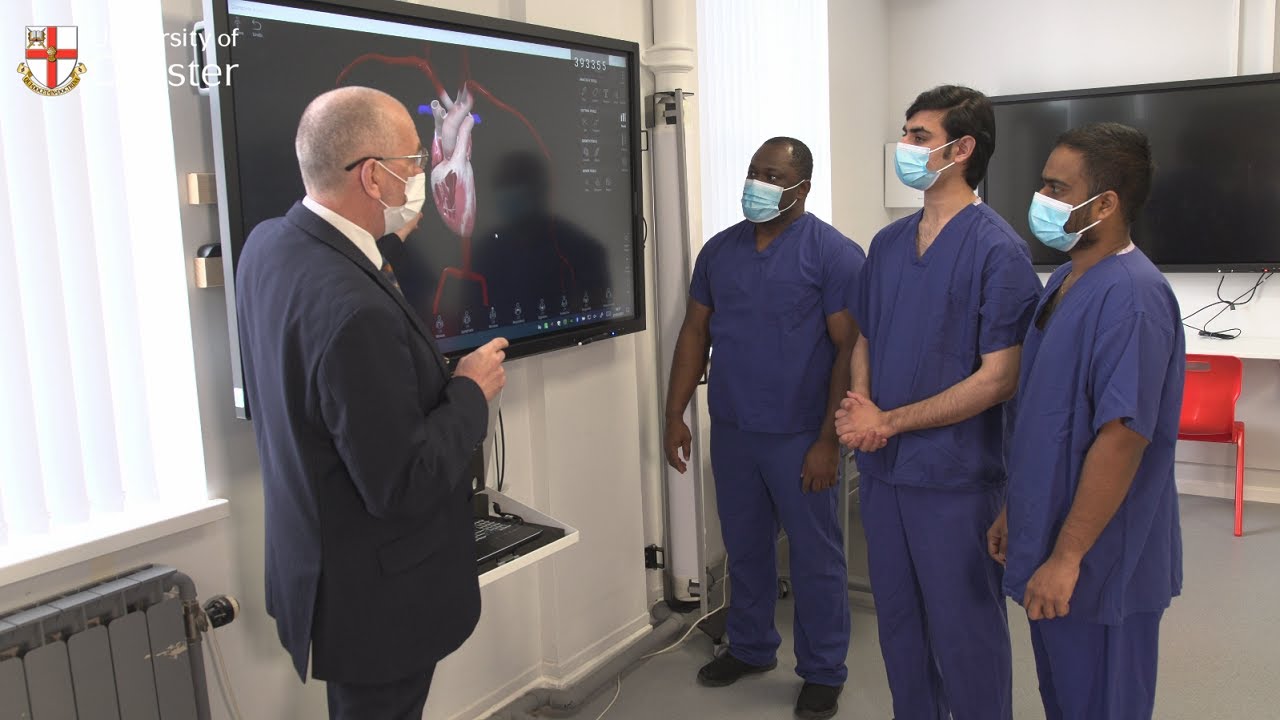
Graduate Entry Medicine students practicing clinical skills and patient care during a hands-on training session.

Course Overview

The University of Chester's medical degree is an accelerated four-year, graduate entry MBChB programme, open to applicants with a previous degree in any discipline. Unlike many traditional MBChB degrees, this allows more mature students to consider becoming a doctor after having completed a previous course of study towards a graduate degree.  For example, even if you have a first degree in the arts, humanities or languages but would now like to study medicine, you are eligible to apply. We welcome people from a wide variety of backgrounds who wish to pursue a degree in graduate entry medicine in the UK, not just those with a background in science or allied health care disciplines.

Our medicine programme has been designed to provide you with the underpinning scientific and clinical knowledge, skills and professional behaviours required of a 21st-century doctor. The course is structured into a series of core university and health and care placement blocks, which gradually introduce and prepare you for working with complex situations and more independently as a Foundation Doctor.

You will meet patients right from the early part of the course and this, plus our case-based learning approach, placements and simulation, provides a continuing focus on patient care. A strength of the University of Chester MBChB programme is the longitudinal integration of core themes throughout all four years of the course. This spiral curriculum approach integrates the introduction and consolidation of knowledge and skills appropriate to each stage of the course.

Community and primary care placements and hospital-based teaching provide a rich experience within a variety of settings across our region with a diversity of patient groups. Clinical exposure increases as you progress through the course, with placements in primary, community and secondary care settings and across clinical specialties on a rotational basis in Years 2, 3 and 4. Academic blocks and days are integrated throughout these years, offering opportunities for additional teaching, support, and consolidation of learning.

Student Selected Components (SSC) run throughout the four years of the programme. You can choose from a range of options, each of which has broad relevance to the core MBChB curriculum and enables you to explore a particular topic in greater depth.

As a new medical school, we are required to undergo quality assurance by the General Medical Council (UK) to ensure that our medical education is of a high standard and that we meet the requirements for all UK medical schools set out in the document, “Promoting excellence: standards for medical education and training”. The GMC's quality assurance process has several stages, culminating in approval for a new medical school to award a Primary Medical Qualification (PMQ). Chester Medical School is progressing through the stages of the GMC approval process and have agreed the 2024 commencement date with the GMC. As a graduate of the University of Chester's MBChB programme, you will be eligible to provisionally register with the General Medical Council (providing you meet all the GMC's Fitness to Practice requirements) and apply for Year 1 of the UK Foundation Programme (UKFPO). Places on the UKFPO are competitive and subject to you meeting all the eligibility criteria.

New medical schools across the UK operate with a contingency partner as a normal part of medical education regulation. This collaborative arrangement ensures continuity of study for students if exceptional circumstances were ever to occur. The University of Chester’s contingency partner is Warwick Medical School.

September 2027 Entry

We are now closed for Home and International applications for September 2027 entry.


MB ChB Graduate Entry Medicine at Chester Medical School You Tube video

MB ChB Graduate Entry Medicine at Chester Medical School

Course Content

The aim of Year 1 is to equip you with the core knowledge, practical and clinical skills needed to get the most out of the intensive clinical placements in the rest of the course. The first year is therefore mainly provided as university-based teaching in the Wheeler Building on our Chester campus. Your learning is organised into five blocks of five weeks each. In each block, you will learn the biomedical, psychosocial and clinical knowledge and skills through a combination of lectures, case-based learning (CBL), practical sessions and simulation and clinical skills sessions, delivered in our state-of-the-art simulation facilities. You will learn with, alongside and about other health professionals, reflecting the inter-professional nature of our health and care courses. You will meet patients early in the medical course and be prepared for this through a combination of simulated patient encounters and clinical skills training. Year 1 is concluded with a 'transition to year 2' block, which will provide you with an opportunity to consolidate your learning from year 1 and begin to explore the structure and focus of year 2.

Core Modules

The aim of this Year 1 module is to provide students with an understanding of biomedical, social and
behavioural sciences, and population health principles, methods and knowledge as they relate to medical
practice; foundational clinical and communications skills; an understanding of the professional requirements and
behaviours expected of a medical student and future doctor, and an understanding of hospital and community
health and care settings.

The information listed in this section is an overview of the academic content of the course that will take the form of either core or option modules and should be used as a guide. We review the content of our courses regularly, making changes where necessary to improve your experience and graduate prospects. If during a review process, course content is significantly changed, we will contact you to notify you of these changes if you receive an offer from us.

Year 2 is structured around three blocks of clinical placement, with academic blocks integrated throughout for additional teaching, support and guidance and a student-selected component (SSC) completed during the year where you can study a topic in more depth in an area of practice or clinical speciality that interests you. The Core Clinical Education (CCE) blocks comprise three ten-week clinical placements in General Medicine, Surgery and other specialities. You will also undertake placements in General Practice (Family Medicine) and Community Psychiatry. In year 2, you will spend most of your time in the clinical environment, building upon the theoretical material learned in year 1.

Core Modules

The aim of this Year 2 module is to develop students' knowledge and understanding of the biomedical, social and behavioural sciences, and population health principles underpinning a range of common clinical presentations and conditions; and to further develop students' clinical, communication and professional skills and behaviours so they can work effectively with patients and colleagues in clinical placements.

The information listed in this section is an overview of the academic content of the course that will take the form of either core or option modules and should be used as a guide. We review the content of our courses regularly, making changes where necessary to improve your experience and graduate prospects. If during a review process, course content is significantly changed, we will contact you to notify you of these changes if you receive an offer from us.

Year 3 of the course begins with an 8-week academic block during which you will complete your Year 3 Student Selected Component (SSC) and this will be an opportunity to undertake a research project in an area which interests you.

This academic block will also prepare you for the intensive Specialist Clinical Placements (SCPs) to follow, with opportunities to review and consolidate your learning and practice in areas of clinical procedural and communication skills within the university environment.

The majority of teaching in Year 3 is based in regional community settings, general practice and NHS hospitals. The SCPs are six-week placements that cover eight clinical specialties, six of which are undertaken in Year 3 and the final two in Year 4. Each student will undertake these in a rotation; therefore, scheduling varies according to student group.

Core Modules

Phase 3 of the MBCHB programme consists of two years of study (Year 3 and Year 4). Building on previous learning the first year of Phase 3 (Year 3) further consolidates knowledge and understanding of the biomedical, social and behavioural sciences, and population health principles underpinning a range of common clinical presentations and conditions related to a range of medical and surgical specialties. Clinical, communication and professional skills and behaviours are extended to enable effective working in clinical placements alongside patients and colleagues. Phase III (Year 3) learning is organised into seven blocks, consisting of a student-selected project (SSC2), and six rotational clinical placements that provide opportunities to learn and demonstrate more advanced clinical practice.

Due to the rotational nature of placements across Phase 3 of the MBChB programme, it is expected that the outcomes achieved are those outcomes relevant to the placements completed during Year 3. The remaining outcomes should be achieved by the end of Year 4 so that by the end of Phase III, students will be prepared for practice as a Foundation doctor and able to demonstrate all requirements of the GMC outcomes for graduates (2018).


The information listed in this section is an overview of the academic content of the course that will take the form of either core or option modules and should be used as a guide. We review the content of our courses regularly, making changes where necessary to improve your experience and graduate prospects. If during a review process, course content is significantly changed, we will contact you to notify you of these changes if you receive an offer from us.

Year 4 is designed to prepare you for the national Medical Licensing Assessment (MLA) and for working as a Foundation doctor. In the final year, you will complete your final SCPs, followed by the Advanced Clinical Cases block where you will consolidate your clinical learning in readiness for the MLA. 

After the national examinations (MLA), you will undertake an elective in the UK or overseas to explore an area of interest, and finish the year with the Assistantship, working with Foundation doctors prior to you starting your first Foundation post.

Core Modules

The aim of the final Year 4 module is to further consolidate students' knowledge and understanding of the biomedical, social and behavioural sciences, and population health principles underpinning a range of common clinical presentations and conditions related to a range of medical and surgical specialties; and to further develop students' clinical, communication and professional skills and behaviours so they are fully prepared to work as a Foundation doctor.

The information listed in this section is an overview of the academic content of the course that will take the form of either core or option modules and should be used as a guide. We review the content of our courses regularly, making changes where necessary to improve your experience and graduate prospects. If during a review process, course content is significantly changed, we will contact you to notify you of these changes if you receive an offer from us.

How You'll Learn

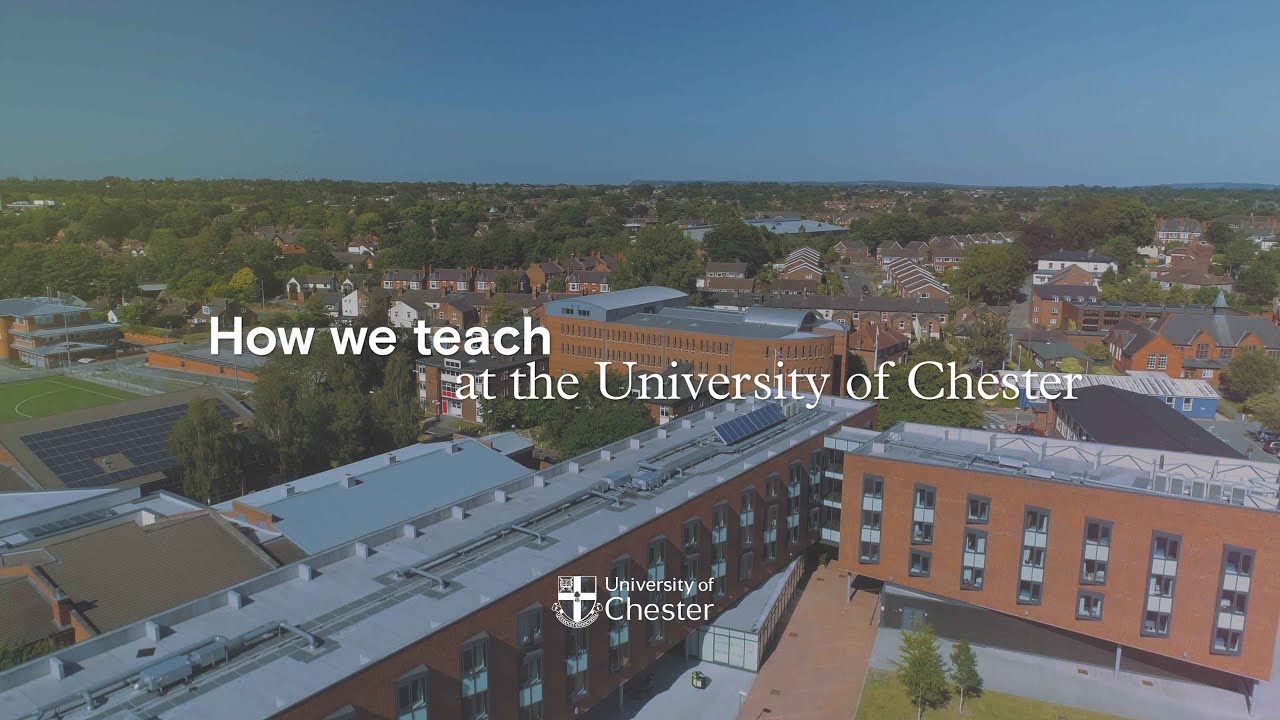
An aerial photograph of Exton Park with the text 'How we teach at the University of Chester'

How we teach at the University of Chester

Case-Based Learning

Case-based learning (CBL) is central to the MBChB curriculum. It mirrors the way experienced doctors learn throughout their professional lives, by putting knowledge in the context of how people present with health concerns and conditions. Throughout the four years, you will work in small groups facilitated by a tutor to explore and analyse a range of clinical cases that will help you to learn all the core information required for you to become a safe, competent, and compassionate doctor. CBL sessions are supported by lectures, seminars, clinical skills sessions and learning opportunities in the community and hospital.

CBL is structured to enable you to integrate the biomedical, psycho-social and clinical sciences with real-world medical problems, helping you to develop team-working, communication and professional skills that are vital to becoming an effective doctor.

Career Prospects

Being a doctor is not just about scientific knowledge, you must develop both professionally and personally throughout your career. The Professionalism and Personal Development strand runs throughout our curriculum with this in mind. Important aspects that you will explore include

  • Teamworking
  • Managing change and uncertainty
  • Managing complexity
  • Patient safety, including understanding how medical errors occur
  • Leadership and management
  • Time management and task prioritisation
  • Becoming an effective teacher
  • Managing your own wellbeing, developing resilience to stress
  • Reflective thinking
  • Learning to learn effectively

Careers Service

Careers and Employability support at the University of Chester helps you plan your future, make the most of your time at university and enhance your graduate prospects.

We provide access to part-time jobs, extra-curricular employability-enhancing workshops and practical one-to-one help with career planning, including help with CVs, applications and mock interviews.

Support goes well beyond graduation at Chester, offering lifelong careers advice and graduate support, so you won't just leave with a degree - you'll leave prepared, connected and ready for success.

The hand of a person pointing inside a test book with text overlaid

MB ChB Graduate Entry Medicine at Chester Medical School: Admissions Criteria

Entry Requirements

Other Admission Requirements

Meeting threshold mark in The University Clinical Aptitude Test (UCAT), Graduate Medical Schools Admissions Test (GAMSAT) or Medical College Admissions Test (MCAT) which are set each year above the national mean.

Reference

Prior Work/ Voluntary Experience

Minimum of 70 hours work experience in relevant fields, in the 3 years prior to date of application.

Interview

Applicants must attain a satisfactory overall assessment at interview across multiple mini interviews (MMIs)

DBS Check

A DBS Check is required

Occupational Health

An Occupational Health check is required

Students from outside the UK are expected to hold qualifications broadly equivalent to UK standards - typically A Level for undergraduate study.

To help you interpret these equivalents, please select your country/region of residence. This will provide details on equivalent entry requirements, as well as information about local representatives, events, and key contacts.

We accept a wide range of qualifications and assess all applications on an individual basis. Relevant work experience may also be taken into consideration where appropriate.

For more information on English entry requirements, including accepted qualifications, please visit International Entry Requirements.

English Language Requirements

IELTS

IELTS 7.0 and a minimum component score of two at 6.0/6.5 and the rest at 7.0 or above

Other Admission Requirements

Meeting threshold mark in The University Clinical Aptitude Test (UCAT), Graduate Medical Schools Admissions Test (GAMSAT) or Medical College Admissions Test (MCAT) which are set each year above the national mean.

Reference

Prior Work/ Voluntary Experience

Minimum of 70 hours work experience in relevant fields, in the 3 years prior to date of application.

Interview

Applicants must attain a satisfactory overall assessment at interview across multiple mini interviews (MMIs)

DBS Check

A DBS Check is required

Occupational Health

An Occupational Health check is required

Fees and Funding

£10,050 per year for a full-time course (2027/28)

The full-time tuition fees for Home students entering in 2027/28 are £10,050 a year, or £1,590 per 20-credit module for part-time study.

You can find more information about undergraduate fees on our Fees and Finance pages.

Students from the UK, Isle of Man, Guernsey, Jersey and the Republic of Ireland are treated as Home students for tuition fee purposes.

Students from countries in the European Economic Area and the EU will pay International Tuition Fees.

Students who have been granted Settled Status may be eligible for Home Fee Status and if eligible will be able to apply for Tuition Fee Loans and Maintenance Loans.

Students who have been granted Pre-settled Status may be eligible for Home Fee Status and if eligible will be able to apply for Tuition Fee Loans.

MBChB Academic Staff

Dr Andrew Fisher

Senior Lecturer
Andrew Fisher

Dr Alex Picts

MBChB Assessment Lead
Blank profile picture placeholder

Chaynee Hodgetts

MBChB Theme Lead
Chaynee Hodgetts

Dr Claire Wilson

Senior Lecturer

Dr Emma Wilson

Academic Lead
Dr Emma Wilson

Dr Georgina Cairns

MBChB Theme Lead
Blank profile picture placeholder

Dr Ian Kay

MBChB Academic Lead
Ian Kay

Dr Jess Fletcher

Senior Lecturer
Jess Fletcher

Dr Mohammed Amali

Senior Lecturer
Dr Mohammed Amali

Megan Twamley

Academic Lead - Case Based Learning
Megan Twamley

Dr Owain Roberts

MBChB Deputy Assessment Lead
Blank profile picture placeholder

Dr Ruth Taylor

MBChB Year 3/4 Academic Lead
Ruth Taylor

Dr Sandra Flynn

MBChB Professionalism Ld - Appl Medicine
Sandra Flynn

Sarah Williamson

Senior Lecturer - EDID/ Student Support
Sarah Williamson

Tara Morris

Academic Lead-ClinicalSkills &Simulation
Tara Morris

MBChB Clinical Staff

Dr Astrid Reid

Practice Education Facilitator
Astrid Reid

Amit Sinha

Clinical Professor (Honorary)
Amit Sinha

Dr Bid Kumar

MBChB Speciality Lead
Bid Kumar

Dr Christine Barsoum

MBChB Academic Lead - Pract Learning
Blank profile picture placeholder

Professor Conor Magee

MBChB Speciality Lead
Conor Magee

Professor Colm O'Mahony

VL Institute of Medicine
Colm O

Dr Colin Wong

MBChB Speciality Lead
Colin Wong

Dr Fiona Davies

MBChB Clinical - CBL Tutor
Fiona Davies

Dr Helen Owen

MBChB Deputy Primary Care/Community Lead
Helen Owen

Jon Broad

MBChB Clinical Assessment Lead
Blank profile picture placeholder

Dr John Evans-Jones

MBChB Clinical - CBL Tutor
Blank profile picture placeholder

Dr Katya Bennett

MBChB Speciality Lead
Katya Bennett

Dr Kathy Smith

MBChB Clinical - CBL Tutor
Kathy Smith

Katherine Valentine

Practice Education Facilitator
Katherine Valentine

Dr Nicola Connelly

MBChB Clinical Lead-Div Applied Medicine
Nicola Connelly

Dr Nicola Nevin

MBChB Clinical Assessment Lead
Blank profile picture placeholder

Dr Rebecca Banks

Primary & Community Care Placement Lead
Rebecca Banks

Dr Robin Bannerjee

MBChB Speciality Lead
Robin Bannerjee

MBChB Senior Leadership Team

Professor Simon Watmough

MBChB Quality Lead
Blank profile picture placeholder

Professor Peter Leadbetter

Itrm Dir of Medical Studies-CMS-App Med
Peter Leadbetter

Dr Jamie Fanning

MBChB Y4 Clinical Lead
Jamie Fanning