



Law students and academic staff examining a legal history exhibition, supporting advanced study of international business law, commercial law, legal research and global legal practice on the LLM International Business and Commercial Law programme.

Course Overview

In today's globalised legal landscape, there is a growing need for expertise to navigate complex transnational interactions. The LLM International Business and Commercial Law is designed to equip you with the necessary expertise to succeed in this dynamic environment, with expert teaching focusing on Business and Commercial Law. Explore regulatory frameworks across various jurisdictions and tailor your learning with our diverse range of modules.

At the School of Law and Social Justice we blend academic theory with practical relevance to enhance your knowledge, advance your career, and specialise in key areas. Through core modules such as International Commercial Law and Dispute Resolution, Developing and Managing Research, Legal Theory and the Common Law, and Human Rights Law, you will gain deep insights into the modern challenges within the legal sector. The course concludes with a Dissertation or Major Law Project, allowing you to apply your learning to a real-world legal issue.

LLM International Business and Commercial Law combines the delivery of legal and business education between the Chester Law School and Business School, offering a unique interdisciplinary approach. By blending legal expertise with business acumen, this course equips you with a comprehensive understanding of the complex dynamics shaping global commerce.

Explore a multitude of postgraduate-focused employability opportunities facilitated by our Careers and Employability services, pro bono activities, and career development opportunities. Embark on a journey that not only enhances your knowledge and skills but also propels you towards a rewarding and fulfilling career. 


Why You'll Love It

Course Content

Core Modules

The content covered in this module will provide students with the knowledge required to design and manage an independent research topic. The module will examine the role of research in law and the social sciences, covering main research paradigms and core philosophical debates. The principal methodologies used in social science research will be examined, together with contemporary applications. Teaching hours will cover all aspects of the research process required to design and manage a successful research project in contemporary legal studies, including:

  • Research Methodologies, particularly doctrinal and socio legal
  • Research methods and design
  • Research ethics
  • Writing an effective research proposal
  • Presenting research findings

The module content will enable a student to produce a research proposal which can be the basis of their LA7040 Major project.

This module is principally an independent study module and, accordingly, much of the specific content will be chosen by students, with direction from their supervisor, dependent on which particular area(s) they have chosen to focus on over the course of their Masters programme.

The submitted work will be a portfolio, representing a traditional written dissertation or portfolio of professional relevant work underpinned by a detailed literature review. Both formats will incorporate a critical reflection, with a focus on professional development.

Designated supervisors will provide further individual advice and support on specific modes of analyses as relevant. The dissertations may require ethical approval and this will be considered by the School of Law research ethics committee as required.

The module will provide a consideration of Common Law from a domestic and international perspective.

The module will assess common law, considering its history and development as well as it functions in a modern legal system.
The module will provide a solid foundation for students studying common law jurisdictions and enabling them to navigate the complexities of such a system.

The module will consider the common law in action and support students in developing a framework to utilising common law within complex legal scenarios.

Topics to be covered will be:

  • Origins of the Common Law
  • Evolution of the Common Law
  • The Common Law in a modern context, challenges and developments
  •  Application of common law in a particular fields of law

In the International Commercial Law and Dispute Resolution module, students gain a thorough understanding of dispute resolution mechanisms and commercial law principles. Through lectures, seminars, exercises, and case analyses, they build skills in drafting clauses, conducting negotiations, and navigating the legal frameworks that govern international transactions and arbitration.

In the International Trade, Investment and Competition Law module, students evaluate international economic regulation, investment protections, and market competition frameworks. Through advanced legal research, case analysis, and practical scenarios, they master key principles governing cross-border trade agreements, investor-state dispute settlement, and the enforcement of anti-competitive practices.

The information listed in this section is an overview of the academic content of the course that will take the form of either core or option modules and should be used as a guide. We review the content of our courses regularly, making changes where necessary to improve your experience and graduate prospects. If during a review process, course content is significantly changed, we will contact you to notify you of these changes if you receive an offer from us.

How You'll Learn

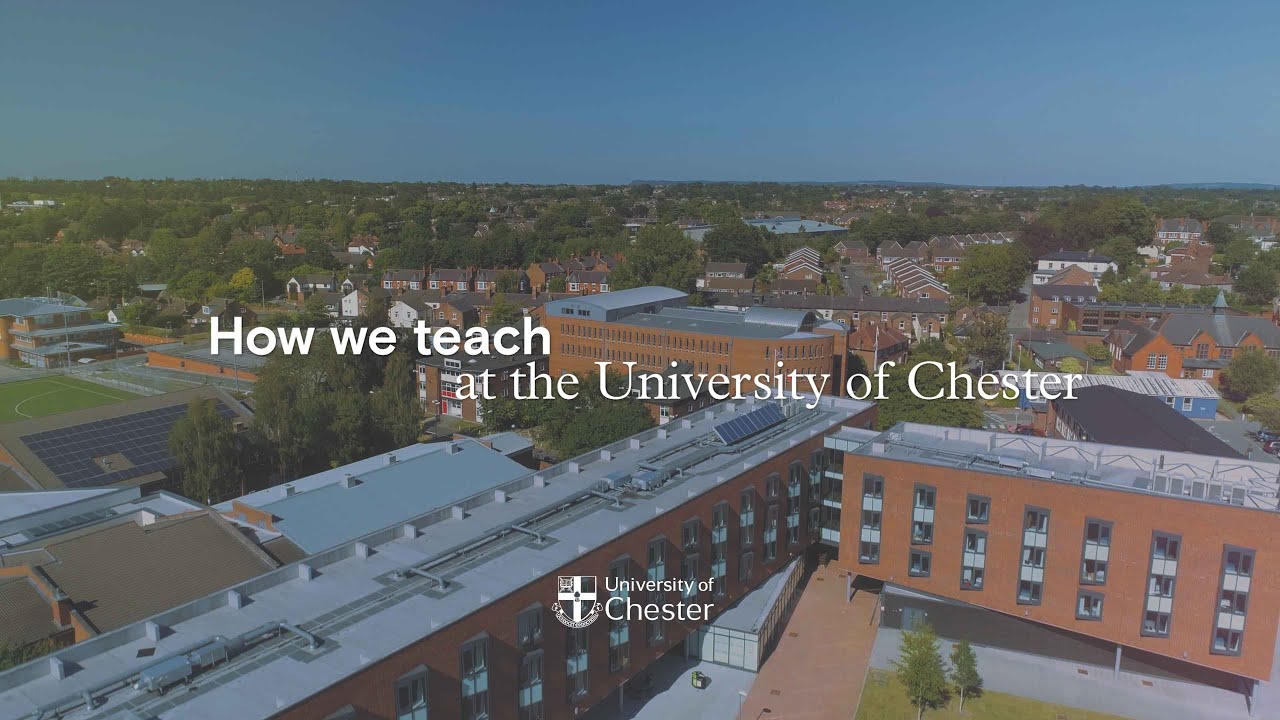
An aerial photograph of Exton Park with the text 'How we teach at the University of Chester'

How we teach at the University of Chester

The course includes four taught modules plus the Dissertation. Each taught module amounts to a total of 30 hours of tutor contact time. In addition, each module is designed with a notional 170 hours of private study.

Your Future Career

Job Prospects

Completing the LLM in International Business and Commercial Law course equips you for a diverse range of professional roles. Whether you aspire to pursue a career in law or aim to specialise in international business, this course lays a solid foundation.

Careers service

The University has an award-winning Careers and Employability service which provides a variety of employability-enhancing experiences; through the curriculum, through employer contact, tailored group sessions, individual information, advice and guidance.

Careers and Employability aims to deliver a service which is inclusive, impartial, welcoming, informed and tailored to your personal goals and aspirations, to enable you to develop as an individual and contribute to the business and community in which you will live and work.

We are here to help you plan your future, make the most of your time at University and to enhance your employability. We provide access to part-time jobs, extra-curricular employability-enhancing workshops and offer practical one-to-one help with career planning, including help with CVs, applications and mock interviews. We also deliver group sessions on career planning within each course and we have a wide range of extensive information covering graduate jobs and postgraduate study.

Beyond The Classroom

The Law School’s Legal Advice Clinic and Community Law Projects offer award winning opportunities to develop employability skills during your studies.

Through these activities, the Law School has a strong relationship with a wide range of law firms, businesses, local and national stakeholders and charities.

These contacts and opportunities mean that Law School graduates are well placed to secure jobs within the Legal Profession, local and international businesses, as well as the public and charity sectors.

Additionally, the LLM fosters the development of essential research skills, preparing you for potential advancement to a PhD course or an academic career focused on international human rights law.

Entry Requirements

Honours Degree

Relevant degree with a minimum 2:2 honours, or equivalent.

Relevant degrees are considered to be in:

Law
Business
Finance
Political Science
Sociology
Philosophy
English
Economics

Extra Requirements

Applications are also welcome from those with non-standard entry qualifications. A typical applicant may be a new/recent graduate, who has attained a first degree and wishes to augment that with further study to optimise their career opportunities.

Students from outside the UK are expected to hold qualifications broadly equivalent to UK standards - a Bachelor's degree (or equivalent) for postgraduate study.

To help you interpret these equivalents, please select your country/region of residence. This will provide details on equivalent entry requirements, as well as information about local representatives, events, and key contacts.

We accept a wide range of qualifications and assess all applications on an individual basis. Relevant work experience may also be taken into consideration where appropriate.

For more information on English entry requirements, including accepted qualifications, please visit International Entry Requirements.

IELTS

6.5 (minimum of 5.5 in all sub skills)

Honours Degree

Relevant degree with a minimum 2:2 honours, or equivalent.

Relevant degrees are considered to be in:

Law
Business
Finance
Political Science
Sociology
Philosophy
English
Economics

Extra Requirements

Applications are also welcome from those with non-standard entry qualifications. A typical applicant may be a new/recent graduate, who has attained a first degree and wishes to augment that with further study to optimise their career opportunities.

Fees and Funding

£9,090 for a full-time course (2026/27)

The tuition fees for home students studying courses in 2026/27 are £9,090 per year.

Guides to the fees for students who wish to commence postgraduate courses are available to view on our Postgraduate Fees page. Here you will also find information about part-time fees and project/placement year fees.

£15,500 (2026/27)

The tuition fees for international students studying courses in 2026/27 are £15,500 per year.

Irish Nationals living in the UK or ROI are treated as Home students for Tuition Fee Purposes.

For more information about International fees for Postgraduate study, go to our International Fees, Scholarship and Finance section.

Your course will involve additional costs not covered by your tuition fees. This may include books, printing, photocopying, educational stationery and related materials, specialist clothing, travel to placements, optional field trips and software. Compulsory field trips are covered by your tuition fees. 

The University of Chester supports fair access for students who may need additional support through a range of bursaries and scholarships. 

Full details, as well as terms and conditions for all bursaries and scholarships can be found on the Fees and Finance section of our website.

Our Facilities

Who You'll Learn From

Dr Abdullah Nawafleh

Senior Lecturer
Abdullah Nawafleh

Tao Chang

Senior Lecturer
Tao Chang

Dr John Morrow

Senior Lecturer
Dr John Morrow

Dr Matt Garrett

Senior Lecturer
Blank profile picture placeholder