




Journalism BA (Hons)
Course Overview
Our Journalism degree equips you with the essential skills and knowledge to succeed in the fast-paced media industry, supporting you to become a dynamic and adaptable journalist.
Stay ahead of the curve and explore the latest trends in journalism, including the impact of technology and sustainability on news reporting and consumption. Master essential skills such as news research and writing, photography, video and audio production, including podcasting, and develop strong written and oral communication skills essential for effective journalism.
Learn from our experienced team of journalists with backgrounds in newspapers, magazines, radio, and television. Our degree will equip you with the skills and knowledge needed to thrive as a journalist or in another creative profession, becoming a force for change in the world.
You’ll leave us fully equipped with the skills and knowledge to understand and address the challenges facing society today, in any number of social fields.
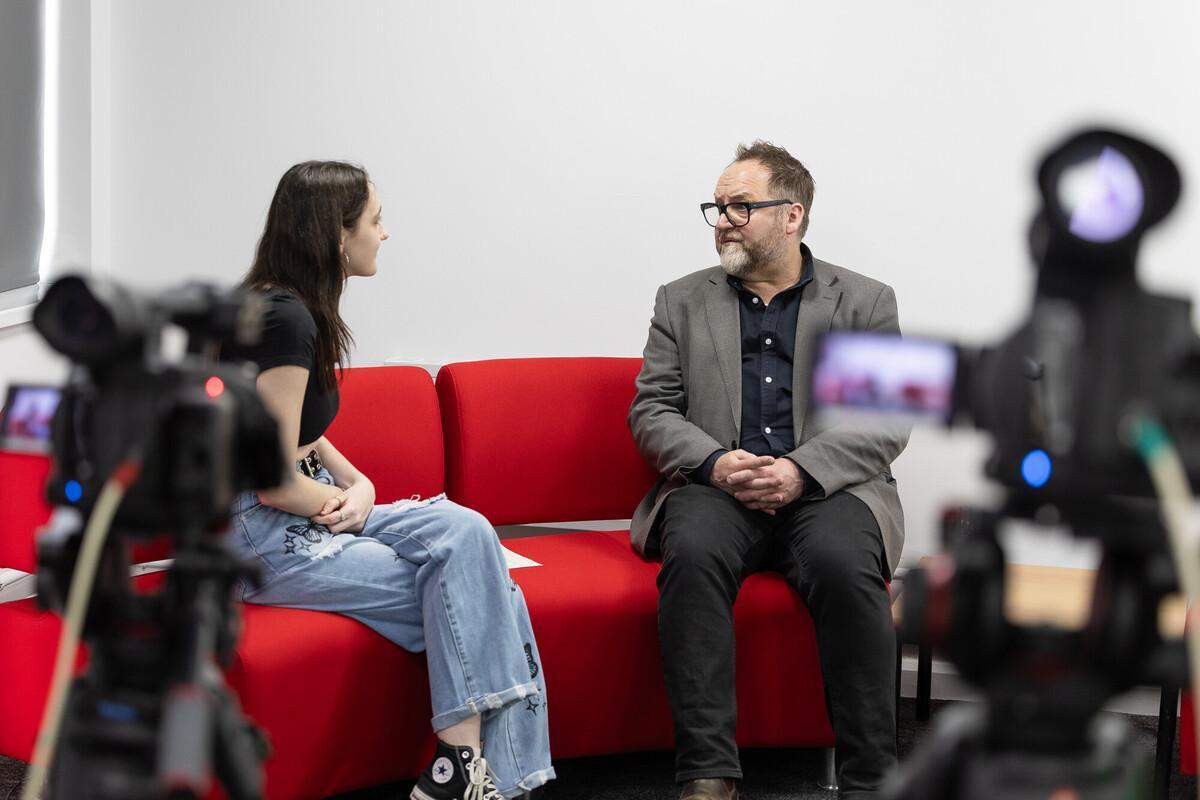
We've worked with Springpod to produce this Journalism Subject Spotlight. In this fascinating experience, you will step into the fast paced and exciting world of journalism with Senior Lecturer Mark Hannaby.
How we teach at the University of Chester
This course is delivered in three terms of 10 weeks each. By the end of each year the student will have completed 120 credits of learning. Students will gradually gain greater independence in their learning throughout the three years with a view to students achieving positive graduate outcomes. This course is delivered predominantly in person. Students can expect to take part in lectures, workshops, seminars and a range of experiential activities both on and off campus – in the UK and abroad to locations such as Berlin, Amsterdam, Madrid and Prague. Activities on these trips include visits to a range of media, cultural and political institutions.
If studied, the Foundation Year, as with the following years of study, will be taught in three 10-week blocks across an academic year. Each block will comprise of a large 40-credit subject-specific module that includes a breadth of topics and subject skills. You will have on average 12-14 hours of contact time per week during the Foundation Year. There may be variations to this where subject practical or specialist space teaching is included.
Students should expect to undertake about 40 hours per week of study in total which comprises scheduled sessions, independent study including engaging with learning material on the University’s VLE, tutorials with staff, researching and producing stories, using the University’s library and other resources, working with peers and preparing work for assessment.
Teaching will be delivered by experienced academics and practitioners in the subject. This will be supplemented by occasional guest lecturers and speakers.
There will be a broad range of assessment methods so that students are exposed to the different types of tasks they might encounter in the workplace. These will include coursework in the form of portfolios, essays, presentations, digital productions and online tasks. We continuously review the assessment methods used in order that they adequately prepare students for graduate level employment.
All teaching is delivered by experienced academics and practitioners, with the fundamental principles of the Chester Future Skills Curriculum at its core - building your subject competence, confidence, and key transferable skills to shape you into a world-ready Chester graduate.
Your Future Career
Job Prospects
Students have gone on to work for journalistic organisations including international and national news agencies such as Reuters and News Corp, online and print publications such as Newsweek and more. Some have taken a freelance approach, forging careers in niche aspects of journalism such as gaming, lifestyle, and pop culture. Others have gone into roles such as social media management, copy-writing and public relations.
Careers service
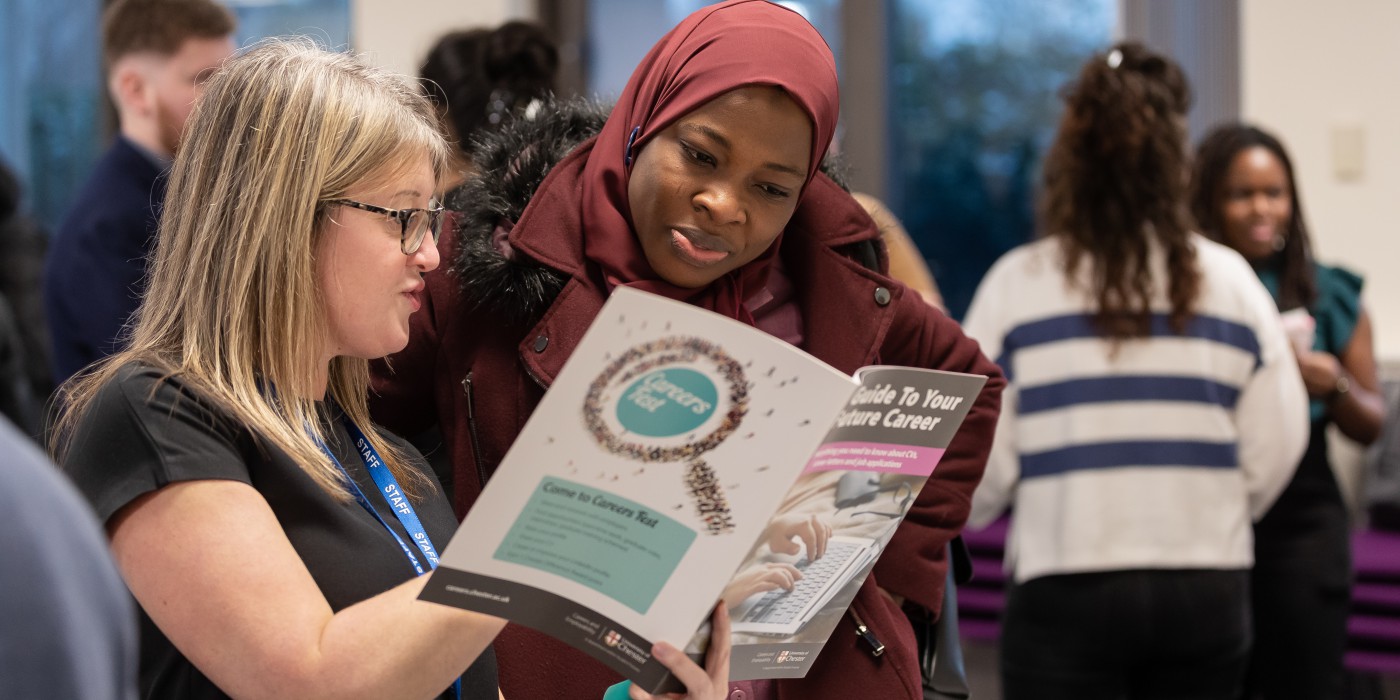
The University has an award-winning Careers and Employability service which provides a variety of employability-enhancing experiences; through the curriculum, through employer contact, tailored group sessions, individual information, advice and guidance.
Careers and Employability aims to deliver a service which is inclusive, impartial, welcoming, informed and tailored to your personal goals and aspirations, to enable you to develop as an individual and contribute to the business and community in which you will live and work.
We are here to help you plan your future, make the most of your time at University and to enhance your employability. We provide access to part-time jobs, extra-curricular employability-enhancing workshops and offer practical one-to-one help with career planning, including help with CVs, applications and mock interviews. We also deliver group sessions on career planning within each course and we have a wide range of extensive information covering graduate jobs and postgraduate study.
Study a Common First Year
This course shares a common first year with students on the Music Journalism, Sports Journalism and Creative and Professional Writing courses.
This means that you’ll learn alongside students studying a similar discipline, helping to broaden your knowledge and exposure to other concepts, perspectives and professions in the first year of your degree.
As you learn and collaborate with students from other courses, you'll not only widen your social and professional network but also learn new skills that will set you up for success in your industry.
In your second and third years, you will progress to studying more specialist modules within journalism, developing your skills to become a World Ready graduate.
Study the final year of an undergraduate degree
If you have successfully completed a Level 5 qualification, e.g. a Higher National Diploma (HND) or Foundation Degree in a relevant subject, then we may be able to consider you for the final year (Level 6) of one of our degrees. Topping up your HND or Foundation Degree will typically take one further year of study and will lead to a full BA (Honours) degree.
To apply for the final year of a degree on a full-time basis you will need to submit an application through UCAS.
For international applicants, please refer to the entry requirements listed on the "Your Country/Region" pages. To be considered for advanced entry into relevant degree programmes, you must have completed a qualification equivalent to a Level 5 or Level 6 in the UK, in a related subject area