Mathematics Education MA

This course is designed for educators who want to deepen their understanding of mathematics teaching and learning. You will explore key issues in education with our MA Education students through core modules, but will have the opportunity to engage in dedicated breakout sessions that apply these themes to mathematics education. These sessions provide opportunities to reflect on policy, curriculum design and classroom practice in mathematics. Throughout the course, you will be supported by a tutor with expertise in mathematics education, who will guide you in developing a research project focused on a topic relevant to mathematics teaching and learning. This will ensure you gain both a broad understanding of educational research and specialist insights into mathematics education.
Why Study This Course at the University of Chester?
This pathway is ideal for educators across different settings who are passionate about improving mathematics teaching and learning. The structure of the course allows you to benefit from interdisciplinary discussions, while also engaging with subject-specific applications of educational research. With expert academic support, the Mathematics Education pathway will equip you with the skills to critically evaluate research, reflect on practice and contribute to the development of mathematics education in your own context.
If you do not wish to complete the full MA, you can choose to exit with a PGDip qualification instead.
Childhood, Education and Professional Development Postgraduate Information Event
Advance your career with CEPD courses designed to refine your expertise, strengthen critical practice, and support sustained professional growth.
Find out moreSpecialist support in mathematics education

Dual delivery for flexible learning

Focused application to mathematics teaching

What You'll Study
The MA Education (Mathematics Education) is designed to be highly relevant to professional practice, supporting the exploration and development of educational work across multiple settings. This course enables you to research key issues in mathematics education and apply educational theories to enhance teaching and learning in mathematics. Through a combination of core MA Education modules and dedicated breakout sessions, you will critically engage with research, policy and practice, while exploring innovative approaches to mathematics teaching.
Modules run on a two-year rolling cycle, meaning not all modules are available every year. If you're on the Mathematics Education pathway, you will study the same core modules as students on the MA Education course but with subject-specific breakout sessions.
Depending on your qualifications at the point of entry to the course, you will be required to complete up to four modules, plus a research project in an area related to mathematics education. Modules which may be available to choose from within this two-year cycle are:
The information listed in this section is an overview of the academic content of the course that will take the form of either core or option modules and should be used as a guide. We review the content of our courses regularly, making changes where necessary to improve your experience and graduate prospects. If during a review process, course content is significantly changed, we will contact you to notify you of these changes if you receive an offer from us.
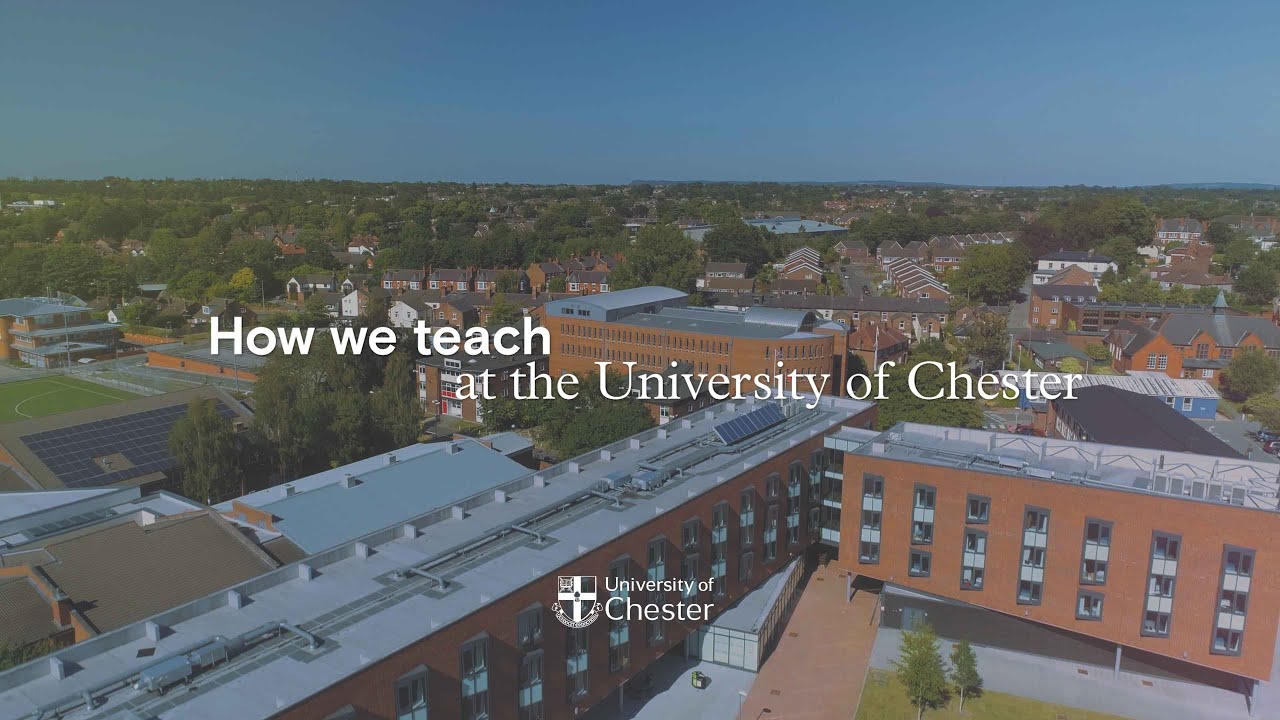
How we teach at the University of Chester
Teaching methods
The course has been structured to integrate with the work patterns of busy professionals. You can choose to attend the taught sessions at the University of Chester's Exton Park in Chester, or to attend by distance learning where participants can join the classroom-based students virtually from anywhere in the world using Microsoft Teams.
As the majority of participants will be teachers or other educational professionals, the teaching is concentrated into six Saturdays each year, supplemented by six online evening seminars.
Assessment
We use a variety of assessment methods, including digital presentations, essays, projects, and critical reflections, which will enable you to apply the topics studied to your own area of interest and to the age phase or subject area in which you are working.
Your Future Career
Job Prospects
Students who successfully engage in the MA in Education will become reflective practitioners and critical thinkers who can articulate their views with confidence and conviction.
The course will enhance participants' knowledge and understanding, developing skills that will support career progression in educational settings. Graduates may go on to work with children and young people in a variety of contexts; take up leadership and management roles; take on roles in further and higher education such as lecturing and research; or engage in advisory roles with local authorities or private companies.
Careers Service
The University has an award-winning Careers and Employability service which provides a variety of employability-enhancing experiences; through the curriculum, through employer contact, tailored group sessions, individual information, advice and guidance.
Careers and Employability aims to deliver a service which is inclusive, impartial, welcoming, informed and tailored to your personal goals and aspirations, to enable you to develop as an individual and contribute to the business and community in which you will live and work.
We are here to help you plan your future, make the most of your time at University and to enhance your employability. We provide access to part-time jobs, extra-curricular employability-enhancing workshops and offer practical one-to-one help with career planning, including help with CVs, applications and mock interviews. We also deliver group sessions on career planning within each course and we have a wide range of extensive information covering graduate jobs .
Entry Requirements
2:2 honours degree
Applicants should hold a Bachelor's degree, 2:2 or higher, plus either a Level 7 qualification related to mathematics education, such as a PGCE Mathematics or a PG Cert Educational Practice in Mathematics, or have completed an eligible course with the NCETM.
Please note:
The PGCert Mathematics Education is only available to teachers who have completed or are currently enrolled on one of the following National Centre for Excellence in the Teaching of Mathematics (NCETM) accredited courses:
• Professional Development Lead (PD Lead)
• Specialist Knowledge for Teaching Mathematics (SKTM) for non-specialist mathematics teachers
Applicants without one of these NCETM courses should apply for the PGDip Mathematics Education or the MA Mathematics Education instead.
This course is exclusively available to UK students.
Using credits towards your MA
If you have completed a PGCE, you can use the 60 credits you have achieved from it towards your MA Education. To transfer your PGCE credits directly to the MA Education, you must have completed the PGCE within the last five years. If your PGCE is older than five years, you may still be able to use the credits but you will have to demonstrate the currency of the knowledge you gained from the PGCE and pay a fee of £220 to have your knowledge assessed.
In addition, if you have completed other Level 7 courses in the area of education, you may be able to use the credits achieved from these courses towards your MA Education, for example, the following Postgraduate Certificates awarded by the University of Chester can all be used as credit towards the MA Education: Postgraduate Certificate in Attachment, Trauma and Mental Health; Postgraduate Certificate in Coaching & Mentoring; Postgraduate Certificate in Leading SEND Provision and Practice; Postgraduate Certificate in Conservation and Sustainability Education; Postgraduate Certificate in Educational Practice in Mathematics. Level 7 courses from other universities may also be accepted. To transfer these credits directly to the MA Education, you must have completed them within the last five years. If your credits are older than five years, you may still be able to use them, but you will have to demonstrate the currency of your knowledge and pay a fee of £220 to have this assessed.
If you have completed a National Professional Qualification (NPQ) then you can use this as credit towards your MA Education, up to a maximum of 60 credits.
|
National Professional Qualification |
Maximum number of masters credits at Level 7 |
What your programme will look like.
|
|
National Professional Qualification for Leading Teacher Development (NPQLTD) |
40 Credits |
Four taught 20-credit modules (from the list of available modules), plus the 60-credit Research Project |
|
National Professional Qualification for Leading Teaching (NPQLT) |
40 Credits |
|
|
National Professional Qualification for Leading Behaviour and Culture (NPQLBC) |
40 Credits |
|
|
National Professional Qualification for Early Years Leadership (NPQEYL) |
40 Credits |
|
|
National Professional Qualification for Leading Literacy (NPQLL) |
40 Credits |
|
|
National Professional Qualification for Leading Primary Mathematics (NPQLPM) |
40 Credits |
|
|
National Professional Qualification for SENCOs (NPQ for SENCOs) |
60 Credits |
Three taught 20-credit modules (from the list of available modules), plus the 60-credit Research Project
|
|
National Professional Qualification for Senior Leadership (NPQSL) |
60 Credits |
|
|
National Professional Qualification for Headship (NPQH) |
60 Credits |
|
|
National Professional Qualification for Executive Leadership (NPQEL) |
60 Credits |
If you wish to bring more than one NPQ into the MA Education, please contact the Programme Leader to discuss if this will be possible.
To bring your NPQ into the MA Education, you need to engage in a professional discussion with the programme leader for the MA Education. This takes place once you are registered for the course. We cannot do this before your induction.
We will ask you to explain one or both of your projects (depending on the NPQ), what you did, the theories underpinning your project, the impact and the learning you have taken from it.
Fees and Funding
£9,090for a full-time course (2026/27)
Guides to the fees for students who wish to commence postgraduate courses are available to view on our Postgraduate Taught Programmes Fees page. Here you will also find information about part-time fees and project/placement year fees.
Your course will involve additional costs not covered by your tuition fees. This may include books, printing, photocopying, educational stationery and related materials, specialist clothing, travel to placements, optional field trips and software. Compulsory field trips are covered by your tuition fees.
The University of Chester supports fair access for students who may need additional support through a range of bursaries and scholarships.
Full details, as well as terms and conditions for all bursaries and scholarships can be found on the Fees and Finance section of our website.
Dr Heather Macdonald
Senior Lecturer and Programme Leader for the MA in Education
Sarah Collins
Senior Lecturer
Tracey Patterson
Deputy Head of Division
Christine Packer
Senior Lecturer
Dr Sally Bamber
Senior Lecturer