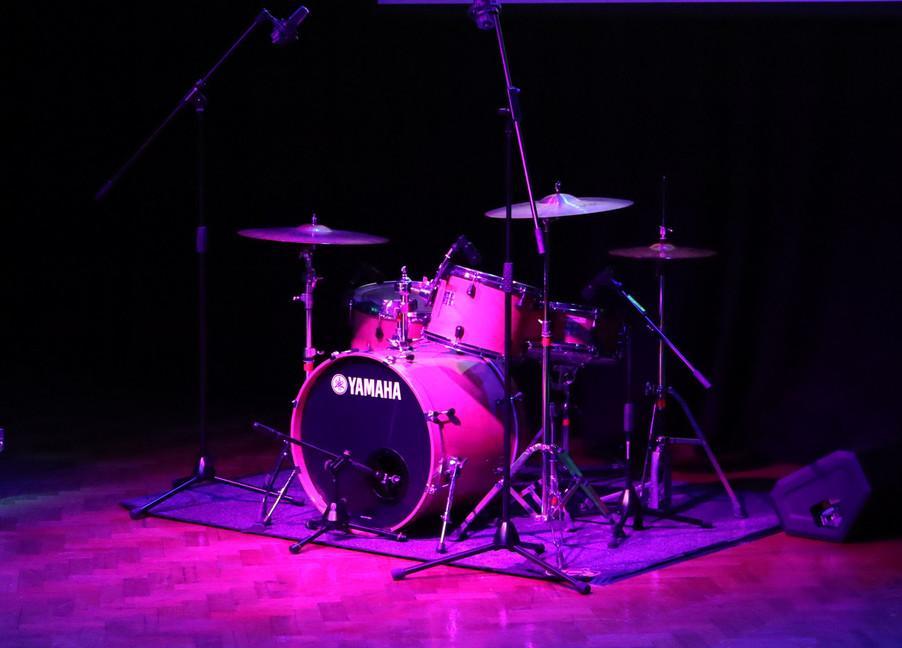

man playing drums on stage

The MA Popular Music course is designed for those interested in exploring all aspects of performance. This degree will develop your creative skills and theoretical understanding to an advanced level. 

Our course offers you the opportunity to shape your learning through a series of modules that will enable you to integrate scholarly work with your personal experience as a musician. You will be taught by industry professionals, as well as highly respected academics, to ensure your studies remain current and relevant. Our modules consider current theoretical and practical debates in the subject area, and will guide you through the research methodologies required at Master's level. You will have the opportunity to negotiate the most effective approach to your subject, before carrying out an in-depth study of your specialism.

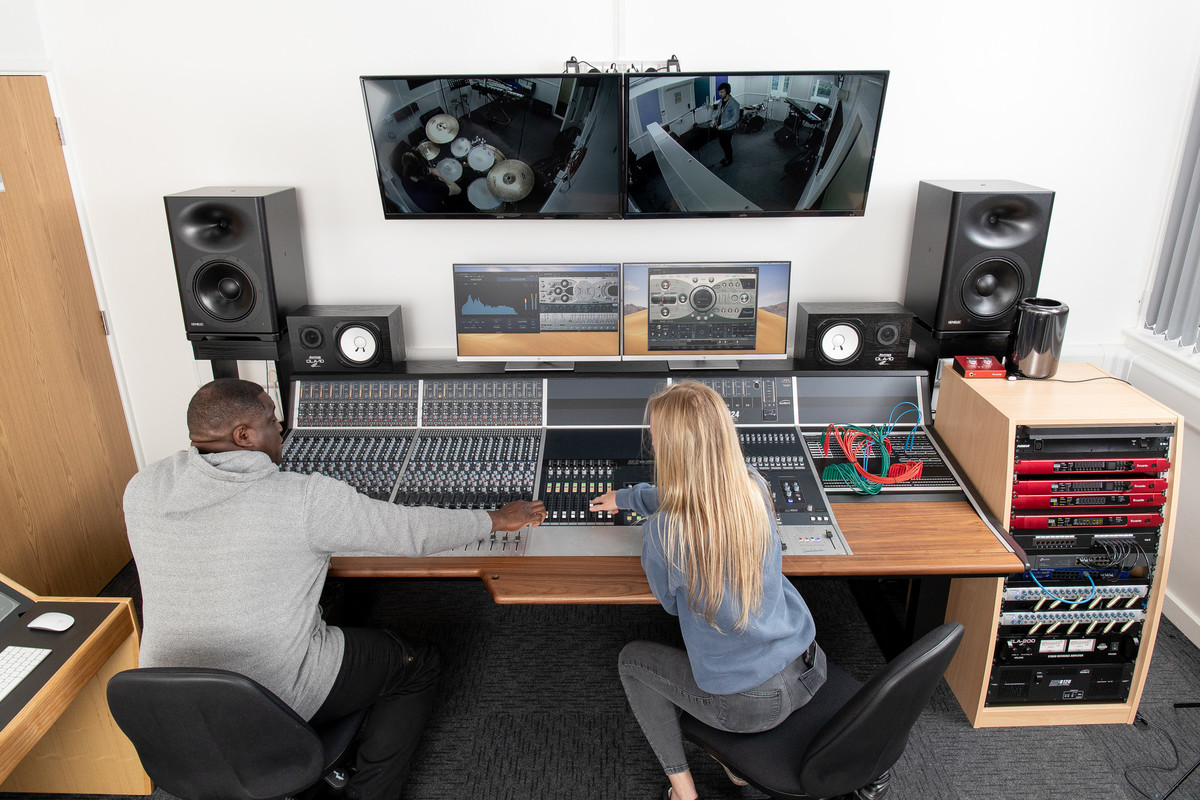
You will study at Creative Campus, Kingsway, which features multiple soundproof rehearsal rooms, state-of-the-art recording studios and Mac-based computer suites. All our facilities are equipped with professional equipment and are available to book throughout the year. Additionally, there is a large selection of loan equipment, including drum kits, guitar amplifiers, PA systems, and more, all available for you to reserve as part of your studies.

Music Production Equipment List


MA Popular Music YouTube video

MA Popular Music

What You'll Study

Our modules cover areas of research strategy, analysis, documentation and management, and will require you to engage with and develop your skills to an advanced level. The final phase of the MA will result in the production of a substantial piece of work – for example a large-scale performance, workshop, lecture or event. 

Core Modules

In this module you will learn about a range of research methodologies appropriate to the development of analytical and critical research skills. Topics covered in taught sessions may include: fieldwork methods, ethnography, practice based research, retrieval skills, referencing and academic writing. You will apply these methods to create an analytical piece of work.   

In this module, you will develop a substantial research-led project. The potential output of work can take various forms. Some may choose to develop practical work, which could culminate in performances, live shows, exhibitions, workshops, lectures or presentations, whereas others might present their work as portfolios, pre-recorded media, or written dissertations.     

The project created will provide an opportunity for you to evidence increased breadth and depth as creative practitioners, and the ability to critique a range of suitable theories, practices and scholarly frameworks. Those choosing to develop practical work can work individually or with their peers, with undergraduate students of the division or with external contacts and agencies.

This module will provide students with the opportunity to expand upon and develop greater knowledge and depth of inquiry within their own personal and creative practice. Work created will be specific and appropriate for the individual subject discipline and may include: performance; composition; arrangement; exhibition; recording; film; production of coursework or a portfolio.  

Lectures, seminars and workshops will encourage students to consider how they might further refine their creative practice and offer distinctive and original interpretations of forms, practices, and established traditions. Students will move closer to establishing their artistic niche and be able to situate their practice in comparison to other practitioners within their field of study.

In this module, students will continue to develop their personal creative practice, but this time with an emphasis upon developing a more distinctive and original synthesis. Work created will therefore push or challenge conventions of style and/ or genre, demonstrate innovation, as well as a high degree of specialist skill, artistic control and stylistic flair.  

Lectures, seminars and workshops will enable students to develop and discuss their individual practice with an advanced level of critical self-reflection. Students will learn how to confidently discuss the significance of their work by referring to current research, trends, movements, theories and advanced practice within their discipline.   

This module will examine methodological approaches to the analysis of Popular Music. 

It will include, socio-cultural approaches, performance studies, musicology of production techniques and musicological (‘content’) analysis to provide an analytical toolbox for performers, composers, producers and musicologists to develop a critical awareness of their own (and others’) disciplines.

It will also facilitate the application of analytical methodologies on the work of others in order to inform and challenge the students' own practices.

The module aims to provide a framework for students to investigate and deepen their practical skill and knowledge by exploring musical techniques, performance or production, and interpretative approaches. Students will be involved in practical tasks given by tutors drawn from the professional field. Students will explore, test and reflect upon the tasks in relation to their own practices. Through this task-based approach, students will be able to exemplify an expressive and interpretative position on their own work.

Students will also develop their own practice regime to work with material outside of taught sessions. This will also be supported by independent research into theoretical frameworks and practices.

Work created will be specific and appropriate for the subject discipline and may include: performance; composition; arrangement; recording; film; production of coursework or a portfolio. In addition, students will have the opportunity to work in state of the art studios, and use a variety of analogue and digital equipment.

The information listed in this section is an overview of the academic content of the course that will take the form of either core or option modules and should be used as a guide. We review the content of our courses regularly, making changes where necessary to improve your experience and graduate prospects. If during a review process, course content is significantly changed, we will contact you to notify you of these changes if you receive an offer from us.

How You'll Learn

An aerial photograph of Exton Park with the text 'How we teach at the University of Chester'

How we teach at the University of Chester

Contact time is 3-4 hours per week, and the workload is 40 hours per week. Assessment can take the form of performances, essays, practical presentations, lecture demonstrations, oral assessments, and the submission of portfolios of original music. 

Your Future Career

Job Prospects

In addition to professional work as performing musicians, graduates have gained employment as education professionals, lecturing in further and higher education, as well as becoming peripatetic teachers for county music services and private schools.  

The course requires students to work independently on large-scale projects, allowing them to define their unique position within the industry. Our PULSE week of visiting industry professionals provides an excellent networking opportunity for students developing their emerging career.    

Careers Service

The University has an award-winning Careers and Employability service which provides a variety of employability-enhancing experiences; through the curriculum, through employer contact, tailored group sessions, individual information, advice and guidance.

Careers and Employability aims to deliver a service which is inclusive, impartial, welcoming, informed and tailored to your personal goals and aspirations, to enable you to develop as an individual and contribute to the business and community in which you will live and work.

We are here to help you plan your future, make the most of your time at University and to enhance your employability. We provide access to part-time jobs, extra-curricular employability-enhancing workshops and offer practical one-to-one help with career planning, including help with CVs, applications and mock interviews. We also deliver group sessions on career planning within each course and we have a wide range of extensive information covering graduate jobs .

Entry Requirements

Honours Degree

2:2 honours degree in any relevant discipline or an equivalent qualification

Audition

Applicants will be required to attend and audition/interview

IELTS

6.5 (minimum 5.5 in each band)

Honours Degree

2:2 honours degree in any relevant discipline or an equivalent qualification

Audition

Applicants will be required to attend and audition/interview

Fees and Funding

£9,990 for a full-time course (2026/27)

The tuition fees for home students studying courses in 2026/27 are £9,990 per year.

£15,500 (2026/27)

The tuition fees for international students studying courses in 2026/27 are £15,500 per year.

Our Facilities

Study at our Creative Campus, Kingsway, home to some outstanding art, design and performance-based courses for the University’s School for the Creative Industries. Scroll through our 360 tours to explore our state-of-the-art facilities.

Who You’ll Learn From

Kristian Rozells

Senior Lecturer
Kristian Rozells

Dr Evelyn Jamieson

Professor (Emeritus)
Dr  Evelyn Jamieson

Jim Mason

Senior Lecturer
Jim Mason

Enquire about a course