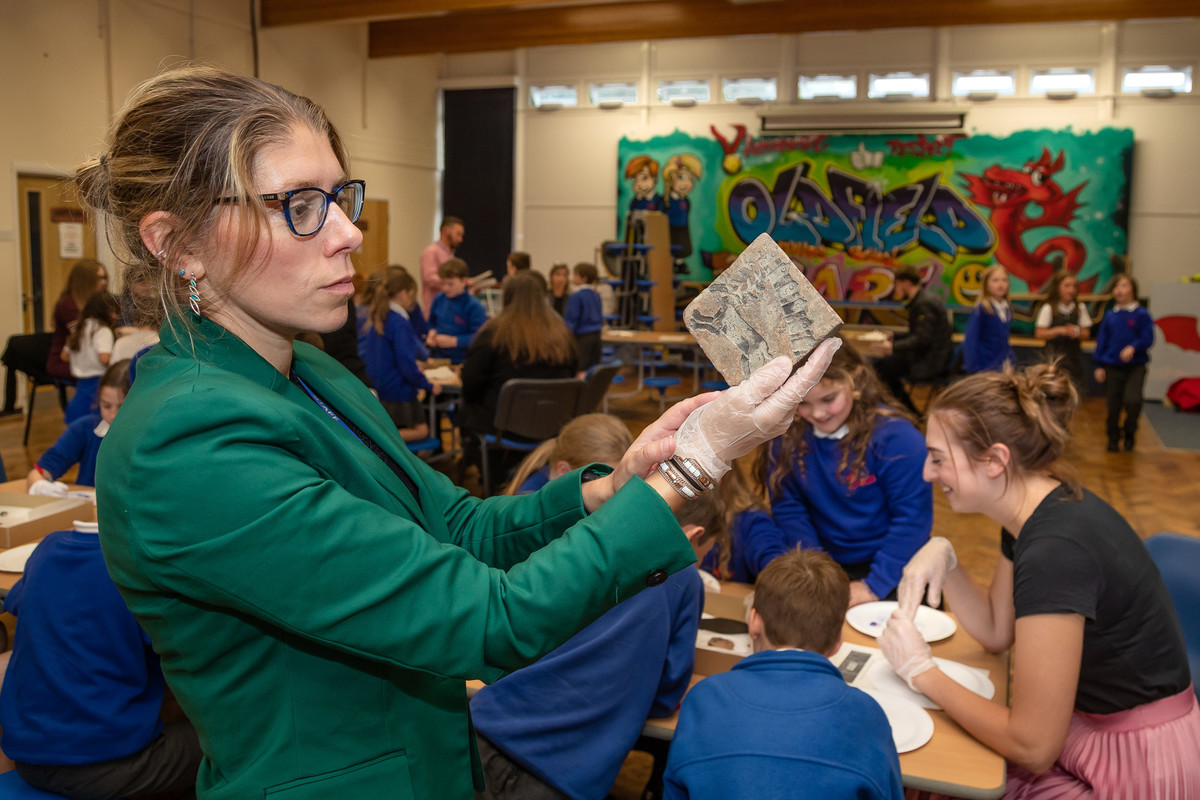
Primary education degree student teacher leading a classroom activity with young children, gaining Qualified Teacher Status experience.

Do you have the ambition to inspire curiosity, and to shape and inspire young minds? If so, this course will provide you with everything you need to succeed. At Chester, we’ve been training future educators for over 180 years.

Our PGCE Primary course with Qualified Teacher Status (QTS) builds on our vast experience as an institution to help prepare you to thrive in today’s classrooms with the creativity, compassion and confidence to teach across the full Primary 5–11 age range.

This course covers the national curriculum for both Key Stage 1 and Key Stage 2, across school Years 1 through 6. In one placement, you could be introducing phonics to five-year-olds, the next you could be discussing environmental change with Year 6 students or recommending books that focus on equality to young audiences. The learning you gain at Chester will support you to become a wonderfully skilled and diverse practitioner in your future school. You’ll be equipped to deliver rich, inclusive learning across a broad curriculum, and to meet the unique needs of children at every stage of their development.

Based in our dedicated School of Education building, you’ll benefit from a combination of rigorous academic study and practical learning sessions in realistic settings. Our purpose-built classrooms and interactive learning spaces in our cinema and auditoria bring your learning to life.

You’ll also have hands-on school placements where you will explore the theory and evidence behind great primary school teaching through your bespoke modules. At Chester, we will encourage you to develop your own values and practice as a competent and compassionate teacher.

Our carefully structured placements give you experience across different schools and settings, including Special Educational Needs and Welsh schools. We will support you at every stage of your learning; expert tutors and school-based mentors will be available to help advise you as you train with us. You’ll be part of one of the strongest education partnerships in the region– the University of Chester Partnership– and our close links with schools across Cheshire, the Wirral, Shropshire, Telford and Wrekin, connects you to a vibrant and well-established teaching community that consistently produces highly employable graduates.

If you're passionate about making a difference in children's lives, and want to gain the tools to lead, reflect and grow as a professional, this course will give you everything you need to get started.

International Application Closed!

Please note, international applications for this course closed on 27th May 2025.

PGCE Events

If you're looking to study a PGCE course with us and would like to find out more, book your place on one of our PGCE online or in-person events.

Book your place

Accreditations

Ofsted Good Provider

PGCE Courses at the University of Chester Course Video

PGCE Courses at the University of Chester

What You'll Study

Our modules will provide you with critical understanding of pedagogy, assessment and curriculum; critical knowledge, understanding and skills in primary age phases and subjects; critical knowledge and understanding of wider professional issues, e.g. behaviour management and inclusive practice; enrichment opportunities; and at least 120 days of school-based learning.

Core Modules

Common strands explored throughout the programme and within the context of this module include commitments to inclusivity in all its forms; safeguarding and wellbeing of children; promoting a positive classroom environment conducive to engagement and respecting diversity; and building curricula and sequences of lessons designed to ensure the progression of all.  Alongside this and in common with other modules, ATs will be supported to prioritise their own wellbeing, achieve a sustainable work-life balance while managing their initiation into professional communities of practice.

Associate Teachers (ATs) will develop an understanding of the nature and aims of the National Curriculum and/or Early Years Foundation Phase depending on the age-phase in which they are training to teach.  They will consider these documents in relation to breadth, balance and ambition and how pupils and children can be supported to make links between subjects, disciplines and associated areas of learning to ensure that the curriculum is greater than the sum of its parts.  ATs will cover important elements of the legislative and statutory framework relevant to teaching, education and the professional responsibilities (e.g. safeguarding, the SEND Code of Practice, the promotion of Fundamental British Values, the Equality Act etc.).  ATs will also cover important aspects of inclusion, the definitions and categories of different pupil needs, including the 4 categories (social, emotional and mental health, sensory and/or physical, communication and interaction, cognition and learning).  Through guided observation, ATs will develop knowledge of how to generate motivation, autonomy, mutual respect and positive relationships with staff and pupils of all kinds and how important a consistent whole-school/institution-wide approach to managing children and pupils' behaviour is to this.  ATs will be expected to demonstrate principles of professionalism and professional behaviours of teachers along with the importance of reading policies, following them and taking appropriate advice and initiative.  ATs will observe and develop their knowledge of the teaching of citizenship and PSHE where relevant and their relationship to the notion of a healthy and socially responsible school/institutional community as well as the spiritual, moral, social and cultural development of pupils and children.  ATs will be supported to manage their workload to ensure there is a productive work/life balance and that proportionate amounts of time are set out for planning, teaching and assessment activities - and recognise the importance of their contribution to the wider life of the school/institution.  Through the guided observation of experts, ATs will develop how to communicate with lay stakeholders, parents, and carers and others in promoting professional cooperation and the engagement of pupils.

Associate Teachers (ATs) will be supported to manage their own progress in developing and extending their knowledge and understanding of inclusion in all its forms, the promotion of a positive classroom environment which maximises learning and respects safeguarding and the dignity and diversity of all pupils.  They will also be supported to consistently and confidently plan sequences of lessons which enable the progression of all pupils and engage with colleagues in mutual enquiries to develop the curriculum.  ATs will develop their understanding of the nature and aims of the National Curriculum and/or Early Years Foundation Phase depending on the age-phase in which they are training to teach.  They will consider the practical implications of these documents in relation to breadth, balance and ambition and how pupils and children can be supported to make links between subjects, disciplines and associated areas of learning to ensure that the curriculum is greater than the sum of its parts.  ATs will further develop their understanding of statutory frameworks and legislation in relation to safeguarding, Special Educational Needs, Fundamental British Values etc.  ATs will develop their understanding of the different types of assessment that can be used with classes to ensure planning is responsive to pupils' and children's needs.  ATs will extend their knowledge of planning and particularly their understanding of how all pupils learn (in general and within specific subjects) and the range of concepts and theories which underpin it.  Also they will extend their knowledge of curricular planning and how coherent sequences of learning can promote learning for all pupils.  ATs will extend their knowledge of how to generate motivation, autonomy, mutual respect and positive relationships with staff and pupils of all kinds and how important a consistent whole-school/institution-wide approach to managing children and pupils' behaviour is to this.  ATs will demonstrate consistently and confidently the principles of professionalism and professional behaviours of teachers along with the importance of reading policies, following them and taking appropriate advice and initiative.  ATs will extend their understanding of citizenship and PSHE where relevant and support a sustainable, healthy and socially responsible school/ institutional community as well as the spiritual, moral, social and cultural development of pupils and children.  ATs will manage their workload to sustain a productive work/life balance and that proportionate amounts of time are set out for planning, teaching and assessment activities while contributing to the wider life of the school/institution.  ATs will develop their confidence in communicating with lay stakeholders, parents, and carers and others in promoting professional cooperation and the engagement of pupils.

This module is underpinned by common strands explored across the programme as a whole.  Within the context of this module, this includes commitments to inclusivity in all its forms; safeguarding and wellbeing of children; promoting a positive classroom environment conducive to engagement and respecting diversity; and building curricula and sequences of lessons designed to ensure the progression of all.  Alongside this and in common with other modules, ATs will be supported to prioritise their own wellbeing, achieve a sustainable work-life balance while managing their initiation into professional communities of practice.

The module covers important legislative and statutory frameworks which teachers must know and understand (e.g. inter alia those governing safeguarding, SEND, the promotion of Fundamental British Values, the Equality Act etc).  Part and parcel with this are issues of race and gender identification, how teachers can promote good behaviour and a positive orientation to learning from pupils, including those from disadvantaged backgrounds or who have diverse needs.  The module also covers the nature and aims of the primary National Curriculum and Early Years Foundation Stage particularly with regard to ambition, and breadth and balance. The ATs will take a holistic view of the curriculum and explore how pupils can be supported to make links between different subjects, areas of learning and disciplines within the curriculum.  The ATs will be introduced to important principles of professionalism and professional behaviours of teachers along with establishing professional relationships with staff and pupils and the importance of reading policies and following them. ATs will be introduced to protocols of data security and for communicating with lay stakeholders, parents and carers in the support of children’s engagement.  The ATs will know and understand the nature and practice of inclusion in all its forms.  ATs will be introduced to Citizenship and PHSE and their relationship to the notion of a healthy and socially responsible school community as well as the spiritual, moral, social and cultural development of pupils, where appropriate.  ATs will also develop ways to understand how curriculum areas support pupils to develop literacy, reading, writing, oracy and an enjoyment of engaging with text.  ATs will develop their own ability to manage their workload, promptness and punctuality with tasks, resilience and wellbeing and be able to balance their work/life activities and see the value of contributing to the wider life of school.

This module explores the place and nature of English, mathematics and science as core subjects within the National Curriculum Programmes of Study for Key Stages 1 and 2, and as prime and specific areas (where appropriate) within the Early Years Foundation Stage. Associate Teachers begin with their own experiences and attitudes towards learning in these subject areas, and from here, explore how children learn English, mathematics and science, with links to appropriate learning theories. There is a fundamental emphasis on developing the Associate Teachers’ subject, curriculum and pedagogical knowledge so that they are best placed to plan engaging and creative lessons that support progression for all. Alongside this, Associate Teachers consider essential aspects such as behaviour and engagement; inclusive and adaptive practice (including supporting pupils with SEND and EAL); safeguarding and assessment. Strong links are made between this module and the school based learning modules where subject-specific tasks are set to support and enrich the Associate Teachers’ experiences.

NB: For the Early Years/Primary cohort, there will be a greater emphasis on teaching and learning in the Early Years Foundation Stage and Key Stage 1. For the Primary cohort, there will be greater emphasis on teaching and learning in Key Stages 1 & 2.

Key foci for individual subjects: 

English:

    • Spoken English including standard English;
    • Reading: Systematic Synthetic phonics as the prime approach to teaching word-reading; reading comprehension;  reading for pleasure;
    • Writing: Transcription (spelling and handwriting), composition, vocabulary, grammar  and punctuation;
    • Drama conventions;

Mathematics:  

    • Number recognition and counting;
    • Place value;
    • Fractions and decimals;
    • Number operations;
    • Geometry;
    • Algebra;
    • Measure;
    • Handling Data.

 Science:

    • The nature of science and scientific enquiry
    • Materials and their Properties
    • Earth and Beyond
    • Forces
    • Sound
    • Light
    • Electricity
    • Life Processes

This module focuses on developing ATs’ domain-specific subject, curriculum and pedagogical knowledge for effective teaching in the Foundation subjects. Tools for subject knowledge auditing will enable ATs to initiate independent research to address gaps in their knowledge.  ATs will be given opportunities to articulate key theoretical concepts related to classroom practice and curriculum design and be able to relate them to Foundation subjects (e.g. scaffolding; using exemplars; analogy; multiple representations; demonstrations and explanations; modelling; working memory; long-term memory; cognitive load; engagement; sequencing; interleaving; interweaving; knowledge-rich; coherence; cumulativity; cultural capital; connectivity).  ATs will be introduced to the four categories of SEND (communication, cognitive, emotional, physical) and how these affect decision-making about teaching in the Foundation subjects.  An important focus of this module is to enable ATs to analyse and evaluate inclusive approaches to teaching and differentiation in foundation subjects that take into account SEND, EAL, ACE, BAME pupils and that promote positive relationships, motivation, well-being, and attainment especially of those from disadvantaged backgrounds. Intrinsic to this is how pupils’ needs can be discerned from efficient and effective assessment practices (oral, written, self-assessment, peer assessment etc.) that do not overly burden learners and colleagues.  ATs will also become increasingly confident in the use of subject specific terminology and how to communicate to lay stakeholders (e.g. Classroom Assistants, Parents and Carers) appropriately to co-plan and elicit support for pupils.  The module also encourages ATs to take an increasingly critical approach to practices that serve no evident purposes, or are not evidence-based.  

This module constitutes the method by which tutors and students in ITE programmes can establish, track and support Associate Teachers' development of fundamental knowledge for teaching in English, Maths, and, for Primary and Early Years ITE, Science.  There are no taught sessions as such though Associate Teachers will be required to take a number of audit tests in the aforementioned subject areas across their ITE registration period.  Associate Teachers' performance in these audit tests will signpost them to undertake independent study to improve proficiency.

Common strands embedded within the programme as a whole and explored within the context of this module include commitments to inclusivity in all its forms; safeguarding, and wellbeing of children; promoting a positive classroom environment conducive to engagement and respecting diversity; and building curricula and sequences of lessons designed to ensure the progression of all.  Alongside this and in common with other modules, ATs will be supported to prioritise their own wellbeing, achieve a sustainable work-life balance while managing their initiation into professional communities of practice.

Beyond these underpinning strands, this module will introduce ATs to the concepts of criticality and its role in professional practice.  Alongside this, ATs will be introduced to critical reading and writing at Level 7 and how they can connect this to the discipline of noticing in reflective and reflexive practice in teaching.  ATs will use critical incident theory as a framework for the analysis of practice and introduce key concepts and theories of learning, teaching and assessment.  ATs will also engage and analyse their own experiences and observations of practice in relation to the Teachers' Standards.

Common strands underpinning each module include commitments to inclusivity in all its forms; safeguarding and wellbeing of children; promoting a positive classroom environment conducive to engagement and respecting diversity; and building curricula and sequences of lessons designed to ensure the progression of all.  Alongside this and in common with other modules, ATs will be supported to prioritise their own wellbeing, achieve a sustainable work-life balance while managing their initiation into professional communities of practice. 

Throughout the content articulated here, ATs will engage with theory, research and with ethical considerations in making sense of the practices in the Early Years settings and schools they observe and undertake themselves.   The module develops understanding of pedagogical concepts (e.g. scaffolding; meaning-making; working memory; long-term memory; cognitive load; engagement; banding and grouping; identity transformation) through a focused exploration of dialogue in institutional settings. This will focus ATs’ attention on the interactions they and other colleagues have with each other and with pupils and what this means about what they are learning and the characteristics of the setting. The ATs will engage in debate and promote critical thinking, through identification and analysis of key issues related to the thinking, learning, care and development of young children. ATs will develop a nuanced understanding of the ways in which different discourses (e.g. from subject specialisms, and institutional culture, perceptions of the role of the teacher in Primary and Early Years) are reproduced within dialogic interaction and how these discourses interrelate, co-exist and sometimes conflict. ATs will also focus in particular on their own use of dialogue in their own teaching and reflect critically on their use of different stimuli and speech acts to evoke discussion, their use of questioning for different purposes, and how interactions with young children can facilitate or close down pupils’ negotiation of meaning and thus bring about transformations or affirmations of pupils’ self-identity, executive functioning, emotional resilience, engagement, and interest. ATs will also recognise that dialogue has significant implications for assessment, assessment for learning and the decisions teachers make about teaching, groupings, inclusion, enhanced provision, curriculum design and development, environment for learning and the identification of underachievement and barriers to learning. In this way ATs will begin to see that dialogue is a critical window into the pupil voice and a crucial opportunity for teachers to understand the perspectives of young children. ATs will establish a rationale for the observation and assessment of young children’s holistic learning and development. In completing this module, ATs will participate in a supportive and ethical culture of enquiry that will act to build resilience to criticism, or challenge and as an initiation to the principles and ethics of self-improvement in a Professional Learning Community into their careers.

The information listed in this section is an overview of the academic content of the course that will take the form of either core or option modules and should be used as a guide. We review the content of our courses regularly, making changes where necessary to improve your experience and graduate prospects. If during a review process, course content is significantly changed, we will contact you to notify you of these changes if you receive an offer from us.

How You'll Learn

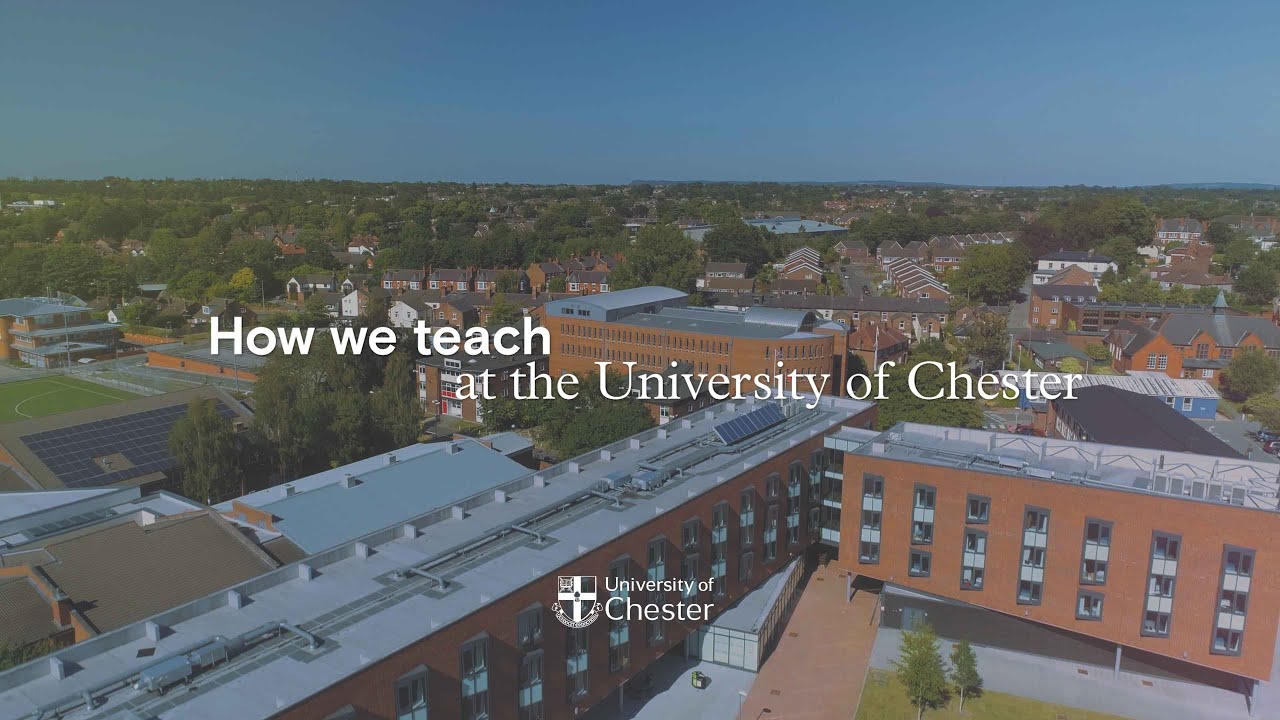
An aerial photograph of Exton Park with the text 'How we teach at the University of Chester'

How we teach at the University of Chester

You will be expected to undertake ten independent preparation and consolidation study hours (minimum) per week for the University course, in addition to full teaching days when on placement. 

Professional and academic learning takes place within University and partnership settings in lectures, seminars, practical workshops and tutorials. It is assessed through assignments and directed activities. 

School-based learning will enable you to apply what you have learned in University to placement. You will progress from observation of teaching and learning, to team planning, teaching and observation; and finally, to independently planning and teaching the whole class. Critical reflection on your practice is a key component of the course which is assessed holistically against the Teachers’ Standards. 

Your Future Career

Becoming a Teacher

On successfully completing your PGCE, you will attain Qualified Teacher Status (QTS). This will mean that you can then go on to become a teacher in your chosen area when you graduate.

To support you in securing your first teaching post, we host a careers event for each course to support you as you prepare for the teaching market.

Your Personal Academic Tutor (PAT) will be able to advise on your personal statement and can also provide a reference for you.

Once you graduate, whatever you’re PGCE route, you’ll be able to teach across the entire 3-11 age range, and in secondary schools.  

The placements included in your course are designed to equip you with the practical skills and experience to support you in pursuing a career in teaching. Whilst some graduates do achieve job offers from placement schools, this is not guaranteed, and you will need to find a teaching post at the end of the course. 

A qualification in teaching has the possibility of leading to:

  • Senior Leadership Team roles in Schools (Head Teacher, Deputy Head Teacher etc.)
  • Specialist roles such as a Special Educational Needs & Disability Coordinator (SENDCo)
  • Further study
  • Support Roles in Education Institutions
  • Higher Education roles

Careers service

The University has an award-winning Careers and Employability service which provides a variety of employability-enhancing experiences; through the curriculum, through employer contact, tailored group sessions, individual information, advice and guidance.

Careers and Employability aims to deliver a service which is inclusive, impartial, welcoming, informed and tailored to your personal goals and aspirations, to enable you to develop as an individual and contribute to the business and community in which you will live and work.

We are here to help you plan your future, make the most of your time at University and to enhance your employability. We provide access to part-time jobs, extra-curricular employability-enhancing workshops and offer practical one-to-one help with career planning, including help with CVs, applications and mock interviews. We also deliver group sessions on career planning within each course and we have a wide range of extensive information covering graduate jobs .

Placements

While studying here at Chester, you will have a placement in one of our partner schools, with 120 days of school-based learning.

School-based learning will enable you to apply what you’ve learned at university to your placement. You will progress from observing teaching and learning to team planning, teaching and observation; and finally, to independently planning and teaching the whole class. Critical reflection on your practice is a key component of the course, which is assessed holistically against the Teachers’ Standards.

Securing quality placements is a complex process of matching school expertise to Associate Teacher needs. Because of this, we cannot guarantee that we will place you ‘close to home’. Travel time can be up to 90 minutes per journey – this cannot be a guaranteed maximum, particularly if you are based outside our traditional partnership area.​

You will be supported throughout your degree before, during and after your placement, to ensure you get the most out of your school-based learning.

Entry Requirements

GCSE

Grade C/4 or above, in English, Mathematics and Science (or acceptable equivalents).

Honours Degree

Applicants will normally be required to hold, or be expected to gain, a degree of at least a 2:1 classification, in an area with relevance to primary education.

Interview

All applications will be carefully screened, and those deemed suitable will be invited for interview.

DBS Check

A DBS Check is required

Occupational Health

An Occupational Health check is required

IELTS

Level 7 or above or accepted equivalent

Honours Degree

Applicants will normally be required to hold, or be expected to gain, a degree of at least a 2:1 classification, in an area with relevance to primary education.

Interview

All applications will be carefully screened, and those deemed suitable will be invited for interview.

DBS Check

A DBS Check is required

Occupational Health

An Occupational Health check is required

Fees and Funding

£9,790 per year for a full-time course (2026/27)

The full-time tuition fees for Home students entering in 2026/27 are £9,790 a year, or £1,590 per 20-credit module for part-time study.

£14,950 per year for a full-time course* (2026/27)

The tuition fees for international students studying programmes in 2026/27 are £14,950 per year for a full-time course. This fee is set for each year of study.

For courses with a Foundation Year, the tuition fees for Year 1 are £11,250 and £14,950 for Years 2-4 in 2026/27.

Our Facilities

Who You’ll Learn From

Kathryn Clarke

Senior Lecturer
Kathryn Clarke

Lucy Underwood

Admissions Tutor ITE
Blank profile picture.

Enquire about a course