Professional Policing BSc (Hons)

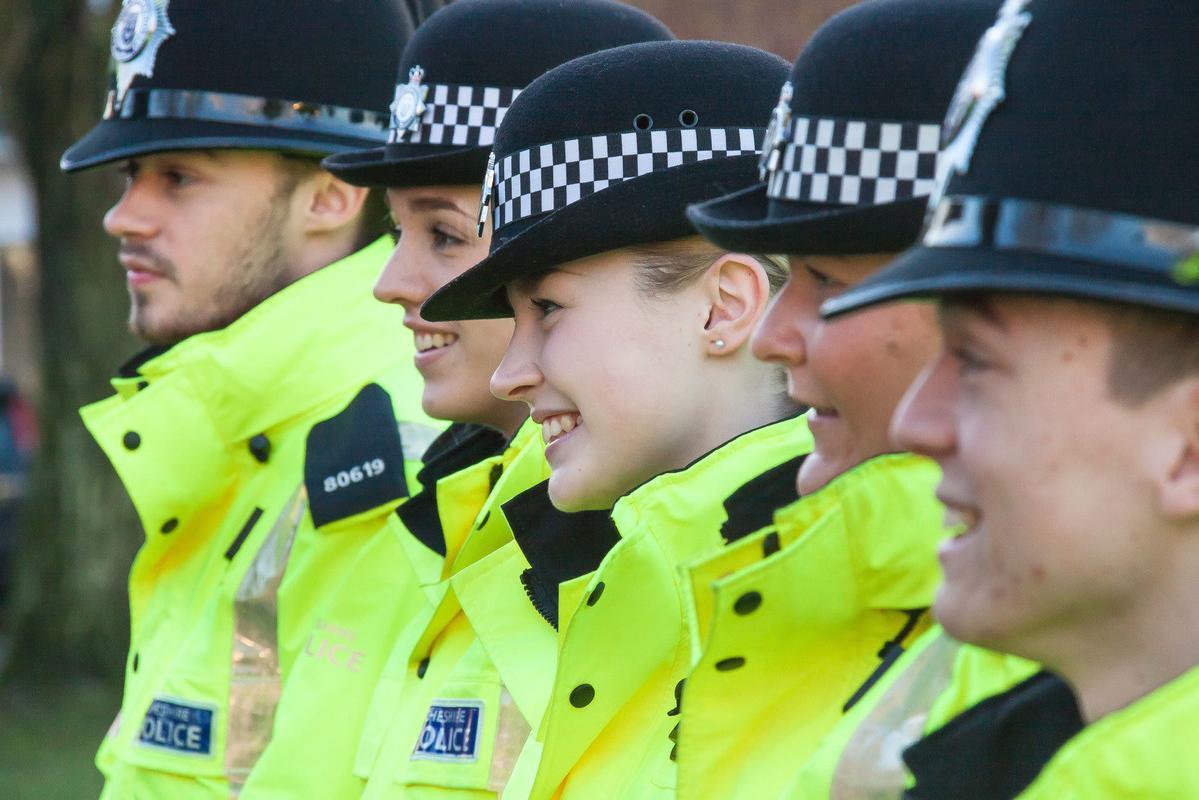
Group of smiling police officers in bright yellow jackets and traditional black hats during training, representing Professional Policing BSc (Hons) students.

This course is a national pre-join degree licensed by the professional body for policing, the College of Policing. The course is delivered by subject matter experts and experienced practitioners (including former police officers) with a wealth of subject and operational expertise to prepare you with the key transferable skills required for the role of police constable.

Entry requirements for joining any of the 43 police forces in England and Wales have changed and this is something to consider if you are thinking of pursuing a career as a police officer. The Degree in Professional Policing is one of the four College of Policing routes to join a police force as a police constable.

On our course, you will cover all the learning content of the College of Policing’s Degree in Professional Policing, as well as receive additional detailed inputs on specialist subjects like public protection and digital crime. You will gain a grounded knowledge of the key aspects of policing, such as legislation, police powers and investigative interviewing skills.

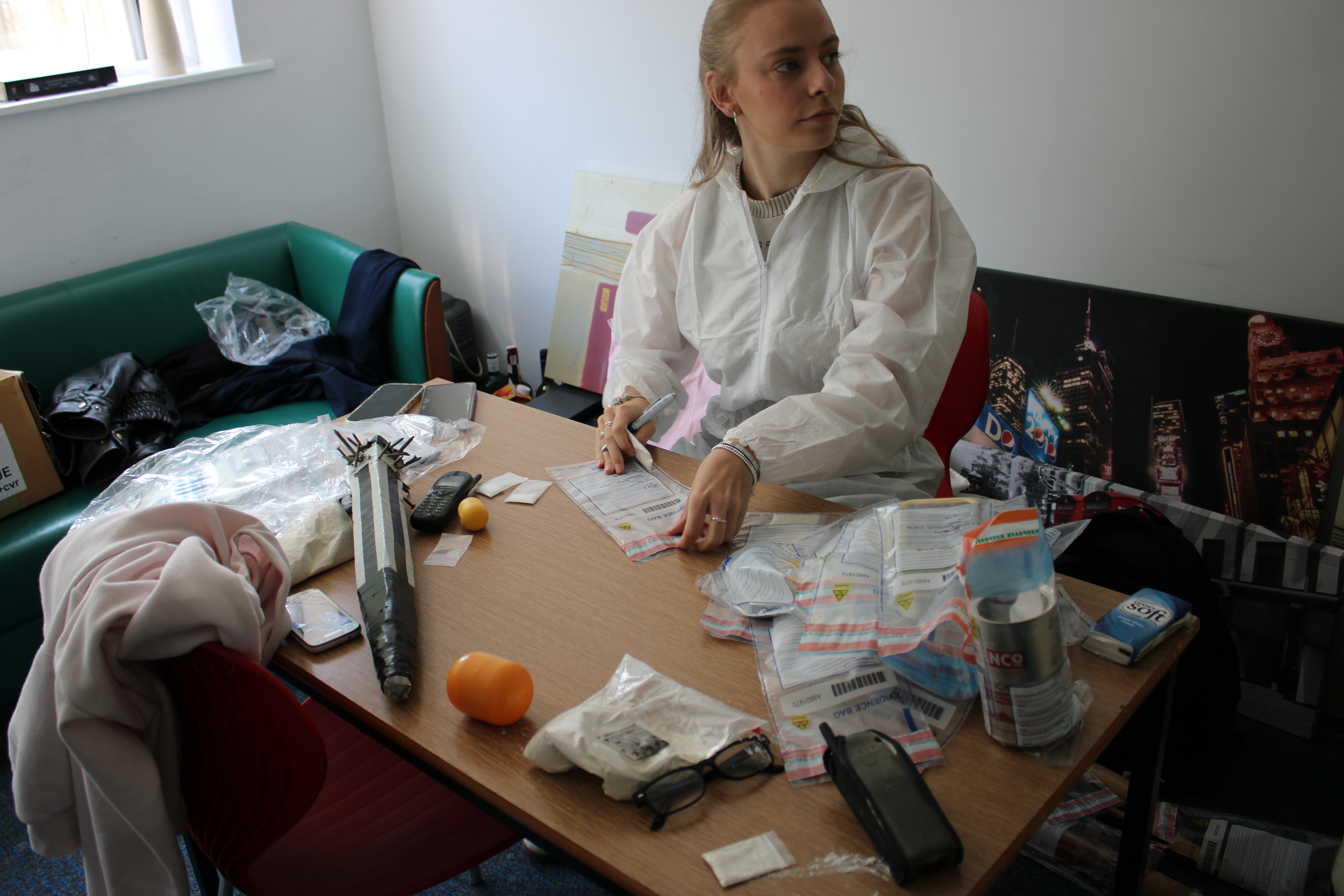
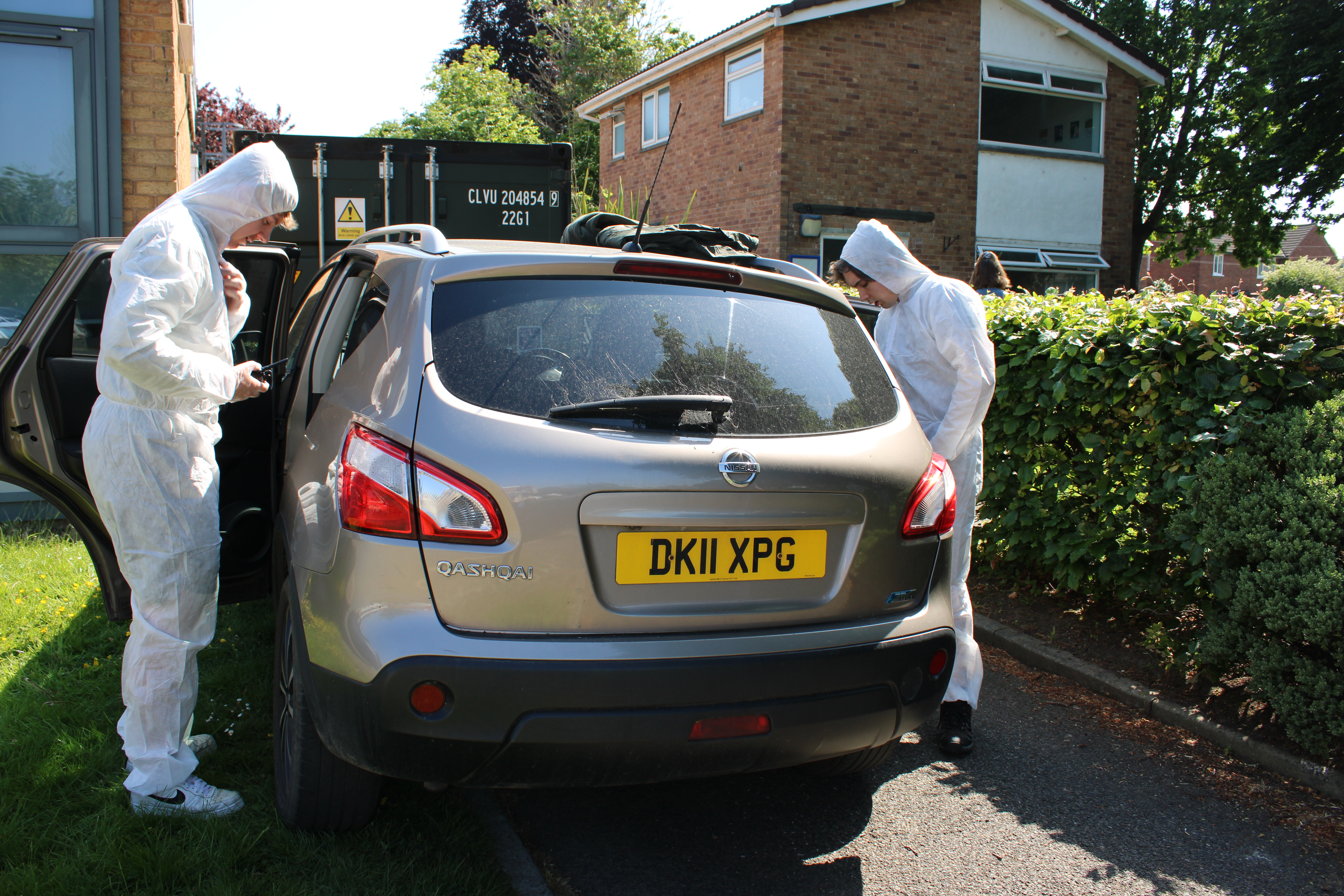
Our excellent simulation facilities for role-play scenarios will allow you to put your knowledge into practice in a safe learning environment. Our policing skills labs comprise of an immersive learning suite where you make real-time decisions whilst managing critical investigation, interview rooms, a crime scene house where you will conduct a variety of role-play situations, road policing scenarios, a custody office, and a mock courtroom where you will learn how to present evidence and defend your decision-making.

Through our relationships with police colleagues, we can help you to apply to be a special constable, allowing you to put your knowledge and skills into practice with on-the-job experience. There is a specific entry route into Cheshire Police Special Constabulary; students who pass the recruitment and selection process will not be required to compete the specials training course. This forms part of a bespoke selection process with Cheshire Police to become a regular officer with the Force on the successful completion of your degree. 


Why You'll Love It

BSc (Hons) Degree in Professional Policing Course Video

BSc Degree in Professional Policing at the University of Chester

What You'll Study

The Professional Studies Foundation Year route is designed to provide you with the knowledge and skills you will need to be successful at university and whilst on a professional and vocational course.

You will study a range of topics relating to your profession and the environment in which you will eventually work.  Areas of focus include person-centred care, mental health, children’s development, communication in a professional setting, social inequality, and how to apply psychology in the real world. 

Teaching and learning is tailored and designed with specific modules that relate to the profession you are preparing to join. You will also be introduced to the professional codes and standards that you must uphold such as, the Nursing and Midwifery Code, Social Work England, College of Policing, and national Safeguarding guidance.

This module introduces students to the key principles and structures of the English Legal System including contemporary debates relevant to the study of law and criminal justice. Criminological theories are explored and crime is analysed from a sociological perspective.

Indicative content:

  • Understanding the evolution of the law and legal concepts 
  • Principles and basic structure of the English Legal System
  • Sources of Law
  • Introduction to civil and criminal law and the court system
  • Key legal personnel and institutions 
  • Tort and law of negligence
  • Case studies on crime and punishment
  • Academic discipline of criminology and its scope
  • The social impact of crime 
  • Crime as a product of social inequality
  • Defining and measuring crime
  • Criminological theories of crime 
  • Investigate miscarriages of justice 
  • Learning to use and navigate a range of digital spaces specific to your subject
  • Understanding academic conduct and conventions for communicating information

The module introduces students to a range of social issues that are of concern across the social sciences, including for sociological, psychological, criminological and legal studies, as well as for people-focussed professional courses. It also encourages students to analyse the wider social and historical contexts for various public policy, legal and criminal justice scenarios, cases and debates. Additionally, the module provides students with support to advance their academic communication and to expand their research into subject-specific literatures.

Indicative content:

  • Social scientific subjects and subject lenses, including sociological criminological, psychological, legal and professional perspectives on the social world
  • Introductory ideas and concepts including society, socialisation and social structures  
  • Introducing and applying social psychological ideas and theories to social issues
  • Introducing ideas and debates surrounding youth studies, youth crime, and youth justice, including knife crime analysis
  • Theory and debates surrounding generational categories (such as generations X, Y, Z and Alpha) 
  • Digitalisation of society and digital ‘zeitgeist’ debates (such as selfie culture and ‘brain rot’)
  • Consumerism, young people and identities
  • Equality, inequality and intersectionality: class, age, gender, ‘race’, sexuality, disability
  • Tackling inequalities, promoting equalities, power and social change
  • Introducing and applying critical social science to issues of class, gender and 'race' , including Marxist, feminist, and critical race theory
  • Riots, uprisings and collective violence
  • Sex work, legal frameworks and sex trafficking
  • Criminal justice debates including prison reform, the role and impact of Victim Offender Mediation (VOM) initiatives, ‘defunding the police’ campaigns, and the representation of crime in the media
  • Public policy, legal, and criminal justice scenarios and cases  
  • Advancing digital and academic skills introduced during Term 1
  • Developing research and information literacy in relation to your subject
  • Creating an academic poster on a chosen research paper
  • Field visit
  • Local case study

This module explores the principles and practices of leadership, coaching, and change management within diverse professional contexts, including education, social work, sports management, policing, and business. Students will build self-awareness, develop coaching and leadership skills, and learn how to manage individual, team, and organizational change effectively. By combining theory with practical application, the module prepares students to navigate real-world challenges in their chosen fields.

Module Content:

  • Self-Awareness and Leadership Development:
    • Identifying personal leadership styles and growth areas.
    • Reflecting on the role of self-awareness in influencing others.
  • Building Professional Relationships:
    • Techniques for effective communication and boundary setting.
    • Coaching and mentoring for individual development.
  • Understanding Group Dynamics:
    • Strategies for managing team change and fostering collaboration.
    • Addressing conflict and building resilience in groups.
  • Leading Organizational Change:
    • Influencing culture and driving sustained change.
    • Ethical considerations and professional boundaries in leadership.

The information listed in this section is an overview of the academic content of the course that will take the form of either core or option modules and should be used as a guide. We review the content of our courses regularly, making changes where necessary to improve your experience and graduate prospects. If during a review process, course content is significantly changed, we will contact you to notify you of these changes if you receive an offer from us.

This degree is designed to give you the skills you need to progress in a career in policing and wider law enforcement.

You will study a wide range of modules that give you a thorough understanding of the key areas of policing. You'll also gain practical employability skills appropriate for a career in a police force or in wider law enforcement agencies such as the National Crime Agency.

The first year of study (level 4) will provide you with the knowledge and practical skills required to become a special constable, if you so wish. You will study criminal law, and police powers and procedures. In addition, you will gain invaluable knowledge in relation to intelligence, road traffic policing and response policing.

Core Modules

This module combines the essential aspects of policing, criminal law, decision making and police powers and procedures. It is designed to introduce you to the principles and application of legislation in relation to crime and the criminal justice system. You will be taught relevant legislation to the activities of a police officer and how to break down the legislation into points to prove. Practical scenarios and discussions will allow you to understand how to apply the law at police incidents, as well as considering the different agencies that make up the criminal justice system and how these reflect our understanding of 'crime' and the purpose of punishment.

In addition, you will begin to understand the various functions of the criminal justice system including the courts and supporting vulnerable victims and witnesses. Academic skills of notetaking and revision skills will be developed to assist in identifying the relevant aspects of lectures for the online exam. Revision sessions and knowledge checks will be utilised to cement knowledge and introduce techniques to assist in retaining information. Students will then develop the skill of applying the law at policing incidents together with the National Decision Model, utilising a structured approach to decision making in policing. Videos of incidents and scenarios will be used to allow students to apply decision making and provide rationales during group discussions. Key documentation such as the Core Investigative Doctrine will be used to develop ethically recorded rationales and how discretion, accountability, ethical behaviour, risk and bias can potentially impact on professional and objective decision making.

You will be taught essential skills such as communication skills and the importance of the types of questions to elicit information from a victim or witness. The purpose and structure of a statement will be discussed together with decision making and the recording of information at policing incidents. A series of practical role plays will provide you with the opportunity to witness an incident and then write your own statement before taking statements from victims and witnesses using authentic documentation. You will then combine these skills in immersive exercises using our Visual-reality (VR) cave and in a series of role play scenarios. This will be the opportunity to make and develop decision making skills and your rationales for those decisions. Students will be taught reflective practices and theories such as Gibbs reflective cycle, together with research skills to find relevant academic sources. Essay writing skills will be developed during the module and these skills will be used to reflect on decisions and actions during the role plays to produce a reflective piece of work as the second assessment of the module. The practical workings of a court will be witnessed through visiting and observing their Chester Magistrates Court and Chester Crown Court.

This module introduces the role of a response incident police officer, focusing on stop and search, arrest powers, entry powers, and managing a wide range of incidents. Students will explore high‑risk, critical, and major incidents—such as domestic abuse, public order situations, and missing‑from‑home cases—and consider how technology and inter‑agency working support effective response policing.

Students will study the PACE 1984 Codes of Practice, learning how suspects are identified, how arrests and searches are conducted, and what happens when individuals enter custody. They will also examine the legal basis for searching people without arrest under Code A and Section 1 of PACE.

The module also covers traffic law, core policing functions related to road safety, and strategies to reduce collisions. Students learn how to manage road traffic collision scenes with partner agencies, investigate fatal collisions, and understand the impact of road offences on victims and families. Road‑related anti‑social behaviour and the National Road Policing Strategy are also considered.

Further content includes policing the Strategic Road Network, serious criminal activity linked to roads, and the complexities of police pursuits. Students will develop skills in prevention and disruption tactics targeting criminals using the road network.


This module will introduce you to your policing studies and the use of intelligence which is a golden thread throughout all policing activities.

You will look at policing from a historical perspective and how the organisation has evolved up to the present day, how it links into partnership working with other law enforcement and partner agencies and addresses concepts of culture, ethics and values in addition to policing legitimacy and discretion You will focus on the core principles/concepts of ethics, equality, diversity and human rights in professional policing - demonstrating fairness, ethics and integrity/ the necessity for maintaining organisational standards in policing and the importance of incorporating research/using research informed practice in policing. You will gain a comprehensive understanding of how intelligence plays an integral link in implementing effective law enforcement through tactical and strategic decision-making and the importance of the correct handling, dissemination, storage and retention of intelligence. Group activities during lectures include producing intelligence products such as a subject profile and forming an intelligence cell for a counter terrorism operation managing intelligence in real time. These activities will introduce and develop teamwork, communication and decision-making skills together with understanding the importance of the retention, storage and dissemination of intelligence with cultural, legal and vulnerability issues. Finally, you will begin to develop and understand the specific skills required to manage intelligence in an operational setting.

This module will also develop your academic skills focusing on presentation skills, writing skills and referencing skills. You will be introduced to academic research related to policing, and how to access research from a range of different databases. Academic skills will be developed in the use of PowerPoint skills in producing an presentation and academic poster including use of pictures, fonts and colours to make information visible and informative. Presentation skills will be developed group activities to support you to produce and deliver a presentation and an academic poster and conduct a professional discussion in relation to the contents.

The information listed in this section is an overview of the academic content of the course that will take the form of either core or option modules and should be used as a guide. We review the content of our courses regularly, making changes where necessary to improve your experience and graduate prospects. If during a review process, course content is significantly changed, we will contact you to notify you of these changes if you receive an offer from us.

The second year (level 5) of the degree builds upon this knowledge, with an emphasis on evidence-based policing, criminology theory and community policing. There is also a practical-based module where you'll investigate a crime, from the initial report to giving evidence in court. This includes investigative interviewing, investigation skills, and forensics and intelligence gathering and understanding.

Core Modules

This module applies learning from IP4107 Criminal Law and Decision Making in the first year. The aim of this module is to focus on the Anatomy of a Crime and allow the students to apply learning in a safe teaching environment and to develop employability skills as criminal investigators. The intention is for students to investigate a reported crime from its initial report, up to presenting evidence at court. This module builds on knowledge relating to criminal decision making and the responsibilities of a response officer.

An investigative journey will include the Hydra Immersive Suite, where students will receive the report of the crime and develop a hypothesis of the cause and develop intelligence to identify a suspect. They will then attend the Crime Scene House, where they will develop skills in implementing witness and forensic strategies and digital forensic strategies, as well as create ongoing decision logs to effectively record their decision-making processes. Having gathered all available sources of intelligence and evidence, the students will plan and execute a search warrant culminating in the arrest of a suspect along with Investigative interviewing of the identified suspect. Finally, the students will prepare their evidence in a case file that will ultimately be presented at court. Students will also attend sessions in Chester Crown Court to witness police officers and witnesses present their evidence. This will allow students to apply prior learning and develop skills in criminal investigation, teamworking, public speaking and communication skills.

This module  takes both a theoretical and practical approach to criminology, crime prevention and sociology. It examines the relationship between victims and those who commit crime and how to apply sociological, historical, psychological, criminal and cultural perspectives to the study of crime and punishment and how societies respond to such offending.

Students will learn several crime prevention principles and theories, and examine and discuss the role of the public, the Police and both statutory and statutory Authorities role in crime prevention.

The fascinating concept of Restorative Justice as a means of crime prevention/and or rehabilitation will be examined in detail discussing the theory in the UK and across the World. Using real case study examples, students will plan, prepare and take part in multiple roles in practical role -play scenarios in restorative justice conferences highlighting a victim-centred approach to crime.

This module examines the future direction of community policing, with an emphasis on evidence‑informed decision-making and approaches that enhance public trust. Students will explore community expectations, methods for predicting demand, and strategies for managing high‑risk situations.

Key Learning Areas

  • The use of Artificial Intelligence in contemporary policing
  • Evidence-based policing principles and real‑world application
  • Developing and sharing research effectively

Critical Analysis

Students will critically assess the effectiveness of community policing in the UK, focusing on engagement, partnership working, and problem‑solving methodologies. The module also addresses key issues such as fear of crime, crime prevention, the experiences of victims and offenders, and wider social and economic influences—including austerity, media narratives, and poverty.

Why This Matters

Community policing plays a vital role in maintaining public confidence and ensuring community safety. By understanding how evidence, technology, and societal change influence policing practice, students will be equipped to contribute to innovative, effective solutions that reduce crime, strengthen communities, and support the legitimacy of policing.


The information listed in this section is an overview of the academic content of the course that will take the form of either core or option modules and should be used as a guide. We review the content of our courses regularly, making changes where necessary to improve your experience and graduate prospects. If during a review process, course content is significantly changed, we will contact you to notify you of these changes if you receive an offer from us.

In the third year of study (level 6), you will study digital policing and leadership skills, together with undertaking an academic project in an area of policing or law enforcement that you are interested in or an area of policing in which you wish to pursue a career. There is a final module where you will apply skills, abilities and experiences gained throughout your degree to investigate a complex criminal investigation.

The University is licensed by the College of Policing, the professional body for policing, to deliver this professional degree course which is one of the pathways into a police force. However, the skills you'll gain will provide a wide range of employment opportunities and potential in law enforcement and wider employment.

Core Modules

This module builds on the Level 5 module relating to research methods and skills and evidence based policing, providing an opportunity for students to carry out an in-depth study of a topic or issue based in, or closely allied to Policing by independent study. The module will continue to develop students skills in the role of research in Policing and examine some of the main theories and methodologies used in social science and develop an understanding of the application of theory and methodology to research practice.

Students will then develop their ability to understand and define clearly a problem or area for further study. Students will develop the ability to extract relevant material from an in depth literature review using primary and secondary sources and to design and undertake an original investigation using acceptable research methodologies. Finally, students will critically analyse and interpret results, to present a coherent and critical account of the work developing time management skills and achieving a measure of independence, demonstrating proficiency in academic writing/referencing.

This module builds upon knowledge from the Level 4 module Information and Intelligence and aims to enable students to understand and identify legislative, ethical and professional considerations and demonstrate the application (through a case study) of the highly technical skills required when conducting digital crime investigation evaluating the relevant legislation, national policy and specialist support structures available to investigators and the support of vulnerable victims and witnesses. The student will also recognise and acknowledge community and business considerations when conducting digital crime investigations whilst keeping a balanced, professional and objective approach. Elements of the Module will be taught in a computer laboratory allowing for a  real world experience of examining digital evidence and intelligence.   

Students will review a crime scene in the Virtual Reality immersive cave, to assess initial actions and evidence gathering from a crime scene. A visit to Chester Crown Court for sentencing of offences connected to the use of digital technology will assist in understanding of the role of digital evidence in criminal investigations.

This module builds on teaching delivered at Level 4 and Level 5 modules relating to police investigations and safeguarding. The module will provide students with knowledge of serious and organised crime, and the investigation of serious and complex crime and multi-agency working in the context of protecting vulnerable children and adults. The module focuses on all aspects of public protection and how police and agency partners manage investigations to reduce the risks to individuals and communities. The student will learn about the identification and mitigation of risk and the planning and delivery of interventions to tackle dangerous offenders to protect the public.

Students will assume the role of detective to investigate a serious incident provided by way of a case study. Learning will be supported by a range of practical activities such as workshops, role play, and the use of the Hydra Immersive Learning Suite, which allows the student to develop their decision making, teamwork and construction of investigative strategies.

Students to gain knowledge to enable them to critically articulate key theories in relation to leadership and management skills and to evaluate and analyse how these skills are applied to policing leadership in the United Kingdom. Students will apply theories around teamwork, motivation, change management, toxic leadership including power and conformity and be able to articulate how these effect police leadership. In addition, the student will be able to discuss issues which arguably effect successful leadership including the media. austerity, force structure and criminological aspects.


Students will be able to articulate the professional importance of self-evaluation, self-improvement and reflective practice, as they take part in an immersive tabletop leadership scenario as they take on the role as a match commander at a large sporting event.


Students will apply their knowledge to complete a 4000-word written assignment about the skills and qualities required to be successful in police leadership.

The information listed in this section is an overview of the academic content of the course that will take the form of either core or option modules and should be used as a guide. We review the content of our courses regularly, making changes where necessary to improve your experience and graduate prospects. If during a review process, course content is significantly changed, we will contact you to notify you of these changes if you receive an offer from us.

How You'll Learn

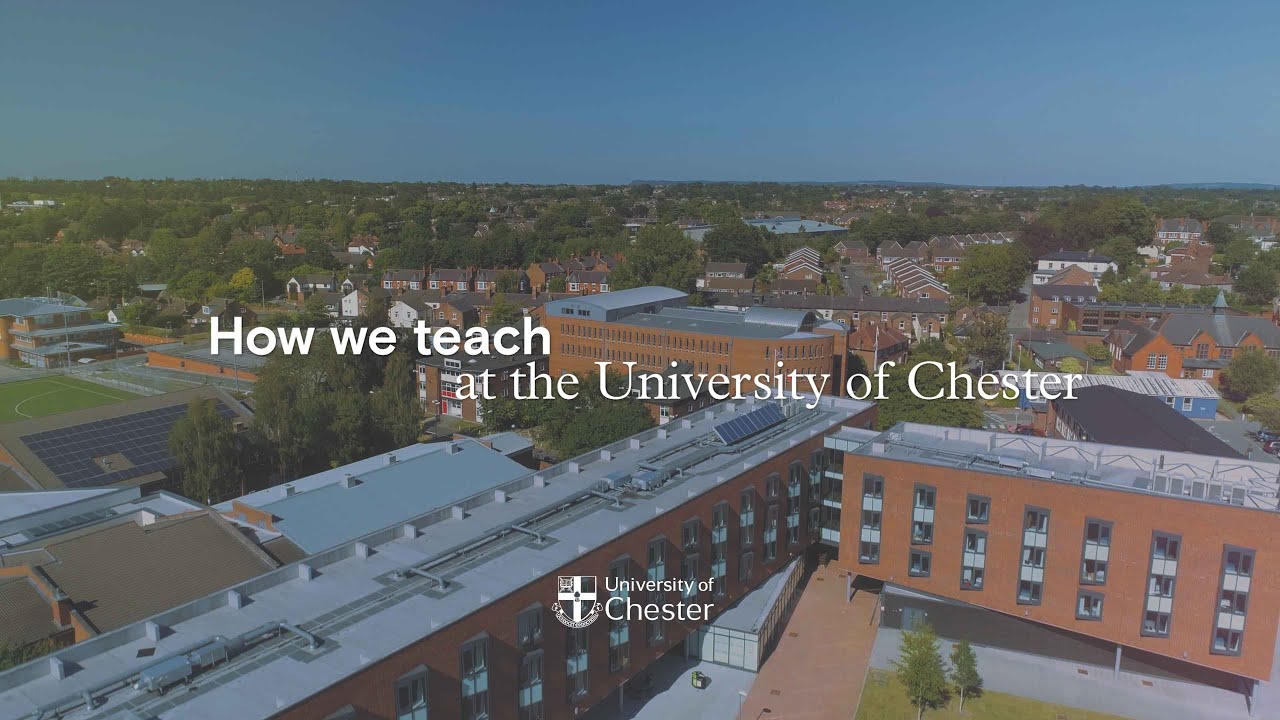
An aerial photograph of Exton Park with the text 'How we teach at the University of Chester'

How we teach at the University of Chester

This course is taught in three terms of ten weeks each.     

The majority of this course consists of in-person learning; however, there may be elements of online learning. You will take part in lectures, workshops and peer-led seminars. 

You should expect to spend an average of 10-20 hours per week on independent study, which might include following asynchronous learning material on the University’s VLE, tutorial time with staff, using the University’s library, working with peers and preparing work for assessment. 

If studied, the Foundation Year, as with the following years of study, will be taught in three 10-week blocks across an academic year. Each block will comprise of a large 40-credit subject-specific module that includes a breadth of topics and subject skills. You will have on average 12-14 hours of contact time per week during the Foundation Year. There may be variations to this where subject practical or specialist space teaching is included.

Teaching will be delivered by experienced academics and practitioners in the subject. This will be supplemented by occasional guest lecturers and speakers. 

The assessment strategy for this course was developed in accordance with the requirements of the College of Policing to provide you with the necessary skills, abilities and experience you need to be an effective candidate for the police.

You will be assessed using a variety of methods, incorporating practical elements where applicable. Formative and summative assessments have been designed to authentically reflect professional policing through the production of material utilised within policing, thereby developing effective and robust transferable skills in graduates.

Some of the assessments include:

  • coursework in the form of essays
  • academic posters
  • presentation
  • witness/suspect interviews
  • investigative decision logs
  • conducting a stop/search
  • a road traffic collision
  • giving evidence in a courtroom.

The assessment methods are continuously reviewed so that they reflect the requirements of the College of Policing. They are created so that the teaching on this course adequately prepares you for graduate-level employment.

All teaching is delivered by experienced academics and practitioners, with the fundamental principles of the Chester Future Skills Curriculum at its core - building your subject competence, confidence and key transferable skills to shape you into a world-ready Chester graduate.
Your Future Career

Job Prospects

This degree is a recognised entry route into English and Wales police forces and graduates need to apply to a police force within five years of graduation. The successful completion of this degree does not necessarily guarantee recruitment to a police force and is subject to police force recruitment and selection processes, including background checks and medical and fitness criteria. The University of Chester has an exciting specific entry route into Cheshire Police, whereby students who are a Special Constable within that force – subject to certain criteria and meeting aspects of the selection process, such as vetting and medical/fitness standards – will not have an interview as part of the process or have to complete any further training from the police constable entry route.

Through our relationships with police colleagues, we can help you obtain an opportunity to apply to be a special constable, allowing you to put your knowledge and skills into practice with on-the-job experience, and providing evidence to support your CV. 

Careers Service

The University has an award-winning Careers and Employability service which provides a variety of employability-enhancing experiences; through the curriculum, through employer contact, tailored group sessions, individual information, advice and guidance.

Careers and Employability aims to deliver a service which is inclusive, impartial, welcoming, informed and tailored to your personal goals and aspirations, to enable you to develop as an individual and contribute to the business and community in which you will live and work.

We are here to help you plan your future, make the most of your time at University and to enhance your employability. We provide access to part-time jobs, extra-curricular employability-enhancing workshops and offer practical one-to-one help with career planning, including help with CVs, applications and mock interviews. We also deliver group sessions on career planning within each course and we have a wide range of extensive information covering graduate jobs and postgraduate study.

Public Order Tactical Training Exercise - Degree in Professional Policing BSc (Hons) Video

Public Order Tactical Training Exercise - BSc (Hons) in Professional Policing

Entry Requirements

104 UCAS points

UCAS Points

104

GCE A Level

Typical offer – CCC-BCC

BTEC

DMM

International Baccalaureate

26 points

Irish/Scottish Highers

H3 H3 H3 H4 H4

Scottish Highers - BBBB

Access requirements

To include 45 credits at level 3, of which 30 must be at Merit or above

T Level

Pass (C or above on the core)

OCR Cambridge Technicals

OCR Extended Diploma: DMM

Extra Requirements

Welsh Baccalaureate Advanced and A Level General Studies will be recognised in our offer. We will also consider a combination of A Levels and BTECs/OCRs.

72 UCAS points

UCAS Points

72

GCE A Level

72 points overall, including grade D in A level

BTEC

MMP

International Baccalaureate

24

Irish/Scottish Highers

H4 H4 H4 H4 H4

Scottish Highers - CCDD

Access requirements

Pass overall

T Level

Pass (C or above on the core)

OCR Cambridge Technicals

MMP

Extra Requirements

Welsh Baccalaureate Advanced and A Level General Studies will be recognised in our offer. We will also consider a combination of A Levels and BTECs/OCRs.

Fees and Funding

£9,790 per year for a full-time course (2026/27)

The full-time tuition fees for Home students entering in 2026/27 are £9,790 a year, or £1,590 per 20-credit module for part-time study.

Tuition fees for Home students for the Foundation Year in 2026/27 will be £5,760 (subject to Parliamentary approval) for the first foundation year of a four-year course. Tuition fees for subsequent years will be charged at the standard undergraduate tuition fee rate for that academic year. Standard undergraduate tuition fees for Home students for the academic year 2027/28 will be £10,050 for full-time students and £7,530 for part-time students (subject to Parliamentary approval). Fees for subsequent years may be subject to increase in line with the Government fee cap

  Foundation (First) Year Second Year onwards per year
Home Students £5,760 full-time fee for the first foundation year (2026/27) £10,050 full-time fee per year from the second year onwards (2027/28)
International Students * £11,250 full-time fee for the first foundation year (2026/27) £14,950 full-time fee per year from the second year onwards (2026/27)

* For courses which accept applications from International Students

Your course will involve additional costs not covered by your tuition fees. This may include books, printing, photocopying, educational stationery and related materials, specialist clothing, travel to placements, optional field trips and software. Compulsory field trips are covered by your tuition fees. 

If you are living away from home during your time at university, you will need to cover costs such as accommodation, food, travel and bills.

Our Facilities

Who You'll Learn From

Mike Parsons

Senior Lecturer
Mike Parsons

Enquire about a course