




A group of female teacher training students around table writing notes and open laptop screen.

PGCE Events

If you're considering studying a PGCE and would like to find out more and receive personal advice, guidance and support, you're welcome to join us at one of our PGCE online or in-person events.

Learn more and book your place

Course Overview

In conjunction with Secondary Lead School partners, the University of Chester offer Chemistry (11-16 with sixth form enhancement) as a subject specialism leading to the award PGCE with QTS. Teaching is an extremely rewarding and challenging career. Our course is designed to provide you with the knowledge, understanding and skills that you need to be an outstanding teacher. We aim to nurture teachers who are passionate about the development of their own and their pupils' learning.   

Chemistry is taught in conjunction with Lead Secondary Partners: Alliance of Leading Learning, Sandstone Trust, Salop Teaching Partnership, Teach Cheshire and Wade Deacon Trust.

The University of Chester Partnership has a rich history of developing highly skilled, knowledgeable teachers, and has a high employability rate. Our Partnership has learning at its heart, combined with passion and enthusiasm for teaching and learning. We will provide you with the support you need to become a critically reflective evidence-based practitioner through a combination of academic challenge and school learning. An unusual aspect of the Chester experience is the enrichment module, which will support you in developing your expertise and employability in different educational settings, e.g. nurseries, SEND schools, post-16 provision. Strong pastoral care is a key aspect of ensuring your success on this demanding but fulfilling course.

Our ‘School-led PGCEs’ were previously named ‘School Direct PGCEs’

Changes within the government’s Department for Education have led to a change in nomenclature, but the courses remain the same in both build and delivery. The way we work with our partners and local schools has not changed.

Accreditations

Ofsted Good Provider

Why You’ll Love It

What You'll Study

Our modules will provide you with critical understanding of pedagogy, assessment and curriculum; critical knowledge, understanding and skills in primary age phases and subjects; critical knowledge and understanding of wider professional issues, e.g. behaviour management and inclusive practice; enrichment opportunities; and at least 120 days of school-based learning.

Core Modules

Common strands explored throughout the programme and within the context of this module include commitments to inclusivity in all its forms; safeguarding and wellbeing of children; promoting a positive classroom environment conducive to engagement and respecting diversity; and building curricula and sequences of lessons designed to ensure the progression of all.  Alongside this and in common with other modules, ATs will be supported to prioritise their own wellbeing, achieve a sustainable work-life balance while managing their initiation into professional communities of practice.

Associate Teachers (ATs) will develop an understanding of the nature and aims of the National Curriculum and/or Early Years Foundation Phase depending on the age-phase in which they are training to teach.  They will consider these documents in relation to breadth, balance and ambition and how pupils and children can be supported to make links between subjects, disciplines and associated areas of learning to ensure that the curriculum is greater than the sum of its parts.  ATs will cover important elements of the legislative and statutory framework relevant to teaching, education and the professional responsibilities (e.g. safeguarding, the SEND Code of Practice, the promotion of Fundamental British Values, the Equality Act etc.).  ATs will also cover important aspects of inclusion, the definitions and categories of different pupil needs, including the 4 categories (social, emotional and mental health, sensory and/or physical, communication and interaction, cognition and learning).  Through guided observation, ATs will develop knowledge of how to generate motivation, autonomy, mutual respect and positive relationships with staff and pupils of all kinds and how important a consistent whole-school/institution-wide approach to managing children and pupils' behaviour is to this.  ATs will be expected to demonstrate principles of professionalism and professional behaviours of teachers along with the importance of reading policies, following them and taking appropriate advice and initiative.  ATs will observe and develop their knowledge of the teaching of citizenship and PSHE where relevant and their relationship to the notion of a healthy and socially responsible school/institutional community as well as the spiritual, moral, social and cultural development of pupils and children.  ATs will be supported to manage their workload to ensure there is a productive work/life balance and that proportionate amounts of time are set out for planning, teaching and assessment activities - and recognise the importance of their contribution to the wider life of the school/institution.  Through the guided observation of experts, ATs will develop how to communicate with lay stakeholders, parents, and carers and others in promoting professional cooperation and the engagement of pupils.

Associate Teachers (ATs) will be supported to manage their own progress in developing and extending their knowledge and understanding of inclusion in all its forms, the promotion of a positive classroom environment which maximises learning and respects safeguarding and the dignity and diversity of all pupils.  They will also be supported to consistently and confidently plan sequences of lessons which enable the progression of all pupils and engage with colleagues in mutual enquiries to develop the curriculum.  ATs will develop their understanding of the nature and aims of the National Curriculum and/or Early Years Foundation Phase depending on the age-phase in which they are training to teach.  They will consider the practical implications of these documents in relation to breadth, balance and ambition and how pupils and children can be supported to make links between subjects, disciplines and associated areas of learning to ensure that the curriculum is greater than the sum of its parts.  ATs will further develop their understanding of statutory frameworks and legislation in relation to safeguarding, Special Educational Needs, Fundamental British Values etc.  ATs will develop their understanding of the different types of assessment that can be used with classes to ensure planning is responsive to pupils' and children's needs.  ATs will extend their knowledge of planning and particularly their understanding of how all pupils learn (in general and within specific subjects) and the range of concepts and theories which underpin it.  Also they will extend their knowledge of curricular planning and how coherent sequences of learning can promote learning for all pupils.  ATs will extend their knowledge of how to generate motivation, autonomy, mutual respect and positive relationships with staff and pupils of all kinds and how important a consistent whole-school/institution-wide approach to managing children and pupils' behaviour is to this.  ATs will demonstrate consistently and confidently the principles of professionalism and professional behaviours of teachers along with the importance of reading policies, following them and taking appropriate advice and initiative.  ATs will extend their understanding of citizenship and PSHE where relevant and support a sustainable, healthy and socially responsible school/ institutional community as well as the spiritual, moral, social and cultural development of pupils and children.  ATs will manage their workload to sustain a productive work/life balance and that proportionate amounts of time are set out for planning, teaching and assessment activities while contributing to the wider life of the school/institution.  ATs will develop their confidence in communicating with lay stakeholders, parents, and carers and others in promoting professional cooperation and the engagement of pupils.

This module is underpinned by common strands explored across the programme as a whole.  Within the context of this module, this includes commitments to inclusivity in all its forms; safeguarding and well-being of children; promoting a positive classroom environment conducive to engagement and respecting diversity; and building curricula and sequences of lessons designed to ensure the progression of all.  Alongside this and in common with other modules, ATs will be supported to prioritise their own well-being, achieve a sustainable work-life balance while managing their initiation into professional communities of practice.

The module covers important legislative and statutory frameworks which teachers must know and understand (e.g. inter alia those governing safeguarding, SEND, the promotion of Fundamental British Values, the Equality Act etc).  Part and parcel with this are issues of race and gender identification, how teachers can promote good behaviour and a positive orientation to learning from pupils, including those from disadvantaged backgrounds or who have diverse needs.  The module also covers the nature and aims of the secondary National Curriculum particularly with regard to its ambition, and breadth and balance. The ATs will take a holistic view of the curriculum and explore how pupils can be supported to make links between different subjects and disciplines within the curriculum.  The ATs will be introduced to important principles of professionalism and professional behaviours of teachers along with establishing professional relationships with staff and pupils and the importance of reading policies and following them. ATs will also be introduced to protocols of data security and for communicating with lay stakeholders, parents and carers in the support of children’s engagement.  The ATs will also know and understand the nature and practice of inclusion in all its forms.  ATs will also be introduced to Citizenship and PHSE and their relationship to the notion of a healthy and socially responsible school community as well as the Spiritual, Moral, Social and Cultural development of pupils.  ATs will also develop ways to understand how curriculum areas support pupils to develop literacy, reading, writing, oracy and an enjoyment of engaging with text.  ATs will develop their own ability to manage their workload, promptness and punctuality with tasks, resilience and well-being and be able to balance their work/life activities and see the value of contributing to the wider life of school.

ATs will involve themselves in a variety of activities aimed to develop their professional perspectives on teaching and introduce them to broader horizons in the practice of education.  These projects involve work with young people and for example could entail learning outside the classroom; understanding of diversity in the classroom; developing pupil engagement among those in vulnerable groups; involvement in research and curriculum development initiatives; work with other adults or in non-formal/ alternative settings involved in the education of children.  ATs will reflect on the value of these activities in promoting and enhancing learning beyond formal curriculum prescription, and in the development of their own understanding.

This module constitutes the method by which tutors and students in ITE BA QTS courses can establish, track and support Associate Teachers' development of fundamental knowledge for teaching in English, Maths, and Science.  There are no taught sessions as such though Associate Teachers will be required to take a number of audit tests in the aforementioned subject areas across their ITE registration period.  Associate Teachers' performance in these audit tests will signpost them to undertake independent study to improve proficiency.

Common strands embedded within the programme as a whole and explored within the context of this module include commitments to inclusivity in all its forms; safeguarding, and well-being of children; promoting a positive classroom environment conducive to engagement and respecting diversity; and building curricula and sequences of lessons designed to ensure the progression of all.  Alongside this and in common with other modules, ATs will be supported to prioritise their own well-being, achieve a sustainable work-life balance while managing their initiation into professional communities of practice.

Beyond these underpinning strands, this module will introduce ATs to study habits, conventions, writing and communication at Level 7 and initiate ATs to the principles of professional enquiry as part of their learning journey.  It will serve as an initiation to developing the critical perspectives necessary for interactions between theory, research and practice within the specialist subject. In order to develop close and incisive observations of practice in school, ATs will be introduced to notions of reflectivity and reflexivity, and develop perceptive insights into what they notice from concepts derived from theory and research.  ATs will develop an understanding of how all children learn the specialist subject and relate this to key concepts in teaching and learning (e.g. scaffolding; dialogue; questioning; meaning-making; working memory; long-term memory; cognitive load; engagement; identity transformation) and concepts relating to curriculum design (e.g. sequencing; interleaving; knowledge-rich; coherence; cumulativity; cultural capital; connectivity).  ATs will also begin to use research and theory systematically in order to make judgements about how to present new material in learnable ways to pupils (e.g. using exemplars, analogy, multiple representations, explanations, dialogue and discussion, scaffolds, and demonstrations) and begin to develop responsiveness to what they notice pupils need from their assessments and reflections.  ATs will reflect critically on the rationale behind the curriculum choices that have been made and initiate where appropriate professional dialogues with colleagues and peers about planning.  ATs will be encouraged to develop criticality relating to uninformed and/or culturally reproduced practices (e.g. fixed groupings, 'learning styles' approaches; unpurposeful or burdensome assessment; exclusive differentiation) and they will exercise professional discretion in choosing how and when to demonstrate this.  ATs will learn how to maximise the engagement, motivation, participation and attainment of all pupils through carefully planned and adapted lessons.  ATs will also begin to understand key barriers to learning, and likely misconceptions within the subject and how inclusivity in all its forms can underpin lesson and curriculum design.  This will require a critical engagement with key policy documents, legislation, research, codes of practice and collaboration with other colleagues, parents, carers and classroom assistants.

This module straddles two contrasting placements and as such provides an arena for exploring contrasts between curriculum and pedagogy within the specialist subject and between institutions.  Throughout the content articulated beneath, ATs will develop their commitment to inclusivity in all its forms, safeguarding and well-being of children. and establish a positive learning environment that respects diversity, and the dignity of all children.  ATs will also develop their contributions to a rich and empowering curriculum by planning sequences of lessons that ensure the progression of all and develop strategies for supporting their own well-being and a sustainable work-life balance within an increasing workload.  ATs will participate in a supportive culture of enquiry that will act to build resilience to criticism and as an initiation to the principles and ethics of self-improvement in a Professional Learning Community into the NQT years. The module develops understanding of pedagogical and curriculum concepts (e.g. scaffolding; dialogue; questioning; meaning-making; working memory; long-term memory; cognitive load; engagement; banding and grouping; identity transformation; sequencing; interleaving; knowledge-rich; coherence; cumulativity; cultural capital; connectivity) and relates them critically to the specialist subject, to enacted practice in placement schools, research and the principles of inclusion. The ATs' will also develop their understanding of how to plan sequences of lessons, including purposeful homework activities so that they fit into broader curriculum frameworks and objectives. ATs will explore philosophical, socio-political and historical influences on the curriculum and develop their understanding of how curriculum intention is mediated by their teaching and by how pupils respond to their teaching. ATs will develop their understanding of the ways in which their subject can usefully contribute to pupils’ literacy, including their reading, writing, and oracy. It will also extend opportunities for ATs to develop their understanding of assessment principles and how ATs can respond to the diverse challenges pupils experience. ATs will be invited to explore their own uses of assessment, dialogue and questioning and how they use it to develop as well as check pupils' understanding.  In this way, ATs will begin to see that dialogue and assessment is a critical window into the pupil voice and a crucial opportunity for teachers to understand pupils' perspectives. ATs will be invited to explore critically the purposes behind assessment and the meanings behind notions of the curriculum itself as the progression model.  ATs will examine inclusive approaches to teaching and planning within the specialist subject and critically identify where there may be unintended consequences to planned activities.  ATs will also reflect critically on the correlation between a well sequenced series of lessons and its impact on the development of positive relationships with pupils, a classroom environment conducive to learning and to pupils' well-being, autonomy, and agency.  

The information listed in this section is an overview of the academic content of the course that will take the form of either core or option modules and should be used as a guide. We review the content of our courses regularly, making changes where necessary to improve your experience and graduate prospects. If during a review process, course content is significantly changed, we will contact you to notify you of these changes if you receive an offer from us.

How You'll Learn

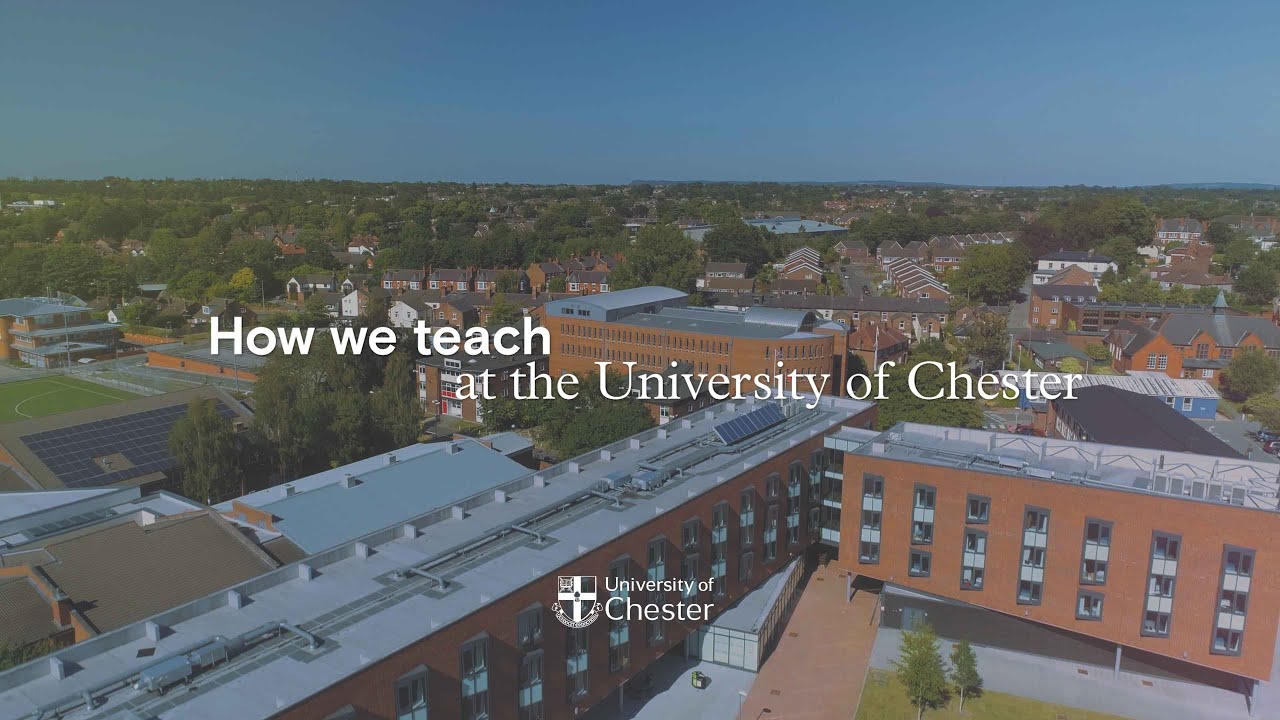
An aerial photograph of Exton Park with the text 'How we teach at the University of Chester'

How we teach at the University of Chester

Professional and academic learning takes place within the University and partnership settings in lectures, seminars, practical workshops and tutorials. School-based learning is assessed holistically against the Teachers’ Standards, and through assignments and directed activities.

Your Future Career

Becoming a Teacher

On successfully completing your PGCE, you will attain Qualified Teacher Status (QTS). This will mean that you can then go on to become a teacher in your chosen area when you graduate.

To support you in securing your first teaching post, we host a careers event for each course to support you as you prepare for the teaching market.

Your Personal Academic Tutor (PAT) will be able to advise on your personal statement and can also provide a reference for you.

Once you graduate, whatever you’re PGCE route, you’ll be able to teach across the entire 3-11 age range, and in secondary schools.  

The placements included in your course are designed to equip you with the practical skills and experience to support you in pursuing a career in teaching. Whilst some graduates do achieve job offers from placement schools, this is not guaranteed, and you will need to find a teaching post at the end of the course. 

A qualification in teaching has the possibility of leading to:

  • Senior Leadership Team roles in Schools (Head Teacher, Deputy Head Teacher etc.)
  • Specialist roles such as a Special Educational Needs & Disability Coordinator (SENDCo)
  • Further study
  • Support Roles in Education Institutions
  • Higher Education roles

Careers service

The University has an award-winning Careers and Employability service which provides a variety of employability-enhancing experiences; through the curriculum, through employer contact, tailored group sessions, individual information, advice and guidance.

Careers and Employability aims to deliver a service which is inclusive, impartial, welcoming, informed and tailored to your personal goals and aspirations, to enable you to develop as an individual and contribute to the business and community in which you will live and work.

We are here to help you plan your future, make the most of your time at University and to enhance your employability. We provide access to part-time jobs, extra-curricular employability-enhancing workshops and offer practical one-to-one help with career planning, including help with CVs, applications and mock interviews. We also deliver group sessions on career planning within each course and we have a wide range of extensive information covering graduate jobs .

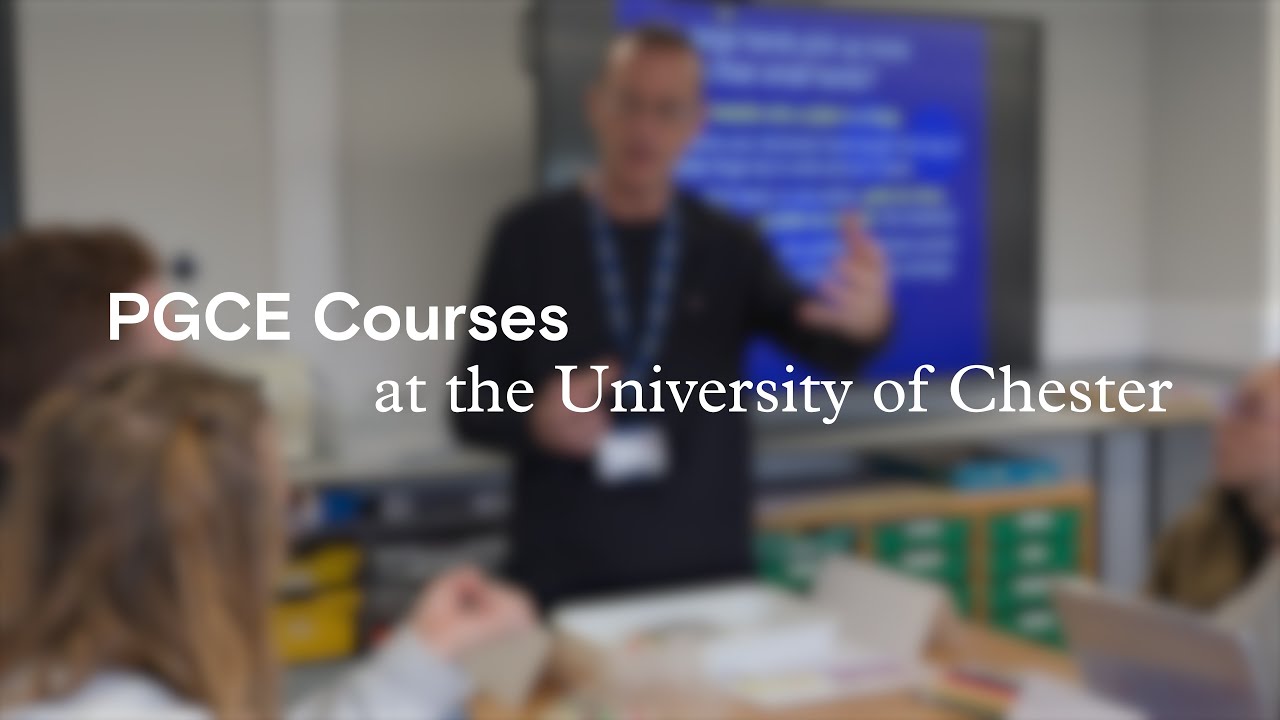
PGCE Courses at the University of Chester Course Video

PGCE Courses at the University of Chester

Beyond The Classroom

On this course, you’ll spend time out on placement where you’ll apply what you have learnt to real scenarios in the workplace, giving you genuine experience and insight that will prepare you for your future career. 

Entry Requirements

GCSE

Grade C/4 or above, in English, and Mathematics (or acceptable equivalents).

Honours Degree

Applicants will normally be required to hold, or be expected to gain, a degree of at least a 2:1 classification, in an area with relevance to a specialist secondary subject.

Interview

All applications will be carefully screened, and those deemed suitable will be invited for interview.

DBS Check

A DBS Check is required

Occupational Health

An Occupational Health check is required

Students from outside the UK are expected to hold qualifications broadly equivalent to UK standards - a Bachelor's degree (or equivalent) for postgraduate study.

To help you interpret these equivalents, please select your country/region of residence. This will provide details on equivalent entry requirements, as well as information about local representatives, events, and key contacts.

We accept a wide range of qualifications and assess all applications on an individual basis. Relevant work experience may also be taken into consideration where appropriate.

Please note: This course only accepts the following English language qualifications:

  • IELTS 7.0 overall (with no less than 5.5 in each band)
  • UK and majority English speaking degrees (equivalent to UK degree at 2:2) accepted

IELTS

Level 7 or above or accepted equivalent

Honours Degree

Applicants will normally be required to hold, or be expected to gain, a degree of at least a 2:1 classification, in an area with relevance to a specialist secondary subject.

Interview

All applications will be carefully screened, and those deemed suitable will be invited for interview.

DBS Check

A DBS Check is required

Occupational Health

An Occupational Health check is required

Fees and Funding

£9,790 per year for a full-time course (2026/27)

The full-time tuition fees for Home students entering in 2026/27 are £9,790 a year, or £1,590 per 20-credit module for part-time study.

Guides to the fees for students who wish to commence postgraduate courses are available to view on our Postgraduate Fees page. Here you will also find information about part-time fees and project/placement year fees.

£14,950 per year for a full-time course* (2026/27)

The tuition fees for international students studying courses in 2026/27 are £14,950 per year for a full-time course. This fee is set for each year of study.

For courses with a Foundation Year, the tuition fees for Year 1 are £11,250 and £14,950 for Years 2-4 in 2026/27.

Irish Nationals living in the UK or ROI are treated as Home students for Tuition Fee Purposes.

For more information about International fees for Postgraduate study, go to our International Fees, Scholarship and Finance section.

Our Facilities

Who You’ll Learn From

Dr Anjali Shah

Senior Lecturer
Dr Anjali Shah