Two students discussing work on a laptop in a campus café, reflecting collaborative learning and engagement in Sociology with Criminology BSc Hons studies.

Our dynamic Sociology with Criminology combined honours degree is tailor-made for those fascinated by the complexities of society and the intricacies of criminal justice.

In a world grappling with diverse social challenges, and evolving crime and criminal justice dynamics, there's a growing demand for informed, lifelong critical thinkers who can navigate these issues reflexively. This course melds the study of societal structures and social relations with an in-depth exploration of criminological theories, offering a comprehensive understanding of both fields.

Our curriculum is designed to immerse you in a range of topics, from the foundations of sociological and criminological thought, to contemporary debates. You will delve into areas such as social inequalities, the drivers of deviance and criminal behaviour, the functioning of social and criminal justice institutions, and the potential of social science in promoting progressive social change. The course empowers you with the analytical tools to understand and critically assess social and criminological issues using theory, evidence and everyday examples, and facilitates an insight into how societal forces shape criminal phenomena.

Through our interactive teaching approaches and learning activities, you'll engage in case studies and simulations and engage with experts, gaining practical insights into real-world scenarios. Graduates are well-equipped for careers in social research, community development, criminal justice, and policy analysis, or for further academic pursuits in sociology or criminology.


Why You'll Love It

What You'll Study

The Law, Humanities and Social Sciences Foundation Year route offers you an important preparation year as part of your four-year degree.

For Law and Criminal Justice subjects, you will explore legal frameworks, criminal justice systems, wider social contexts and issues, as well as case scenarios, and research and problem solving in law and criminology. 

For Humanities and Social Science subjects, you will explore people and societies and their beliefs, cultures, power structures, stories and narratives, as well as critical inquiry into societal issues and global affairs with contemporary and historical perspectives.

  • Term 1: Introduction to Law & Criminal Justice
  • Term 2: Social Issues and Contexts
  • Term 3: Research in Law & Criminology

This module introduces students to the key principles and structures of the English Legal System including contemporary debates relevant to the study of law and criminal justice. Criminological theories are explored and crime is analysed from a sociological perspective.

Indicative content:

  • Understanding the evolution of the law and legal concepts 
  • Principles and basic structure of the English Legal System
  • Sources of Law
  • Introduction to civil and criminal law and the court system
  • Key legal personnel and institutions 
  • Tort and law of negligence
  • Case studies on crime and punishment
  • Academic discipline of criminology and its scope
  • The social impact of crime 
  • Crime as a product of social inequality
  • Defining and measuring crime
  • Criminological theories of crime 
  • Investigate miscarriages of justice 
  • Learning to use and navigate a range of digital spaces specific to your subject
  • Understanding academic conduct and conventions for communicating information

The module introduces students to a range of social issues that are of concern across the social sciences, including for sociological, psychological, criminological and legal studies, as well as for people-focussed professional courses. It also encourages students to analyse the wider social and historical contexts for various public policy, legal and criminal justice scenarios, cases and debates. Additionally, the module provides students with support to advance their academic communication and to expand their research into subject-specific literatures.

Indicative content:

  • Social scientific subjects and subject lenses, including sociological criminological, psychological, legal and professional perspectives on the social world
  • Introductory ideas and concepts including society, socialisation and social structures  
  • Introducing and applying social psychological ideas and theories to social issues
  • Introducing ideas and debates surrounding youth studies, youth crime, and youth justice, including knife crime analysis
  • Theory and debates surrounding generational categories (such as generations X, Y, Z and Alpha) 
  • Digitalisation of society and digital ‘zeitgeist’ debates (such as selfie culture and ‘brain rot’)
  • Consumerism, young people and identities
  • Equality, inequality and intersectionality: class, age, gender, ‘race’, sexuality, disability
  • Tackling inequalities, promoting equalities, power and social change
  • Introducing and applying critical social science to issues of class, gender and 'race' , including Marxist, feminist, and critical race theory
  • Riots, uprisings and collective violence
  • Sex work, legal frameworks and sex trafficking
  • Criminal justice debates including prison reform, the role and impact of Victim Offender Mediation (VOM) initiatives, ‘defunding the police’ campaigns, and the representation of crime in the media
  • Public policy, legal, and criminal justice scenarios and cases  
  • Advancing digital and academic skills introduced during Term 1
  • Developing research and information literacy in relation to your subject
  • Creating an academic poster on a chosen research paper
  • Field visit
  • Local case study

The module provides students with an overview of social scientific research and its application within the fields of law and criminology. As well as reviewing existing research into criminological and legal topics, the module will also introduce students to problem-solving scenarios within a criminal and legal context. Additionally, the module will support students to identify, negotiate and develop a project about a topic relevant to their degree subject.     

Indicative content:

  • Social scientific research and its applications within law and criminology
  • Introducing basic research methods & methodology, and standards of good research
  • Reading and reviewing example research papers
  • Recognising basic research methods and relevant terminology within published research papers
  • Research skills for advocacy and policy development
  • Criminal and legal case studies for problem-solving exercises
  • Identifying topics of interest and generating ideas for a self-directed project
  • Undertaking background research to inform a project title and project proposal
  • Introduction to searching and reviewing literature for a project
  • Formulating a project title or question
  • Introduction to the use of legal software
  • Devising, planning and producing a proposal for a project
  • Project development sessions to include generating ideas, research and planning, proposal and project development workshops, self-directed study, and individual tutorials with study supervisor
  • Producing a final piece of work in a relevant format
  • Recognising key stages in project development
  • Skills for developing a self-directed project, including skills for independent study and time management
  • Introduction to reflective cycles and reflective practice, and application of this to own project development experiences
  • Field visit

The information listed in this section is an overview of the academic content of the course that will take the form of either core or option modules and should be used as a guide. We review the content of our courses regularly, making changes where necessary to improve your experience and graduate prospects. If during a review process, course content is significantly changed, we will contact you to notify you of these changes if you receive an offer from us.

The course offers an in-depth understanding of the key social and criminological issues and challenges affecting our lives today and in the future, alongside giving you the skills needed to explore and respond to such issues independently.

In your first year (Level 4), you will develop an understanding of what social science is, key themes within the discipline, and how social scientists look at and study the world using theory and research skills. You will then be introduced to people's journeys through the criminal justice system from the perspectives of practitioners, victims and suspects, developing a critical understanding of differential experiences of policing, courts, prisons, and probation. You'll also explore the role of the media in contemporary society and the ways that different groups are represented. Another key topic concerns environmental changes and their interconnection with global inequalities, enabling you to participate in debates on ecology and climate change.

Core Modules

This module provides an introduction to sociological and social theory, as well as key sociological concepts, and demonstrates the breadth of sociological investigation in contemporary society. It considers the making of social identities – both individual and collective with a focus on theorising social divisions, in particular diversity and inequality. The module proposes thematic applications of social science, including education, work and leisure, consumption, culture, knowledge and belief, impairment, normalcy and disability, as well as the body, health and medicine.  

Additionally, the module considers the making of Sociology as a discipline, reflecting upon the considerable roles that modernity and colonialism have played in its development and direction. The module also fosters an understanding of the contributions of authors from within and beyond the sociological canon in thinking about what is next for sociological research. 

Alongside fostering the requisite sociological knowledge, the module equips students with core academic skills.  

Explore how media shapes public perceptions, in particular in reference to deviance in this dynamic sociology and criminology module. "Media and the Representation of Deviance" delves into the influence of both traditional and contemporary media platforms on societal views, looking in particular at deviance, from crime to inequality, mental health and politics. Students will examine key academic literature and theories, learning to critically analyse concepts such as agenda-setting, news values, and media framing, as well as influential models like Chomsky and Herman's propaganda model and moral panic theory. The module covers the evolution of media, from its historical roots to the complex world of social media, examining the power dynamics in media ownership, the regulatory landscape, and the framing of social issues. Through case studies, students will apply theoretical insights to real-world examples, understanding how media representations impact public opinion and influence policy on topics like mental health, poverty, welfare, and crime. By the module's end, students will be equipped to construct well-supported arguments on the role of media in shaping social inequalities, understand its power in influencing societal outcomes, and critically reflect on emerging trends in media representation. This module is essential for anyone interested in understanding the media’s role in constructing narratives around deviance and its broad impact on society.

This module will explore how crime, deviance and harm are constructed, perceived and responded to in society. This content will include key ideas associated with differential treatment and experiences of the criminal justice system for marginalised and under-represented groups in society. There will also be a theoretical and practical exploration of the interrelationships between crime and harm, social problems and their context. This will support students to look beyond traditional frameworks to focus on non-conventional forms of crime and harm, especially those committed by the ‘powerful’. The module will also assist students in developing the core academic skills needed throughout their Undergraduate degree. This will include guidance for searching, identifying and engaging with relevant academic literature to effectively organise and articulate ideas and arguments. Furthermore, students will be encouraged to seek opportunities to develop their career readiness. Through this, students will be guided and supported to discover their interests and passions to enable them to explore potential career paths. 

Optional Modules

This module introduces students to contemporary debates concerning the increasing impact of human
activities on the climate and natural environment, with a particular focus on the connection between
global inequalities, environmental issues, and global heating.

Students are supported to develop a basic understanding of climate science and to apply social scientific reasoning and analysis to a discussion of the causes and implications of contemporary climate change. The module draws on scholarly and climate justice perspectives from the global South, indigenous people’s movements, and Feminist, antiracist and world-systems analysis of global inequality, environmental issues, and climate change, enabling students to explore how critical
social scientific perspectives can bring novel insights and contributions to bear on one of the most pressing issues of our time.

Optional Language Modules

This module enables students with A-Level German or equivalent to further develop their grammar, vocabulary and expression and apply these to real world situations.You will work with written and recorded texts on a range of cultural, personal and social topics and will develop your oral and written communication skills at Post-A level.

This module is designed for students that have completed A-Level or equivalent in French. You will further develop your grammar, vocabulary and expression and apply these to real world situations. You will work with written and recorded texts on a range of cultural, personal and social topics and will develop your oral and written communication skills at Post-A level.

This module is designed for students that have completed a A-Level or equivalent in Spanish. You will further develop your grammar, vocabulary and expression and apply these to real world situations. You will work with written and recorded texts on a range of cultural, personal and social topics and will develop oral and written communication skills at Post-A level.

This module is designed for students who have completed GCSE in Chinese or equivalent. You will further develop your grammar, vocabulary and learning conventions for spelling and pronunciation. You will work with written and recorded texts on a range of cultural, personal and social topics and will develop oral and written communication skills at an intermediate level.

This module is designed for students who have completed GCSE or equivalent in French. You will further develop your grammar, vocabulary and learning conventions for spelling and pronunciation. You will work with written and recorded texts on a range of cultural, personal and social topics and will develop oral and written communication skills at an intermediate level.

This module is designed for students that have completed GCSE or equivalent in Spanish. You will further develop your grammar, vocabulary and learning conventions for spelling and pronunciation. You will work with written and recorded texts on a range of cultural, personal and social topics and will develop oral and written communication skills at an intermediate level.

This module provides the opportunity to study a new language from scratch and introduces you to basic grammar, vocabulary and cultural contexts. You will apply the language to practical situations using both oral and written skills. 

The information listed in this section is an overview of the academic content of the course that will take the form of either core or option modules and should be used as a guide. We review the content of our courses regularly, making changes where necessary to improve your experience and graduate prospects. If during a review process, course content is significantly changed, we will contact you to notify you of these changes if you receive an offer from us.

In your second year (Level 5), you will build on your learning and skills, by engaging in theoretically informed debates on contemporary social issues such as mobilities, globalisation, status, social class, and decolonisation. You will also study race, ethnicity, nationality and citizenship in a historical perspective that takes account of power and inequalities. This entails an exploration of how human mobility and the categorisations of groups of people transform societies, and how these social phenomena can contribute to and explain continued social inequalities. You will also learn about how historical treatments of mental illness have created false representations that connect mental illness with criminality, risk and dangerousness. You will examine how these constructions contribute to the stigmatisation of individuals who have mental health vulnerabilities and are in contact with the Criminal Justice System.

In Year 2, you are also offered opportunities to put your learning into practice through real-world experience, for example, projects with local organisations, studying abroad, learning a language or engaging with a research project, to support and develop your future career plans.

Core Modules

This module allows students to build a more in-depth understanding of the complexities of social life, by learning a range of social theories, and building the capacity to critically approach social issues and their theorisations.

Within the module, students learn about the fundaments of sociological theories and the main schools of thought within Sociology, as well as how social theory applies to different social domains, such as class, gender and power. Further, students learn about social theory as a practice. This includes developing a critical capacity to examine the advantages and disadvantages of different social theories, and how they can help us to understand the real world. It also includes approaching theories not for their own sake, but as tools that can be used to understand social situations, from establishing formal sociological research projects, to translating social theory to approach practical issues. In particular, attention is given to how social theory can aid an understanding of how social issues can affect people differently according to their social position, background and needs.

Over the course of the module, students will both work on specific academic readings, and learn to develop theoretical frameworks to inform research projects.

This module offers students an understanding of the interactions between race, ethnicity and migration in the contemporary governance of global injustice, inequality, and in the structuring of society. It introduces students to race and ethnicity as fluid and contradictory categories, and as social constructions with real social and legal consequences. It further discusses migration, both as a range of practices and relations that people enact, and as a system of governance that manages inequality in the freedom to move, and in life opportunities.

The module approaches race and ethnicity to show the global variation of the concepts, going beyond the criteria used in the Global North and in anglophone contexts. It further discusses migration, both in terms of different practices of global mobility and participation and society, and in terms of specific aspects of governance, from border controls and migrant detention, to the attribution of citizenship rights. It also explores how systemic inequities in race and ethnicity intersect with criminal justice practices, influencing outcomes such as policing, sentencing, and incarceration.

The module introduces students to how race, ethnicity, and migratory experience and background can lead to diversity in the impact of social issues. It encourages students to critically examine the ways in which race, ethnicity, and migration inform societal responses to crime, law enforcement, and broader patterns of injustice. The module further guides students to consider life histories and the mutual relation between social concepts and individual biographical experiences

This module will explore the contribution of medical and scientific expertise in the management of mental illness. Furthermore, the convergence of mental health and criminal justice policy, legislation, systems and practice will be critically examined. There will be an exploration of the development of psychiatry and the medicalisation process, focussing on themes of power and control. The module will consider how historical treatments of mental illness have created false identities of mental illness being connected to crime and concepts of risk and dangerousness. These discussions will then expand to the criminal justice system through the mapping of theory, policy and practice in the area of public protection and offender assessment and management in the conventional criminal justice process. This content will enable students to develop a critically informed viewpoint on the ethical, practical and legal complexities of treating, assessing and managing offenders with a mental health disorder in the criminal justice and psychiatric systems. This will support students in understanding the complexities of assessing and managing so-called ‘dangerous’ or ‘high-risk’ offenders in practice, and to develop integrity to seek ways to proactively respond to these equality concerns.

Optional Modules

This experiential module is designed to provide students with hands-on learning experiences that complement their academic studies. This module aims to bridge the gap between personal social missions, theory and practice, equipping students with critical awareness, essential skills and experiences for their future plans, including employment, further study and other ventures. The module is enriched through partnership working between academics and others working in a range of organisations promoting social impact. Students will have opportunities to foster their own social missions, develop and apply academic understanding and key skills through working on real-world projects. Key components of teaching and learning include:

  1. Real-World Projects: Students engage in projects that address actual challenges faced by organisations, allowing them to apply theoretical knowledge and key skills in practical settings. 

  2. Service Learning: Initiatives that combine community service with learning objectives, promoting social responsibility and civic engagement.

  3. Reflective Practices: Encouraging students to reflect on their experiences through journals, discussions, and skills analyses to enhance critical thinking and personal growth.

  4. Networking Opportunities: A range of networking opportunities will be shared that students can engage in during independent study to build sector insights and develop their networks. 

  5. Skills workshops: Experts will deliver Social Impact Leadership workshops giving insight into personal success and challenges in their paths and teaching key skills towards success.
  6. Career Guidance workshops: Knowledge from Career Experts will underpin career guidance to support students to develop personalised plans for actioning towards aspirations, including employment, further study and other aspirations. 

This module aims to empower students with the tools and resources necessary to secure meaningful employment and embark on successful careers.


This module provides a structured, university-level work placement for 4, 5 or 7 weeks as one continuous block / period with a placement provider (i.e. a local employer from the private, public, or charitable sector). It is designed to enhance your professional skills in a real-world job setting.

The placement can either be organised by you or with support from university staff.

All work placements within this module must be university-level; this means:

  • Undertaking high-skilled work commensurate with level 5 study (e.g. report writing, attending meetings, delivering presentations, producing spreadsheets, writing content on webpages, social media, marketing services/products etc)
  • Physically placed (albeit part of it can be hybrid) within an employer setting in one continuous block / period for 4, 5 or 7 weeks for a minimum of 140-147 hours over the course of the entire work placement
  • Where applicable, your existing part-time employer can be approached/used as the placement provider, if the high-skilled work criterion above is fulfilled for the full duration of the placement.
  • All quality assurances/agreements provided by the University are adhered to, by you and the employer.

The work placement context may not necessarily, reflect your degree discipline per se, but rather, it will give you an enriched experience to enhance your professional skills in a real-world job setting.

Optional Language Modules

The module will provide the opportunity to further develop your language skills, building on your previous learning at advanced level. The second half of the module includes a placement abroad or, alternatively, a project on a sustainability issue in a target language country. The first half of the module will prepare you for placements abroad where appropriate as well as a deeper understanding of sustainability in target language contexts. Students of more than one language may take one language in the first half of the module and spend their time abroad developing a different language. 

The module will provide the opportunity to further develop your language skills, building on your previous learning at intermediate level. The first half of the module includes intensive taught sessions in interactive workshop mode which will prepare you for placements abroad or self-directed language development. The second half of the module includes an placement abroad or, alternatively, a project on a business or tourism issue in a target language country. Students of more than one language may take one language in the first half of the module and spend their time abroad developing a different language. 

The module will provide the opportunity to further develop your language skills, building on your previous learning at beginner level. The first half of the module includes intensive taught sessions in interactive workshop mode which will prepare you for placements abroad or self-directed language development. The second half of the module includes a placement abroad or, alternatively, a project on a cultural issue in a target language country. Students of more than one language may take one language in the first half of the module and spend their time abroad developing a different language. 

  • The multiple facets of global citizenship
  • Ethical engagement and practice
  • The United Nations Sustainable Development Goals
  • Cross-cultural issues and sensitivity
  • Intercultural communication
  • Culture shock
  • Cultural adjustment
  • Self- assessment of needs: identification of the range of transferable skills, competencies and attitudes employees need and employers expect graduates to possess-with a strong focus on understanding the intercultural competencies (ICC) needed to live and work abroad.
  • Critical analysis/evaluation of individual requirements in relation to culture/cultural adjustment/culture shock/visas/medical.
  • Critical analysis/evaluation of skills already acquired in relation to key skills related to ICC.
  • Devising strategies to improve one’s own prospects of working abroad in the future.
  • Devising an action plan to address gaps in transferable skills based on organisational analysis and sector opportunities.

Part A:      

Preparation for Experiential Overseas Learning will take place at the University of Chester during level 5 and will include:  

  • The multiple facets of Global citizenship
  • Ethical engagement and practice
  • Cross-cultural issues and sensitivity
  • Intercultural communication

Theories, models and strategies of learning

  • Theories and models Intercultural competence
  • Theories and models of Integration and Multiculturalism
  • Critical thinking skills and models of Reflection
  • Experiential learning models
  • Self-directed experiential learning

Personal and placement-related skills

  • Enhanced independence
  • Improved command of multicultural behaviour
  • Increased knowledge and confidence in their individual facets of personal identity
  • Effective time management and organisational skills
  • Project management – working away from University and independent study
  • Self-management and personal development
  • Team building and team work

Part B:            Overseas

Students will engage in experiential learning activities overseas for at least 150 hours 

Optional International Placement Year

Preparation for the year abroad will take place in Chester during level 5 and will include:

  • Cross-cultural issues and sensitivity
  • Host-country orientation, study methods– economic, political and social reality of the country
  • Orientation specific to exchange – health, education, gender issues
  • The United Nations Sustainable Development Goals
  • Practical matters relating to living and studying in the wider world

Theories, models and strategies of learning

  • Critical thinking skills, experiential learning and models of reflection

Personal and placement-related transversal skills

  • Effective self-motivation and independent resourcefulness
  • Effective time management and organisational skills
  • Project management – working away from University and independent study
  • Self-management and personal development

Whilst abroad:

You will undertake study at one of the University of Chester's partner universities or undertake and approved work placement or virtual placement. If you are a student,  it is expected that you will choose a series of modules at the university abroad which must be agreed by the host institution and the Module Leader. you must supply details of you modules on a learning agreement within 4 weeks of arrival at the host university.

The information listed in this section is an overview of the academic content of the course that will take the form of either core or option modules and should be used as a guide. We review the content of our courses regularly, making changes where necessary to improve your experience and graduate prospects. If during a review process, course content is significantly changed, we will contact you to notify you of these changes if you receive an offer from us.

In your third year (Level 6), you’ll critically explore the concept of punishment in theory and practice, enabling you to advocate for criminal justice reform, and ask big questions about the role of social science beyond the university: Can it drive change? Whose voices are heard? How can it be more impactful? Another topic of exploration is education and its role in society, looking critically at the impact of neoliberal policies and the inequalities that persist. You’ll  get to put your skills into practice with an independent project on an issue you care about, with continued support and guidance from experienced researchers.

Core Modules

This level 6 major project module will take students on a transformative journey that will enhance their critical thinking, analytical abilities, and academic writing.  Students will learn about the philosophical foundations of social research and will be able to reflect on their own philosophical and methodological standpoint. Research design, ethical issues and methodological tensions will be covered throughout the first two terms of this module. A practical focus on quantitative and qualitative data analysis will aid students to become career ready for the research sector. Teaching will be face to face in small groups,  where students will work with peers to consider the staged process of research design and apply what they have learnt to real world research phenomena. Once students have developed their knowledge and understanding of research methods and data analysis techniques, they will embark on their own piece of research under the guidance of an academic supervisor. By writing a substantial piece of independent research students will gain essential skills in research methodology, data analysis, and academic writing that will serve them throughout their academic and professional career.

Students will be able to focus their major projects within a range of themes such as: Criminal Justice System, Mental Health, Risk and Counselling, State Crime, Media and Representation, Social Policing, Sustainability, Vulnerable groups, and Youth Justice. 

What role do social sciences play beyond the University? This module introduces students to the key discussions in public social science.  You will be encouraged to consider the possibilities and challenges sociologists face in engaging with the public and contributing to social change. Where do sociological/ criminological ideas and theories originate from, who do they serve, and, most importantly, what impact can they have? 

We will examine how sociologists and criminologists approach public social science, both historically and today, critically evaluating the institutional structures that shape it, including funding, influence, and policy considerations. Students will explore the role of current sociological and criminological research in driving social change and informing policy across diverse sectors. Together, we'll discuss the major social challenges that public social scientists encounter today. 

The module also encourages you to think about life after University, considering the responsibilities and opportunities you have as a social science graduate to bring your sociological and criminological insight to the world. In line with this focus, assessments will test a variety of skills beyond traditional essays. 

Education has long been established as a means of achieving greater equality for all, with educational policy positioned as egalitarian. This module critically explores education’s identity within contemporary contexts of neoliberalism, capitalism and postmodernity. It includes an exploration of the possibilities and barriers to emancipatory education, including globalisation, technological advancements, and contemporary educational improvement agendas.  

The module invites students to consider how their personal biographies relate to both contemporary and legacy educational policy agendas. The module utilises critical social theory to debate the impact of educational reform, and the social and structural forces that drive it. The module also considers the social conditions required for education to deliver greater equality, and the impact that curriculum design has upon social mobility.

This module will enable students to critically analyse and evaluate theoretical and philosophical justifications of punishment across time and space. Coupled with an examination of why and how punishment is delivered in practice. This module will encourage students to appreciate the consistencies, contradictions and conflicts which arise across theoretical and philosophical inquiry, as well as among political ideologies. That serve to impact upon the creation, development and application of penal policy. Students upon the module will critically appraise what is (and is not) known of the inner workings and relationships among practitioners. With considerations of gender, race, religion, age, class, sex and disability also being acknowledged to emphasise the role(s) and responsibility(s) of society as determining factors in the development and delivery of punishment. This module will allow students to acquire meaningful skills which can be influential in their personal and professional lives as proponents of criminal justice reform. From having explored and discovered the multiplicity of individuals involved in and impacted by the existence of crime, as well as developing their capacity to communicate effectively to an audience and stimulate change.

The information listed in this section is an overview of the academic content of the course that will take the form of either core or option modules and should be used as a guide. We review the content of our courses regularly, making changes where necessary to improve your experience and graduate prospects. If during a review process, course content is significantly changed, we will contact you to notify you of these changes if you receive an offer from us.

How You'll Learn

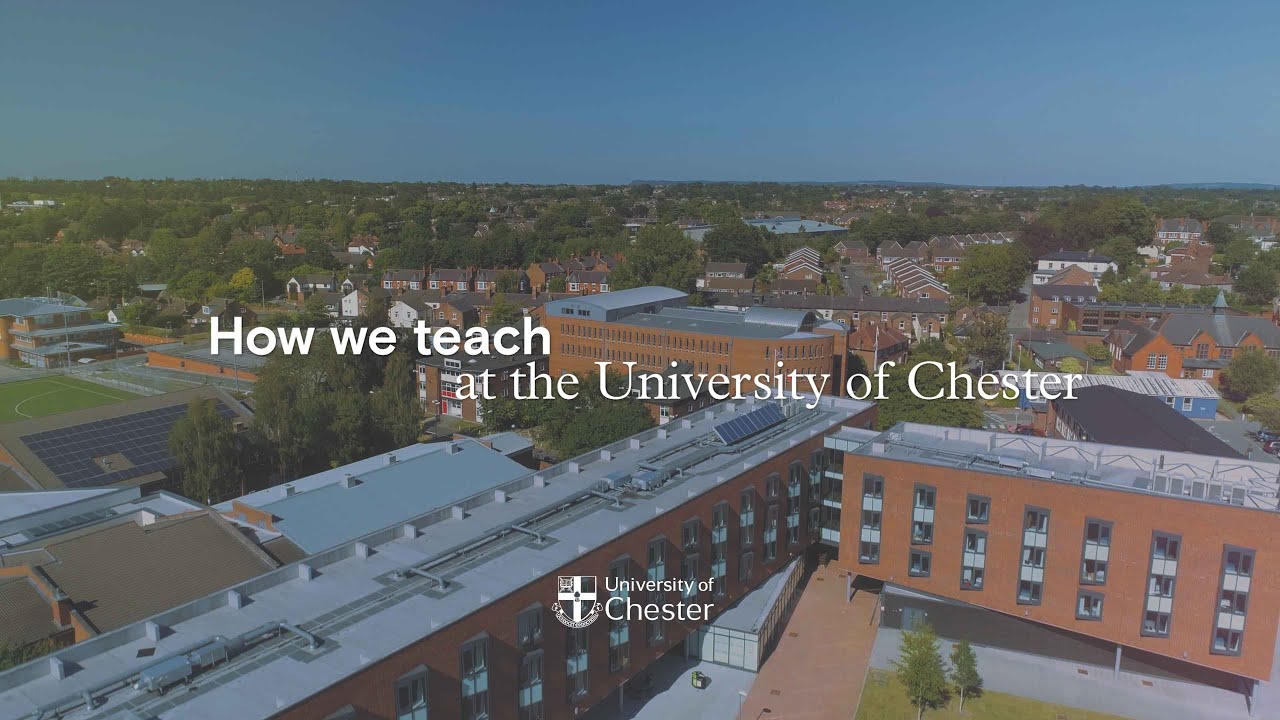
An aerial photograph of Exton Park with the text 'How we teach at the University of Chester'

How we teach at the University of Chester

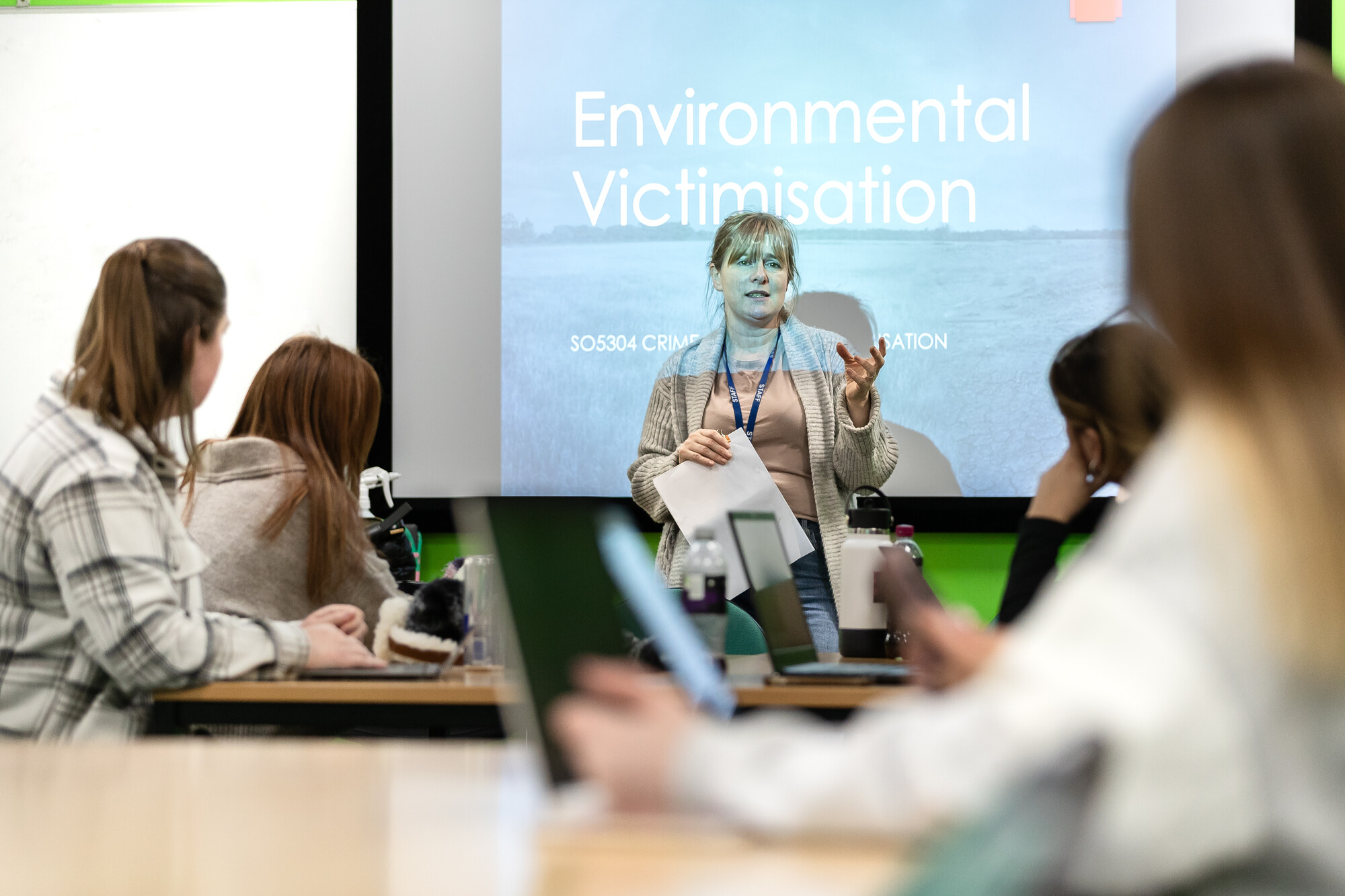
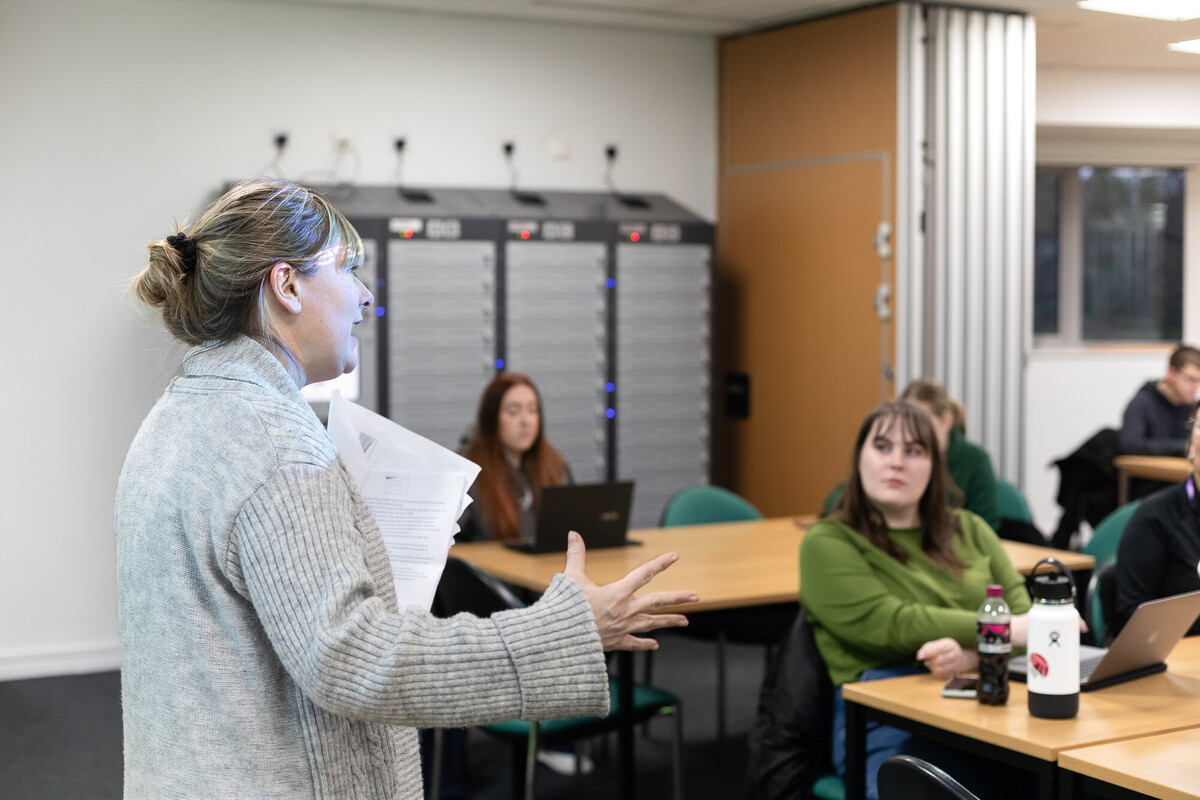
This course is delivered in three terms of ten weeks each. In each term, you will study 40 credits comprising either one or two modules. Scheduled contact hours range between approximately six and ten hours per week, depending upon level of study and the complexity of the material being taught. This course is primarily delivered in person, with some online learning. You can expect to take part in interactive sessions comprising lecture content, task-based workshops and peer-led seminar discussions that enhance subject knowledge and build key academic skills.

As a student, you will be involved in the design, delivery, and experience of your learning at university, recognising the importance of student agency and co-creation in education. Opportunities to collaborate in your learning process include student representation; feedback; inclusive teaching initiatives (such as workshops or discussions around making the curriculum more inclusive, where student input is crucial); student-led workshops and seminars; collaborative curriculum design; peer teaching; access to digital platforms where you can share resources; project-based learning (such as coursework projects where students have choice over the topic); being part of a learning community with your fellow students; and having input into how these communities are structured and operate.

If studied, the Foundation Year, as with the following years of study, will be taught in three 10-week blocks across an academic year. Each block will comprise of a large 40-credit subject-specific module that includes a breadth of topics and subject skills. You will have on average 12-14 hours of contact time per week during the Foundation Year. There may be variations to this where subject practical or specialist space teaching is included.

Outside of timetabled teaching, you should expect to spend an average of 30-34 hours per week on independent study, which might include undertaking weekly learning activities for each module in your own time, undertaking wider reading, using the University's library, one-to-one tutorial time with staff, working with peers, and preparing work for summative assessments. 

There will be a broad range of assessment methods to optimise learning and skill development for a diverse range of learners with unique needs and preferences, and to enable you to build a wide array of skills to thrive in the workplace. These will include formative assessment such as group tasks and discussions where you can receive feedback from lecturers and your peers to build your confidence and skills. Summative assessment will include written coursework, such essays (short and long form), summaries and critical reviews of literature and/or policy, case study reports, and writing for public as well as academic audiences. In addition, summative assessment will focus on visual, verbal and practical skills, encompassing, for example, posters and presentations.

You will be given ongoing support with assessments throughout each module, in addition to being guided on how to utilise past feedback. We continuously review the assessment methods used, to ensure they are inclusive and engaging, and so that they equip you with all of the skills that graduate-level employers are looking for.

All teaching is delivered by experienced academics and practitioners, with the fundamental principles of the Chester Future Skills Curriculum at its core – building your subject competence, confidence, and key transferable skills to shape you into a world-ready Chester graduate.


Your Future Career

Job Prospects

Sociology and Criminology are both diverse disciplines which have several professional and vocational applications.  However, students completing the degree will exit with a range of attributes that they can apply in a vocational context. Both Sociology and Criminology emphasise the skills of critical analysis, synthesis and the generation of a reflexive capacity. These are skills demanded by industry that can enable graduates to function effectively in the world of employment and to play a positive and effective role in the wider community. It is anticipated that many students who complete their studies will gain employment in a field that will have a relationship to social process and enquiry. Sociology with Criminology provides a pathway towards many possible career choices, ranging from the caring professions to business, management, the media, local government, the criminal justice system and the voluntary sector. 

A Sociology with Criminology degree may also open up opportunities as follows: 

  • Criminal Justice System Roles 
  • Policing and Law Enforcement 
  • Legal Professions / Paralegal / Legal Researcher / Victim Advocate 
  • Research and Analysis 
  • Community and Social Work 
  • Non-Profit and Advocacy 
  • Charity Worker 
  • Lobbyist 
  • Education and Training 
  • Journalism and Media 
  • Government and Public Policy 
  • International Careers / Human Rights Worker / Anti-Trafficking Worker

While the above are directly related opportunities, the skills gained in a sociology and criminology programme widely apply to many fields. Skills such as critical thinking, research, and analysing societal structures are in demand in various professions. 

Progression Options

Gender Studies MRes

Policing, Law Enforcement and Security MSc

Careers Service

The University has an award-winning Careers and Employability service which provides a variety of employability-enhancing experiences; through the curriculum, through employer contact, tailored group sessions, individual information, advice and guidance.

Careers and Employability aims to deliver a service which is inclusive, impartial, welcoming, informed and tailored to your personal goals and aspirations, to enable you to develop as an individual and contribute to the business and community in which you will live and work.

We are here to help you plan your future, make the most of your time at University and to enhance your employability. We provide access to part-time jobs, extra-curricular employability-enhancing workshops and offer practical one-to-one help with career planning, including help with CVs, applications and mock interviews. We also deliver group sessions on career planning within each course and we have a wide range of extensive information covering graduate jobs and postgraduate study.

What Our Students Think

Entry Requirements

112 UCAS points

UCAS Points

112 points

GCE A Level

Typical offer – BCC-BBC

BTEC

DMM

International Baccalaureate

28 points

Irish/Scottish Highers

Irish Highers - H3 H3 H3 H3 H4

Scottish Highers - BBBB

Access requirements

To include 45 credits at level 3, of which 30 must be at Merit or above

T Level

Merit

OCR Cambridge Technicals

DMM

Extra Requirements

Welsh Baccalaureate Advanced and A level General Studies will be recognised in our offer. We will also consider a combination of A Levels and BTECs/OCRs.

English Language Requirements

IELTS

6.0 (minimum 5.5 in each band)

72 UCAS points

UCAS Points

72 points

GCE A Level

72 points overall, including grade D in A level

BTEC

MMP

International Baccalaureate

24 points

Irish/Scottish Highers

Irish Highers: H4 H4 H4 H4 H4

Scottish Highers - CCDD

Access requirements

Pass overall

T Level

Pass (D or E on the core)

OCR Cambridge Technicals

MMP

Extra Requirements

Welsh Baccalaureate Advanced and A level General Studies will be recognised in our offer. We will also consider a combination of A Levels and BTECs/OCRs.

Fees and Funding

£9,790 per year for a full-time course (2026/27)

The full-time tuition fees for Home students entering in 2026/27 are £9,790 a year, or £1,590 per 20-credit module for part-time study.

£14,950 per year for a full-time course* (2026/27)

The tuition fees for international students studying programmes in 2026/27 are £14,950 per year for a full-time course. This fee is set for each year of study.

For courses with a Foundation Year, the tuition fees for Year 1 are £11,250 and £14,950 for Years 2-4 in 2026/27.

Tuition fees for Home students for the Foundation Year in 2026/27 will be £5,760 (subject to Parliamentary approval) for the first foundation year of a four-year course. Tuition fees for subsequent years will be charged at the standard undergraduate tuition fee rate for that academic year. Standard undergraduate tuition fees for Home students for the academic year 2027/28 will be £10,050 for full-time students and £7,530 for part-time students (subject to Parliamentary approval). Fees for subsequent years may be subject to increase in line with the Government fee cap

  Foundation (First) Year Second Year onwards per year
Home Students £5,760 full-time fee for the first foundation year (2026/27) £10,050 full-time fee per year from the second year onwards (2027/28)
International Students * £11,250 full-time fee for the first foundation year (2026/27) £14,950 full-time fee per year from the second year onwards (2026/27)

* For courses which accept applications from International Students

Who You’ll Learn From

Dr Nancy Evans

Senior Lecturer
Dr Nancy Evans

Dr Jayne Price

Deputy Head
Dr Jayne Price

Dr Joe Rigby

Senior Lecturer
Dr Joe Rigby

Dr Kim Ross

Deputy Head
Dr Kim Ross

Dr Wayne Campbell

Senior Lecturer
Dr Wayne Campbell

Dr Paul French

Senior Lecturer
Paul French

Dr Emma Campbell

Senior Lecturer
Blank profile picture placeholder

Enquire about a course