Specialist Practice Community (District Nursing) PGDip
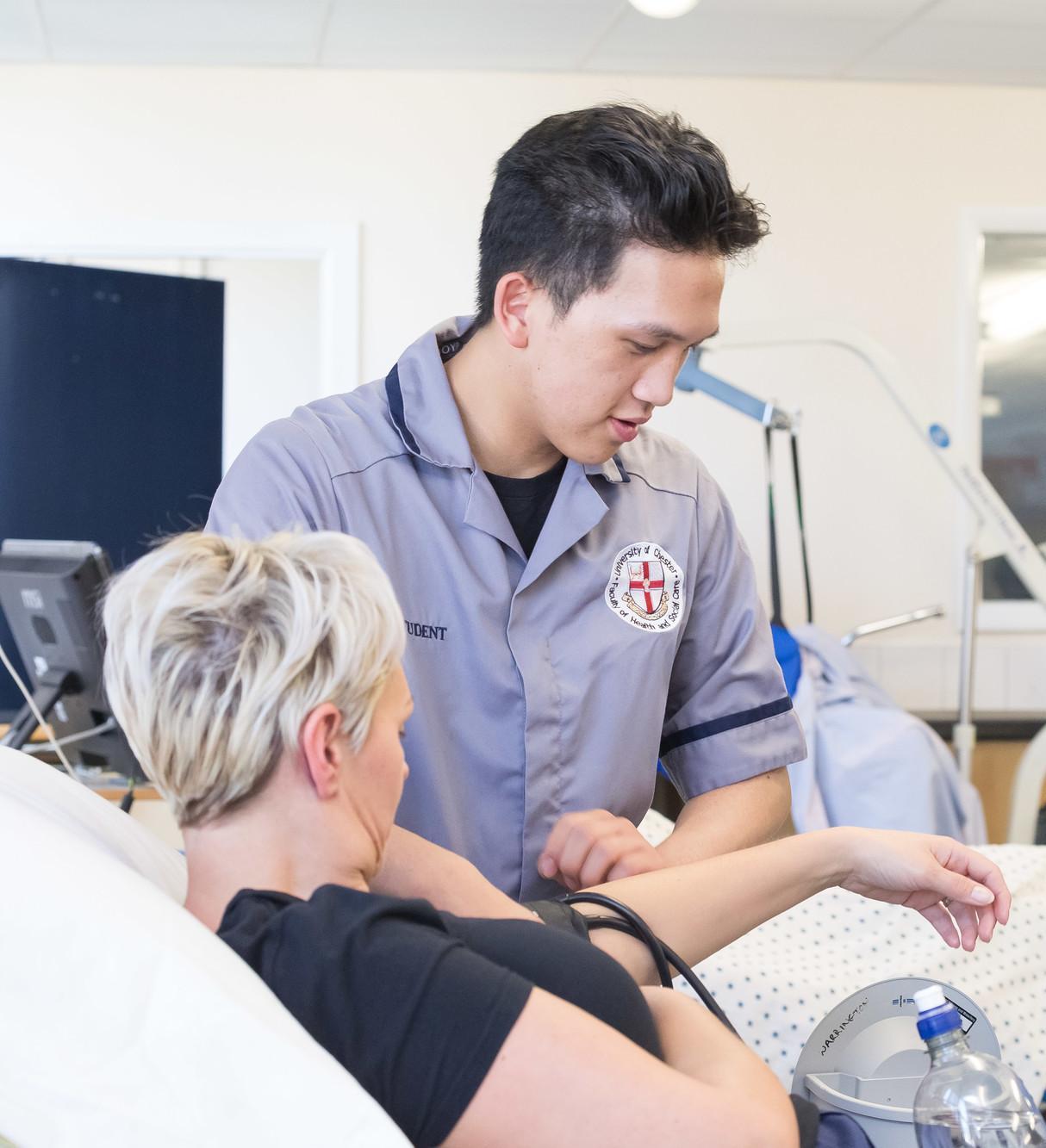
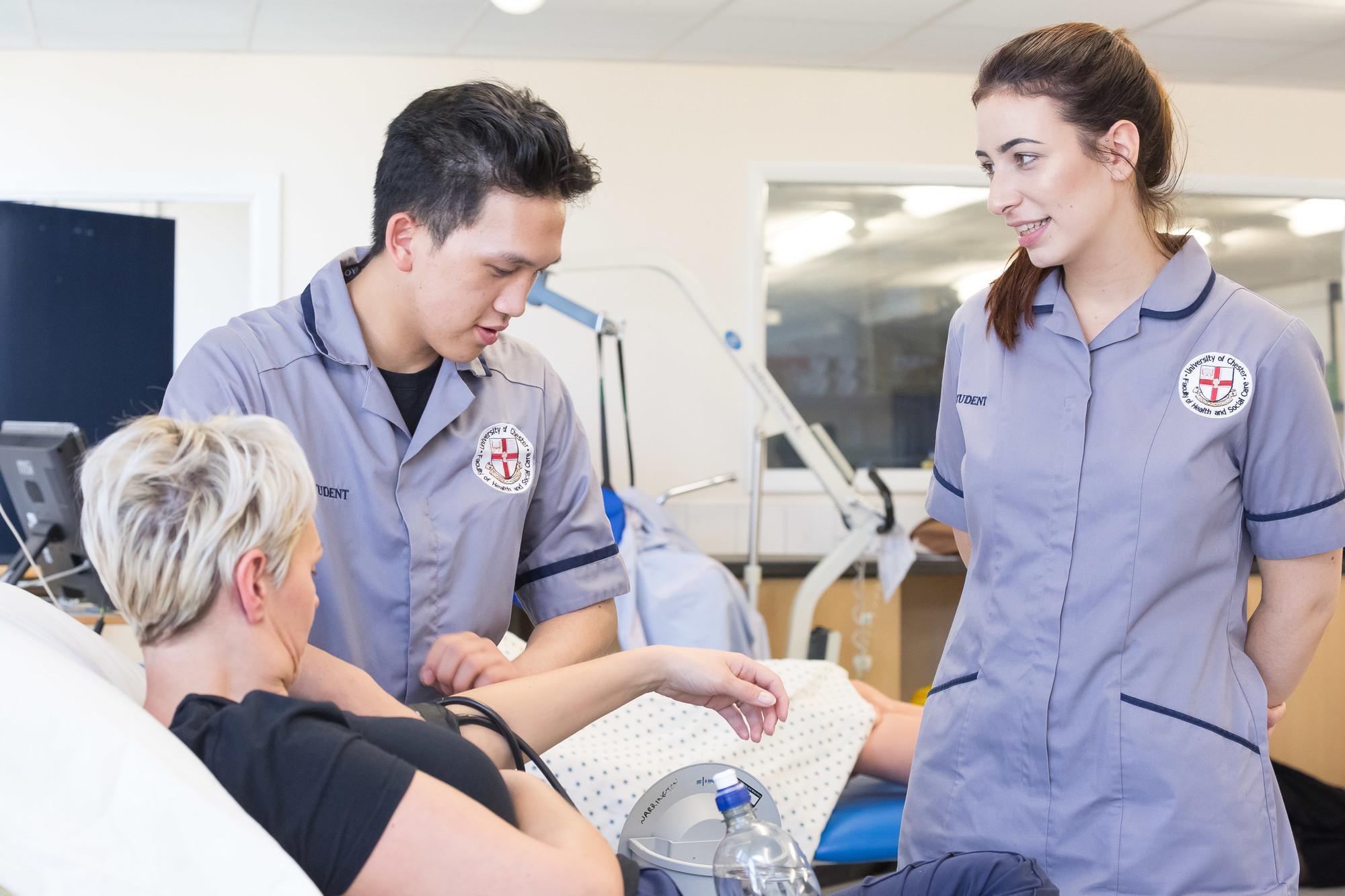
nursing students with patient

Course Overview

This Postgraduate Diploma offers practical support to qualified nurses in delivering advanced practice in a community setting and undertaking quality improvement or service evaluations. On completion of this course, students will have met the NMC requirements of an SPQ District Nurse and will feel confident in their ability to manage complex cases, deliver advanced practice interventions, deliver quality improvement, and evaluate changes made.

Our course is designed to support ‘live’ improvement projects and service evaluations. It appreciates the dynamic and complex environment of contemporary service provision. It includes real case studies and presentations from experienced people with a track record of delivery in quality improvement and service evaluation.

The underpinning philosophy is engagement—‘all share, all learn’—and therefore, the course provides opportunities for students to learn, support, and challenge each other in their improvement efforts.

The course is 40% theory and 60% practice and this is integrated across the duration of the course. You will undertake the theoretical component in the University, and undertake the practice component in a community setting under the supervision of a qualified Practice Assessor and Practice Supervisor from the defined area of practice.


What You'll Study

Core Modules

This module develops your leadership, self-awareness, and strategic thinking skills for effective practice as a District Nurse in community and organisational settings. You'll explore values, ethics, emotional intelligence, and personal motivation, using tools like mind mapping and action planning to shape your future direction. Leadership theories—such as compassionate, transformational, and situational models—are examined alongside the impact of governance, policy, and service reorganisation. You'll study change management, business case development, and cross-sector collaboration, with a focus on inclusion, advocacy, and human rights. Key themes include safeguarding, managing complex needs, team leadership, and service innovation. The module promotes culturally competent, accountable leadership in challenging systemic inequality.


Module content will include:  

  • Frameworks of analysis, values, beliefs, attitudes, ethics, self-awareness, emotional intelligence, openness, personal motivation, mind mapping and personal action planning, and developing a vision for future direction.  
  • Theories and models of leadership and management, including compassionate, situational, transformational and transactional leadership styles. The impact of reorganisation of services, including the regulatory influences of governance and policy within an organisational culture. Health and Safety legislation in home and community environments. 
  • Change management theory; tools for analysing to achieve specific developments innovations and improvements in organisational systems, or in the health and wellbeing of the population. Working across organisational boundaries; formulating business cases for service development. 
  • People/service users/carer participation models, advocacy, self-advocacy, self-efficacy, empowerment, human rights, equality, inclusion, diversity and partnership working. Leadership at the point of care, cultural competence and inclusivity. Managing and evaluating people with complex health needs, including end of life care, Safeguarding and protection. 
  • Team analysis across agencies and disciplines including team collaboration and development, team leadership, team cohesion, negotiation and productivity, technology for service improvement. 
  • Development of specific roles and responsibilities in role modelling and leading and managing a service. Demonstrate sustainability, accountability, delegation and conflict resolution techniques. Demonstrate cultural competence and leadership when challenging discriminatory, oppressive cultures and behaviours. 

  • Formulating differential diagnosis (Ear Nose & Throat, Respiratory, Cardiovascular, Gastrointestinal, Mental Health) using advanced communication, history taking, clinical examination, diagnostics, – to develop patient centred management plans  including safety netting and collaboration with others (Health Education England’s framework to promote person-centered approaches in health and care.) 


  • Interpreting the evidence to justify clinical decisions made and to ensure best practice is delivered and shared widely in day to day Advanced Clinical Practitioner (ACP) roles. Be able to identify gaps within the evidence available and consider how these may be addressed 


  • Working in partnership to understand the influences of individuals, society and communities on health and access to health care services 


  • Explore role modelling to ensure care that is delivered by all is safe and evidence-based

This module provides a comprehensive foundation in public health theory and practice across the lifespan, focusing on population health and community wellbeing. You'll explore emerging public health themes, policies, and governance at local, national, and global levels, supported by epidemiology and demography to assess health needs and social determinants. Emphasis is placed on ethical, legal, and evidence-based frameworks that empower inclusive, person-centred care and health promotion. You'll develop skills in partnership working, community development, and safeguarding, while gaining specialist knowledge in social prescribing, genomics, and epigenetics. The module also covers infection control, vaccination, and managing public health incidents—preparing you for effective, community-focused practice.


Module content will include: 

  • Underpinning theories and principles of public health across the lifespan, population health and the wellbeing of people and communities. Emerging public health themes, key policies, strategies and related governance requirements, including global and national policies and research. 
  • Understanding epidemiology and demography. Specialist knowledge and application of epidemiological evidence at national and local policy levels, to include utilisation of data in the assessment and identification of need within social determinants of health across the lifespan. 
  • Utilisation of professional, legal and ethical frameworks to empower individuals and communities to engage effectively with public health and health promotion initiatives promoting person centred inclusive care. Adopting an evidence base to underpin specialist community and public health nursing practice to support innovative approaches to influence people’s motivation, choices and behaviour to maximise their health potential.  
  • Partnership roles. Understanding the unique contributions which specialist community nursing and public health nursing practice make to establishing and maintaining collaborative partnerships with people, families and communities.
  • Understanding of how culturally responsive resources and community and strength-based assets support health and wellbeing. Application of specialist knowledge of social prescribing and commissioning. Identifying those who are vulnerable and taking action to support, safeguard and protect them. Understand and apply genomics and epigenetics in sufficient detail to inform the concept of health as a fundamental human right and a shared value. 
  • Understanding how communities are developed and sustained in relation to their specialised characteristics and assets, and acknowledge their impact when planning preventative strategies to reduce inequalities within a diverse and multicultural society. Political and economic drivers in communities which impact upon resource allocation and health. Understanding how to assess, plan, implement and evaluate major incidents and outbreaks in population health. Infection prevention and control including immunisation and vaccination programmes.

The aim of this module is to enable the professional to attain the competencies as identified by the Royal Pharmaceutical Society (2021) Framework for safe effective prescribing practice.

The RPS (2021) generic Prescribing competency framework forms the basis of the curriculum and has been used to inform the design and delivery of the programme acting as a contextual framework to structure learning and assessment for all students regardless of their professional background. The RPS competencies are: 

1: ASSESS THE PATIENT

2: CONSIDER THE OPTIONS

3: REACH A SHARED DECISION

4: PRESCRIBE

5: PROVIDE INFORMATION

6: MONITOR AND REVIEW

PRESCRIBING GOVERNANCE (COMPETENCIES 7-10)

7: PRESCRIBE SAFELY

8: PRESCRIBE PROFESSIONALLY

9: IMPROVE PRESCRIBING PRACTICE

10: PRESCRIBE AS PART OF A TEAM


This module develops your ability to engage with evidence-based practice and data-driven decision-making to improve professional and clinical outcomes. You'll explore key research concepts, including formulating research questions, sampling, data validity, and the use of qualitative and quantitative methods. Various research designs—such as ethnography, surveys, and mixed methods—are introduced alongside practical data collection techniques like interviews, observation, and audits. Ethical and legal considerations, including data protection, confidentiality, and cultural competence, are emphasised throughout. You’ll also learn how to audit current practice, involve service users, and apply quality improvement models to drive innovation, evaluate services, and lead meaningful change in professional settings.

The module content will include:

  • Data and professional practice: Evidence-based practice, benchmarking, audit, evaluation, practice development and quality improvement. 
  • Key concepts and issues in social and behavioural research: Research topics and research questions, answering questions with data, validity and reliability of data, qualitative and quantitative data, description, exploration, finding connections, formulating and testing hypotheses, populations and sampling, cultural competence in research practice. Research traditions and designs: Ethnography, survey, experiment, mixed method, research process. 
  • Gathering and analysing data: Observation, questionnaires, interviews, surveys, audits, psycho-biometrics. Data analysis and drawing conclusions. 
  • Ethical and legal frameworks, constraints in specialist practice, data protection, confidentiality, human rights, cultural competence, Helsinki declaration.  
  • Auditing current practice: Prioritisation, best practice standards, service and carer user involvement, collecting data, analysis and evaluation. 
  • Quality Improvement: QI models; co-production with service users; community of practice; leadership; monitoring methods and techniques for dissemination. 

The content of this module is designed to enable students to meet the needs of service users, carers and organisations in the 21st Century and to achieve the Nursing and Midwifery Council (2022) Standards of proficiency for Community Nursing Specialist Practice Qualifications - District Nursing. The NMC platforms will be taught and assessed throughout the programme and at the end of the programme and point of registration, the registered SPQ District Nurse will be proficient in all proficiencies within the platforms. 


Platform 1: Being an accountable, autonomous professional and partner in care  

Platform 2: Promoting health and wellbeing and preventing ill-health  

Platform 3: Assessing people's abilities and needs, and planning care  

Platform 4: Providing and evaluating evidence-based care  

Platform 5: Leading, supporting and managing teams  

Platform 6: Leading improvements in safety and quality of care  

Platform 7: Care coordination and system leadership 

The information listed in this section is an overview of the academic content of the course that will take the form of either core or option modules and should be used as a guide. We review the content of our courses regularly, making changes where necessary to improve your experience and graduate prospects. If during a review process, course content is significantly changed, we will contact you to notify you of these changes if you receive an offer from us.

How You'll Learn

An aerial photograph of Exton Park with the text 'How we teach at the University of Chester'

How we teach at the University of Chester

Practice is assessed via a Practice Learning Portfolio under the supervision of a practice assessor/supervisor and academic assessor.

Modules are assessed in a variety of ways, e.g. examinations, assignments, presentations, oral examinations and portfolios.

There is also the opportunity for the pathway lead to visit you and your practice assessor/supervisor to aid learning and support. This will allow you to reflect upon your practice and to show progression within the SPC programme.

Your Future Career

Careers service

The University has an award-winning Careers and Employability service which provides a variety of employability-enhancing experiences; through the curriculum, through employer contact, tailored group sessions, individual information, advice and guidance.

Careers and Employability aims to deliver a service which is inclusive, impartial, welcoming, informed and tailored to your personal goals and aspirations, to enable you to develop as an individual and contribute to the business and community in which you will live and work.

We are here to help you plan your future, make the most of your time at University and to enhance your employability. We provide access to part-time jobs, extra-curricular employability-enhancing workshops and offer practical one-to-one help with career planning, including help with CVs, applications and mock interviews. We also deliver group sessions on career planning within each course and we have a wide range of extensive information covering graduate jobs .

Entry Requirements

Honours Degree

- A minimum of degree in a related discipline area OR
- An equivalent academic or professional qualification from the UK or elsewhere i.e. incorporating study at least comparable to 120 credits at Honours level OR
- Professional qualification of equivalent status and associated work experience or an equivalent qualification deemed suitable by the course team.

Extra Requirements

Essential registration and professional experience:

1. Demonstrate capability of safe and effective practice at the level of proficiency appropriate to the NMC approved Community Nursing Specialist Practice Qualification (SPQ) The University and practice partner will assess that the applicant has the relevant professional experience and is capable of safe and effective practice for the District Nursing programme.
2. All students must have been registered with the NMC for least one year to comply with the Nursing and Midwifery Council requirements for V300 - Non-medical Prescribing qualification. The student on non-medical prescribing modules must also be practising in, and have appropriate experience in, an environment where there is an identified need for the individual to regularly use independent/supplementary prescribing (for example, community team)

Other Admission Requirements

Have the right to work in England and meet the residency eligibility.

Active registration as a nurse (level 1) on the Nursing and Midwifery Council register (NMC).

Interview

As a prospective student, you will usually be interviewed by an academic with expertise in the course, alongside practice partners, employers, stakeholders, and often a Practice Assessor, or Supervisor, or service user. If any of these individuals are unavailable, questions developed by practice partners and service user groups will still be used to ensure their perspectives are represented.
This process ensures your suitability for the course is assessed holistically, reflecting the real-world expectations of community nursing practice and the values of those you’ll work with and support.

DBS Check

A DBS Check is required

Occupational Health

An Occupational Health check is required

Fees and Funding

£2,020 (2026/27)

Guides to the fees for students who wish to commence postgraduate courses are available to view on our Postgraduate Fees page. Here you will also find information about part-time fees and project/placement year fees.

Your course will involve additional costs not covered by your tuition fees. This may include books, printing, photocopying, educational stationery and related materials, specialist clothing, travel to placements, optional field trips and software. Compulsory field trips are covered by your tuition fees. 

The University of Chester supports fair access for students who may need additional support through a range of bursaries and scholarships. 

Full details, as well as terms and conditions for all bursaries and scholarships can be found on the Fees and Finance section of our website.