Living with Functional Seizures - the struggle for legitimacy and the medical gaze
Location: CSE016 – Cinema Room, School of Education Building, Exton Park, Parkgate Road, Chester, CH1 4BJ.
Overview
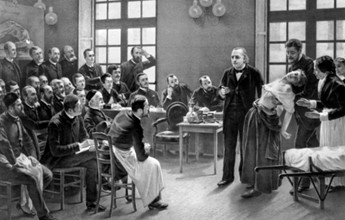
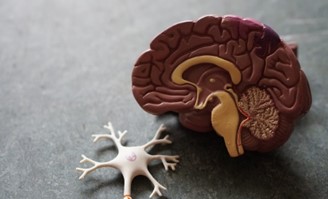
The image above may be a familiar to some - it’s A Clinical Lesson at the Salpêtrière with the famous 19th Century neurologist Charcot demonstrating a classical “hysteric”- his patient, Marie Wittman- to a group of postgraduate medical students. Today the same sorts of symptoms and experiences are likely to be labelled as functional neurological disorder (FND) or functional seizures (FS) and to be represented by the sort of image you see below titled Functional Seizures Linked to Structural Abnormalities in the Brain- a paper published in the journal Neurology.
At both points in time the symptoms experienced by women (and it was and still is overwhelmingly women- over 75% in the case of FS) are subjected to a medical gaze- a gaze that we will argue ignores realities of gender, class and suffering as major factors in these experiences. A diagnosis of functional seizures is one often experienced as troubling and lacking in the medical legitimacy that people seek. “Medical” explanations (preferably organic in nature) can be experienced as the most protective as these seizures are felt by many to be highly stigmatised carrying implications of feigning, madness or weakness and where a “real” diagnosis might aid in lifting the stigma. But this seldom works and we will propose that women (and other genders) experiences of pain and suffering play a major part in functional seizures experiences.
Reading and other info
Understandings of functional seizures has changed over time with one manifestation of these changes being the naming of what we now call functional seizures also being termed as Non-epileptic Attack Disorder (NEAD), psychogenic seizures (PNES), dissociated seizures or the pejorative and pretty much universally disliked, pseudo seizures.
We’ve added some reading and information below that you may wish to look at prior to or after our talk
- You may want to watch this video about NEAD from a talented, young film maker. Dis-sociated
- This is a fascinating paper that shows how contemporary social and political life constructs mental health problems, loneliness and suffering. Neoliberalism can reduce well-being by promoting a sense of social disconnection, competition, and loneliness
- This last one is the most recent paper published by our team and which looked at trauma and life events in non-epileptic attack. Non-epileptic attack disorder (NEAD): trauma and life events, context and meaning
Who you'll Learn from
Professor Paul Bissell
Pro Vice-Chancellor Research and Innovation
Exton Park is centrally located in Chester, and accessible via the M53, A483, A41, A56, and public transport from the city centre.
Address
University of Chester, Parkgate Road, Chester, CH1 4BJThe Greenway Gate, accessible between 7am – 9pm with your University pass, is located at the back of the overflow car park and is the nearest point of access to the Millennium Greenway cycle path that connects to routes throughout the city.
Bache train station is a 15-minute walk from Exton Park and Chester railway station is a 20-minute walk. Arriva 1A and Arriva 1 run frequent services that stop with a short walk to Exton Park. All three Park and Ride routes, PR1, PR2 and PR3 have connections within walking distance to Exton Park.
Parking on campus is limited, so we recommend using public transport and/or walking if possible.