New book seeks to end debate on location of historic British battle
The much-debated question of where the greatest and bloodiest battle in England before the Norman Conquest took place is argued to be answered in a new book from the University of Chester Press.
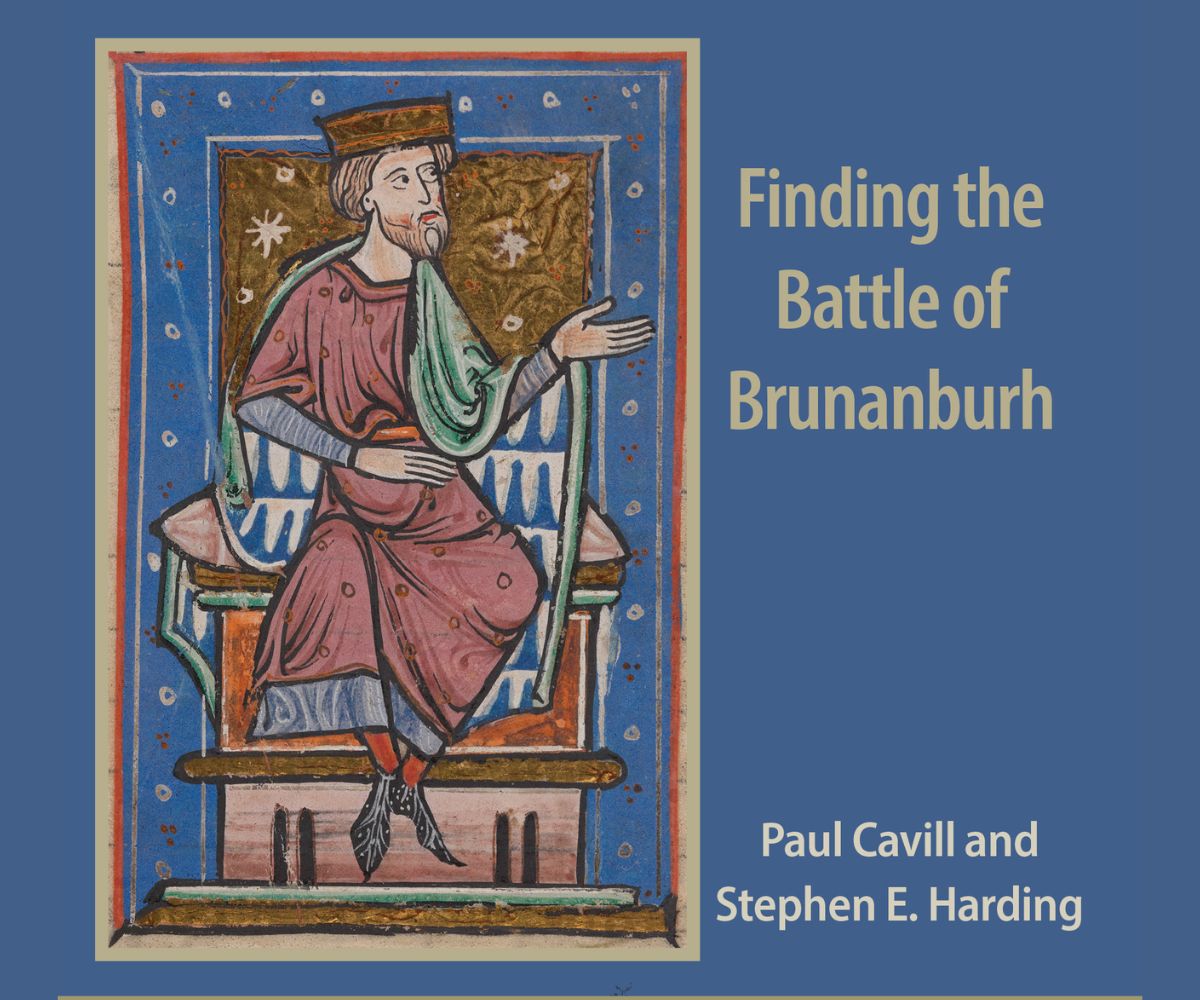
In Finding the Battle of Brunanburh, scholars have undertaken the most comprehensive analysis of the evidence yet available and argued that it points to Bromborough in Wirral as the location for one of the most important clashes ever fought on English soil.
Brunanburh is the principal name given to a great battle fought between the West Saxon King Athelstan and a joint force under King Anlaf of Dublin, King Constantine of Alba and King Owain of Strathclyde in the year 937. After a bloody day-long encounter in which many were killed, the English emerged victorious; the Hiberno-Norse contingent fled back to Dublin in ships, and the northern British forces returned to their lands. For Athelstan, Brunanburh was the crowning achievement of his successful reign, justifying his claim to be ‘ruler of all Britain’.
The story of the battle was told again and again, with more than 50 medieval writers recording it in various forms, and many writers during the last 100 years or so trying to answer the question of where specifically it happened. For years, writers have assumed that almost anywhere with a name beginning with B- could be the Brunanburh where the climactic battle was fought. Recent places suggested have included Bourne, Burghwallis, Brinsworth, the River Browney, Burnley, Bromswold and Brumby among others.
The evidence in this book shows that the spelling of Brunanburh is the key to understanding the name and finding the place. There are four known place-names containing the first part of the name, which is a man's name Bruna: three of these are on Wirral, in a small cluster around and including Bromborough. The early records of Bromborough show, despite its changed modern form, that it was a compound of the man's name and a word for 'fortification', exactly as in the battle name. The simple question remains: if the battle was originally called Brunanburh, 'Bruna's fort', why is there no evidence that any of the other suggested sites were ever called Brunanburh, but were actually called something else entirely?
The book, published recently, offers the insights of Paul Cavill, Honorary Associate Professor at the University of Nottingham, and Steve Harding, Professor Emeritus in Applied Biochemistry at the University of Nottingham.
The sources - literary, linguistic, historical, scientific and archaeological - are examined in detail. Combining specialist knowledge of place-names and ongoing chemical isotope analysis and provenancing of archaeological finds, the book has paved the way for finally locating Brunanburh.
Professor Cavill said: “This book argues from first principles that Bromborough is the likeliest location for the battle. It explains why we do not accept the many alternative proposals that have been put forward, and tries to articulate clearly, rationally and forcefully why the Wirral hypothesis is not only plausible but convincing.”
Professor Harding added: “One cannot doubt the interest that the battle of Brunanburh creates and retains in present-day discussion. The debate about this is sometimes heated, causing a polarisation of views.
“But this publication adds significant new material and analysis. Detailed analysis of the linguistic evidence seeks to answer the question, ‘what information can we glean from the names which are used in the sources for the battle site’? And a scientific protocol has been established based on chemical composition and chemical isotope analysis for testing whether significant numbers of any lead- or iron-based objects positively identified as coming from the Viking Age near Bromborough can be traced back to Scandinavia or Scotland.”
The authors write: “Our aim throughout has been to observe, test and report fairly on the various sources and reach reasoned conclusions. Our belief that the evidence points to Bromborough has been reinforced by this work: in this book, more than a thousand years on from the pivotal event, we have been Finding the Battle of Brunanburh.”
For further information about the book and to place online orders directly via the publisher, the University of Chester Press, please visit the University of Chester Storefront.
More details about the Press and its publications are available at: www.chester.ac.uk/university-press