Study reveals fragility in a high value shark population
The vulnerability of a shark population to losing even small numbers to fishing has been highlighted by researchers from the University of Chester and partners in the Philippines using a remote stereo camera system.
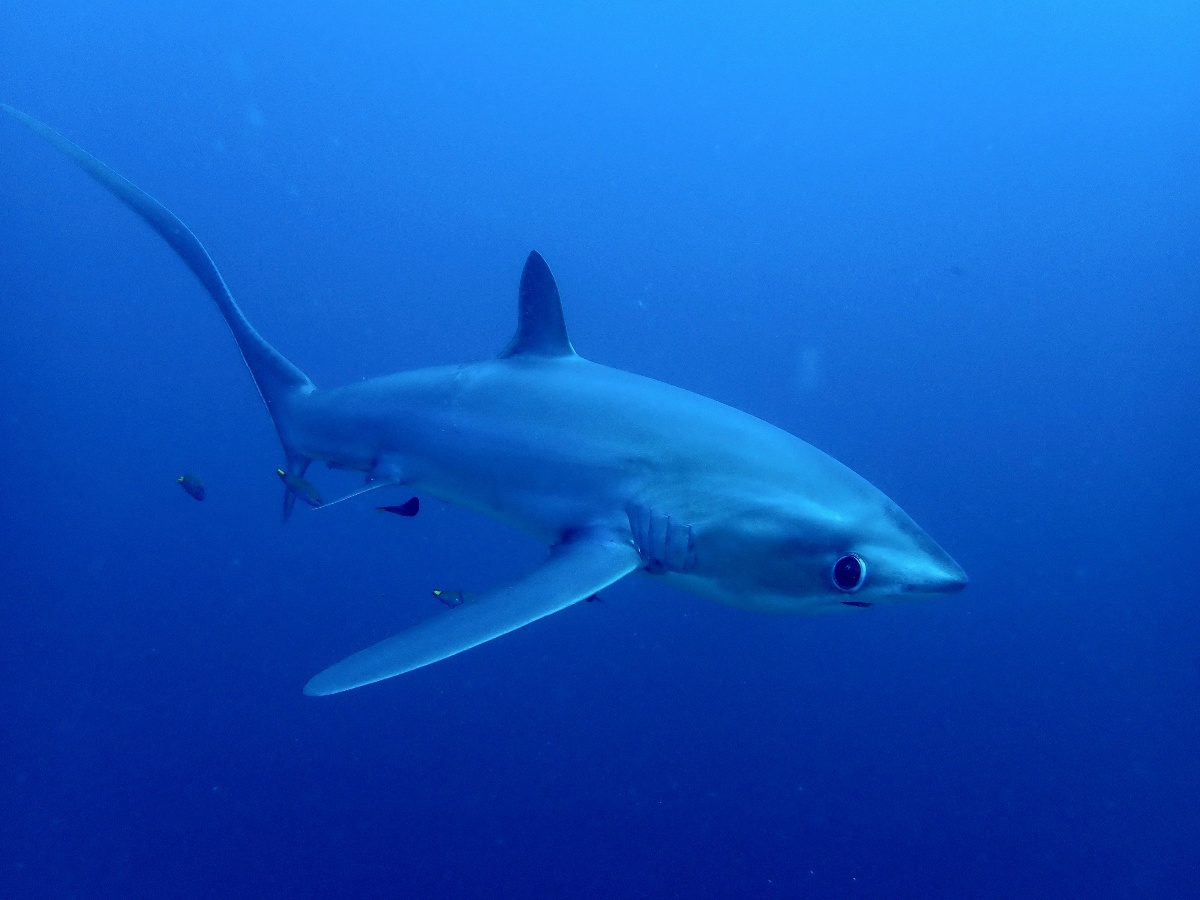
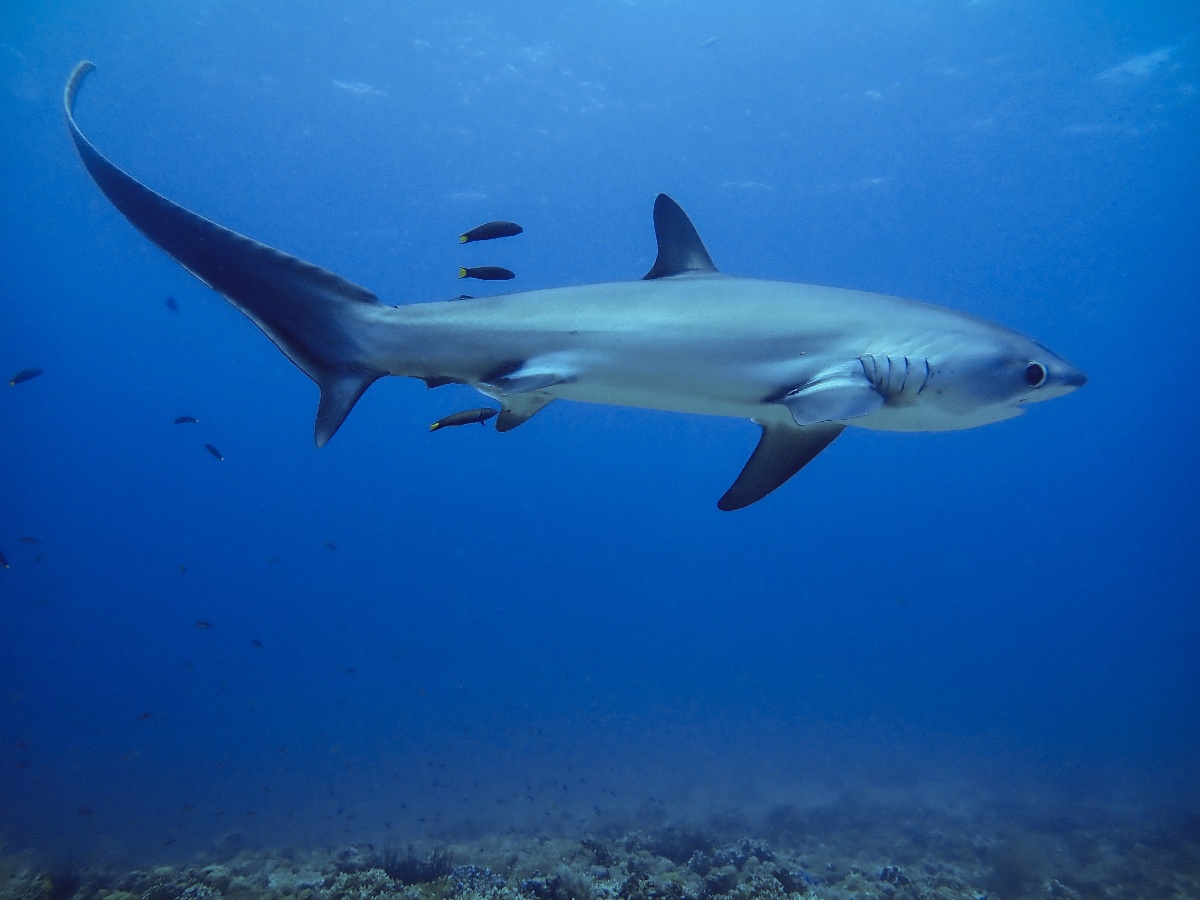
The team has found that pelagic thresher sharks in the Central Visayan Sea would be vulnerable to a fishing mortality rate of 5.3% each year, and that the removal of 15 to 18 females would result in a potentially catastrophic decline in the population.
The study represents the first attempt to characterise the demographics of these thresher sharks who live in the open with stereo videography and provides a framework for future non-invasive assessments of threatened species of marine life.
The research paper explains that the past five decades have seen significant declines in oceanic shark populations, with an estimated 71% decrease globally.
In the Philippines, pelagic thresher sharks are important to the region’s tourism economy but little is known of the status of their populations. Policy makers have also made inroads to progress legislative protection for sharks in recent years. However, a ban on targeted shark fisheries has not guaranteed the sustainability of their populations and bycatch (accidental catches with fishing gear) and illegal fishing still represent a significant threat to sharks, rays and skates across its coasts.
The team from the School of Natural Sciences at the University of Chester, The Thresher Shark Research and Conservation Project, in Cebu, the Philippines, and Divelink Cebu, designed, tested, and deployed a remote stereo camera system to survey the sharks at Monad Shoal and investigate their population dynamics for a four-month period.
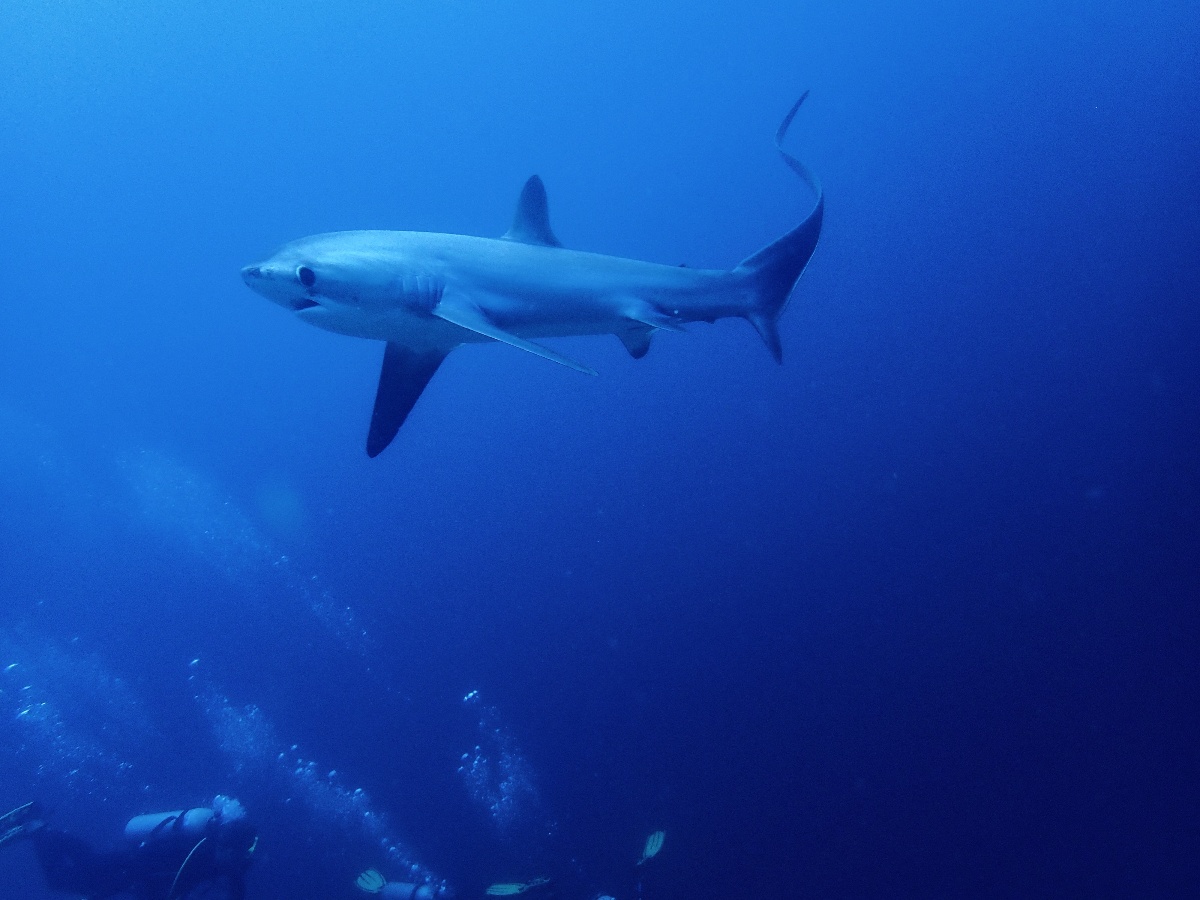
Two cameras filmed the same scene from slightly different angles, allowing the team to measure shark length, so they could estimate the body size of the sharks directly underwater, and in turn, assess the maturity of individual males and females.
Significantly more females of all maturity groups were observed than males overall.
The team constructed a continuous four-stage model from the demographic data and best life history parameter estimates to determine the sustainability of the population in the region.
The results indicated, given that female pelagic thresher sharks typically produce small litters, have long gestation periods, and late maturity, targeted or incidental removal of breeding females is likely to accelerate population declines more than male-biased mortality.
When the research team projected the population 30 years into the future, the margin for survival was found to be extremely narrow, and that losing even a few females each year - 15 to 18 - could shift the population into decline.
Dr Simon Oliver, Associate Professor for Biological Sciences at the University of Chester, said: “Population risk assessments are important tools for understanding the sustainability of shark populations and informing their conservation.
“The stereocam proved to be a valuable asset for this, pointing towards how the stability, and hence sustainability, of pelagic thresher shark populations in the Visayan Sea hinges on fine margins. The findings revealed that the species is fragile and particularly vulnerable to exploitation in the region.
“Our research shows that we need to counteract this and protect the population. Bycatch could be reduced by modifying gear and capture techniques, implementing post-capture release protocols, legislating fishery closures for target stocks that are located in known thresher shark habitats, mandating compensatory mitigation, and establishing marine protected areas with strict enforcement in thresher shark hotspots.”
He added how stereo videography could shed light on more species: “The stereocam’s capability for providing accurate data that can be directly associated with important life history parameters allows population-focused conservation research to shift away from relying on fisheries dependent data, and high-risk invasive capture techniques. This method can enable the collection of demographic data without compromising the welfare of the very shark populations that are under scrutiny, and can be modified for a range of species. The standardisation and scalability of stereo videography has considerable scope for outreach.”
Dr Oliver was joined in the research team by Dr Alp Gokgoz, Dr James Brown, Voltaire Cerna, Gary Cases, Professor Andrew Lawrence and Isabelle Faringstam.
To read the paper, Stereo videography reveals fragility in a high value thresher shark population, in full, please visit the Frontiers in Marine Science website.