Why public engagement matters
The work universities undertake with their communities and stakeholders is more important now than ever.
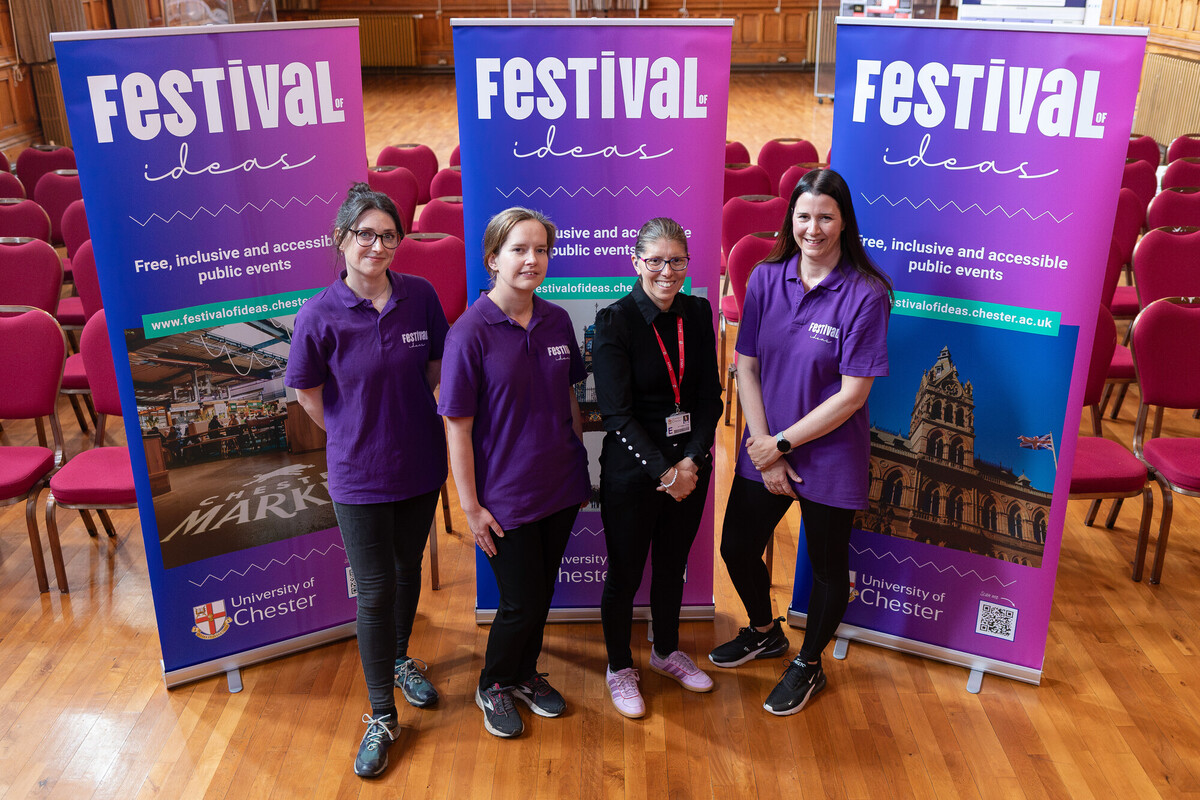
In a world where ‘truth’ can lose meaning and misinformation fuels misunderstanding and division, universities offer a space to share ideas, explore differences and debate the challenges that affect us all. For the University of Chester, public engagement is also an opportunity to learn from our local communities, promote our city and connect our staff and students with the world beyond academia.
Increasingly, universities’ engagement activities are recognised as being crucial in achieving economic benefits, too. UK Research and Innovation (UKRI) – the UK's national funding agency for research and innovation – defines this mission as, “building an economy that grows, creates wealth, and generates opportunities for all, across regions and communities”. Engagement is now reflected in the national assessment exercises in which universities participate and there is a wealth of support resources for universities to understand how to realise this economic benefit (eg the UCI’s November 2025 briefing). As a university, the economic benefit we contribute to the UK economy has been estimated at £893m (Mickledore, 2026), and much of this impact is underpinned by public engagement.
In order to achieve any of this, we need to engage with the regions and communities we want to benefit. The key message? Good practice public engagement makes good things happen and enables us to point to tangible successes.
What does ‘public engagement’ actually mean?
The University engages with an incredibly wide range of external stakeholders, businesses, communities, and individuals for many different purposes – our staff and students help businesses solve commercial challenges; we hold public events to share and inform our work; we work with schools to raise aspiration; and we work with vulnerable communities to learn from them and put our expertise to good use. Best practice public engagement activities are mutually beneficial and two-way, meaning those that:
- are intentional and can articulate and identify an outcome that benefits all those involved;
- provide opportunities for all stakeholders to shape and influence the activity;
- are tailored to the stakeholders involved.
What public engagement looks like at the University of Chester
Public engagement is embedded at Chester: our academic staff, professional services staff and our students are all involved in shaping and delivering activity – below are just a few examples.
Chester Festival of Ideas:
The Festival is our flagship annual public engagement activity, where we invite members of our university community and external communities and organisations to deliver events that matter to them, alongside headline events delivered by household names. Taking place over four days in July, typically the Festival programme includes about 90 free events, which are open to everyone. We work closely with key local stakeholders, such as Storyhouse and Cheshire West and Chester Council, to make the Festival as inclusive and welcoming a celebration as possible.
Public engagement as part of our teaching and learning:
The Chester Community Law Project gives our students the opportunity to work with each other and learn from both law firms and vulnerable communities, while raising awareness within those communities of their legal rights and obligations. Through this activity our students have worked with those facing homelessness, refugees and women facing discrimination in the workplace. Crucial to this work has been engagement with local support organisations, and a recognition that their expertise in how to address the barriers facing vulnerable communities.
Public engagement-informed research:
The world-leading research our academics undertake with and for different communities includes work with professional clubs to find solutions to the challenges they face. This has involved work with sport the Rugby Football League, Manchester City Women’s Football Club, Aston Villa Football Club, and supporting professional organisations such as Active Cheshire, focusing on applied research in areas such as: testing of players for talent identification; equality and representation in sport through investigation of menstrual cycle tracking and wellbeing of female athletes player development; and, how to encourage more of Cheshire’s residents to cycle and walk.
Public engagement to inform policy:
Engaging with stakeholders is also essential to informing recommendations for local and national policy change. Our strengths in this area include work locally to co-produce a decision-making framework designed to ensure that marginalised groups are not disadvantaged by environmental policy decisions, and national and international engagement with victim-survivors of spiritual abuse, to co-develop recommendations and training materials to inform future best practice, ensuring that this work is made publicly available.
How to get the most out of public engagement
- Be prepared to commit – many stakeholder relationships need time to evolve and for stakeholders to build trust and understanding; short-term transactional engagement just isn’t the same.
- Look out for the unexpected – some of our best examples of public engagement have continued to evolve beyond the original intentions. This may be introductions to new stakeholders, access to funding or other opportunities, or the discovery that there are additional activities that could be mutually beneficial.
- Values matter – adopt a listening-led approach to engagement (and know that you don’t know everything), do what you say you’re going to do, recognise and respect constraints and barriers, and be sure that stakeholders’ values align with your own.
We’d love for you to get involved
Whether or not you are part of our existing University community, and whether you’re an individual or representing a business, charity or other organisation, there’s a way for you to be part of our public engagement activities.
- We’d love to see you at Chester Festival of Ideas! Festival 2026 took place from July 2 to 5 and was a huge success. Keep an eye on the Festival of Ideas website for an announcement about Festival 2027. You can also request to join our mailing list.
- You don’t have to wait until then to get involved – our Research and Knowledge Exchange Institutes deliver a range of public events throughout the year.
If your business or organisation would like to work with the University, whether that’s by accessing our student talent, collaborating with one of our experts, or something else, please contact communications@chester.ac.uk.
About the author
Jane Pearson is Head of Public Engagement and Impact in the University’s Research and Innovation Office, playing a key role in the development and delivery of the University’s Research and Knowledge Exchange Strategy.
Key responsibilities include: working with research colleagues to identify impact pathways for their work, in support of the Research Excellence Framework; development of the University’s public engagement strategy and delivery, including the Festival of Ideas; and, capacity building for KE activities and partnerships.
Jane is also a bid writer with 15+ years’ experience and secures external funding for strategic projects.
Main image: Jane Pearson, left, with the Festival of Ideas team Hannah Perkins, Katherine Wilson and Sarah Cameron.