




Creative Writing: Writing and Publishing Fiction MA

A student writing on paper

Our MA in Creative Writing: Writing and Publishing Fiction is a stimulating and rewarding course designed to help you develop the craft of excellent writing, enable you to produce original fiction, and equip you with the knowledge to get it published.

Distinctive and popular, the MA comprises four modules:

  • Writing Short Fiction for Publication
  • Writing Novels for Publication
  • Getting Your Fiction Published
  • The Major Fiction Writing Project

These are taught by a team of highly respected authors, editors, and academics. Their publications include: flash fictions; novellas and novels; short-story anthologies and collections; articles and essays; interviews; student textbooks; and writers’ guides.

Two of the teaching team, Peter Blair and Ashley Chantler, are the directors of the International Flash Fiction Association and editors of Flash: The International Short-Short Story Magazine and Flash: The International Short-Short Story Press.

As a student, you will have access to the Exton Park library, which is well-stocked with creative writing textbooks and houses the Flash Fiction Special Collection, the world’s largest archive of flash-related books and magazines.

For more information, please contact the Course Leader, Dr Ashley Chantler: a.chantler@chester.ac.uk


Why You'll Love It

What You'll Study

Core Modules

This module is about writing flash fiction and short stories. You will read a wide range of contemporary short fiction and consider key aspects such as: openings; endings; settings; characterization; dialogue; points of view; description; detail; pace; tone; singleness of effect; economy; ambiguity; and implication.

From studying exemplary texts, you will gain technical knowledge and an awareness of what makes certain short fictions accomplished and publishable, and you will apply these insights to your own fiction-writing practice.

This module is about writing novels. You will read a range and consider key aspects such as: narrative; plot; chapters; pace; settings; description; detail; characterization; dialogue; points of view; the representation of thought; ambiguity; and implication.

From studying exemplary texts, you will gain technical knowledge and an awareness of what makes certain novels accomplished and publishable, and you will apply these insights to your own fiction-writing practice.

This module engages with how research into the world of publication is a key part of an aspiring fiction writer’s work. Authors must consider, for example: literary agents; publishers (print and digital); self-publishing; promotion and publicity; websites; social media; literary magazines and other periodicals (print and online); fiction competitions; literary festivals; readings; workshops; other events.

This module enables you to develop a major work of fictional prose as the culmination of your MA, typically:

A collection of flash fictions or short stories;

A long short story;

A novella-in-flash;

An extract from a novel.

The information listed in this section is an overview of the academic content of the course that will take the form of either core or option modules and should be used as a guide. We review the content of our courses regularly, making changes where necessary to improve your experience and graduate prospects. If during a review process, course content is significantly changed, we will contact you to notify you of these changes if you receive an offer from us.

How You'll Learn

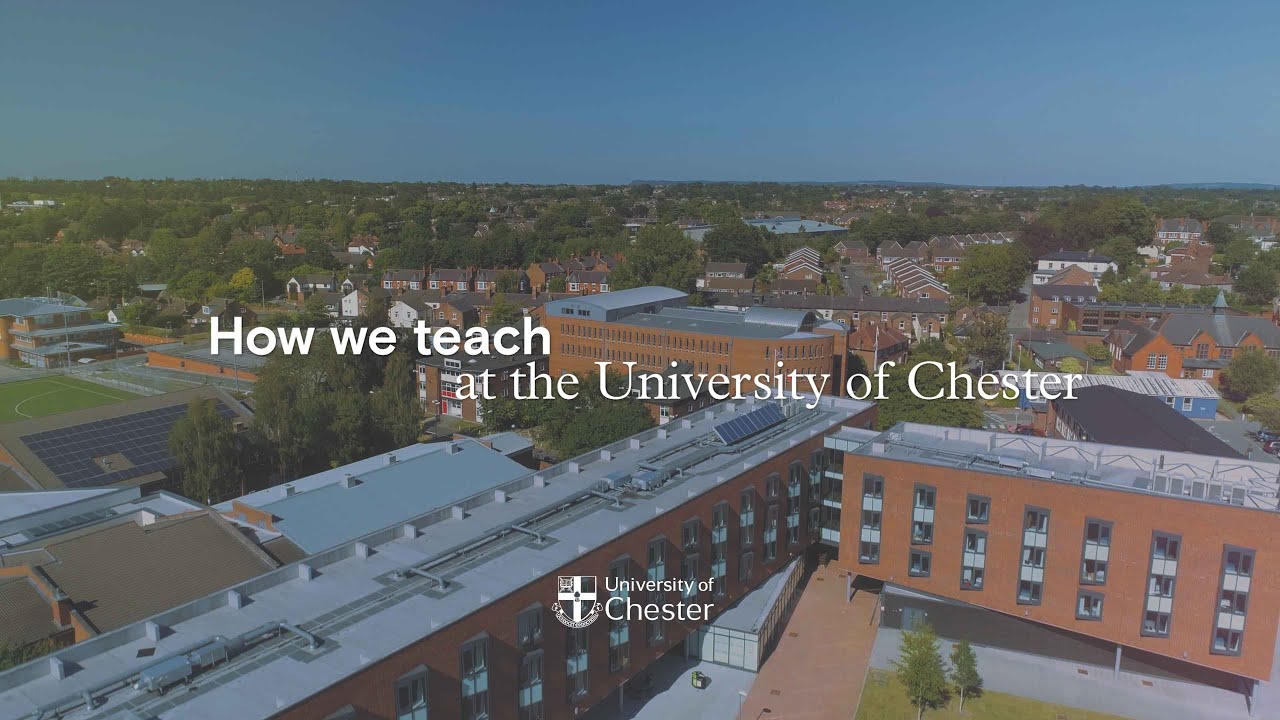
An aerial photograph of Exton Park with the text 'How we teach at the University of Chester'

How we teach at the University of Chester

You will be taught in seminars and workshops and, for the final module, by one-to-one tutorials. You will be assessed by coursework, usually portfolios of your fiction. There are no formal exams. The total full-time weekly workload (including reading, research and writing for seminars/workshops and assessment) is approximately 37.5 hours.

All teaching is delivered by experienced academics and practitioners, with the fundamental principles of the Chester Future Skills Curriculum at its core - building your subject competence, confidence and key transferable skills to shape you into a world-ready Chester graduate.

Your Future Career

Job Prospects 

Author. Literary agent. Publisher. Editor. Copywriter. Copyeditor. Proofreader. Project, publicity, sales, platform manager. Journalist. Interviewer. Researcher. Bookseller. Librarian. Gallery, museum, arts curator. Literary festival organizer. Tutor, teacher, lecturer. PhD student.

Careers service

The University has an award-winning Careers and Employability service which provides a variety of employability-enhancing experiences; through the curriculum, through employer contact, tailored group sessions, individual information, advice and guidance.

Careers and Employability aims to deliver a service which is inclusive, impartial, welcoming, informed and tailored to your personal goals and aspirations, to enable you to develop as an individual and contribute to the business and community in which you will live and work.

We are here to help you plan your future, make the most of your time at University and to enhance your employability. We provide access to part-time jobs, extra-curricular employability-enhancing workshops and offer practical one-to-one help with career planning, including help with CVs, applications and mock interviews. We also deliver group sessions on career planning within each course and we have a wide range of extensive information covering graduate jobs and postgraduate study.

Entry Requirements

Honours Degree

2:2 in an appropriate discipline such as Creative Writing; English Literature; English Language; Drama; Theatre Studies; Communication Studies; Cultural Studies; Film Studies; Journalism.

Other Admission Requirements

In your personal statement on the application form, please give details of the fiction you have written (including any publications), what (if any) fiction-related events you have attended (e.g. workshops, readings), which fiction writers you particularly admire and why, and why you would like to do our MA.

After applying, you make be asked to upload a sample of your own fiction: c. 15 pages of flashes, a short story, or an extract of a longer fictional prose piece.

Interview

Admission to the course may be subject to interview in some instances.

IELTS

6.5 (Min 5.5 in each sub-skill)

Other Language Proficiency Qualification

For more information on our English Language requirements, please visit International Entry Requirements.

Honours Degree

2:2 in an appropriate discipline such as Creative Writing; English Literature; English Language; Drama; Theatre Studies; Communication Studies; Cultural Studies; Film Studies; Journalism.

Other Admission Requirements

In your personal statement on the application form, please give details of the fiction you have written (including any publications), what (if any) fiction-related events you have attended (e.g. workshops, readings), which fiction writers you particularly admire and why, and why you would like to do our MA.

After applying, you make be asked to upload a sample of your own fiction: c. 15 pages of flashes, a short story, or an extract of a longer fictional prose piece.

Interview

Admission to the course may be subject to interview in some instances.

Fees and Funding

£9,090 for a full-time course (2026/27)

The tuition fees for home students studying courses in 2026/27 are £9,090 per year.

£15,500 (2026/27)

The tuition fees for international students studying courses in 2026/27 are £15,500 per year.

Who You'll Learn From

Dr Ashley Chantler

Senior Lecturer
Dr Ashley Chantler

Dr Peter Blair

Senior Lecturer
Dr Peter Blair

Enquire about a course