


Criminology with Counselling Skills BSc (Hons)
Course Overview
Discover a unique educational journey at the University of Chester with our undergraduate course in Criminology with Counselling Skills. This dynamic course is designed for those who are passionate about understanding the complexities of crime and harm, and who are eager to learn how to support individuals within and outside the criminal justice system through counselling and advocacy.
Our course offers an in-depth exploration of criminology, delving into the causes of crime, the impact of crime on society, and the various aspects of the criminal justice system. Alongside this, you will develop a robust set of counselling skills, learning how to provide emotional support and guidance to those affected by trauma, abuse, crime, loss and harm - whether they are victims, offenders or members of the community.
The curriculum is carefully crafted to blend theoretical knowledge with practical application. You will engage in stimulating coursework that covers topics like forensic psychology, rehabilitation, ethical issues in counselling, and effective communication techniques. This combination ensures a well-rounded education that is academically rigorous and highly relevant to real-world scenarios.
At the University of Chester, we pride ourselves on our supportive learning environment. Our experienced academic team is made up of experts and practitioners in their field, and is dedicated to guiding you through your academic and professional development. You will have access to a range of learning resources and opportunities for practical experience, including projects with local organisations.
Graduates of this course are uniquely equipped to pursue careers in advocacy in areas such as victim support services, rehabilitation programmes, youth offending teams, and various roles within the criminal justice system and organisations that focus on social justice issues. By combining criminology with counselling skills, this course opens doors to a fulfilling career where you can significantly impact individuals and communities.
Join us at the University of Chester and embark on a path that blends criminological understanding with the power of counselling skills and advocacy, creating a future where you can make a real difference.
How we teach at the University of Chester
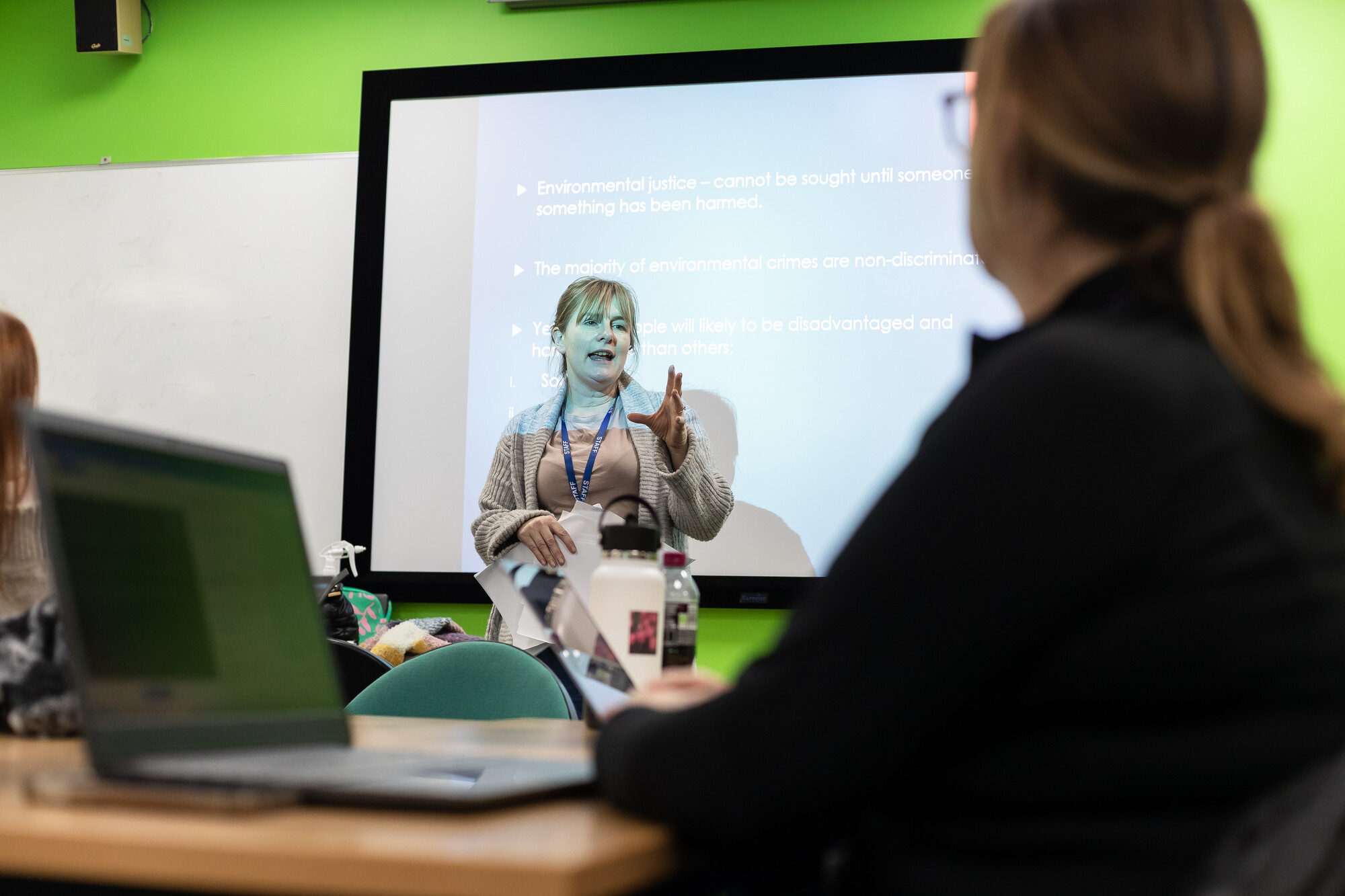
This course is delivered in three terms of ten weeks each. In each term, you will study 40 credits comprised of either one or two modules. Scheduled contact hours range between approximately six and ten hours per week, depending upon level of study and the complexity of the material being taught. This course is delivered through a mix of in-person and online learning. You can expect to take part in lectures, workshops and peer-led seminars.
You should expect to spend an average of 30-34 hours per week on independent study, which might include following asynchronous learning material, tutorial time with staff, using the University’s library, working with peers and preparing work for assessment. Teaching will be delivered by experienced academics and practitioners in the subject. This will be supplemented by occasional guest lecturers and speakers.
There will be a broad range of assessment methods so that you are exposed to the different types of tasks that you might encounter in the workplace. These will include coursework in the form of essays (long and short form), reports, presentations, and recordings of counselling skills practice. Assessment support is provided throughout the modules. We continuously review the assessment methods used to ensure they adequately prepare you for graduate level employment.
All teaching is delivered by experienced academics and practitioners, with the fundamental principles of the Chester Future Skills Curriculum at its core - building your subject competence, confidence and key transferable skills to shape you into a world-ready Chester graduate.
Your Future Career
Job Prospects
Having studied a BSc Criminology with Counselling Skills degree, you will have in-depth knowledge and an understanding of crime, its background and consequences, and an understanding of theories about criminality. Capacities for imaginative, rigorous and critical thinking will be developed through the course of study. Subject-specific skills such as knowledge of the social process of crime and the criminal justice system, and the ability to understand different types of evidence, are complemented by the development of broader skills, including IT skills, research and problem-solving, communication, and working as part of a team.
Below are some potential career paths and roles for BSc Criminology with Counselling Skills graduates:
- Victim Advocate: Offer support and resources to crime victims, acting as a bridge between them and the legal system.
- Offender Counsellor: Provide counselling to incarcerated individuals, preparing them for release and ensuring they have the tools and resources to avoid reoffending.
- Youth Offender Counsellor: Specialise in working with young individuals who have committed crimes, focusing on rehabilitation and social reintegration.
- Restorative Justice Coordinator: Facilitate communication between victims and offenders, aiming for reconciliation and mutual understanding.
- Substance Abuse Counsellor: Help individuals overcome addiction, particularly those who have entered the system due to drug-related offences.
- Crisis Intervention Specialist: Respond to individuals in crisis, often immediately after traumatic events, providing counselling and resources.
- Therapist/Counsellor in private practice: Utilise counselling skills to provide therapy to individuals, potentially specialising in areas like crime-related trauma.
Further certifications, experience or advanced degrees may be required for the above roles.
The course will open up a range of careers in which the understanding and contextualisation of crime are regarded as valuable. Some of our graduates use the study of criminology as a stepping stone to undertake formal legal training and education. Others choose alternative career pathways based on the organisational and communication skills and analytical abilities acquired through the study of criminology.
Careers Service
The University has an award-winning Careers and Employability service, which provides a variety of employability-enhancing experiences; through the curriculum, through employer contact, tailored group sessions, individual information, advice and guidance.
Careers and Employability aims to deliver a service which is inclusive, impartial, welcoming, informed and tailored to your personal goals and aspirations, to enable you to develop as an individual and contribute to the business and community in which you will live and work.
We are here to help you plan your future, make the most of your time at University and to enhance your employability. We provide access to part-time jobs, extra-curricular employability-enhancing workshops and offer practical one-to-one help with career planning, including help with CVs, applications and mock interviews. We also deliver group sessions on career planning within each course, and we have a wide range of extensive information covering graduate jobs and postgraduate study.
University of Chester Social and Political Science Conference 2025
Study a Common First Year
This course shares a common first year with students on the Criminology pathway.
This means that you’ll learn alongside students studying a similar discipline, helping to broaden your knowledge and exposure to other concepts, perspectives and professions in the first year of your degree.
As you learn and collaborate with students from other courses, you'll not only widen your social and professional network but also learn new skills that will set you up for success in your industry.
In your second and third years, you will progress to studying more specialist modules within criminology, developing your skills to become a world-ready graduate.