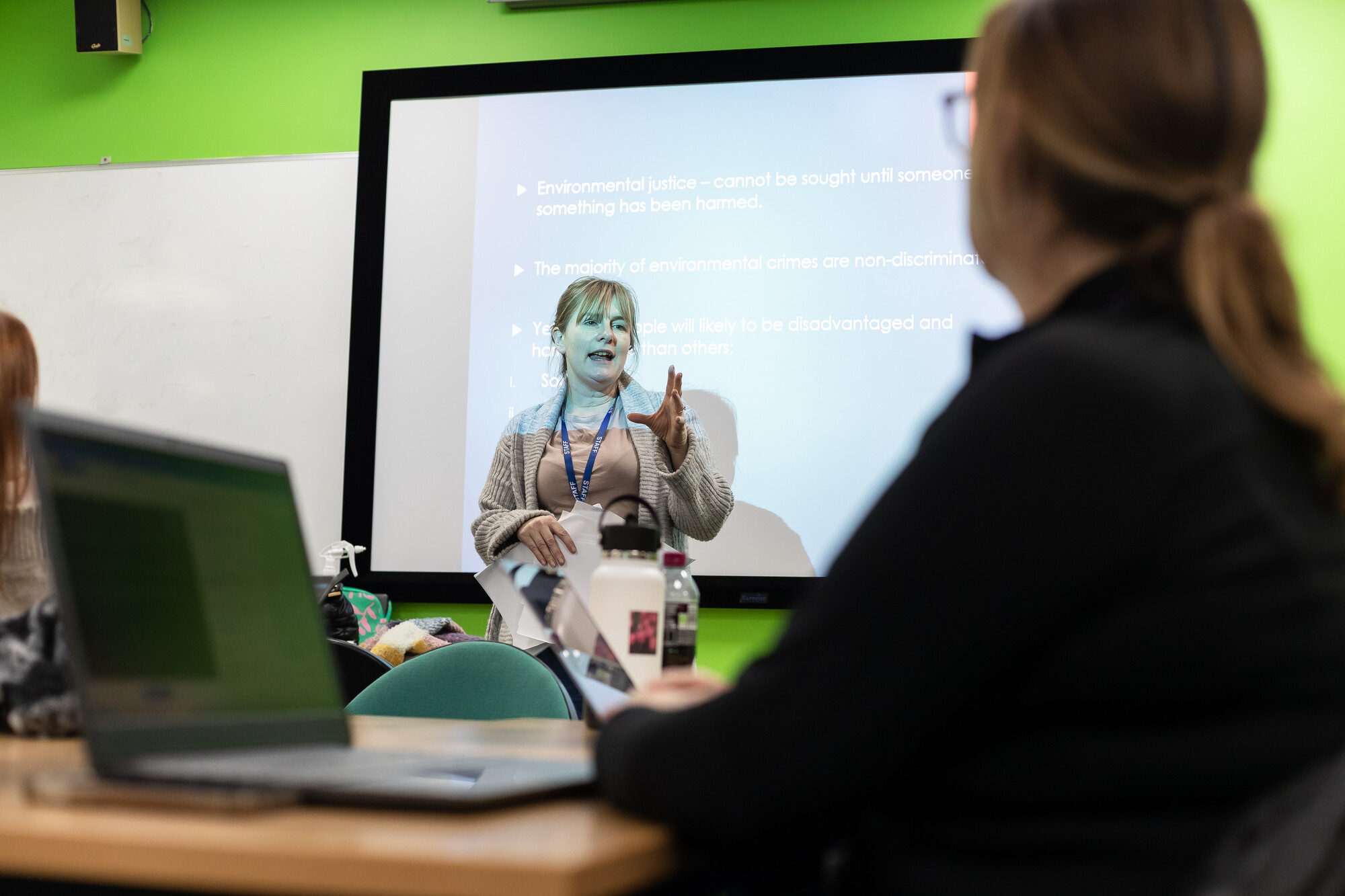

A counsellor takes notes while listening to a person speaking during a session, representing the integration of criminology and counselling skills in understanding and supporting individuals within the justice system.

Discover a unique educational journey at the University of Chester with our undergraduate course in Criminology with Counselling Skills. This dynamic course is designed for those who are passionate about understanding the complexities of crime and harm, and who are eager to learn how to support individuals within and outside the criminal justice system through counselling and advocacy. 

Our course offers an in-depth exploration of criminology, delving into the causes of crime, the impact of crime on society, and the various aspects of the criminal justice system. Alongside this, you will develop a robust set of counselling skills, learning how to provide emotional support and guidance to those affected by trauma, abuse, crime, loss and harm - whether they are victims, offenders or members of the community. 

The curriculum is carefully crafted to blend theoretical knowledge with practical application. You will engage in stimulating coursework that covers topics like forensic psychology, rehabilitation, ethical issues in counselling, and effective communication techniques. This combination ensures a well-rounded education that is academically rigorous and highly relevant to real-world scenarios. 

At the University of Chester, we pride ourselves on our supportive learning environment. Our experienced academic team is made up of experts and practitioners in their field, and is dedicated to guiding you through your academic and professional development. You will have access to a range of learning resources and opportunities for practical experience, including projects with local organisations. 

Graduates of this course are uniquely equipped to pursue careers in advocacy in areas such as victim support services, rehabilitation programmes, youth offending teams, and various roles within the criminal justice system and organisations that focus on social justice issues. By combining criminology with counselling skills, this course opens doors to a fulfilling career where you can significantly impact individuals and communities. 

Join us at the University of Chester and embark on a path that blends criminological understanding with the power of counselling skills and advocacy, creating a future where you can make a real difference. 


Why You'll Love It

What You'll Study

Criminology

In this year of study, you will initially explore how crime, deviance and harm are constructed, perceived and responded to in society. This content will include key ideas associated with differential treatment and experiences of the criminal justice system for marginalised and under-represented groups in society. There will also be a theoretical and practical exploration of the interrelationships between crime and harm, social problems and their context. This will support you to look beyond traditional frameworks to focus on non-conventional forms of crime and harm, especially those committed by the 'powerful'.

Counselling Skills

You will develop an understanding of various ethical issues within counselling, such as confidentiality, informed consent, boundaries, and working with risk. We explore all stages of the counselling process, from beginnings to endings, and incorporate reflective practice to support you in understanding your own beliefs and values in relation to ethics. 

Core Modules

This module will explore how crime, deviance and harm are constructed, perceived and responded to in society. This content will include key ideas associated with differential treatment and experiences of the criminal justice system for marginalised and under-represented groups in society. There will also be a theoretical and practical exploration of the interrelationships between crime and harm, social problems and their context. This will support students to look beyond traditional frameworks to focus on non-conventional forms of crime and harm, especially those committed by the ‘powerful’. The module will also assist students in developing the core academic skills needed throughout their Undergraduate degree. This will include guidance for searching, identifying and engaging with relevant academic literature to effectively organise and articulate ideas and arguments. Furthermore, students will be encouraged to seek opportunities to develop their career readiness. Through this, students will be guided and supported to discover their interests and passions to enable them to explore potential career paths. 

This module provides an introduction to the basic principles, key concepts, and key theories that underpin the use of counselling skills. Students are introduced to the ‘core values’ and begin to understand how these create and sustain the helping process. With this understanding, students will work with their peers to practice their own counselling skills.

This module offers a critical excursion of theory, legislation, policy and practice in the domain of contemporary youth justice. Children and young people may be considered both victim and offender and students within this module will explore representations of this stage of the life-course. This module provides students with a critical insight into criminal justice and societal responses to children and young people in conflict with the law. Through exploration of public, political and media attention to children and young people alongside modern reformers and activists, students will develop an ability to communicate arguments relevant to youth justice. This module aims to provide students with the key skills to develop an alternative assessment of the ‘youth crime problem’. Students will learn about personal and professional opportunities and develop an ability to respond to feedback about practical and academic work relevant to contemporary youth justice.

Optional Modules

Explore how media shapes public perceptions, in particular in reference to deviance in this dynamic sociology and criminology module. "Media and the Representation of Deviance" delves into the influence of both traditional and contemporary media platforms on societal views, looking in particular at deviance, from crime to inequality, mental health and politics. Students will examine key academic literature and theories, learning to critically analyse concepts such as agenda-setting, news values, and media framing, as well as influential models like Chomsky and Herman's propaganda model and moral panic theory. The module covers the evolution of media, from its historical roots to the complex world of social media, examining the power dynamics in media ownership, the regulatory landscape, and the framing of social issues. Through case studies, students will apply theoretical insights to real-world examples, understanding how media representations impact public opinion and influence policy on topics like mental health, poverty, welfare, and crime. By the module's end, students will be equipped to construct well-supported arguments on the role of media in shaping social inequalities, understand its power in influencing societal outcomes, and critically reflect on emerging trends in media representation. This module is essential for anyone interested in understanding the media’s role in constructing narratives around deviance and its broad impact on society.

Optional Language Modules

This module enables students with A-Level German or equivalent to further develop their grammar, vocabulary and expression and apply these to real world situations.You will work with written and recorded texts on a range of cultural, personal and social topics and will develop your oral and written communication skills at Post-A level.

This module is designed for students that have completed A-Level or equivalent in French. You will further develop your grammar, vocabulary and expression and apply these to real world situations. You will work with written and recorded texts on a range of cultural, personal and social topics and will develop your oral and written communication skills at Post-A level.

This module is designed for students that have completed a A-Level or equivalent in Spanish. You will further develop your grammar, vocabulary and expression and apply these to real world situations. You will work with written and recorded texts on a range of cultural, personal and social topics and will develop oral and written communication skills at Post-A level.

This module is designed for students who have completed GCSE in Chinese or equivalent. You will further develop your grammar, vocabulary and learning conventions for spelling and pronunciation. You will work with written and recorded texts on a range of cultural, personal and social topics and will develop oral and written communication skills at an intermediate level.

This module is designed for students who have completed GCSE or equivalent in French. You will further develop your grammar, vocabulary and learning conventions for spelling and pronunciation. You will work with written and recorded texts on a range of cultural, personal and social topics and will develop oral and written communication skills at an intermediate level.

This module is designed for students that have completed GCSE or equivalent in Spanish. You will further develop your grammar, vocabulary and learning conventions for spelling and pronunciation. You will work with written and recorded texts on a range of cultural, personal and social topics and will develop oral and written communication skills at an intermediate level.

This module provides the opportunity to study a new language from scratch and introduces you to basic grammar, vocabulary and cultural contexts. You will apply the language to practical situations using both oral and written skills. 

The information listed in this section is an overview of the academic content of the course that will take the form of either core or option modules and should be used as a guide. We review the content of our courses regularly, making changes where necessary to improve your experience and graduate prospects. If during a review process, course content is significantly changed, we will contact you to notify you of these changes if you receive an offer from us.

In Year 2 (Level 5), you will deepen your understanding of criminal moralities and realities, and delve into core counselling practices. This year focuses on developing practical skills in interpersonal communication and emotional support, while exploring complex issues such as rehabilitation, victimology, and ethical considerations in both fields.

Criminology

You will critically develop your existing knowledge and understanding of current, and former, representations of crime and criminal justice. You will be encouraged to identify and assess how and why these representations of crime and criminal justice are constructed and disseminated among society. In this year, you will acquire meaningful skills which can be pivotal in your personal and professional lives as champions of social justice reform. This can then be applied to hands-on learning experiences that complement your academic studies and bridge the gap between personal social missions, theory and practice, equipping you with critical awareness, essential skills and experiences for your future plans, including employment, further study and other ventures.

The content within this academic year aims to empower you with the tools and resources necessary to secure meaningful employment and embark on successful careers.

Counselling Skills

In Year 2, you will explore counselling theories in more detail and consider how different approaches might work with a range of client issues, alongside continuing to develop your counselling skills. You will also complete an experiential learning module either with Counselling Skills or your other subject.

You will explore issues relating to an individual's experience during the life span, drawing on theories such as those of loss, attachment, and adversity, as well as provide opportunities to discuss specific client issues. You will begin to understand the relationship between counselling theory and specific client issues, such as anxiety, depression, shame and trauma. 

Core Modules

This module will enable students to critically develop their existing knowledge and understanding of current – and former – representations of crime and criminal justice. Through analytically deconstructing a wide array of historical, geographical, social and political representations of crime and criminal justice. Students upon the module will be encouraged to identify and assess how and why these representations of crime and criminal justice are constructed and disseminated among society. Considerations of gender, class, disability, age, race, religion and sex will therefore be acknowledged to emphasise the spectrum of individuals within society (sub-)consciously influential in, as well as influenced by representations of crime and criminal justice. Whilst the philosophical and theoretical concepts which are embedded throughout the module will serve to highlight to students the advantages and limitations of representations throughout practice. This module will allow students to acquire meaningful skills which can be pivotal in their personal and professional lives as champions of social justice reform. From having explored and discovered the pervasive influence representations hold over the ongoing (re-)configuration of culture in practice, as well as developing their digital proficiencies in communication.

This module offers students an understanding of the interactions between race, ethnicity and migration in the contemporary governance of global injustice, inequality, and in the structuring of society. It introduces students to race and ethnicity as fluid and contradictory categories, and as social constructions with real social and legal consequences. It further discusses migration, both as a range of practices and relations that people enact, and as a system of governance that manages inequality in the freedom to move, and in life opportunities.

The module approaches race and ethnicity to show the global variation of the concepts, going beyond the criteria used in the Global North and in anglophone contexts. It further discusses migration, both in terms of different practices of global mobility and participation and society, and in terms of specific aspects of governance, from border controls and migrant detention, to the attribution of citizenship rights. It also explores how systemic inequities in race and ethnicity intersect with criminal justice practices, influencing outcomes such as policing, sentencing, and incarceration.

The module introduces students to how race, ethnicity, and migratory experience and background can lead to diversity in the impact of social issues. It encourages students to critically examine the ways in which race, ethnicity, and migration inform societal responses to crime, law enforcement, and broader patterns of injustice. The module further guides students to consider life histories and the mutual relation between social concepts and individual biographical experiences

The main purpose of this module is develop your practical counselling skills. Students are introduced to a range of skills to support this development, and working with peers from the course, will begin to embed these within a distinct helping relationship.

This module will develop the student’s knowledge and understanding of counselling theories and processes. It will address issues relating to an individual's experience during the life span, drawing on theories such as those of loss, attachment, and adversity, as well as provide opportunities to discuss specific client issues, such as trauma, anger, and shame.

Optional Modules

This experiential module is designed to provide students with hands-on learning experiences that complement their academic studies. This module aims to bridge the gap between personal social missions, theory and practice, equipping students with critical awareness, essential skills and experiences for their future plans, including employment, further study and other ventures. The module is enriched through partnership working between academics and others working in a range of organisations promoting social impact. Students will have opportunities to foster their own social missions, develop and apply academic understanding and key skills through working on real-world projects. Key components of teaching and learning include:

  1. Real-World Projects: Students engage in projects that address actual challenges faced by organisations, allowing them to apply theoretical knowledge and key skills in practical settings. 

  2. Service Learning: Initiatives that combine community service with learning objectives, promoting social responsibility and civic engagement.

  3. Reflective Practices: Encouraging students to reflect on their experiences through journals, discussions, and skills analyses to enhance critical thinking and personal growth.

  4. Networking Opportunities: A range of networking opportunities will be shared that students can engage in during independent study to build sector insights and develop their networks. 

  5. Skills workshops: Experts will deliver Social Impact Leadership workshops giving insight into personal success and challenges in their paths and teaching key skills towards success.
  6. Career Guidance workshops: Knowledge from Career Experts will underpin career guidance to support students to develop personalised plans for actioning towards aspirations, including employment, further study and other aspirations. 

This module aims to empower students with the tools and resources necessary to secure meaningful employment and embark on successful careers.


This module provides a structured, university-level work placement for 4, 5 or 7 weeks as one continuous block / period with a placement provider (i.e. a local employer from the private, public, or charitable sector). It is designed to enhance your professional skills in a real-world job setting.

The placement can either be organised by you or with support from university staff.

All work placements within this module must be university-level; this means:

  • Undertaking high-skilled work commensurate with level 5 study (e.g. report writing, attending meetings, delivering presentations, producing spreadsheets, writing content on webpages, social media, marketing services/products etc)
  • Physically placed (albeit part of it can be hybrid) within an employer setting in one continuous block / period for 4, 5 or 7 weeks for a minimum of 140-147 hours over the course of the entire work placement
  • Where applicable, your existing part-time employer can be approached/used as the placement provider, if the high-skilled work criterion above is fulfilled for the full duration of the placement.
  • All quality assurances/agreements provided by the University are adhered to, by you and the employer.

The work placement context may not necessarily, reflect your degree discipline per se, but rather, it will give you an enriched experience to enhance your professional skills in a real-world job setting.

Optional Language Modules

The module will provide the opportunity to further develop your language skills, building on your previous learning at advanced level. The second half of the module includes a placement abroad or, alternatively, a project on a sustainability issue in a target language country. The first half of the module will prepare you for placements abroad where appropriate as well as a deeper understanding of sustainability in target language contexts. Students of more than one language may take one language in the first half of the module and spend their time abroad developing a different language. 

The module will provide the opportunity to further develop your language skills, building on your previous learning at intermediate level. The first half of the module includes intensive taught sessions in interactive workshop mode which will prepare you for placements abroad or self-directed language development. The second half of the module includes an placement abroad or, alternatively, a project on a business or tourism issue in a target language country. Students of more than one language may take one language in the first half of the module and spend their time abroad developing a different language. 

The module will provide the opportunity to further develop your language skills, building on your previous learning at beginner level. The first half of the module includes intensive taught sessions in interactive workshop mode which will prepare you for placements abroad or self-directed language development. The second half of the module includes a placement abroad or, alternatively, a project on a cultural issue in a target language country. Students of more than one language may take one language in the first half of the module and spend their time abroad developing a different language. 

  • The multiple facets of global citizenship
  • Ethical engagement and practice
  • The United Nations Sustainable Development Goals
  • Cross-cultural issues and sensitivity
  • Intercultural communication
  • Culture shock
  • Cultural adjustment
  • Self- assessment of needs: identification of the range of transferable skills, competencies and attitudes employees need and employers expect graduates to possess-with a strong focus on understanding the intercultural competencies (ICC) needed to live and work abroad.
  • Critical analysis/evaluation of individual requirements in relation to culture/cultural adjustment/culture shock/visas/medical.
  • Critical analysis/evaluation of skills already acquired in relation to key skills related to ICC.
  • Devising strategies to improve one’s own prospects of working abroad in the future.
  • Devising an action plan to address gaps in transferable skills based on organisational analysis and sector opportunities.

Part A:      

Preparation for Experiential Overseas Learning will take place at the University of Chester during level 5 and will include:  

  • The multiple facets of Global citizenship
  • Ethical engagement and practice
  • Cross-cultural issues and sensitivity
  • Intercultural communication

Theories, models and strategies of learning

  • Theories and models Intercultural competence
  • Theories and models of Integration and Multiculturalism
  • Critical thinking skills and models of Reflection
  • Experiential learning models
  • Self-directed experiential learning

Personal and placement-related skills

  • Enhanced independence
  • Improved command of multicultural behaviour
  • Increased knowledge and confidence in their individual facets of personal identity
  • Effective time management and organisational skills
  • Project management – working away from University and independent study
  • Self-management and personal development
  • Team building and team work

Part B:            Overseas

Students will engage in experiential learning activities overseas for at least 150 hours 

Optional International Placement Year

Preparation for the year abroad will take place in Chester during level 5 and will include:

  • Cross-cultural issues and sensitivity
  • Host-country orientation, study methods– economic, political and social reality of the country
  • Orientation specific to exchange – health, education, gender issues
  • The United Nations Sustainable Development Goals
  • Practical matters relating to living and studying in the wider world

Theories, models and strategies of learning

  • Critical thinking skills, experiential learning and models of reflection

Personal and placement-related transversal skills

  • Effective self-motivation and independent resourcefulness
  • Effective time management and organisational skills
  • Project management – working away from University and independent study
  • Self-management and personal development

Whilst abroad:

You will undertake study at one of the University of Chester's partner universities or undertake and approved work placement or virtual placement. If you are a student,  it is expected that you will choose a series of modules at the university abroad which must be agreed by the host institution and the Module Leader. you must supply details of you modules on a learning agreement within 4 weeks of arrival at the host university.

The information listed in this section is an overview of the academic content of the course that will take the form of either core or option modules and should be used as a guide. We review the content of our courses regularly, making changes where necessary to improve your experience and graduate prospects. If during a review process, course content is significantly changed, we will contact you to notify you of these changes if you receive an offer from us.

In Year 3 (Level 6), you will engage in advanced studies, focusing on specialised topics. You’ll undertake a significant research project, where you will demonstrate your understanding and skills in both fields, preparing you for your future career.

Criminology

You will critically examine the multifaceted ways in which state actions can contribute to social harms, injustices, and environmental degradation. You will consider practical, socially responsible approaches to addressing systemic issues, equipping you with actionable skills to contribute to meaningful change. In your studies, you will be encouraged to consider the possibilities and challenges in engaging with the public and contributing to social change. You will examine public social science, both historically and today, critically evaluating the institutional structures that shape it, including funding, influence, and policy considerations. There will be an exploration of the role of current sociological and criminological research in driving social change and informing policy across diverse sectors.

This year of study also encourages you to think about life after university, considering the responsibilities and opportunities you have as a social science graduate to bring your insight to the world.

Counselling Skills

In Year 3, you will learn about theories of multiculturalism, diversity, and discrimination and how they impact the counselling context. This will involve critically reflecting on how such issues come into play and are navigated in the helping relationship. You will also explore a range of careers where counselling skills are used. You will perform a critical examination of those roles within their specific context. 

You will explore a range of careers within the field of counselling and perform a critical examination of those roles within their specific context. You will begin to explore the concept of multicultural competence, and how this relates to the counselling relationship, through learning about pertinent issues of social justice, such as intersectionality and power. You can choose to undertake a research project exploring a highly relevant social issue of concern to Counselling Skills.

You will also get the chance to consolidate your knowledge and skills through undertaking an independent project on a key issue of your choice, with continued support and guidance from experienced staff. 

Core Modules

What role do social sciences play beyond the University? This module introduces students to the key discussions in public social science.  You will be encouraged to consider the possibilities and challenges sociologists face in engaging with the public and contributing to social change. Where do sociological/ criminological ideas and theories originate from, who do they serve, and, most importantly, what impact can they have? 

We will examine how sociologists and criminologists approach public social science, both historically and today, critically evaluating the institutional structures that shape it, including funding, influence, and policy considerations. Students will explore the role of current sociological and criminological research in driving social change and informing policy across diverse sectors. Together, we'll discuss the major social challenges that public social scientists encounter today. 

The module also encourages you to think about life after University, considering the responsibilities and opportunities you have as a social science graduate to bring your sociological and criminological insight to the world. In line with this focus, assessments will test a variety of skills beyond traditional essays. 

This module critically examines the multifaceted ways in which state actions can contribute to social harms, injustices, and environmental degradation. Students will explore state-induced crimes through a critical criminological lens, focusing on how policies and actions can perpetuate systemic inequalities and harm both individuals and communities globally. The module introduces sense-making theories, providing tools to analyse and evaluate the impact of state actions on broader social injustices, including ecological damage and economic inequality. Through a combination of theoretical insights and real-world case studies, students will critically assess topics such as state violence, environmental harms, economic policies, and human rights violations. Key learning outcomes include the ability to analyse the global impacts of state-induced crimes, apply theoretical frameworks, and devise strategies for mitigating harms. The module emphasises practical, socially responsible approaches to addressing systemic issues, equipping students with actionable skills to contribute to meaningful change. With a structured curriculum spanning ten weeks, topics include the historical and contemporary dimensions of state crime, environmental and social injustices, and the role of human rights frameworks. By the end, students will be well-prepared to critically engage with these pressing global challenges and advocate for justice in diverse contexts.

This level 6 major project module will take students on a transformative journey that will enhance their critical thinking, analytical abilities, and academic writing.  Students will learn about the philosophical foundations of social research and will be able to reflect on their own philosophical and methodological standpoint. Research design, ethical issues and methodological tensions will be covered throughout the first two terms of this module. A practical focus on quantitative and qualitative data analysis will aid students to become career ready for the research sector. Teaching will be face to face in small groups,  where students will work with peers to consider the staged process of research design and apply what they have learnt to real world research phenomena. Once students have developed their knowledge and understanding of research methods and data analysis techniques, they will embark on their own piece of research under the guidance of an academic supervisor. By writing a substantial piece of independent research students will gain essential skills in research methodology, data analysis, and academic writing that will serve them throughout their academic and professional career.

Students will be able to focus their major projects within a range of themes such as: Criminal Justice System, Mental Health, Risk and Counselling, State Crime, Media and Representation, Social Policing, Sustainability, Vulnerable groups, and Youth Justice. 

This module develops students’ critical understanding of the wider social, political and cultural issues which both challenge and inform the helping relationship. This increased understanding enables students to consider the implications for the helping relationship, leading to a greater awareness of the issues which inform and shape the lives of the helper and helpee.

 
This module explores a range of organisations where counselling skills are used, and considers how the dynamics and culture within these organisations effects the use of those counselling skills. Students are introduced to a range of careers within the field of counselling and perform a critical examination of those roles within their specific context.

The information listed in this section is an overview of the academic content of the course that will take the form of either core or option modules and should be used as a guide. We review the content of our courses regularly, making changes where necessary to improve your experience and graduate prospects. If during a review process, course content is significantly changed, we will contact you to notify you of these changes if you receive an offer from us.

How You'll Learn

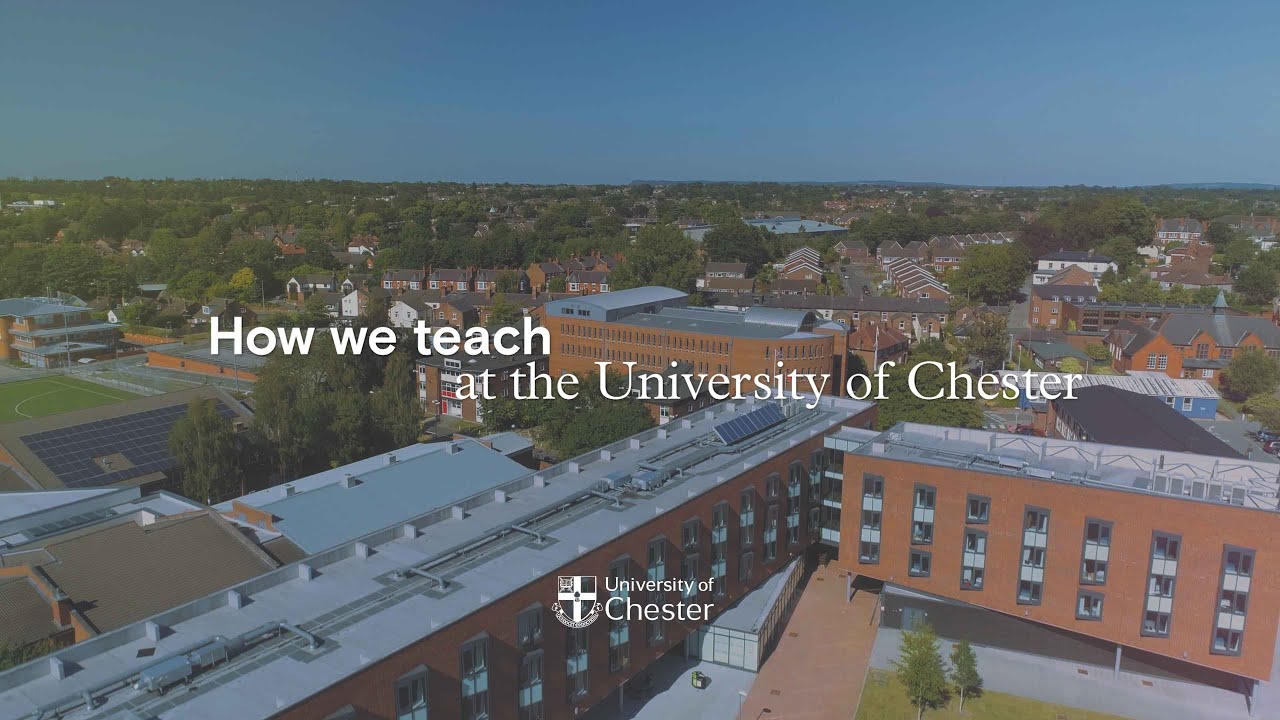
An aerial photograph of Exton Park with the text 'How we teach at the University of Chester'

How we teach at the University of Chester

This course is delivered in three terms of ten weeks each. In each term, you will study 40 credits comprised of either one or two modules. Scheduled contact hours range between approximately six and ten hours per week, depending upon level of study and the complexity of the material being taught. This course is delivered through a mix of in-person and online learning. You can expect to take part in lectures, workshops and peer-led seminars.

You should expect to spend an average of 30-34 hours per week on independent study, which might include following asynchronous learning material, tutorial time with staff, using the University’s library, working with peers and preparing work for assessment. Teaching will be delivered by experienced academics and practitioners in the subject. This will be supplemented by occasional guest lecturers and speakers.

There will be a broad range of assessment methods so that you are exposed to the different types of tasks that you might encounter in the workplace. These will include coursework in the form of essays (long and short form), reports, presentations, and recordings of counselling skills practice. Assessment support is provided throughout the modules. We continuously review the assessment methods used to ensure they adequately prepare you for graduate level employment.

All teaching is delivered by experienced academics and practitioners, with the fundamental principles of the Chester Future Skills Curriculum at its core - building your subject competence, confidence and key transferable skills to shape you into a world-ready Chester graduate.

Your Future Career

Job Prospects

Having studied a BSc Criminology with Counselling Skills degree, you will have in-depth knowledge and an understanding of crime, its background and consequences, and an understanding of theories about criminality. Capacities for imaginative, rigorous and critical thinking will be developed through the course of study. Subject-specific skills such as knowledge of the social process of crime and the criminal justice system, and the ability to understand different types of evidence, are complemented by the development of broader skills, including IT skills, research and problem-solving, communication, and working as part of a team. 

Below are some potential career paths and roles for BSc Criminology with Counselling Skills graduates:

  • Victim Advocate: Offer support and resources to crime victims, acting as a bridge between them and the legal system.
  • Offender Counsellor: Provide counselling to incarcerated individuals, preparing them for release and ensuring they have the tools and resources to avoid reoffending.
  • Youth Offender Counsellor: Specialise in working with young individuals who have committed crimes, focusing on rehabilitation and social reintegration.
  • Restorative Justice Coordinator: Facilitate communication between victims and offenders, aiming for reconciliation and mutual understanding.
  • Substance Abuse Counsellor: Help individuals overcome addiction, particularly those who have entered the system due to drug-related offences.
  • Crisis Intervention Specialist: Respond to individuals in crisis, often immediately after traumatic events, providing counselling and resources.
  • Therapist/Counsellor in private practice: Utilise counselling skills to provide therapy to individuals, potentially specialising in areas like crime-related trauma.

Further certifications, experience or advanced degrees may be required for the above roles.

The course will open up a range of careers in which the understanding and contextualisation of crime are regarded as valuable. Some of our graduates use the study of criminology as a stepping stone to undertake formal legal training and education. Others choose alternative career pathways based on the organisational and communication skills and analytical abilities acquired through the study of criminology.  

Careers Service

The University has an award-winning Careers and Employability service, which provides a variety of employability-enhancing experiences; through the curriculum, through employer contact, tailored group sessions, individual information, advice and guidance.

Careers and Employability aims to deliver a service which is inclusive, impartial, welcoming, informed and tailored to your personal goals and aspirations, to enable you to develop as an individual and contribute to the business and community in which you will live and work.

We are here to help you plan your future, make the most of your time at University and to enhance your employability. We provide access to part-time jobs, extra-curricular employability-enhancing workshops and offer practical one-to-one help with career planning, including help with CVs, applications and mock interviews. We also deliver group sessions on career planning within each course, and we have a wide range of extensive information covering graduate jobs and postgraduate study.


What Our Students Think

Social and Political Science Conference 2025

University of Chester Social and Political Science Conference 2025

Entry Requirements

112 UCAS points

UCAS Points

112

GCE A Level

Typical offer BCC-BBC

BTEC

DMM

International Baccalaureate

28 points

Irish/Scottish Highers

Irish Highers H3 H3 H3 H3 H4

Scottish Highers - BBBB

Access requirements

To include 45 credits at level 3, of which 30 must be merit or above

T Level

Merit

OCR Cambridge Technicals

DMM

Extra Requirements

Welsh Baccalaureate Advanced and A level General Studies will be recognised in our offer. We will also consider a combination of A Levels and BTECs/OCRs.

English Language Requirements

IELTS

6 with a minimum of 5.5 in each band

Fees and Funding

£9,790 per year for a full-time course (2026/27)

The full-time tuition fees for Home students entering in 2026/27 are £9,790 a year, or £1,590 per 20-credit module for part-time study.

£14,950 per year for a full-time course* (2026/27)

The tuition fees for international students studying programmes in 2026/27 are £14,950 per year for a full-time course. This fee is set for each year of study.

For courses with a Foundation Year, the tuition fees for Year 1 are £11,250 and £14,950 for Years 2-4 in 2026/27.

Study a Common First Year

This course shares a common first year with students on the Criminology pathway.

This means that you’ll learn alongside students studying a similar discipline, helping to broaden your knowledge and exposure to other concepts, perspectives and professions in the first year of your degree.

As you learn and collaborate with students from other courses, you'll not only widen your social and professional network but also learn new skills that will set you up for success in your industry.

In your second and third years, you will progress to studying more specialist modules within criminology, developing your skills to become a world-ready graduate.

Who You'll Learn From

Dr Jayne Price

Deputy Head
Dr Jayne Price

Dr Kim Ross

Deputy Head
Dr Kim Ross

Dr Wayne Campbell

Senior Lecturer
Dr Wayne Campbell

Dr Paul French

Senior Lecturer
Paul French

Dr Amanda Mcgarry

Senior Lecturer
Amanda McGarry

Dr Emily Fozard

Senior Lecturer
Blank profile picture placeholder

Dr Emma Campbell

Senior Lecturer
Blank profile picture placeholder

Enquire about a course