




Doctor of Business Administration DBA

Man sitting on chair wearing gray crew-neck long-sleeved shirt using Apple Magic Keyboard. Man sitting on chair wearing grey crew-neck long-sleeved shirt using Apple Magic Keyboard

Our DBA is designed for high-performing professionals to stimulate organisational, national or international development and contribute to wider debates in their field.

Innovative research solutions are now required to tackle the challenging circumstances facing contemporary organisations. Our DBA participants positively engage with these challenges as active members of our research community. Our aim is to develop leading practitioner-researchers who inspire strategic change and contribute to wider debates in our areas of expertise.

You will join a growing researcher community with student satisfaction above national average (Higher Education Academy Postgraduate Research Experience Survey).

You can also fast track your doctoral journey by getting recognition for your previous Master’s-level achievements*.

*It is expected that participants will apply for the Accreditation of Prior Certificated Learning for the first stage of the doctoral course: an MBA or equivalent Master’s award in the area of business, leadership or management.

We are now seeking strong applicants who can develop and contribute high-impact research to our areas of expertise.

As this is a work-situated programme, the university does not offer visa sponsorship. Applicants must be employed in a senior leadership role with responsibilities and be able to study and conduct research in their current country of residence and employment.


What You'll Study

Core Modules

This module aims to equip practitioner researchers with the resources to proactively plan and develop their own personal and professional development in relation to designing practice-oriented research projects at doctoral level. Broadly, this involves: 

  • Planning and addressing own personal and professional development priorities as a practitioner researcher seeking to influence practice.
  • Developing knowledge at the forefront of a field in order to define and conceptualise practice-based problems suitable for advanced investigation.
  • Developing knowledge and skills in designing methodology and method, which contribute to practice and scholarly debate.

Specifically, the module includes activities spanning the following topic areas, designed to underpin the development of practitioner research skills:

  • Expectations of doctoral study, and becoming a practitioner researcher
  • Negotiating and planning own researcher development
  • Strategies for resilience and personal effectiveness
  • Research philosophies and perspectives (e.g. ontology, epistemology, axiology)
  • Contemporary and emerging strategic issues in society (e.g. globalisation, resilience, sustainability, big data)*
  • Artful inquiry and experimentation with conceptualising practice problems
  • Experimenting with theoretical lens to examine practice problems*
  • Information literacy (e.g. finding and critiquing arguments and evidence)*
  • Digital tools (e.g. for referencing, source and idea capturing, and data analysis)*
  • Practitioner oriented research approaches, methods and techniques
  • Strategies for engagement, influence and impact*
  • Research governance and ethics

*The Faculty’s researcher development hub provides a common spine of activities oriented to the development of the researcher and their research. Some content will also be negotiated around the specific development needs of the researcher. This is agreed with the Personal Academic Tutor at the start of the programme and reviewed annually.


The principal aim of the module is for the learner to successfully complete a substantial project which results in significant benefits in the context of the professional advancement of the learner and/or impacts positively on the strategic direction of, or operational efficiency of his/her organisation, while providing the context for the learner to fully demonstrate his/her achievement of level 8/D characteristics as defined in the learning outcomes for this module.

The nature of the Research Project will have been identified in the Approved Studies Learning Agreement and will have been precisely defined in the previous part of the programme, where the preparation of a thoroughly planned research proposal will form part of the assessment. The Project will therefore reflect a coherence and focus relevant to the DProf or DBA award title, approved at the start of the programme.

The project will be grounded in professional practice and will be distinctive in terms of its aims and its intended outputs such that it will make a significant impact on, and make an original contribution to, the advancement of the learner’s profession and/or organisation. Through the project the learner will demonstrate mastery of the generic capabilities specified in the learning outcomes.

The information listed in this section is an overview of the academic content of the course that will take the form of either core or option modules and should be used as a guide. We review the content of our courses regularly, making changes where necessary to improve your experience and graduate prospects. If during a review process, course content is significantly changed, we will contact you to notify you of these changes if you receive an offer from us.

How You'll Learn

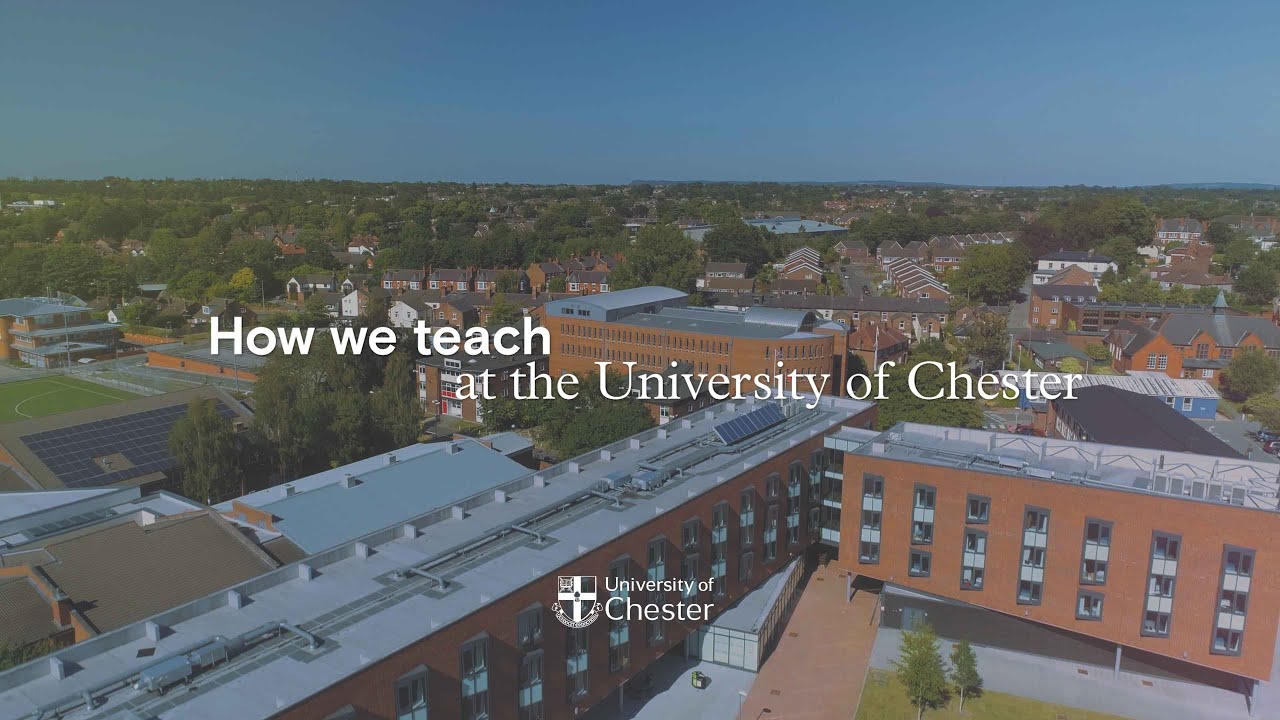
An aerial photograph of Exton Park with the text 'How we teach at the University of Chester'

How we teach at the University of Chester

Our DBA doctoral participants engage with a combination of activities in our pioneering Researcher Development Hub and the wider University research community at our Queen’s Park Campus, in conjunction with high-level critical reflection, and sustained independent self-directed study. Our researchers will engage in group workshops, seminars, an annual research conference, and any relevant professional body activities.

Whilst on programme, participants are typically expected to engage with their supervisory team on a monthly basis with individual activities customised in conjunction with your research supervisor and which may take place in person or via on-line live delivery.

Our researchers focus on a range of themes which normally build on and extend a field developed during their MBA (or equivalent). It is therefore expected that participants will apply for the Accreditation of Prior Certificated Learning for the first stage of the doctoral course, e.g. with a MBA (or equivalent) related to the expected area of research.

The DBA is assessed through a portfolio of written work (15,000-20,000 words), and a Research Project (Thesis) that involves an academic report plus an oral examination (45,000-55,000 words).

Your Future Career

Job Prospects

Our doctoral graduates typically advance their careers into roles which require high levels of expert knowledge and independent expertise, such as consultancy, organisational development, self-employment, executive coaching, senior roles in academe, and strategic leadership positions in business.

Careers service

The University has an award-winning Careers and Employability service which provides a variety of employability-enhancing experiences; through the curriculum, through employer contact, tailored group sessions, individual information, advice and guidance.

Careers and Employability aims to deliver a service which is inclusive, impartial, welcoming, informed and tailored to your personal goals and aspirations, to enable you to develop as an individual and contribute to the business and community in which you will live and work.

We are here to help you plan your future, make the most of your time at University and to enhance your employability. We provide access to part-time jobs, extra-curricular employability-enhancing workshops and offer practical one-to-one help with career planning, including help with CVs, applications and mock interviews. We also deliver group sessions on career planning within each course and we have a wide range of extensive information covering graduate jobs and postgraduate study.

Entry Requirements

Honours Degree

Honours degree with a minimum of an upper second class from a recognised university

Postgraduate Degree

Master's degree in a relevant field and with a minimum of a ‘merit’ profile from a recognised university

Other Admission Requirements

A detailed 1,000 word research proposal that meets the criteria provided by the course leader.

Employment Status

Employed or self-employed, and in a position to influence organisational, sectoral or national policy.

Prior Work/ Voluntary Experience

Minimum of 5 years’ experience of substantial responsibility and appropriate seniority to specify and implement significant change initiatives within their organisation or sector.

Interview

Applicants will be interviewed by a Panel whose composition is set out by the University’s PGR and Prof Doc Admissions policy.

Students from countries outside the UK are expected to have entry qualifications roughly equivalent to UK A Level for undergraduate study and British Bachelor's degree (or equivalent) for postgraduate study. To help you to interpret these equivalents, please select your country/region of residence to see the corresponding entry qualifications, along with information about your local representatives, events, information and contacts.

For more information on our English Language requirements, please visit International Entry Requirements.

IELTS

IELTS Level 7.0.

Honours Degree

Honours degree with a minimum of an upper second class from a recognised university

Postgraduate Degree

Master's degree in a relevant field and with a minimum of a ‘merit’ profile from a recognised university

Other Admission Requirements

A detailed 1,000 word research proposal that meets the criteria provided by the course leader.

Employment Status

Employed or self-employed, and in a position to influence organisational, sectoral or national policy.

Prior Work/ Voluntary Experience

Minimum of 5 years’ experience of substantial responsibility and appropriate seniority to specify and implement significant change initiatives within their organisation or sector.

Interview

Applicants will be interviewed by a Panel whose composition is set out by the University’s PGR and Prof Doc Admissions policy.

Fees and Funding

TBC per year for a full-time course (2026/27)

The tuition fees for home students studying Postgraduate Research Programmes in the academic year 2026/27 are TBC per year full time.

Guides to the fees for students who wish to commence postgraduate courses are available to view on our Postgraduate Fees page. Here you will also find information about part-time fees and project/placement year fees.

£9,911 per year for a full-time course (2026/27)

Irish Nationals living in the UK or ROI are treated as Home students for Tuition Fee Purposes.

For more information about International fees for Postgraduate study, go to our International Fees, Scholarship and Finance section.

Who You'll Learn From

Dr Lisa Rowe

Associate Professor
Dr Lisa Rowe

Enquire about a course