
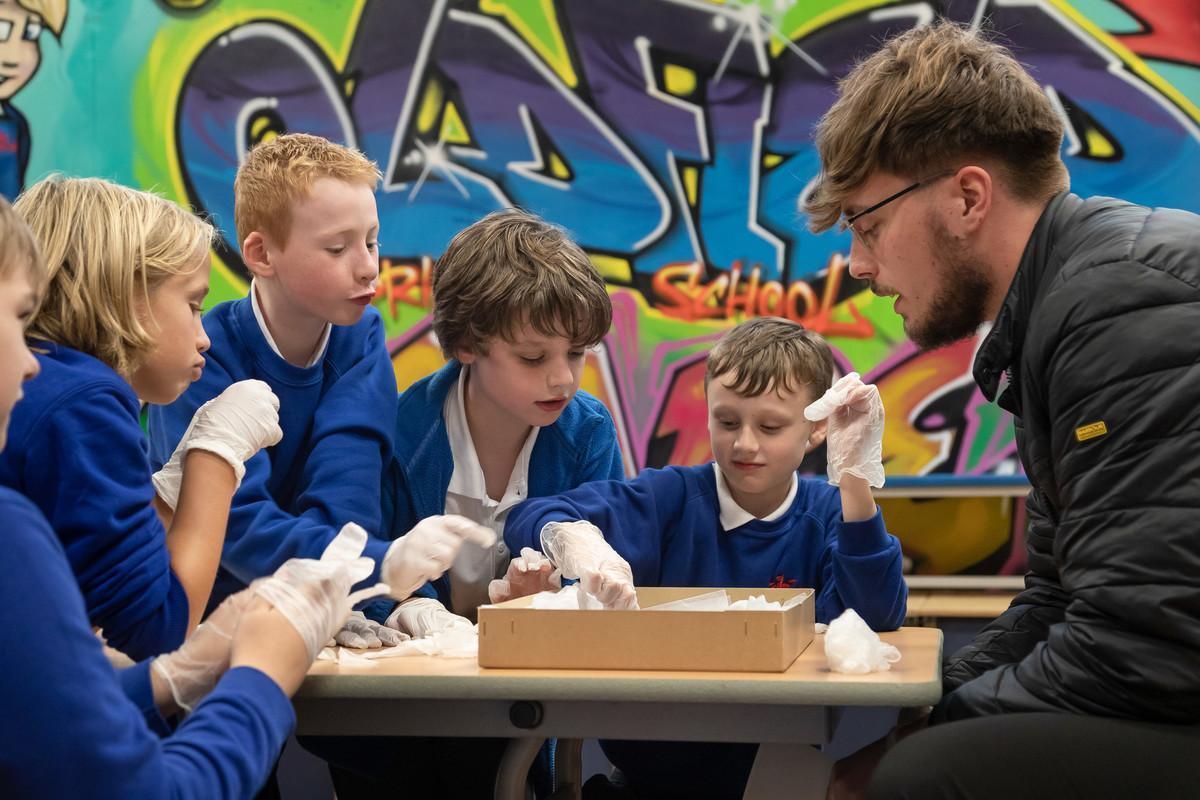
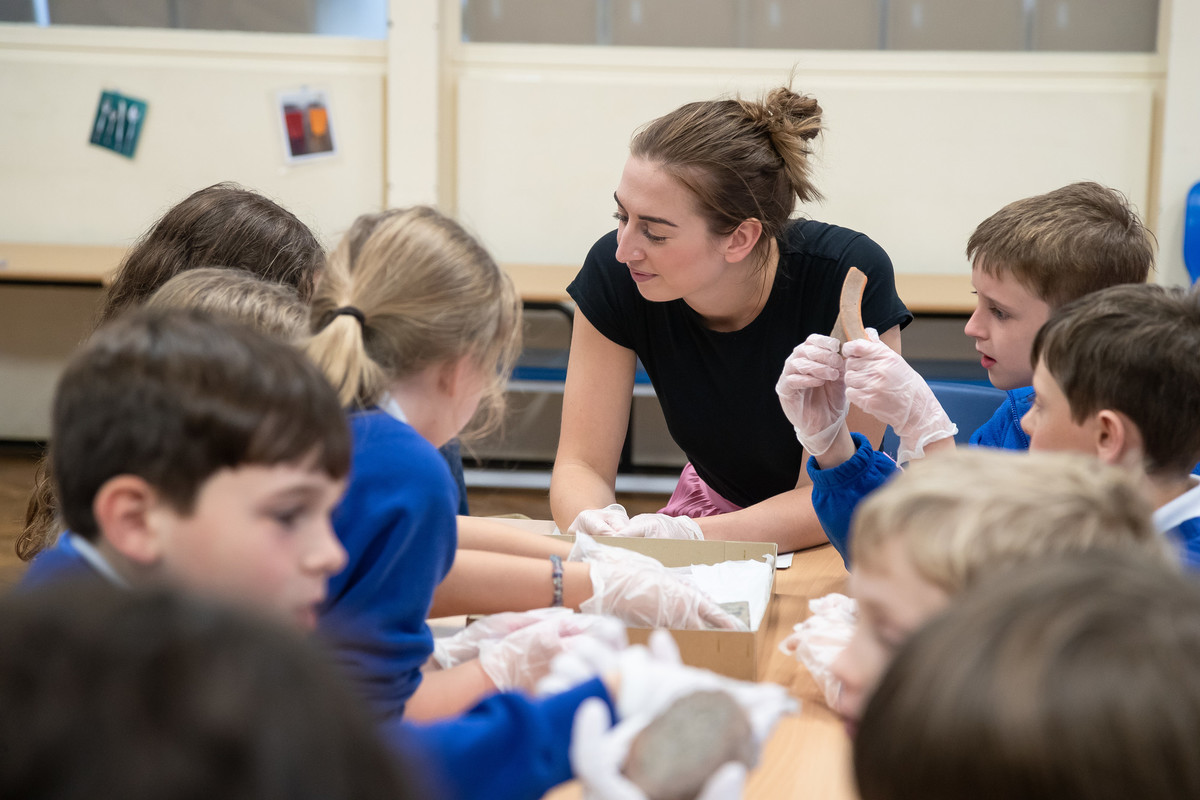

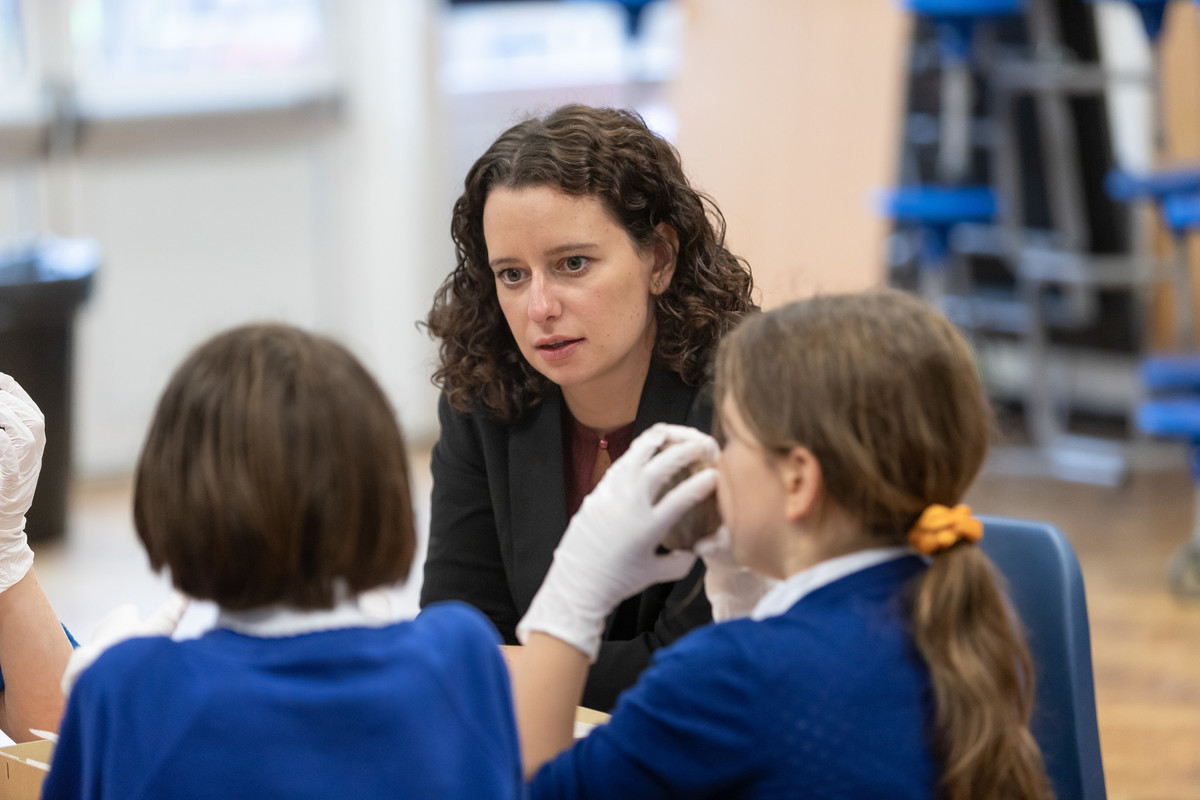


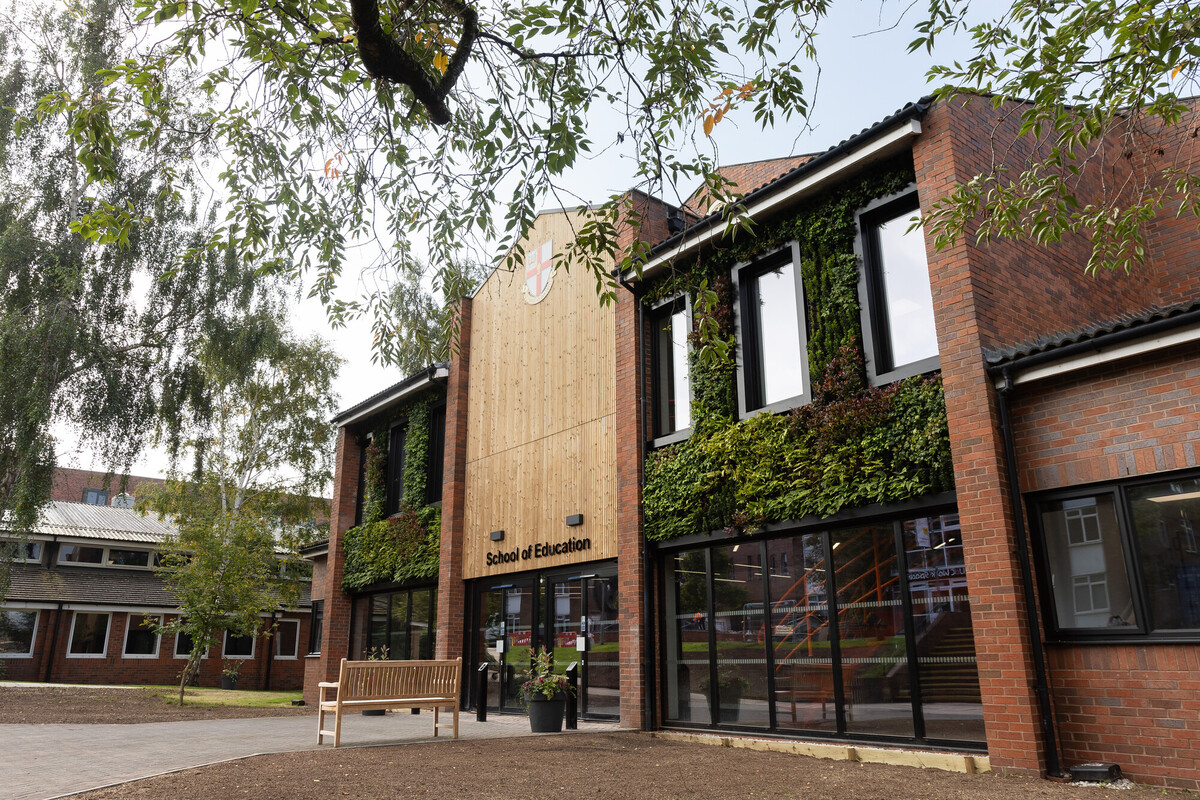

Early Childhood and Primary Education BA student leading a practical learning session with primary school pupils. Early Childhood and Primary Education BA student leading a practical learning session with primary school pupils.

The education landscape plays a critical role in children’s cognitive and emotional development, and how they progress through later life. This course specialises in the transformative power within both the primary education and early childhood sectors, and is perfect if you wish to discuss, discover and analyse in depth why learning experiences are vital. 

You will explore contemporary thinking relating to play, social and emotional development, and the philosophy of childhood and education. Early education creates intense discussion across political and societal landscapes, exposing tensions between care and education. This course supports you to analyse and assess a range of political and societal ideas about family life and teaching and caring for children that have far-reaching impacts on their schooling and wider society.  

This course offers you a great deal of flexibility, and supports you to follow your professional interests. In your second year, you will be well-poised to choose a pathway to specialise in either early childhood or in primary education, and we tailor modules so that they deepen and widen your knowledge in these areas. 

We’re particularly proud of our third-year offering; in this year you will author a personal (and often inspirational) research project. Examples of dissertations include how gender influences toy choices, perceptions of sign language between parents and practitioners, healthy eating in a school environment, and the ‘Justifiable Lie’: the magic of Santa!


Why You’ll Love It

Specialist Pathways

A specialist pathway is your opportunity to further tailor your studies to become an expert in your chosen field. Our pathways provide you with specific modules and opportunities to enable you to tailor your studies towards areas you are passionate about, whether through early childhood studies or primary education studies specialisms. Choose from various modules and optional pathways to align with your interests and career goals.

If you opt for the Early Childhood pathway, you will achieve Early Years Educator status through an assessed observation of practice in your first placement.

What You'll Study

The Professional Studies Foundation Year route is designed to provide you with the knowledge and skills you will need to be successful at university and whilst on a professional and vocational course.

You will study a range of topics relating to your profession and the environment in which you will eventually work.  Areas of focus include person-centred care, mental health, children’s development, communication in a professional setting, social inequality, and how to apply psychology in the real world. 

Teaching and learning is tailored and designed with specific modules that relate to the profession you are preparing to join. You will also be introduced to the professional codes and standards that you must uphold such as, the national Safeguarding guidance.

  • Term 1: Exploring Professional Practice
  • Term 2: Social Issues and Contexts
  • Term 3: Leadership, Coaching and Change Management

This module is designed to enable you to explore your future career and provide an environment where you can begin to focus on the professional values, skills and knowledge needed to succeed in your field.

We will explore the history of your chosen profession, the changing nature of the role, and the social and political context surrounding this. You will have the opportunity to consider the professional codes, values and expectations that relate to your career as well as the various roles you can undertake within your field. 

You will also reflect on your own skill set and consider your personal and professional development needs.

Indicative content:

  • How to be a professional practice student: representing your profession 
  • Investigate the historic and socio-political context of your chosen profession (Nursing, Midwifery, Education or Social Work)
  • The importance of professional values and codes of practice/conduct
  • The nature and scope of inter-professional working
  • Core roles and responsibilities within your career and inter-professional working
  • Theories of professional practice
  • Equal opportunities, inclusion, diversity and professional practice
  • Interpersonal communication skills; development of self-awareness and of own communication skills.
  • Using models of reflection. 
  • Safeguarding of children and vulnerable adults 
  • Personal and professional development knowledge and skills
  • Your profession and the public 
  • Learning to use and navigate a range of digital spaces specific to your subject
  • Understanding academic conduct and conventions for communicating information

The module introduces students to a range of social issues that are of concern across the social sciences, including for sociological, psychological, criminological and legal studies, as well as for people-focussed professional courses. It also encourages students to analyse the wider social and historical contexts for various public policy, legal and criminal justice scenarios, cases and debates. Additionally, the module provides students with support to advance their academic communication and to expand their research into subject-specific literatures.

Indicative content:

  • Social scientific subjects and subject lenses, including sociological criminological, psychological, legal and professional perspectives on the social world
  • Introductory ideas and concepts including society, socialisation and social structures  
  • Introducing and applying social psychological ideas and theories to social issues
  • Introducing ideas and debates surrounding youth studies, youth crime, and youth justice, including knife crime analysis
  • Theory and debates surrounding generational categories (such as generations X, Y, Z and Alpha) 
  • Digitalisation of society and digital ‘zeitgeist’ debates (such as selfie culture and ‘brain rot’)
  • Consumerism, young people and identities
  • Equality, inequality and intersectionality: class, age, gender, ‘race’, sexuality, disability
  • Tackling inequalities, promoting equalities, power and social change
  • Introducing and applying critical social science to issues of class, gender and 'race' , including Marxist, feminist, and critical race theory
  • Riots, uprisings and collective violence
  • Sex work, legal frameworks and sex trafficking
  • Criminal justice debates including prison reform, the role and impact of Victim Offender Mediation (VOM) initiatives, ‘defunding the police’ campaigns, and the representation of crime in the media
  • Public policy, legal, and criminal justice scenarios and cases  
  • Advancing digital and academic skills introduced during Term 1
  • Developing research and information literacy in relation to your subject
  • Creating an academic poster on a chosen research paper
  • Field visit
  • Local case study

This module explores the principles and practices of leadership, coaching, and change management within diverse professional contexts, including education, social work, sports management, policing, and business. Students will build self-awareness, develop coaching and leadership skills, and learn how to manage individual, team, and organizational change effectively. By combining theory with practical application, the module prepares students to navigate real-world challenges in their chosen fields.

Module Content:

  • Self-Awareness and Leadership Development:
    • Identifying personal leadership styles and growth areas.
    • Reflecting on the role of self-awareness in influencing others.
  • Building Professional Relationships:
    • Techniques for effective communication and boundary setting.
    • Coaching and mentoring for individual development.
  • Understanding Group Dynamics:
    • Strategies for managing team change and fostering collaboration.
    • Addressing conflict and building resilience in groups.
  • Leading Organizational Change:
    • Influencing culture and driving sustained change.
    • Ethical considerations and professional boundaries in leadership.

The information listed in this section is an overview of the academic content of the course that will take the form of either core or option modules and should be used as a guide. We review the content of our courses regularly, making changes where necessary to improve your experience and graduate prospects. If during a review process, course content is significantly changed, we will contact you to notify you of these changes if you receive an offer from us.

The BA Early Childhood & Primary Education course contains core modules at each level of study, which are shared with Level 4 students on our BA Education course. This non-QTS course offers you an in-depth exploration of early childhood and primary education which prepares you for employment in a wide and varied sector.

In Year 1 (Level 4) you will be introduced to holistic child development. This offers essential knowledge for everyone who is considering working with children and underpins all of our thinking about childhood. This focus informs our understanding of how children develop and learn as they enter the school system. You will begin to consider how children live and flourish and you will gain an understanding about what is right for them and their unique needs.

You will begin to consider and reflect on the history and philosophy of childhood education and will be invited to question how school and educational systems have developed and will start to assess whether they suit the needs of all children and families. We explore how we could ensure that the educational system embraces childhood and develops emotionally strong, competent and capable learners.

This first year also develops the foundation of play, which sits at the heart of all that children do. Did you know that play is the child’s work? It creates happiness in children and promotes their grasp of school-based concepts such as maths, literacy and holistic aspects like creativity, awe, wonder and motivation.

Towards the end of your first year, you will be offered the opportunity to choose a pathway which focuses your specialism in either early years or primary education studies. This will offer you a more in-depth view of the 0- 8 age group or the 5-11 age group. This offers you an excellent strength in your future career and your chosen pathway influences your teaching in your second year.

Core Modules

This module introduces you to the historical and contemporary landscape of childhood education, focusing on key educational theories, practices, and systems. It will explore how education has evolved from ancient times to the present day, and how different societal, political, and cultural factors have influenced its development. Students will engage with issues such as equality of access to education, the function of the state, the role of women and the changing aims and values of education.

This module introduces students to the fundamental role of play in human creativity, learning, and development across the lifespan. By examining key theories, concepts, and practices surrounding play, students will explore how playful activities stimulate cognitive, emotional, and social growth. The module aims to empower students to appreciate and apply the dynamics of play in both educational and professional contexts, emphasising its interdisciplinary relevance in fostering innovation, problem-solving, and collaboration.

This module introduces students to the multifaceted nature of child development and education, exploring cognitive, emotional, social, and physical domains. Students will engage with key theoretical frameworks and critically analyse how various environmental and cultural factors shape children's growth. The module encourages a holistic approach, examining the interrelationship between different developmental aspects from birth to early adolescence. By unveiling the complexities of childhood, students will gain a foundational understanding to support future studies in education, psychology, social work, and related disciplines.

Optional Modules

This module provides students with the opportunity to engage in a professional placement focused on child-centred practice. Students will develop practical skills, reflective abilities, and a deeper understanding of how to support children's holistic development. The placement experience aims to enhance students' capacity to work with children in diverse settings, emphasising child welfare, rights, and inclusive practices.

Optional Language Modules

This module enables students with A-Level German or equivalent to further develop their grammar, vocabulary and expression and apply these to real world situations.You will work with written and recorded texts on a range of cultural, personal and social topics and will develop your oral and written communication skills at Post-A level.

This module is designed for students that have completed A-Level or equivalent in French. You will further develop your grammar, vocabulary and expression and apply these to real world situations. You will work with written and recorded texts on a range of cultural, personal and social topics and will develop your oral and written communication skills at Post-A level.

This module is designed for students that have completed a A-Level or equivalent in Spanish. You will further develop your grammar, vocabulary and expression and apply these to real world situations. You will work with written and recorded texts on a range of cultural, personal and social topics and will develop oral and written communication skills at Post-A level.

This module is designed for students who have completed GCSE in Chinese or equivalent. You will further develop your grammar, vocabulary and learning conventions for spelling and pronunciation. You will work with written and recorded texts on a range of cultural, personal and social topics and will develop oral and written communication skills at an intermediate level.

This module is designed for students who have completed GCSE or equivalent in French. You will further develop your grammar, vocabulary and learning conventions for spelling and pronunciation. You will work with written and recorded texts on a range of cultural, personal and social topics and will develop oral and written communication skills at an intermediate level.

This module is designed for students that have completed GCSE or equivalent in Spanish. You will further develop your grammar, vocabulary and learning conventions for spelling and pronunciation. You will work with written and recorded texts on a range of cultural, personal and social topics and will develop oral and written communication skills at an intermediate level.

This module provides the opportunity to study a new language from scratch and introduces you to basic grammar, vocabulary and cultural contexts. You will apply the language to practical situations using both oral and written skills. 

The information listed in this section is an overview of the academic content of the course that will take the form of either core or option modules and should be used as a guide. We review the content of our courses regularly, making changes where necessary to improve your experience and graduate prospects. If during a review process, course content is significantly changed, we will contact you to notify you of these changes if you receive an offer from us.

Year 2 (Level 5) develops all that you have learnt in your first year and engages with more complex learning that offers you the opportunity to reflect on the contemporary issues in childhood that contribute to children’s lives. Poverty drives children’s health and wellbeing and underpins many avoidable health challenges faced by children. We consider how children live, what contributes to their overall health and how, as educators, we can support and promote children to be healthy.

This Level also introduces you to how research is conducted and equips you with the early skills to undertake a small piece of research. This is a great practice for your dissertation module in your final year.

Core Modules

This module aims to develop an understanding of how children acquire and develop key skills i communication, language, literacy and mathematics. It explores theoretical perspectives, pedagogical approaches and practical strategies to foster a lifelong love of language and numeracy. The module will examine the role of educators, parents, and wider society in shaping children's experiences with communication, reading, writing and mathematics.

This module will develop your knowledge of research methods, as appropriate to education, and how they are applied in the field. The module will engage students in reflections and support the development of student inquiry. The module will support you to engage in the processes necessary to write an academic research proposal for consideration and adaptation at Level 6.

Optional Modules

This module aims to deepen students’ understanding of the role of health and wellbeing in primary education. It examines the connection between physical and mental health and children’s academic, social, and emotional development within the primary school setting. The module encourages future educators to adopt a holistic approach, addressing the physical, emotional, and social needs of children to support their health and overall wellbeing.

This module explores the health and wellbeing of children from conception to 8 years of age. The module critically examines current agendas and policy drivers, equipping students with the knowledge to address challenges and promote healthy lifestyles and inclusive practices. The module prepares students to support the wellbeing of children and their families in diverse professional contexts.

This module focuses on the central role of effective communication in the development of positive relationships with primary age children, with their parents, with colleagues in the workplace and with other professionals and agencies.

You will examine the importance of respectful partnerships with parents/caregivers and explore the ways in which practitioners and parents/caregivers can work together to support the learning and development of primary age children. You will also consider the importance of working as a member of a team and in multi professional contexts and investigate the barriers to successful teamwork and how to address these in the workplace.  The role of the leader in educational settings will also be explored.

This module focuses on the central role of effective communication in the development of positive relationships with young children, with their parents, with colleagues in the workplace and with other professionals and agencies.

You will examine the importance of respectful partnerships with parents/caregivers and explore the ways in which practitioners and parents/caregivers can work together to support the learning and development of young children. You will also consider the importance of working as a member of a team and in multi professional contexts and investigate the barriers to successful teamwork and how to address these in the workplace.  The role of the leader in early childhood settings will also be explored.

Optional Modules

This module provides students with the opportunity to engage with professional practice in the children, young people, and families sector. Through placement experiences, students will develop and apply key skills in practical settings. The module emphasises the transferability of these skills, enabling students to adapt them to a range of roles and professional environments. By focusing on skill development and consistent practice, the module helps students build a solid foundation for a wide range of future careers.

Optional Language Modules

The module will provide the opportunity to further develop your language skills, building on your previous learning at advanced level. The second half of the module includes a placement abroad or, alternatively, a project on a sustainability issue in a target language country. The first half of the module will prepare you for placements abroad where appropriate as well as a deeper understanding of sustainability in target language contexts. Students of more than one language may take one language in the first half of the module and spend their time abroad developing a different language. 

The module will provide the opportunity to further develop your language skills, building on your previous learning at intermediate level. The first half of the module includes intensive taught sessions in interactive workshop mode which will prepare you for placements abroad or self-directed language development. The second half of the module includes an placement abroad or, alternatively, a project on a business or tourism issue in a target language country. Students of more than one language may take one language in the first half of the module and spend their time abroad developing a different language. 

The module will provide the opportunity to further develop your language skills, building on your previous learning at beginner level. The first half of the module includes intensive taught sessions in interactive workshop mode which will prepare you for placements abroad or self-directed language development. The second half of the module includes a placement abroad or, alternatively, a project on a cultural issue in a target language country. Students of more than one language may take one language in the first half of the module and spend their time abroad developing a different language. 

  • The multiple facets of global citizenship
  • Ethical engagement and practice
  • The United Nations Sustainable Development Goals
  • Cross-cultural issues and sensitivity
  • Intercultural communication
  • Culture shock
  • Cultural adjustment
  • Self- assessment of needs: identification of the range of transferable skills, competencies and attitudes employees need and employers expect graduates to possess-with a strong focus on understanding the intercultural competencies (ICC) needed to live and work abroad.
  • Critical analysis/evaluation of individual requirements in relation to culture/cultural adjustment/culture shock/visas/medical.
  • Critical analysis/evaluation of skills already acquired in relation to key skills related to ICC.
  • Devising strategies to improve one’s own prospects of working abroad in the future.
  • Devising an action plan to address gaps in transferable skills based on organisational analysis and sector opportunities.

Part A:      

Preparation for Experiential Overseas Learning will take place at the University of Chester during level 5 and will include:  

  • The multiple facets of Global citizenship
  • Ethical engagement and practice
  • Cross-cultural issues and sensitivity
  • Intercultural communication

Theories, models and strategies of learning

  • Theories and models Intercultural competence
  • Theories and models of Integration and Multiculturalism
  • Critical thinking skills and models of Reflection
  • Experiential learning models
  • Self-directed experiential learning

Personal and placement-related skills

  • Enhanced independence
  • Improved command of multicultural behaviour
  • Increased knowledge and confidence in their individual facets of personal identity
  • Effective time management and organisational skills
  • Project management – working away from University and independent study
  • Self-management and personal development
  • Team building and team work

Part B:            Overseas

Students will engage in experiential learning activities overseas for at least 150 hours 

Optional International Placement Year

Preparation for the year abroad will take place in Chester during level 5 and will include:

  • Cross-cultural issues and sensitivity
  • Host-country orientation, study methods– economic, political and social reality of the country
  • Orientation specific to exchange – health, education, gender issues
  • The United Nations Sustainable Development Goals
  • Practical matters relating to living and studying in the wider world

Theories, models and strategies of learning

  • Critical thinking skills, experiential learning and models of reflection

Personal and placement-related transversal skills

  • Effective self-motivation and independent resourcefulness
  • Effective time management and organisational skills
  • Project management – working away from University and independent study
  • Self-management and personal development

Whilst abroad:

You will undertake study at one of the University of Chester's partner universities or undertake and approved work placement or virtual placement. If you are a student,  it is expected that you will choose a series of modules at the university abroad which must be agreed by the host institution and the Module Leader. you must supply details of you modules on a learning agreement within 4 weeks of arrival at the host university.

The information listed in this section is an overview of the academic content of the course that will take the form of either core or option modules and should be used as a guide. We review the content of our courses regularly, making changes where necessary to improve your experience and graduate prospects. If during a review process, course content is significantly changed, we will contact you to notify you of these changes if you receive an offer from us.

In Year 3 (Level 6) you will become an independent, critical thinker and, as such, you will be well prepared to further explore the complexities and debates which surround the lives of children, both in their personal and educational experiences. At this level, you will become ready to question your academic reading and to write confidently and with authority.

You will continue learning and developing your philosophy, integrating all the knowledge and skills acquired throughout your studies. Staying in your pathway, you will focus on critical discussions relating to children who have Special Educational Needs and/or Disabilities, the marginalised child and you will explore key debates which influence children’s lives.

Core Modules

This module critically explores contemporary issues and debates in early childhood and primary education, equipping you with an in-depth understanding of current policies, pedagogical practices, and challenges within these fields. Drawing on interdisciplinary perspectives, the module will challenge you to engage with key societal, cultural, and political factors influencing education today. Topics include equity and inclusion, early years pedagogy, the role of technology, the impact of policy reforms, and the evolving expectations of educators in a global context. Through critical reflection, students will analyse how these debates shape both educational theory and practice in the UK and internationally.

This module explores social equality for children and families, focusing on how inequalities manifest and impact children (0-11 years) from marginalised communities. It examines the social, cultural, political, and economic forces that shape children's experiences, opportunities and their understanding of diversity, including the development of social norms and biases. Using a critical lens, the module explores policy, practice, and theory surrounding diversity, inclusion, and equity. The aim is to equip students with the knowledge and tools to challenge inequality and foster environments that promote equality for all children, regardless of their background.

The Critical Explorers: Research into Practice module provides you as a final-year student, with the opportunity to undertake an independent research project, investigating a topic of your choice related to education, children, young people and/or families and communities. This module is designed to develop your skills in critical thinking, research design, and reflective practice, preparing you for professional roles in your chosen sector or further academic study.

This module aims to bridge the gap between academic study and professional practice in children and young people’s settings, equipping you with the skills, knowledge, and critical thinking needed for a successful transition into an appropriate career. The module focuses on reflective practice, professional development, and the application of theoretical knowledge in real-world settings. It encourages you to explore their professional identity and role within the sector, considering the complex social, cultural, and policy-related factors that influence practice.

The information listed in this section is an overview of the academic content of the course that will take the form of either core or option modules and should be used as a guide. We review the content of our courses regularly, making changes where necessary to improve your experience and graduate prospects. If during a review process, course content is significantly changed, we will contact you to notify you of these changes if you receive an offer from us.

Optional Modules

The primary aim of this module is to engage students in critical exploration and reimagination of learning and teaching practices in primary education. Students will examine innovative approaches that challenge traditional pedagogical methods, focusing on creativity, inclusivity, and the integration of technology. The module aims to empower students to envision new possibilities for the primary classroom, grounded in contemporary research, policy developments, and real-world challenges.

This module is designed to explore the essential principles that underpin early childhood education and care. It examines the critical role of early experiences in shaping lifelong development, emphasizing theoretical, practical, and ethical considerations. Students will critically analyse foundational theories, explore contemporary issues, and apply principles in real-world early childhood contexts.

The information listed in this section is an overview of the academic content of the course that will take the form of either core or option modules and should be used as a guide. We review the content of our courses regularly, making changes where necessary to improve your experience and graduate prospects. If during a review process, course content is significantly changed, we will contact you to notify you of these changes if you receive an offer from us.

This pathway offers you a unique opportunity to specialise in in the field of early childhood. The pathway is designed for those who are passionate about understanding the complexities of early years development and education, providing an in-depth exploration of modules that focus on the foundations of early learning, holistic child development, and the social, cultural, and policy contexts that shape early childhood education. 

 On this pathway you  will engage with contemporary issues and debates within modules which integrate practical and theoretical learning ensuring students develop both the academic knowledge and professional skills required to support and advocate for young children and their families.

With opportunities for placements, independent study, classroom discussion and reflective practice, the pathway ensures that you are well  for careers in the field of early childhood, equipping them with the confidence and expertise to make a meaningful impact on the lives of children. This specialisation provides a focused yet holistic approach to studying early childhood, ensuring that as a  graduate yo  are well-prepared for both professional and academic progression.

This pathway offers an engaging opportunity to explore in-depth the field of primary education. Through an array of modules, you will explore the contemporary practices and approaches that shape primary education today. Designed for individuals passionate about making a difference in children's learning, this pathway provides a rich understanding of the primary education sector.

As a graduates from this pathway, you  will emerge with a robust knowledge base and transferable skills, leading to careers in educational support, educational research, or further study in postgraduate teacher training or education related fields.

The information listed in this section is an overview of the academic content of the course that will take the form of either core or option modules and should be used as a guide. We review the content of our courses regularly, making changes where necessary to improve your experience and graduate prospects. If during a review process, course content is significantly changed, we will contact you to notify you of these changes if you receive an offer from us.

How You'll Learn

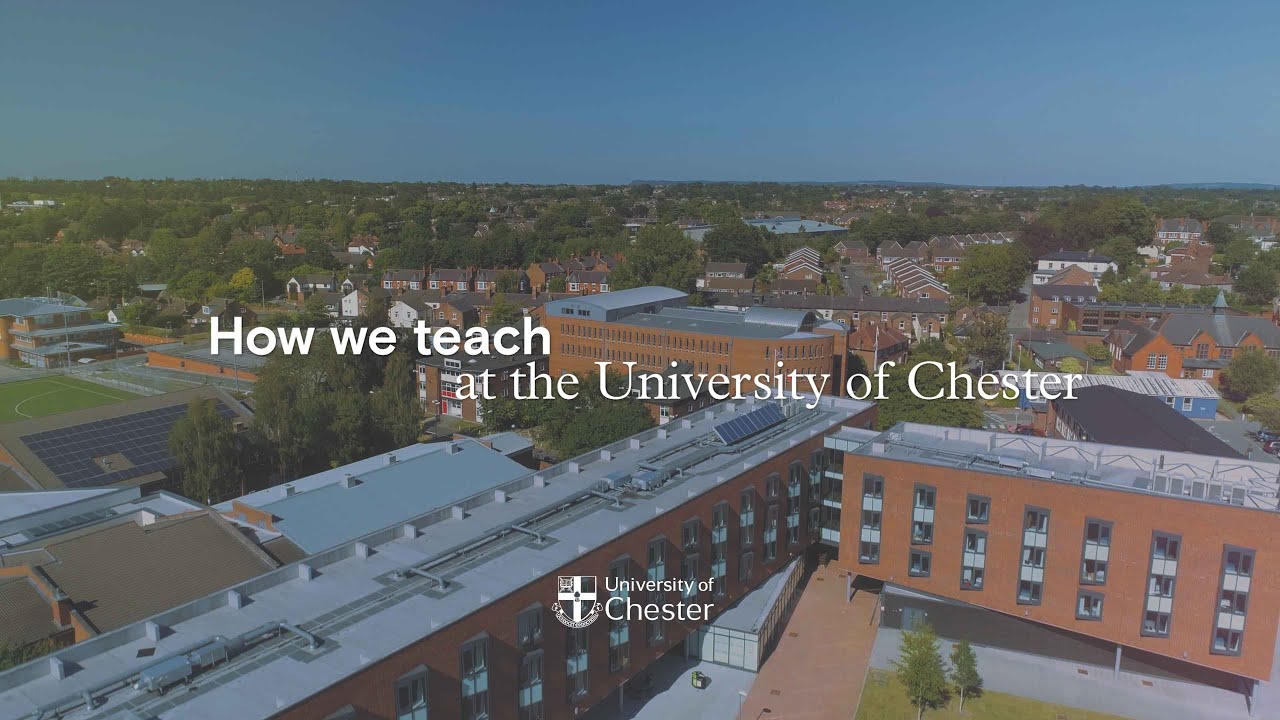
An aerial photograph of Exton Park with the text 'How we teach at the University of Chester'

How we teach at the University of Chester

This course is delivered in three terms of ten weeks each. In each term, you will study 40 credits comprised of either one or two modules. Scheduled contact hours range between approximately six and ten hours per week, depending upon the level of study and the complexity of the material being taught. This course is delivered through in-person learning. You can expect to take part in lectures, workshops and peer-led seminars. 

If studied, the Foundation Year, as with the following years of study, will be taught in three 10-week blocks across an academic year. Each block will comprise of a large 40-credit subject-specific module that includes a breadth of topics and subject skills. You will have on average 12-14 hours of contact time per week during the Foundation Year. There may be variations to this where subject practical or specialist space teaching is included.

You should expect to spend an average of 30-34 hours per week on independent study, which might include following asynchronous learning material, tutorial time with staff, using the University’s library, working with peers and preparing work for assessment. 

Teaching will be delivered by experienced academics and practitioners in the subject. This will be supplemented by occasional guest lecturers and speakers. 

There will be a broad range of assessment methods so you are exposed to the different types of tasks that you might encounter in the workplace. These will include coursework in the form of portfolios, written pieces (both long and short form), podcasts and presentations. In some modules, you will encounter class tests and practical assessments. We continuously review the assessment methods used to ensure they adequately prepare you for graduate level employment. 

All teaching is delivered by experienced academics and practitioners, with the fundamental principles of the Chester Future Skills Curriculum at its core - building your subject competence, confidence and key transferable skills to shape you into a world-ready Chester graduate.

Your Future Career

Job Prospects

With key transferrable skills, graduates may directly access various professional roles, including teaching assistant, early years educator, children and families support worker, policing, or they may choose to enter the charity sector. 

The course also provides a foundation for further study for entry into other professions, such as teaching, children’s nursing, social work or psychotherapy. 

Careers Service

The University has an award-winning Careers and Employability service, which provides a variety of employability-enhancing experiences; through the curriculum, through employer contact, tailored group sessions, individual information, advice and guidance.

Careers and Employability aims to deliver a service which is inclusive, impartial, welcoming, informed and tailored to your personal goals and aspirations, to enable you to develop as an individual and contribute to the business and community in which you will live and work.

We are here to help you plan your future, make the most of your time at University and to enhance your employability. We provide access to part-time jobs, extra-curricular employability-enhancing workshops and offer practical one-to-one help with career planning, including help with CVs, applications and mock interviews. We also deliver group sessions on career planning within each course and we have a wide range of extensive information covering graduate jobs and postgraduate study.

Entry Requirements

104 UCAS points

UCAS Points

104 points

GCE A Level

Typical offer – CCC-BCC

BTEC

DMM

International Baccalaureate

26 points

Irish/Scottish Highers

Irish Highers - H3 H3 H3 H4 H4

Scottish Highers - BBBB

Access requirements

Access to HE Diploma, to include 45 credits at level 3, of which 30 must be at Merit or above

Pass Access to HE Diploma

T Level

T Level with a Pass grade and C or above in the core

OCR Cambridge Technicals

DMM

Extra Requirements

Welsh Baccalaureate Advanced and A Level General Studies will be recognised in our offer. We will also consider a combination of A Levels and BTECs/OCRs.

Please note that GCSE grade C/4 or above in English (or equivalent) is required.

If you are a mature student (21 or over) and have been out of education for a while or do not have experience or qualifications at Level 3 (equivalent to A Levels), then our Foundation Year courses will help you to develop the skills and knowledge you will need to succeed in your chosen degree.


All successful candidates who receive an offer of a place for this course and choose the University of Chester as their Firm choice will be required to undergo checks with regards to their suitability to practice.

A couple of months prior to admission to this course, the University will contact you to request that you complete a self-declaration form detailing any relevant convictions or other information that you believe may have an impact upon your ability to undertake work with children or vulnerable adults.

As a Registered Body, we will send you instructions on how to complete an online application for a Disclosure and Barring Service (DBS) check; there will be a charge for this.

Please note that the University does not accept previous DBS checks from other Registered Bodies or the Update Service.

For details about the cost of the DBS check and for further information please visit our DBS web pages.

DBS Check

A DBS Check is required

English Language Requirements

IELTS

IELTS Academic: Undergraduate: 6.0 (minimum 5.5 in each band)

DBS Check

A DBS Check is required

72 UCAS points

UCAS Points

72 points

GCE A Level

Typical offer – DDD

BTEC

MMP

International Baccalaureate

24 points

Irish/Scottish Highers

Irish Highers - H4, H4, H4, H5, H5

Scottish Highers - CCDD

Access requirements

Pass Access to HE Diploma

T Level

T Level with a Pass grade and D or E on the core

OCR Cambridge Technicals

MMP

DMM

Extra Requirements

Welsh Baccalaureate Advanced and A Level General Studies will be recognised in our offer. We will also consider a combination of A Levels and BTECs/OCRs.

Please note that GCSE grade C/4 or above in English (or equivalent) is required.

If you are a mature student (21 or over) and have been out of education for a while or do not have experience or qualifications at Level 3 (equivalent to A Levels), then our Foundation Year courses will help you to develop the skills and knowledge you will need to succeed in your chosen degree.


All successful candidates who receive an offer of a place for this course and choose the University of Chester as their Firm choice will be required to undergo checks with regards to their suitability to practice.

A couple of months prior to admission to this course, the University will contact you to request that you complete a self-declaration form detailing any relevant convictions or other information that you believe may have an impact upon your ability to undertake work with children or vulnerable adults.

As a Registered Body, we will send you instructions on how to complete an online application for a Disclosure and Barring Service (DBS) check; there will be a charge for this.

Please note that the University does not accept previous DBS checks from other Registered Bodies or the Update Service.

For details about the cost of the DBS check and for further information please visit our DBS web pages.

Fees and Funding

£9,790 per year for a full-time course (2026/27)

The full-time tuition fees for Home students entering in 2026/27 are £9,790 a year, or £1,590 per 20-credit module for part-time study.

£14,950 per year for a full-time course* (2026/27)

The tuition fees for international students studying programmes in 2026/27 are £14,950 per year for a full-time course. This fee is set for each year of study.

For courses with a Foundation Year, the tuition fees for Year 1 are £11,250 and £14,950 for Years 2-4 in 2026/27.

Tuition fees for Home students for the Foundation Year in 2026/27 will be £5,760 (subject to Parliamentary approval) for the first foundation year of a four-year course. Tuition fees for subsequent years will be charged at the standard undergraduate tuition fee rate for that academic year. Standard undergraduate tuition fees for Home students for the academic year 2027/28 will be £10,050 for full-time students and £7,530 for part-time students (subject to Parliamentary approval). Fees for subsequent years may be subject to increase in line with the Government fee cap

  Foundation (First) Year Second Year onwards per year
Home Students £5,760 full-time fee for the first foundation year (2026/27) £10,050 full-time fee per year from the second year onwards (2027/28)
International Students * £11,250 full-time fee for the first foundation year (2026/27) £14,950 full-time fee per year from the second year onwards (2026/27)

* For courses which accept applications from International Students

Who You’ll Learn From

Dr Debbie Ravenscroft

Senior Lecturer
Debbie Ravenscroft

Dr Heather Macdonald

Senior Lecturer and Programme Leader for the MA in Education
Heather Macdonald

Dr Chandrika Devarakonda

Associate Professor
Dr, Chandrika Devarakonda

Ruth Proctor

Senior Lecturer
Ruth Proctor

Kelly Bradburne-Tailby

Senior Lecturer
Kelly Bradburne-Tailby

Enquire about a course