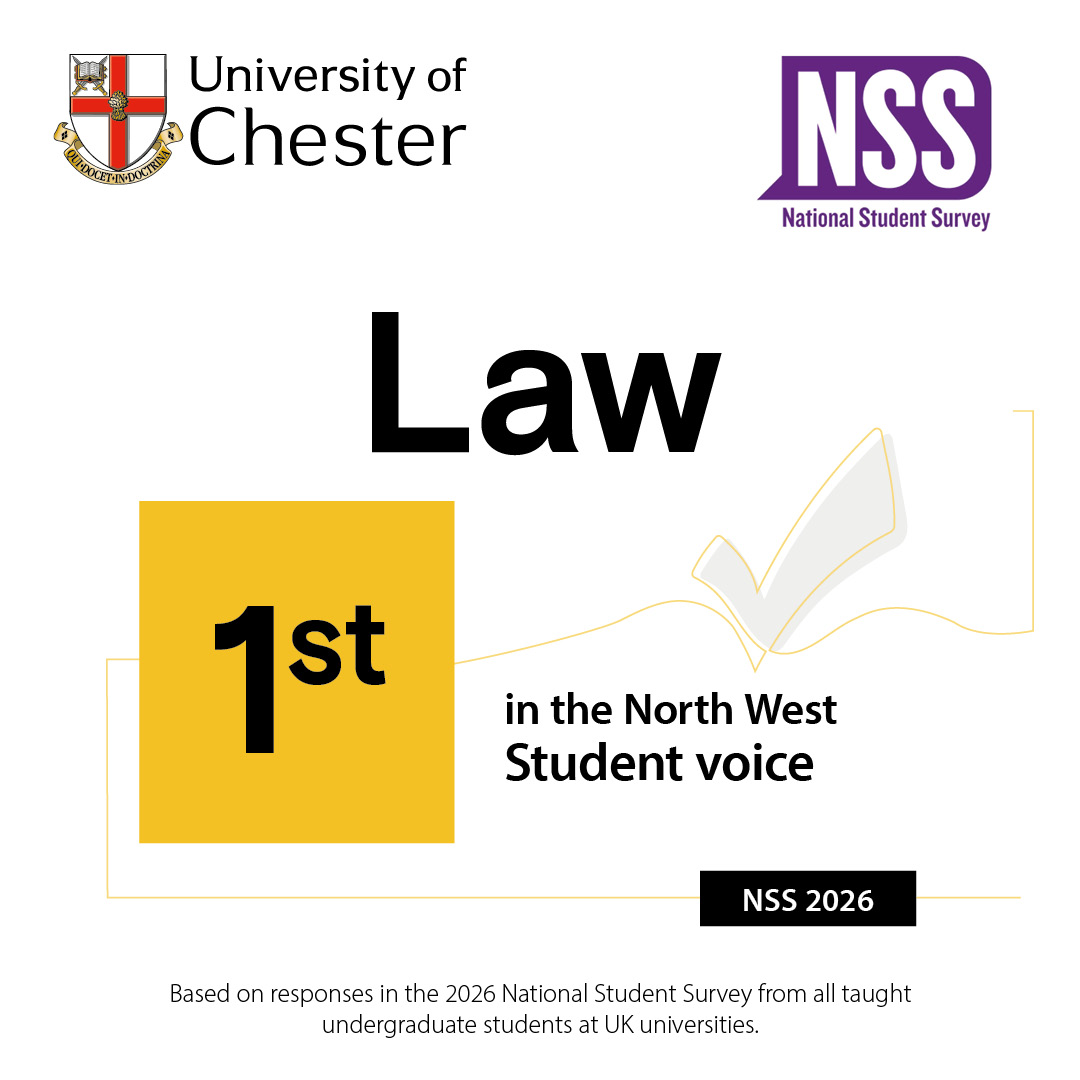
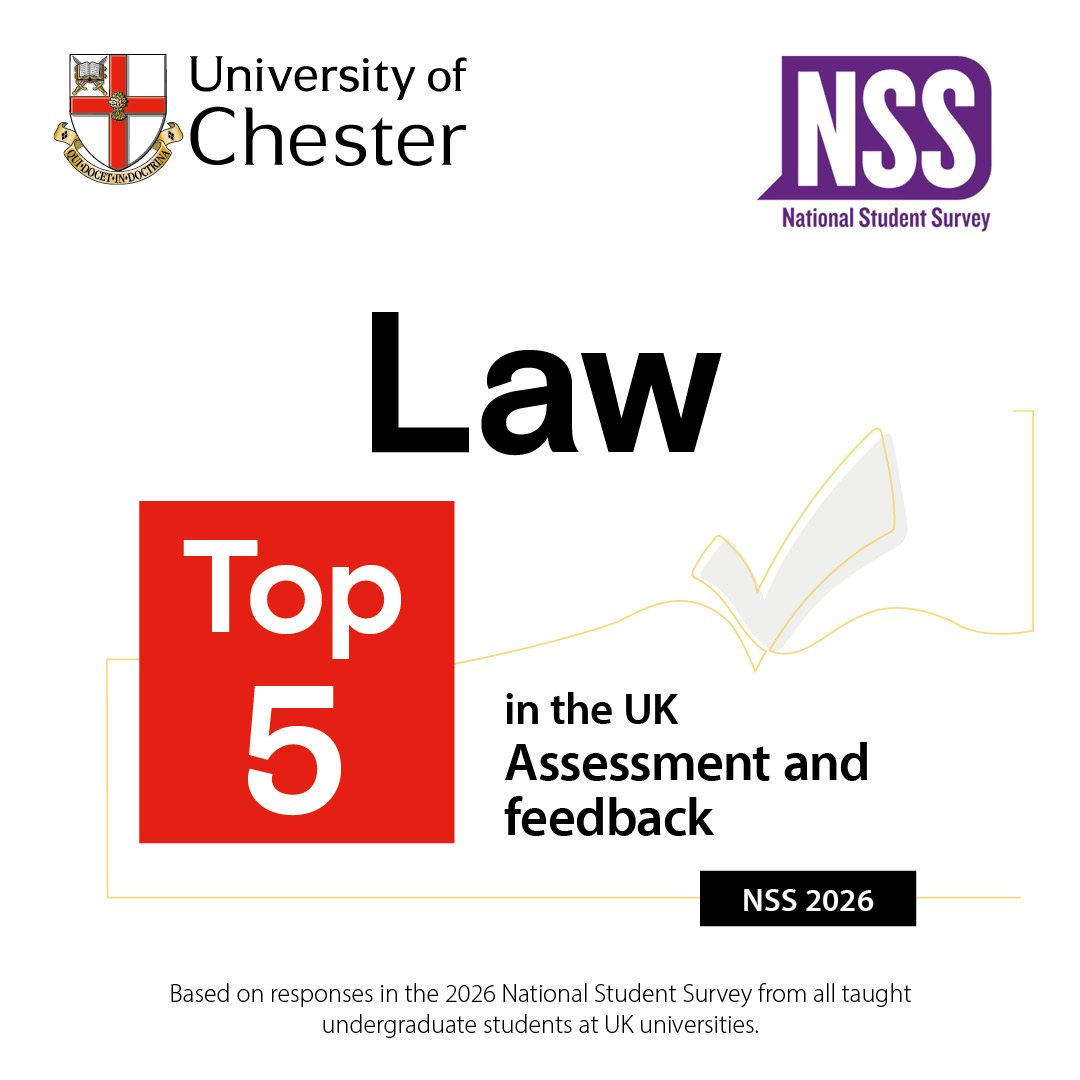
University students attending a Law with Criminal Justice LLB (Hons) lecture, taking notes and viewing legal presentation slides on laptops in a modern classroom.

This course is available in Clearing for 2026 entry.

Our Law with Criminal Justice LLB gives you a rich understanding of the key components and fundamentals of Law and Criminal Justice. All students studying our undergraduate law courses gain a strong foundation in law during a shared first year. 

Students on this specialist pathway can remain on LLB Law with Criminal Justice or move to one of our other pathways (Law LLB and Law with Business and Commerce (LLB)) for the rest of your course. Those on the Criminal Justice pathway follow a more focused selection of modules in their second year,developing a clear, career-aligned specialism. All Law students have the rare opportunity to undertake a legal placement, community engagement activity, or experiential learning as part of their second year, providing valuable practical experience. Moving into your finalyear, you can choose from a range of Criminal Justice aligned modules (refer to our course structure for more information about modules you could study). 

Outside of your course, we encourage you to engage in our active student, staff, and external professionals working communities. Our student Law Society hosts a variety of events throughout the year for you to network and celebrate achievements. You also have the opportunity to work closely on a variety of co-curricular outreach opportunities, pro bono (free legal advice) schemes, and award-winning community action projects, which will enhance your skillset and transform you into a Law graduate who stands out from the crowd. 

Head over to our social media to see what studying Law at Chester is really like, and dive into our blog to discover the city’s fascinating legal history and the many opportunities you’ll experience during your degree. 


Why You'll Love It

Study Law at the University of Chester

Study Law at the University of Chester

What You'll Study

This module introduces students to the key principles and structures of the English Legal System including contemporary debates relevant to the study of law and criminal justice. Criminological theories are explored and crime is analysed from a sociological perspective.

Indicative content:

  • Understanding the evolution of the law and legal concepts 
  • Principles and basic structure of the English Legal System
  • Sources of Law
  • Introduction to civil and criminal law and the court system
  • Key legal personnel and institutions 
  • Tort and law of negligence
  • Case studies on crime and punishment
  • Academic discipline of criminology and its scope
  • The social impact of crime 
  • Crime as a product of social inequality
  • Defining and measuring crime
  • Criminological theories of crime 
  • Investigate miscarriages of justice 
  • Learning to use and navigate a range of digital spaces specific to your subject
  • Understanding academic conduct and conventions for communicating information

Students will develop their skills and knowledge of business management with a focus on business functions. Students will continue to develop and use their mathematical skills to model and solve real-life problems. They will look at the application of maths across different business sectors

  • Developing of understanding of organisations and organisational structures
  • Introduction to business functions (including human resources management, operations, customer service, marketing & finance)
  • Analysing business performance
  • Working with large data sets
  • Further statistics
  • Market share, size and growth
  • Introduction to the 4Ps - price, product, place, promotion
  • Operational management
  • Advancing digital and academic skills introduced during Term 1
  • Developing research and information literacy in relation to your subject
  • Creating an academic poster on a chosen research paper

The module builds on students’ existing understand of the principles of law and criminal justice by examining a range of contemporary legal and criminological issues. This involves focussing on particular types of crime (e.g. knife crime, cybercrime), as well as the systems – both state and non-governmental – relevant to understanding and responding to these issues in society. There is a particular focus on current debates, with an emphasis on critical evaluation of existing approaches to a chosen legal or criminological to be explored in a final project portfolio.

Indicative content:

  • Contemporary criminological and legal themes and issues (e.g. social control, cybercrime, social media)
  • Exploring current debates relating to criminal justice (e.g. punishment & rehabilitation, police strategy)
  • Criminal and legal case studies for problem-solving exercises
  • Exploring and critiquing the role of non-governmental organisations and legal advocacy initiatives relating to law and/or criminology
  • Reading and reviewing example research papers
  • Additional topics relating to current research (e.g. the brain and criminal behaviour, gender & crime, hate crime, miscarriages of justice)
  • Field trips (e.g. court visits)
  • Introducing basic research methods & methodology, and standards of good research
  • Research skills for advocacy and policy development
  • Introduction to reflective cycles and reflective practice, and application of this to own project development experiences

The information listed in this section is an overview of the academic content of the course that will take the form of either core or option modules and should be used as a guide. We review the content of our courses regularly, making changes where necessary to improve your experience and graduate prospects. If during a review process, course content is significantly changed, we will contact you to notify you of these changes if you receive an offer from us.

This course is designed to provide you with the knowledge, skills, and experiences needed to excel in the areas of law and criminal justice and beyond.

Begin your academic journey with a first year that sets the stage for your future success. Not only will you cover foundational legal principles and explore how law interacts with criminal justice, but you will also begin to prepare you for a legal career by introducing you to practical legal and employability skills. This approach provides a well-rounded education that begins to prepare you for the dynamic world of law and business.

At the end of your first year, you'll have the opportunity to continue on the Law with Criminal Justice pathway or choose to move to a different specialised pathway in Law, Business and Commerce or the core Law LLB course that best aligns with your interests and career aspirations.

Core Modules

This module takes a problem focused approach to the key principles that underpin Contract Law in England and Wales. As part of this module you will explore how a contract is formed, identify the contents of the contract whether expressly or impliedly created. You will also consider the enforcement of the contract and some of the vitiating factors that may undermine the apparent creation of a contract.

The module explores the relationship between law and the State, covering elements including: 

• Principles of the UK constitution: the meaning of democratic governance; sources of the Constitution in the UK; theories and concepts underpinning the Constitution in the UK; arguments for and against codification.
• Parliamentary sovereignty
• The Rule of Law and the Separation of Powers; judicial regulation of governmental behaviour; the importance of an independent judiciary
• Political accountability: ministerial responsibility; mechanisms of Parliamentary accountability; freedom of information
• Legal mechanisms of accountability: judicial review
• Introduction to The Human Rights Act 1998: consequences for the relationship between Parliament and the Judiciary

This module is designed to introduce you to the sources and classifications of law and the structure of the English Legal System and those who work within it. It includes training on legal and academic skills to help you succeed in your academic studies as well as understand and avoid academic misconduct. You will also begin to explore your entry into the legal profession by participating in professional sessions covering legal careers, entry into them, and the skills needed to succeed in those careers. Sessions are co-delivered by current practitioners in a wide range of legal and legal-associated professions, and members of the academic team. 

This module focuses on the roles of legal, business and criminal justice professionals and will develop your professional skills.

Key concepts covered by the module: 

  • The role of legal, business and criminal justice professions in the legal system in England and Wales. 
  • Introduction to professionalism and professional ethics
  • An introduction to practical legal and associated research
  • An introduction to the provision of legal and associated professional advice
  • An introduction to communication of legal, business and criminal justice material in the context of professional practice
  • An introduction to independent learning, planning and using resources, reflecting on experience, reaching valid conclusions and setting appropriate goals for development. 

The syllabus covers professionalism, ethics and professional skills; you will learn about and practice the professional skills of:

  • Legal writing and drafting 
  • Practical legal and associated research 
  • Professional writing 
  • Teamwork 
  • Time-management 
  • Reflective practice


The module examines the legal and ethical theories which underpin the law in a variety of subject-areas, including punishment and sentencing, medical law and ethics, family law ethics and business and professional ethics. It looks at proposed law reform in these areas in response to a change in society's moral values and evaluates these proposals.

This module takes a problem-focused approach to introduce you to the key principles that underpin the law of property in England and Wales. You will examine the various types of estates and the rights and interests in land, including their creation and enforceability against current and future landowners. Additionally, you will explore the relationship between law and environmental sustainability in the context of property law.

The information listed in this section is an overview of the academic content of the course that will take the form of either core or option modules and should be used as a guide. We review the content of our courses regularly, making changes where necessary to improve your experience and graduate prospects. If during a review process, course content is significantly changed, we will contact you to notify you of these changes if you receive an offer from us.

In your second year, you'll build upon your solid foundation in legal studies in the core Criminal Law and Tort Law modules. You'll also engage with criminal justice-focused modules, such as Criminological Theory, and Criminalisation and Injustices in Society. You will also gain deeper insight into your future career through Law: Practice and Profession, whilst the Experiential Law module offers opportunities to undertake a placement, experiential learning or community engagement projects. This hands-on experience is designed to bridge the gap between theory and practice.

Core Modules

This module delves into the core aspects of business operations and structures. It explores the identification and roles of both internal and external stakeholders and the influence of various internal and external environments on business. The module will cover essential topics such as marketing and sales, organisational behaviour, finance, environmental sustainability, and introduce the broad legal framework within which various business structure operate. The goal is to provide students with a holistic understanding of business within real-world organisational settings.

This module builds on the knowledge and skills developed in LA5101 Business Principles and Practice but grounds this against elements of commercial law in operation such as setting up a business, financing that business and operational areas such as agency, sale of goods, and environmental sustainability.

This module takes a practical approach to exploring the key legal principles required to prove criminal liability for a variety of specific offences in the jurisdiction of England and Wales. It will also consider the defences available to individuals accused of a specific offence.


This module develops on the skills obtained from students undertaking both Contract Law and Property Law at Level 4. The module takes a problem-based approach to introduce you to the key principles which underpin the law of tort in England and Wales. The most extensive aspect of the module is the most significant of the torts: the tort of negligence. You will explore key principles of the tort of negligence such as the duty of care, the standard of care, breach of the standard of care and the requirements for causation of damage. You will also explore the principles of other torts such as the torts of trespass to the person: assault,  battery and false imprisonment and the tort of private nuisance.

This module builds on the Legal System, Skills and Profession Development module, and centres on developing key academic and professional skills, including academic conduct and legal skills essential for a legal career or related professional career. It promotes critical reflection of existing skills and knowledge to identify strengths and areas that need improvement. Students will participate in skills and professional development sessions to develop strategies to enhance their future career prospects.

This module aims to enhance students’ prospects of gaining graduate level employment through engagement with a range of legal employability events, community activities or placement opportunities, which will enable them to:

  • Develop their understanding of workplace practice and lifelong learning;
  • Enhance their work readiness and employability prospects through development of transferable skills;
  • Take responsibility for their own learning and acquisition of employability skills;
  • Articulate, in writing, their employability skills.

The module offers 3 pathways within it, so that students can choose the employability pathway which best suits their development needs, aspirations and personal circumstances. 

Pathway 1. Placement

This pathway provides a structured, university-level work placement for 4, 5 or 7 weeks as one continuous block / period with a placement provider (i.e. a local employer from the private, public, or charitable sector). It is designed to enhance your professional skills in a real-world job setting. The placement can either be organised by you or with support from university staff. All work placements within this module must be university-level; this means:

  • Undertaking high-skilled work commensurate with level 5 study (e.g. report writing, attending meetings, delivering presentations, producing spreadsheets, writing content on webpages, social media, marketing services/products etc)
  • Physically placed (albeit part of it can be hybrid) within an employer setting in one continuous block / period for 4, 5 or 7 weeks for a minimum of 140-147 hours over the course of the entire work placement
  • Where applicable, your existing part-time employer can be approached/used as the placement provider, if the high-skilled work criterion above is fulfilled for the full duration of the placement.
  • All quality assurances/agreements provided by the University are adhered to, by you and the employer.

The work placement context may not necessarily, reflect your degree discipline per se, but rather, it will give you an enriched experience to enhance your professional skills in a real-world job setting.

Pathway 2. Community Engagement Activity

This pathway provides students with the opportunity to work under a project manager to develop resources to meet the needs of external partner organisations. This may include generating resources for the following (indicative examples, subject to change):

  • SPACE – e.g. SEND mock tribunal 
  • Community Hubs – leaflets and QR codes on various topics 
  • CHAWREC/Eastgate - e.g. a simple guide to setting up e-ID on phones. 
  • ShareAid – posters/book of knowledge extra chapters. 
  • Domestic Abuse resources – e.g. tik tok videos 
  • Families – family related employment rights: e.g. presentation on flexible working to toddler group; presentation to ‘Mama Fit’ group on ‘planning your return to work...what to do when’  
  • Thinking Ahead e.g. how to make a valid will. 

Pathway 3. Experiential Learning

This pathway provides students with a range of alternative online and in person experiential learning opportunities so that they can develop their chosen employability skills in a flexible and diverse manner. These opportunities are arranged with and delivered in partnership with local legal and stakeholders. Indicative examples include:

  • Virtual placement opportunities
  • Online Law Fairs
  • Family Law Advocacy workshops
  • Private client webinars
  • Assessment centre preparation activities
  • Commercial Awareness workshops
  • Career development planning sessions
  • Applications and personal branding workshops

Optional International Placement Year

Preparation for the year abroad will take place in Chester during level 5 and will include:

  • Cross-cultural issues and sensitivity
  • Host-country orientation, study methods– economic, political and social reality of the country
  • Orientation specific to exchange – health, education, gender issues
  • The United Nations Sustainable Development Goals
  • Practical matters relating to living and studying in the wider world

Theories, models and strategies of learning

  • Critical thinking skills, experiential learning and models of reflection

Personal and placement-related transversal skills

  • Effective self-motivation and independent resourcefulness
  • Effective time management and organisational skills
  • Project management – working away from University and independent study
  • Self-management and personal development

Whilst abroad:

You will undertake study at one of the University of Chester's partner universities or undertake and approved work placement or virtual placement. If you are a student,  it is expected that you will choose a series of modules at the university abroad which must be agreed by the host institution and the Module Leader. you must supply details of you modules on a learning agreement within 4 weeks of arrival at the host university.

The information listed in this section is an overview of the academic content of the course that will take the form of either core or option modules and should be used as a guide. We review the content of our courses regularly, making changes where necessary to improve your experience and graduate prospects. If during a review process, course content is significantly changed, we will contact you to notify you of these changes if you receive an offer from us.

In your final year, you will continue to develop and apply the knowledge and skills gained in previous years, but in your area(s) of interest. You'll undertake a major law project, either academic or more practically focused, in an area that ignites your passion. Alongside this, you'll choose a pathway of modules that align with your career aspirations, allowing you to tailor your studies to your interests and goals. This pathway offers focused study in areas such as Advanced Criminal Law & Practice alongside Evidence law, or in Human Rights Law and Social Justice.

Core Modules

This module provides an in-depth study of Equity and Trusts, building on the concepts, principles and laws studied on the Principles of Property Law module.

Students will examine the role of equity and trusts within the English legal system. The module covers the nature and characteristics of trusts, including legal and equitable interests in property, express trusts, implied trusts, charitable trusts, aspects of breach of trust, and co-ownership principles. 

This module provides an opportunity for students to undertake a significant project demonstrating individual creativity and the exploration and application of knowledge gained on the course. The substantive content will be determined by the student’s own focus and context, developed initially as a negotiated proposal, but with the ultimate aim of providing a Project Portfolio. The outcomes of this project would either be presented or exhibited as part of the department’s end of year project exhibition.

Optional Modules

This module follows on from Tort Law at Level 5. The module provides an in depth overview of both clinical negligence, and other aspects of medical law, such as the interface between law and ethics, the historical development of medical law in various areas, and also the potential for reform of the law and regulation in the medical sphere . Aspects covered may include topics such as the regulation of organ donation, the legal position on assisted dying, the regulation of abortion and the regulation of assisted reproduction.

This module explores the development of Discrimination Law in England and Wales and considers this in light of previous EU membership. It introduces the core concepts of Discrimination Law including the protected characteristics and prohibited conduct particularly focusing on the application of the Equality Act 2010 in relation to employment.

You will identify and comprehend the key concepts and principles of European Union Law including the legal, economic and social factors which led to the development of the European Community and Union. You will learn about the legal framework within which the European Union operates and explore in depth the actions that can be taken against both Member States and the institutions for infringement of Union law.

The module will give particular focus to the key actors in the formulation, implementation and enforcement of Union Law at both national and European levels and also the impact of EU law on UK law as relevant to its changing relationship.

Optional Modules - Employment and Company stream

This module takes a problem-based approach and aims to equip you with a broad working knowledge of the legal aspects of employment, enable you to acquire an understanding of the principles underpinning your practical skills such as interpreting real-world documentation and understanding the importance of providing advice tailored to the needs and priorities of the client.

This module covers a spectrum of Company Law topics and introduces you to the areas commonly dealt with by corporate lawyers in practice. The module takes a problem-based approach and aims to enable you to acquire an understanding of the legal principles underpinning the regulation of limited companies, their shareholders and directors, apply your knowledge and understanding to solve problems, develop your practical skills such as interpreting real-world documentation and understanding the importance of providing advice tailored to the needs and priorities of the client.

Optional Modules - Trade stream

The module focusses on developing student's understanding of the EU's internal market in regards to both trade and competition.

You will study the core principles underpinning the regulation of the free movement of goods within the European single market and apply these to hypothetical scenarios.

Focus will then move to the implementation and enforcement of competition law and policy in the European Union, the obligations of Members States and the infringement actions taken by relevant EU insitutions. We will explore the key legal principles underpinning competition law and policy and review key cases to understand the numerous issues that can arise when applying competition law to market behaviour.  This will include scrutinising the EU competition laws regulating such anti-competitive agreements and practices and reviewing case studies (real and hypothetical) exemplifying the conduct which will distort the competitive process and harm competition (e.g. abuse of a dominant position, mergers and oligopolies). We will also explore the interaction between competition law and sustainability in light of the 2030 Agenda for Sustainable Development and the impact this has on trade and competition in the EU. 

This module provides students with foundational knowledge of international trade and investment law. It covers topics such as International Economic Law, World Trade Law, Regional Trade Agreements, International Investment Law, Environmental Sustainability, and Dispute Resolution mechanisms. The module aims to develop critical legal analysis skills, enabling students to address complex problems in international trade and investment law.

The information listed in this section is an overview of the academic content of the course that will take the form of either core or option modules and should be used as a guide. We review the content of our courses regularly, making changes where necessary to improve your experience and graduate prospects. If during a review process, course content is significantly changed, we will contact you to notify you of these changes if you receive an offer from us.

How You'll Learn

An aerial photograph of Exton Park with the text 'How we teach at the University of Chester'

How we teach at the University of Chester

You'll learn through in-person study combined with online preparatory activities, delivered and assessed in three 10-week terms. Each term typically comprises of two subjects to promote deeper learning and stronger connections with tutors and classmates.

This course embeds and assesses real-world employment skills to develop highly skilled, confident and independent graduates. Throughout this course you will develop skills in research using legal databases and legal technology, including Lexis AI, ensuring you're prepared for modern legal practice. You will be assessed using authentic assessments that reflect real-world professional tasks, such as producing due diligence reports, preparing skeleton arguments, drafting letters of advice, or providing advice to clients.

We work with our Employer Advisory Board, comprised of practitioners from various legal and public services, to review our courses and the assessment methods to ensure that they adequately prepare you for graduate-level employment and meet industry needs.

All teaching is delivered by experienced academics and practitioners, with the fundamental principles of the Chester Future Skills Curriculum at its core - building your subject competence, confidence and key transferable skills to shape you into a world-ready Chester graduate.

Your Future Career

Job Prospects

The course’s rich blend of teaching, assessment, and skills-focused learning ensures that students graduate with the knowledge, confidence, and professional attributes required for today’s competitive legal sector. Our curriculum is designed to develop the core legal reasoning, research, advocacy, and professional communication skills that prepare graduates for the next stages of solicitor and barrister training.

Over 90% of our graduates enter high- and medium-skilled employment, reflecting the course’s strong focus on employability, practical legal skills, and career readiness. Every year, our students progress into a wide range of legal and public sector careers. Graduates go on to work as solicitors, barristers, legal advisers, paralegals, and in diverse public service roles across government, regulation, policy, and community-focused organisations. 

The degree provides a solid academic and practical foundation for those wishing to progress to the Bar Course (the mandatory vocational stage to qualify as a barrister) and is equally well‑suited for students who wish to consider progressing onto SQE prep courses to pursue a career as a solicitor via the SQE (Solicitors Qualifying Examination) route. Students benefit from curriculum content and skills training that supports progression into a wide range of legal practice areas, alongside the broader capabilities needed to secure Qualifying Work Experience (QWE).

Progression Options

Our graduates have gone on to successful careers as solicitors and barristers as well as other professional roles and further study.

Careers Service

The University has an award-winning Careers and Employability service which provides a variety of employability-enhancing experiences; through the curriculum, through employer contact, tailored group sessions, individual information, advice and guidance.

Careers and Employability aims to deliver a service which is inclusive, impartial, welcoming, informed and tailored to your personal goals and aspirations, to enable you to develop as an individual and contribute to the business and community in which you will live and work.

We are here to help you plan your future, make the most of your time at University and to enhance your employability. We provide access to part-time jobs, extra-curricular employability-enhancing workshops and offer practical one-to-one help with career planning, including help with CVs, applications and mock interviews. We also deliver group sessions on career planning within each course and we have a wide range of extensive information covering graduate jobs and postgraduate study.

law mooting video

Mooting - Law LLB at Chester

Entry Requirements

120 UCAS points

UCAS Points

120 points

GCE A Level

Typical offer – BBC-BBB

BTEC

DDM

International Baccalaureate

28 points

Irish/Scottish Highers

H3 H3 H3 H3 H3

Scottish Highers - BBBB

Access requirements

To include 45 credits at level 3, of which 30 must be at Merit or above

T Level

Merit

OCR Cambridge Technicals

DDM

Extra Requirements

Welsh Baccalaureate Advanced and A level General Studies will be recognised in our offer. We will also consider a combination of A Levels and BTECs/OCRs.

Students from outside the UK are expected to hold qualifications broadly equivalent to UK standards - typically A Level for undergraduate study.

To help you interpret these equivalents, please select your country/region of residence. This will provide details on equivalent entry requirements, as well as information about local representatives, events, and key contacts.

We accept a wide range of qualifications and assess all applications on an individual basis. Relevant work experience may also be taken into consideration where appropriate.

For more information on English entry requirements, including accepted qualifications, please visit International Entry Requirements.

English Language Requirements

IELTS

6.0 (minimum 5.5 in each band)

72 UCAS points

UCAS Points

72 points

GCE A Level

72 points overall, including grade D in A level

BTEC

MMP

International Baccalaureate

24 points

Irish/Scottish Highers

H4 H4 H4 H4 H4

Scottish Highers - CCDD

Access requirements

Pass overall

T Level

Pass (D or E on the core)

OCR Cambridge Technicals

MMP

Extra Requirements

Welsh Baccalaureate Advanced and A level General Studies will be recognised in our offer. We will also consider a combination of A Levels and BTECs/OCRs.

Fees and Funding

£9,790 per year for a full-time course (2026/27)

The full-time tuition fees for Home students entering in 2026/27 are £9,790 a year, or £1,590 per 20-credit module for part-time study.

You can find more information about undergraduate fees on our Fees and Finance pages.

Students from the UK, Isle of Man, Guernsey, Jersey and the Republic of Ireland are treated as Home students for tuition fee purposes.

Students from countries in the European Economic Area and the EU will pay International Tuition Fees.

Students who have been granted Settled Status may be eligible for Home Fee Status and if eligible will be able to apply for Tuition Fee Loans and Maintenance Loans.

Students who have been granted Pre-settled Status may be eligible for Home Fee Status and if eligible will be able to apply for Tuition Fee Loans.

£14,950 per year for a full-time course* (2026/27)

The tuition fees for international students studying courses in 2026/27 are £14,950 per year for a full-time course. This fee is set for each year of study.

For courses with a Foundation Year, the tuition fees for Year 1 are £11,250 and £14,950 for Years 2-4 in 2026/27.

The University of Chester offers generous international and merit-based scholarships, providing a significant reduction to the published headline tuition fee. You will automatically be considered for these scholarships when your application is reviewed, and any award given will be stated on your offer letter.

For more information, go to our International Fees, Scholarship and Finance section.

Irish Nationals living in the UK or ROI are treated as Home students for Tuition Fee Purposes. 

Tuition fees for Home students for the Foundation Year in 2026/27 will be £5,760 (subject to Parliamentary approval) for the first foundation year of a four-year course. Tuition fees for subsequent years will be charged at the standard undergraduate tuition fee rate for that academic year. Standard undergraduate tuition fees for Home students for the academic year 2027/28 will be £10,050 for full-time students and £7,530 for part-time students (subject to Parliamentary approval). Fees for subsequent years may be subject to increase in line with the Government fee cap

  Foundation (First) Year Second Year onwards per year
Home Students £5,760 full-time fee for the first foundation year (2026/27) £10,050 full-time fee per year from the second year onwards (2027/28)
International Students * £11,250 full-time fee for the first foundation year (2026/27) £14,950 full-time fee per year from the second year onwards (2026/27)

* For courses which accept applications from International Students

Our Facilities

Beyond the Classroom

Chester Law School offers unique co-curriculars that complement your studies and shows future employers that you are a stand-out graduate.

Chester Community Law Project

Our award-winning range of community outreach projects led by student Project Managers and operated by student volunteers. Learn how you can get involved from our students and discover the different projects you can be a part of at Chester.

Chester Community Law Project (CCLP) Pro Bono Award

Legal Advice Centre

Check out our dedicated page where you can hear from staff and students about how you can work with a real-life client on their case in one of our clinics.

chester law school sign outside of building with columns

Mooting

Discover more about how the practice of Mooting at Chester works, along with some of the opportunities it can grant you in the legal sphere, both locally and nationally.

Students demonstrating their legal skills in the Mooting Competition.

Interdisciplinary Learning

This course shares some modules with students on the Law and Law, Business and Commerce courses.

This means that you'll learn alongside students studying a similar discipline, helping to broaden your knowledge and exposure to other concepts, perspectives and professions in the first year of your degree.

As you learn and collaborate with students from other courses, you'll not only widen your social and professional network but also learn new skills that will set you up for success in your industry.

At the end of your first year, you'll have the opportunity to continue on the Law with Criminal Justice LLB or choose to move to another pathway that best aligns with your interests and career aspirations. Whether you decide to continue with Law with Criminal Justice or transition to core Law studies or Law, Business and Commerce, you'll be supported in making an informed decision that suits your goals.

In your second and third years, you will progress to studying more specialist modules within criminal justice, developing your skills to become a World Ready graduate.

Who You'll Learn From

Dr Niel Gillard

Subject Lead - Law
Dr Niel Gillard

Dr Erin O'Leary

Head of Division
Dr Erin O

Gary Robinson

Senior Lecturer
Blank profile picture.

Dr Matt Garrett

Senior Lecturer
Dr Matthew Garrett

Dr Sue Lazer

Senior Lecturer
Dr Sue Lazer

Rosie Sinclair

Senior Lecturer
Rosie Sinclair

Kate Mccarthy

Senior Lecturer
Blank profile picture.

Dr John Morrow

Senior Lecturer
Dr John Morrow

Megan Cowan

Senior Lecturer
Megan Cowan

Caroline Chappell

Senior Lecturer in Law
Caroline Chappell

Andy Todd

Associate Professor
Assoc Prof Andy Todd

Enquire about a course