

Mechanical Engineering and Mechatronics (with optional Placement/Project year) MSc

Female electronics engineer runs vehicle tests Female electronics engineer runs vehicle tests

This MSc course offers an opportunity to explore advanced concepts in mechanical engineering and mechatronics, covering key areas such as energy systems, rigid and deformable body mechanics (including Finite Element Analysis), manufacturing, and design, with additional exposure to mechatronics. These concepts come together in a group design project focused on industry-scale mechatronic systems, such as autonomous vehicles.

Learning takes place in our newly developed Design & Manufacturing suite at the Exton campus, providing you with hands-on experience in industry-scale engineering challenges, manufacturing equipment, material testing, and microscopy. The course encourages an ethos of socially responsible engineering, thus cultivating a mindset of global citizenship, and empowering graduates to contribute to global challenges in the AI era.

A supportive academic and professional team fosters a welcoming and enriching learning environment, ensuring you thrive academically and personally.

There is also an option to choose a Project/Placement year for this course, at an additional cost.


Mechanical Engineering and Mechatronics MSc video

Mechanical Engineering and Mechatronics MSc

What You'll Study

Core Modules

The Robotics module provides an introduction to the foundational principles of robotics, exploring the theoretical aspects that underpin the design, application, and ethical considerations of robotic systems.

You will begin by examining the fundamental question: What is a robot? This includes understanding the diverse applications of robots across industries and their role in society. The module also delves into the ethical implications of robotics, such as their impact on employment, privacy, and safety.

Key technical topics include an overview of mechatronics, which integrates mechanical, electronic, and computer engineering; sensors, which enable robots to perceive their environment; and control systems, which ensure robots can perform tasks accurately and autonomously.

This module is based on the practice of finite element methods with the use of commercial FEA softwares to provide students more realistic FEA experience in relation to real world practical engineering problems. This module will allow students to gain an understanding of modern concepts of Structural Integrity and Dynamics of engineering components using analytical, numerical and experimental technique with practical examples of using FEA.

This module provides a learning environment for students to apply critically-appraised engineering knowledge in developing innovative solutions to industry-scale engineering problems while working in a collaborative team.

This module provides students with the knowledge and skills required to select and develop appropriate manufacturing processes and systems for components and products while being informed by critically appraised existing and emerging knowledge.

Alternative and Renewable Energy Sources
This module aims to develop a comprehensive understanding of the complexities inherent in energy provision and the resultant environmental implications of different energy-sourcing decisions. Particular emphasis is placed on design considerations related to conventional renewable energy systems and strategies for integrating renewable energy technologies into existing electrical power infrastructures.

Sustainability and Energy Systems
In this module, students will examine the future trajectory of energy technologies, enabling them to make informed decisions regarding the generation, conversion, transportation, and utilization of energy. They will also critically evaluate the environmental and socio-economic challenges arising from global energy consumption, and investigate policy frameworks and strategic mechanisms intended to mitigate adverse effects on both ecological and societal systems.

Embedded Systems Introduction:

  1. Embedded Architecture (ARM): Focuses on the ARM architecture, the dominant platform for modern embedded and IoT devices.
  2. C Programming & STM32 HAL: Teaches embedded C programming using the STM32 Hardware Abstraction Layer (HAL), covering I/O operations, pulse-width modulation (PWM), and interrupt handling.
  3. Digital Communication Interfaces: Details key serial and parallel communication standards for embedded systems, including UART/Serial, SPI, I2C, and CAN.
  4. Data Collection & Filtering: Covers techniques for acquiring and processing sensor data, including analog/digital filtering (low-pass, high-pass, band-pass, band-stop, notch filters) and frequency analysis via FFT.
  5. Multithreading & Real-Time Programming: Introduces concepts of concurrent execution and real-time systems, critical for developing responsive, reliable embedded applications.

IoT Fundamentals & Applications:

  1. Introduces the core principles of the Internet of Things, alongside real-world use cases and application scenarios.
  2. Electromagnetics & Sensor Design: Explores the electromagnetic principles underpinning radio-frequency design technology.
  3. Networking Fundamentals: Covers core networking components including Ethernet, web servers, and web clients, establishing the backbone for IoT connectivity.
  4. IoT Communication Technologies: Surveys a wide range of wired and wireless protocols for IoT devices, including RFID, BLE, LiFi, 6LoWPAN, ZigBee, Z-Wave, LoRa, HTTP, and WebSockets.

Optional Modules

In this module, students undertake an individual project to solve a problem requiring critically-appraised new and emerging knowledge of the engineering discipline.

The information listed in this section is an overview of the academic content of the course that will take the form of either core or option modules and should be used as a guide. We review the content of our courses regularly, making changes where necessary to improve your experience and graduate prospects. If during a review process, course content is significantly changed, we will contact you to notify you of these changes if you receive an offer from us.

If chosen, your second year of study will consist of your Project or Professional Placement

This module forms part of the 2 year pathway along with a preparation module - WB7102 Advance Professional Practice. The preparation module forms part of year 1 study and is completed before this module commences.

Students studying the 2 year full time course will not undertake a traditional dissertation module this module replaces that option instead, this module is completed in Year 2, starting at the beginning of year 2, for a minimum of 30 weeks over 3 terms on a full time basis with the exception of university scheduled vacations which equates to a minimum of 1000 work based project hours. 

This module forms part of the 2 year pathway along with a preparation module - WB7102 Advance Professional Practice. The preparation module forms part of year 1 study and is completed before this module commences.

Students studying the 2 year full time course will not undertake a traditional dissertation module this Project module replaces that option instead, this module is completed in Year 2, starting at the beginning of year 2, for a minimum of 30 weeks over 3 terms on a full time basis with the exception of university scheduled vacations which equates to a minimum of 1000 work based project hours.

The information listed in this section is an overview of the academic content of the course that will take the form of either core or option modules and should be used as a guide. We review the content of our courses regularly, making changes where necessary to improve your experience and graduate prospects. If during a review process, course content is significantly changed, we will contact you to notify you of these changes if you receive an offer from us.

How You'll Learn

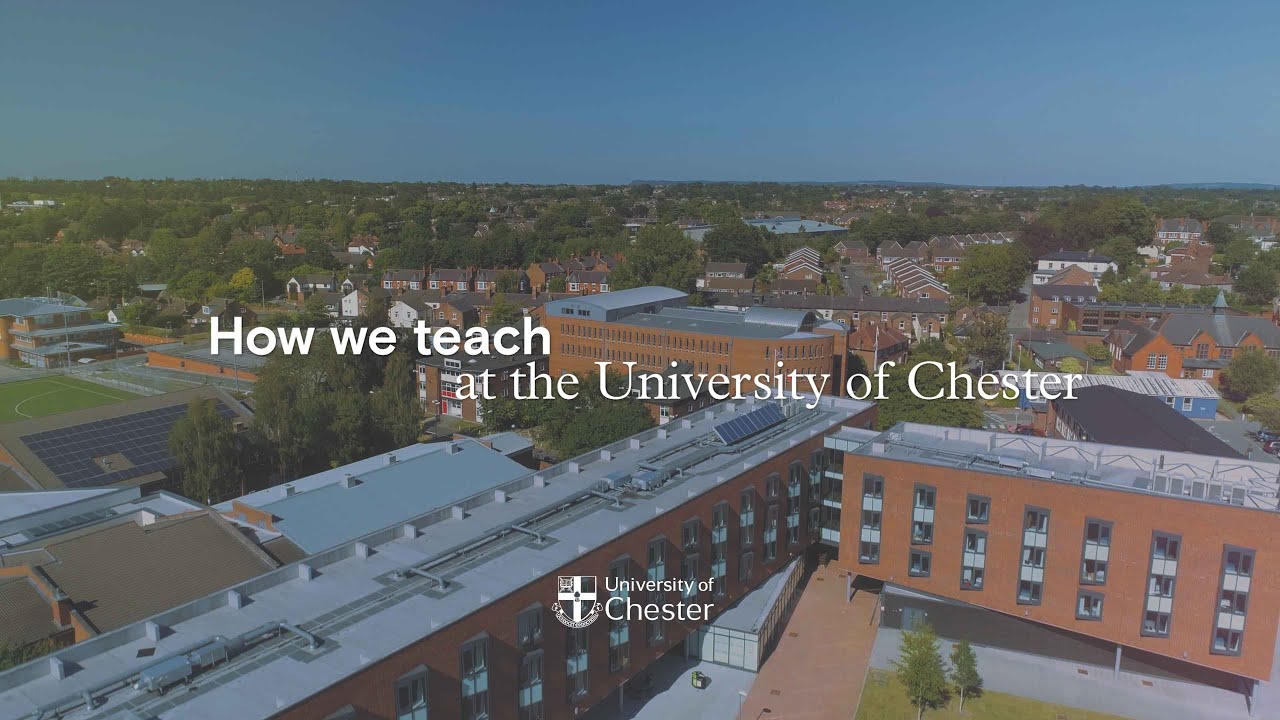
An aerial photograph of Exton Park with the text 'How we teach at the University of Chester'

How we teach at the University of Chester

Your Future Career

Job prospects

Automotive, aerospace, R&D, consultancy and manufacturing sectors. Transferable skills allow graduates to explore careers in management, finance, IT and the armed forces. 

Careers service

The University has an award-winning Careers and Employability service which provides a variety of employability-enhancing experiences; through the curriculum, through employer contact, tailored group sessions, individual information, advice and guidance.

Careers and Employability aims to deliver a service which is inclusive, impartial, welcoming, informed and tailored to your personal goals and aspirations, to enable you to develop as an individual and contribute to the business and community in which you will live and work.

We are here to help you plan your future, make the most of your time at University and to enhance your employability. We provide access to part-time jobs, extra-curricular employability-enhancing workshops and offer practical one-to-one help with career planning, including help with CVs, applications and mock interviews. We also deliver group sessions on career planning within each course and we have a wide range of extensive information covering graduate jobs.

Entry Requirements

Honours Degree

A minimum of second class lower degree in a discipline related to Mechanical Engineering, Mechatronics, Electrical/Electronics Engineering or Computer Engineering.

Honours Degree

A minimum of second class lower degree in a discipline related to Mechanical Engineering, Mechatronics, Electrical/Electronics Engineering or Computer Engineering.

Switch combined course content

Optional 2-year master's to suit your needs

Choosing a Professional Placement MSc is a win-win for your career, giving you the chance to get real experience, apply your cutting-edge skills in the workplace and stand out to future employers.

In the first year you will have help from the University to find a placement, whilst developing your expertise. You will then spend your second year out in industry on placement, getting the chance to work with industry professionals and grow your network of industry contacts. Bringing your university-acquired knowledge and insights to industry, you will get to make a difference to the workplace and make lasting links with your employer.

Students need to find and secure their own placement, supported by the University. A preparation module will also help you to get ready for your placement.

Please note, this course is available as a one-year master degree course, or as a Two-Year Master's Course with a Professional Placement or Project. Please carefully consider your options when applying for our one year or Two-year routes as successful international applicants will not be able to change between courses after a Confirmation of Acceptance of Studies (CAS) letter has been issued or after arriving in the UK.

Fees and Funding

£9,090 for a full-time course (2026/27)

The tuition fees for home students studying courses in 2026/27 are £9,090 per year.

The professional placement/project year will cost an additional £2,750, due at the start of the second year of the course.

£15,500 (2026/27)

The tuition fees for international students studying courses in 2026/27 are £15,500 per year.

For courses where a placement or project year is undertaken there will be an additional charge of £2,750 for the placement/project year (due at the start of the second year of the course).

Who You’ll Learn From

Dr Dele Owodunni

Senior Lecturer
Dr Oladele Owodunni

Dr Simon Hodgson

Senior Lecturer
Dr Simon Hodgson

Dr David Ward

Programme Leader for Chemical Engineering BEng (Hons)
profile picture of david ward

Dr Richard Stocker

Senior Lecturer
Dr Richard Stocker

Enquire about a course