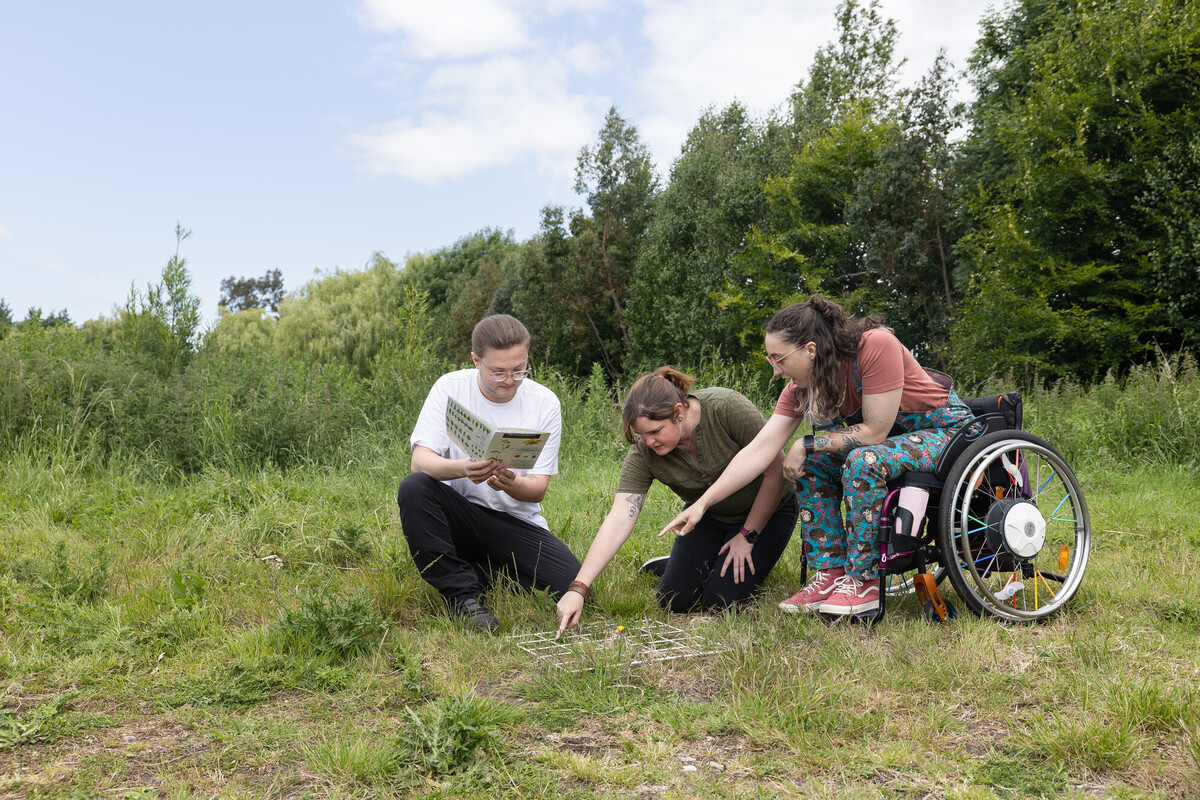

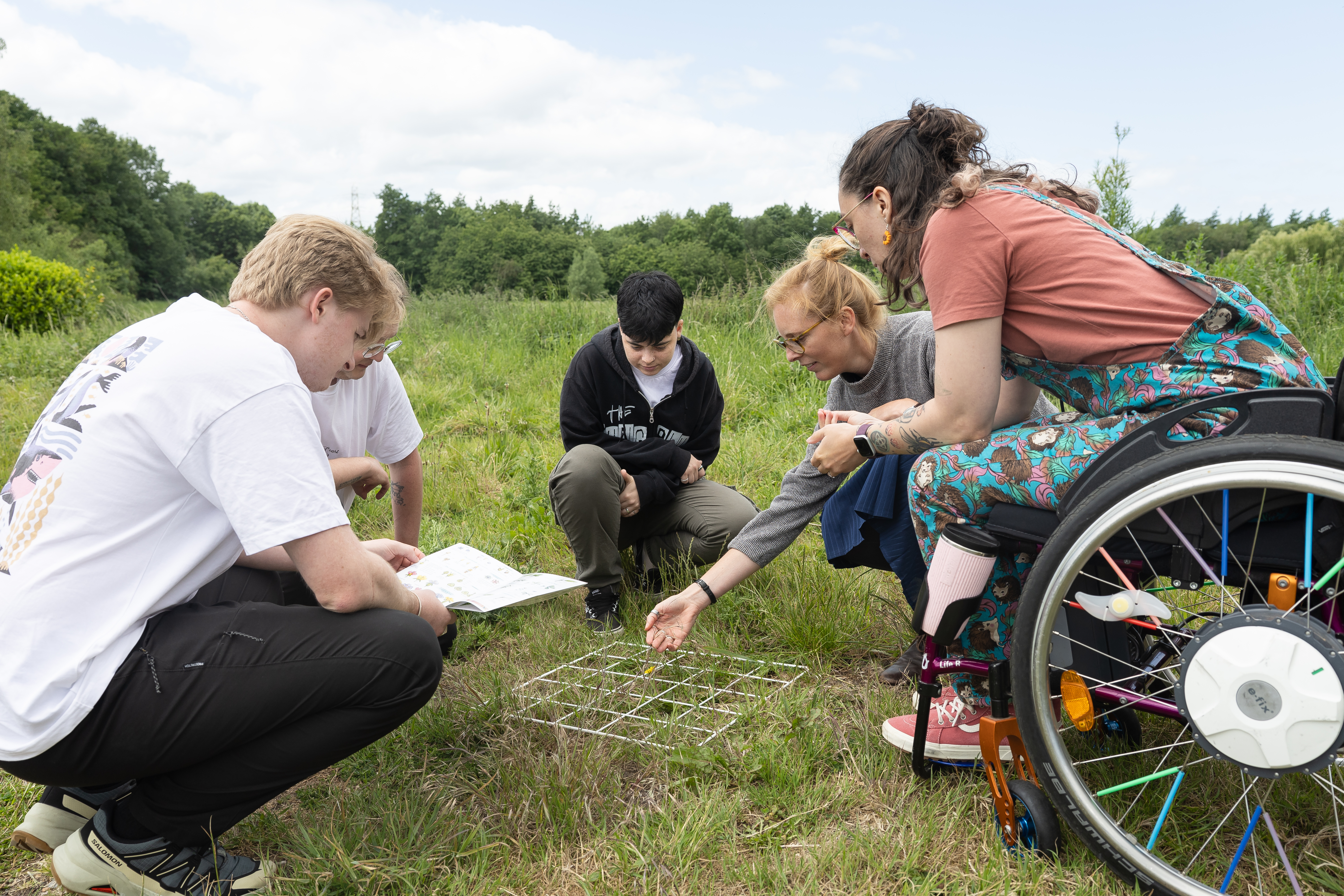
Three people, one in a wheelchair, examining an insect diagram, to observe insects on a field trip.

Zoology explores how animals function, interact and respond to a rapidly changing world. On this course, you will develop advanced knowledge of Animal Biology, Ecology and Behaviour, and learn how to apply this to real-world environmental and conservation challenges.

This MSc has a strong focus on employability and professional skills, preparing you for careers in environmental consultancy, conservation, research and the wider ecological sector. You will gain hands-on experience in key techniques, including ecological surveys, species and habitat assessment, data analysis, and scientific communication.

At Chester, you will learn directly from active researchers with expertise across a wide range of zoological disciplines. You will learn and develop practical field and laboratory skills through applied case studies and problem-based learning. Throughout the course, you will build confidence in analysing complex problems, making evidence-based decisions, and communicating effectively with a range of audiences.

The course brings together expertise across the Natural Sciences, including Animal Behaviour, Entomology, Ecology and Conservation, into a single course, providing a broad yet focused skillset that reflects the interdisciplinary nature of modern Zoology.

There is an option to choose a Project/Placement year for this course, at an additional cost.


Why You'll Love It

Switch combined course content

Optional 2-year Master's To Suit Your Needs

Choosing a Professional Placement MSc is a win-win for your career, giving you the chance to get real experience, apply your cutting-edge skills in the workplace and stand out to future employers.

In the first year you will have help from the University to find a placement, whilst developing your expertise. You will then spend your second year out in industry on placement, getting the chance to work with industry professionals and grow your network of industry contacts. Bringing your university-acquired knowledge and insights to industry, you will get to make a difference to the workplace and make lasting links with your employer.

Students need to find and secure their own placement, supported by the University. A preparation module will also help you to get ready for your placement.

Please note, this course is available as a one-year master degree course, or as a Two-Year Master's Course with a Professional Placement or Project. Please carefully consider your options when applying for our one year or Two-year routes as successful international applicants will not be able to change between courses after a Confirmation of Acceptance of Studies (CAS) letter has been issued or after arriving in the UK.

How You'll Learn

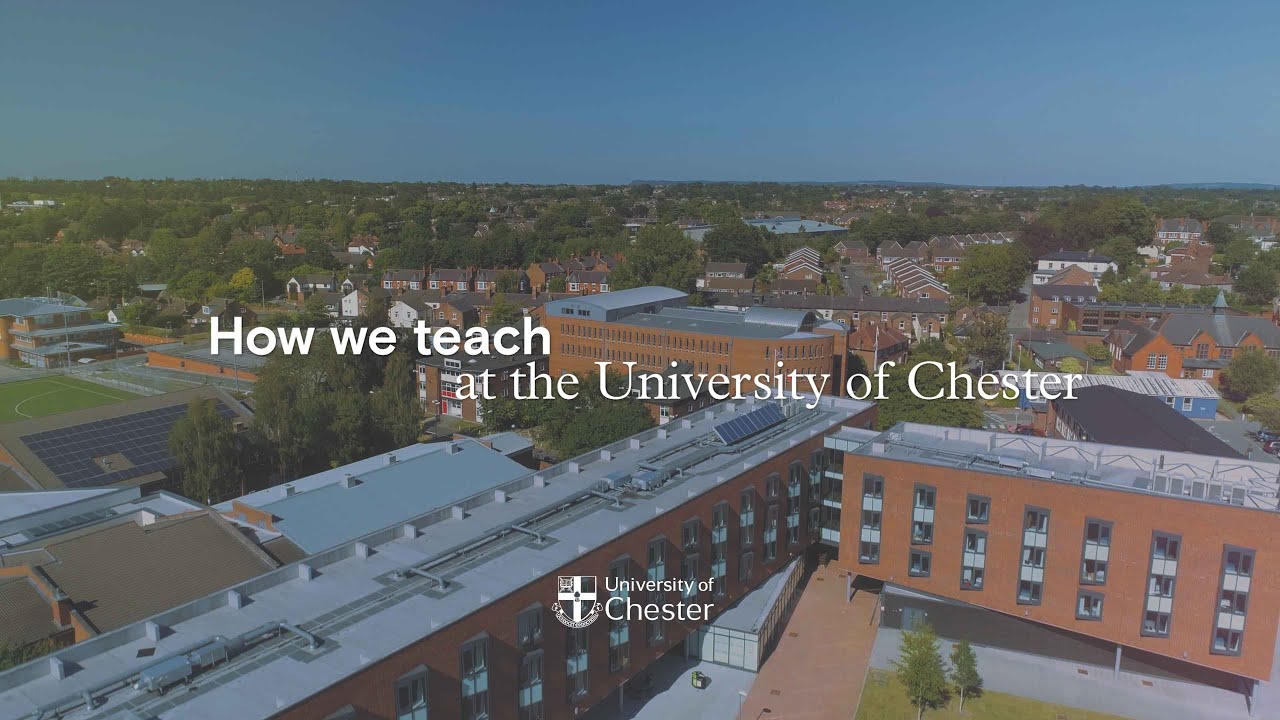
An aerial photograph of Exton Park with the text 'How we teach at the University of Chester'

How we teach at the University of Chester

Teaching  

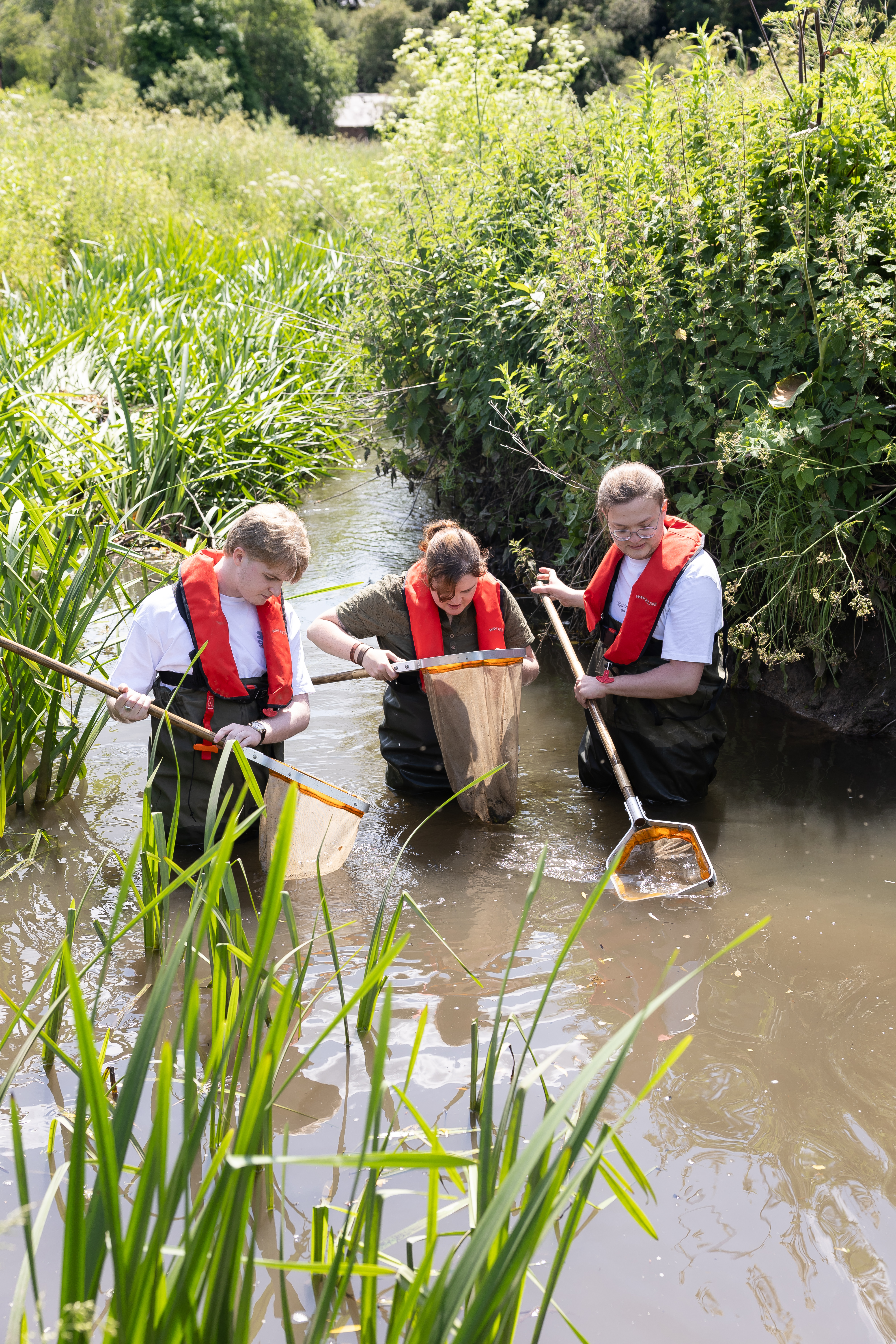
Teaching is delivered in small groups through a mix of seminars, workshops, and discussion-based sessions, supported by lectures where appropriate. You will also take part in laboratory practicals and field-based activities, allowing you to develop hands on skills alongside your theoretical understanding. Taught sessions are typically scheduled across three days per week, with your independent dissertation project completed more flexibly.

Learning is highly applied and focused on real-world challenges. You will engage with case studies, problem-based tasks, and data driven activities designed to develop your analytical, critical thinking, and decision making skills. Throughout the course, you will build confidence in applying Zoological knowledge to practical scenarios and communicating your findings effectively.

Assessment 

Assessment is entirely coursework-based and designed to reflect professional practice. You will complete a range of authentic assessments, including critical reviews of scientific literature, management plans and research proposals. These tasks will support both your academic development and your readiness for careers in the sector.

Your Future Career

Job prospects

This course is designed to equip you with the advanced knowledge, technical skills, and professional competencies needed to pursue a wide range of careers in Zoology and related fields. Employers across ecological consultancies, research organisations, and environmental sectors consistently highlight demand for graduates with strong skills in species monitoring, laboratory skills, biodiversity assessment, data analysis, and applied ecological decision making, areas embedded throughout this MSc.

Graduates will be well prepared for roles in:

  • Ecological consultancy (e.g. protected species surveys, impact assessments)
  • Wildlife and ecological research (e.g. universities, NGOs, research institutes)
  • Laboratory-based roles (e.g. molecular ecology, environmental analysis)
  • Environmental management and biosecurity
  • Animal behaviour and wildlife monitoring
  • Environmental education, outreach, and public engagement

Careers service

The University has an award-winning Careers and Employability service which provides a variety of employability-enhancing experiences; through the curriculum, through employer contact, tailored group sessions, individual information, advice and guidance.

Careers and Employability aims to deliver a service which is inclusive, impartial, welcoming, informed and tailored to your personal goals and aspirations, to enable you to develop as an individual and contribute to the business and community in which you will live and work.

We are here to help you plan your future, make the most of your time at University and to enhance your employability. We provide access to part-time jobs, extra-curricular employability-enhancing workshops and offer practical one-to-one help with career planning, including help with CVs, applications and mock interviews. We also deliver group sessions on career planning within each course and we have a wide range of extensive information covering graduate jobs.

Entry Requirements

2:2honours degree

  • Applicants should normally possess an honours degree (minimum 2:2) in a biological/behavioural/ecological science (or demonstrate equivalent experience in a related field, e.g. animal behaviour, conservation biology, zoology) including components of experimental design and statistical analysis. Applicants will also have relevant experience in the field.
  • Students with a minimum 2:2 undergraduate degree in an unrelated area must demonstrate on application that they have equivalent experience in a related field, e.g. wildlife conservation, habitat or protected areas management, or ex-situ conservation. 

We recommend that all applicants: 

  • Nominate two academic referees as part of their application who can provide letters of recommendation which highlight the applicant’s academic achievements, work commitment and relevant experience. 
  • Include in their personal statement and CV details of any relevant extra-curricular training, volunteering and/or relevant work experience they have obtained. This could include working with a local wildlife trust, animal rescue centre or zoo, for example. 
  • A transcript of marks should be presented with the application.

Applicants may be interviewed. 


2:2honours degree

  • Applicants should normally possess an honours degree (minimum 2:2) in a biological/behavioural/ecological science (or demonstrate equivalent experience in a related field, e.g. animal behaviour, conservation biology, zoology) including components of experimental design and statistical analysis. Applicants will also have relevant experience in the field. 
  • Students with a minimum 2:2 undergraduate degree in an unrelated area must demonstrate on application that they have equivalent experience in a related field, e.g. wildlife conservation, habitat or protected areas management, or ex-situ conservation. 

We recommend that all applicants: 

  • Nominate two academic referees as part of their application who can provide letters of recommendation which highlight the applicant’s academic achievements, work commitment and relevant experience. 
  • Include in their personal statement and CV details of any relevant extra-curricular training, volunteering and/or relevant work experience they have obtained. This could include working with a local wildlife trust, animal rescue centre or zoo, for example.  
  • A transcript of marks should be presented with the application.  

Applicants may be interviewed. 

English Language Requirements

For more information on our English Language requirements, please visit International Entry Requirements.


Fees and Funding

£13,680for the full course (2026/27)

The fees for MSc Wildlife Conservation are inclusive of the compulsory field trip.

Guides to the fees for students who wish to commence postgraduate courses are available to view on our Postgraduate Taught Programmes Fees page. Here you will also find information about part-time fees and project/placement year fees.

£15,500per year (2026/27)

Please note: For MSc programmes where a placement or project year is undertaken there will be an additional charge of £2,900 for the placement/project year (due at the start of the second year of the course).

The University of Chester offers generous international and merit-based scholarships for postgraduate study, providing a significant reduction to the published headline tuition fee. You will automatically be considered for these scholarships when your application is reviewed, and any award given will be stated on your offer letter.

For more information, go to our International Fees, Scholarship and Finance section.

Irish Nationals living in the UK or ROI are treated as Home students for Tuition Fee Purposes.

Your course will involve additional costs not covered by your tuition fees. This may include books, printing, photocopying, educational stationery and related materials, specialist clothing, travel to placements, optional field trips and software. Compulsory field trips are covered by your tuition fees. 

The University of Chester supports fair access for students who may need additional support through a range of bursaries and scholarships. 

Full details, as well as terms and conditions for all bursaries and scholarships can be found on the Fees and Finance section of our website.

Who You’ll Learn From

Dr Jordan Ryder

Senior Lecturer
Dr Jordan Ryder

Dr Candice Owen

Senior Lecturer
Dr Candice Owen

Kev Palmer

Lecturer
profile picture of Kevin Palmer

Dr Matt Geary

Associate Professor
Dr Matt Geary

Dr Nicola Beesley

Deputy Head of School
Dr Nicola Beesley

Dr Nwamaka Akpodiete

Senior Lecturer
Nwamaka Akpodiete

Enquire about a course