On the political home of counselling and psychotherapy in universities
Dr Paul Taylor explains the rationale for where certain courses are placed in the institutional structure.
I should imagine that most universities have not, and do not agonise over where to put their counselling and psychotherapy programmes and provision when designing institutional structures. Often, they perhaps are slotted next to nursing or psychology, or somewhere in a health faculty, and that's the decision made. The justification for these decisions borne from perceived natural alignment and affinity with wellbeing, health and social care-focused provision.
At the University of Chester, we have made different choices. Counselling and psychotherapy education and research sit within the Faculty of Arts, Humanities and Social Sciences, and specifically the Division of Social and Political Sciences. Our courses, research and expertise in this field sits alongside criminology, sociology, politics, and international relations. That placement is deliberate, and it shapes everything from how we teach to what we think the profession is ultimately for. This article tries to say why.
Structure is never neutral
Structures in UK universities are curiously shaped; influenced by history, by disciplinary traditions, and by financial imperatives. When a discipline is embedded in a certain faculty or school it absorbs that areas assumptions gradually, almost by osmosis. The language, in the case of a health faculty, may become clinical. The questions that count are questions shaped by considerations of treatment, of measurements, and of outcomes. The person in the therapy room becomes, at some level, influenced by that educational anchoring of the discipline.
None of that is wrong, exactly. Clinical rigour is important, evidence matters, and practitioners, academics and learners operating in such an environment are not beholden to these orthodoxies. But when one framework becomes the only (or dominant) framework visible, it stops being a framework and starts being reality.
Put therapy next to criminology and sociology instead, and the atmosphere changes. A student learning counselling is now sitting alongside people who are asking why certain communities keep appearing in the criminal justice statistics, how poverty forecloses opportunity, how institutions exercise power in ways that harm the people they claim to serve. Those questions don't stay in the classrooms, rather they get into the bloodstream of a training programme, and they change what a therapist notices and what they think is relevant. That matters more than it might initially appear.
Therapy has always been political
There's a substantial intellectual tradition that has been making this argument for decades. Ignacio Martín-Baró, a Salvadoran social psychologist writing in the shadow of civil war and devastating poverty, argued that psychology had made a foundational error in focusing on the individual as the unit of analysis. To do so, he suggested, was not just an intellectual limitation, rather it was a political act, because it located the cause of distress inside persons rather than in the conditions shaping their lives.
Feminist therapy, from its earliest articulations through to contemporary intersectional practice, has insisted for fifty years that what a person brings into a therapy room is inseparable from the structural conditions of their life. Critical race perspectives make the same point differently. That is that any therapeutic model that treats race as a background variable rather than a constitutive feature of experience doesn't just fail to address inequality, it reproduces it.
These are serious intellectual traditions with real empirical grounding. They are not fringe positions. They share a position of agreement insofar that power - who has it, who doesn't, how it is exercised within relationships that are defined by asymmetry - is not an occasional complication or tricky issue in therapeutic work. It is its permanent feature.
We might argue then that this kind of thinking belongs in a university faculty or school where power and social structure are permanent objects of focus. Is there an avoidable awkwardness if anchored in a health faculty where dominant conversation is shaped by NICE guidelines, randomised controlled trials, and manualised treatments. Again, none of that is worthless, but the question is whether it is sufficient. This is especially so, as treating it as sufficient is itself a political position.
What students can gain
It's worth being concrete about this, because arguments at the level of principle can feel detached from the actual experience of learning.
Students who train in counselling and psychotherapy in a university such as Chester encounter, routinely, material that clinical training alone can tend to ignore or marginalise. Exposure to the social and political sciences as a close neighbour teaches students that many of the people they will eventually sit with have moved through systems that compounded their suffering rather than addressed it, and that working with those people requires understanding those systems, not just their presenting distress. Proximity to these subjects and their influence gives them a working literacy around class, race, gender, and the way structural conditions shape individual lives long before any therapeutic encounter begins. Skills of interrogation and critical enquiry that the social and political sciences have honed over their evolution teaches students that the concepts they will use professionally (e.g. trauma, attachment, anxiety, depression) have genealogies, and those genealogies are complicated.
None of this produces counsellors or psychotherapists who can theorise beautifully but struggle in the room. The reflective practice traditions that are now well established in therapeutic training consistently show that the capacity to think critically about what one is doing tends to produce better practice, not more limited practice. What this context produces, we think, are practitioners who carry a kind of structural awareness that purely clinical training might rarely achieve. The recognition and understanding that a person's distress can be simultaneously real and also a rational response to genuinely difficult circumstances is one of the most therapeutic things available, and it doesn't come automatically from clinical competence alone.
Whose knowledge counts
Counselling and psychotherapy cohorts across the UK, ours included, draw heavily from mature learners, from people with lived experience of mental health difficulties, and from individuals who arrive at university without conventional educational backgrounds, but who are carrying knowledge that is experiential and relational.
Dominant discourses at play in university structures where they may be oriented towards clinical hierarchies and biomedical epistemologies, can send a quiet message to these students. This is not to say that areas outside of social and political sciences do not have expertise or a pedigree in alternative epistemologies, but we might say that the humanities, social, and political sciences also have a sophisticated relationship with the idea that understanding can be produced through multiple methods, by multiple kinds of people, through sustained and disciplined engagement with lived experience. Narrative inquiry, phenomenology, interpretive traditions of all kinds.
Students who have spent their lives feeling that a university qualification isn't really for them are more likely to stay, and to flourish, in environments that don't inadvertently confirm their intuition that their voice doesn’t matter or doesn’t fit. And the clients those students will eventually work with - people who frequently bring exactly the kind of knowledge that clinical frameworks struggle to honour - will be better served by practitioners who have been trained in a context that took that knowledge seriously.
Back to reality
The pull towards medicalisation across the therapy sector is persistent. It is driven by commissioners funding services on outcomes contracts, by the institutional dominance of cognitive approaches in NHS provision, by the straightforward logic of a professionalising discipline seeking legitimacy through proximity to medicine.
We don't stand outside these pressures and criticise them from a comfortable distance. We engage with clinical rigour from within a broader intellectual framework that keeps asking what that rigour is ultimately for. That is more demanding than either a purely clinical model or a purely critical one would require.
The tension doesn't resolve itself or get resolved by us. That's actually the point. Therapy, at its best, is a practice of holding apparently competing things. Be that the individual and the structural, the present and the historical, the clinical and the political, without collapsing one into the other. Training in an environment that reflects that complexity seems to us more honest preparation than one that tidily puts it to one side.
The question underneath the question
Where a discipline lives in a university is really a question about what that discipline thinks it is doing in the world.
If counselling and psychotherapy are primarily clinical technologies or approaches for returning distressed individuals to functional states, then an anchoring in a health faculty school or division makes sense. But if they are relational practices embedded in social and historical realities; if they carry genuine ethical weight and can cause harm as readily as they can offer healing; if they touch questions about what it means to suffer in a particular kind of society, to be recognised or misrecognised by a person with authority over your experience - then perhaps they need intellectual neighbours who take those questions seriously.
Proximity to the social and political sciences for counselling and psychotherapy students, practitioners, researchers and academics, we think brings dividends. The disciplines in such areas are, we think, part of what makes a therapist genuinely capable. This is not because they make for a more interesting conversation, but because they expand the range of what a practitioner can see, and therefore what they can offer.
At Chester we have counselling and psychotherapy situated where we do because we think the question of ‘what therapy is for’ matters too much and so embedding it as we have, with close proximity to the social and political sciences brings about the conditions (and question) of what that proximity makes possible.
About the author
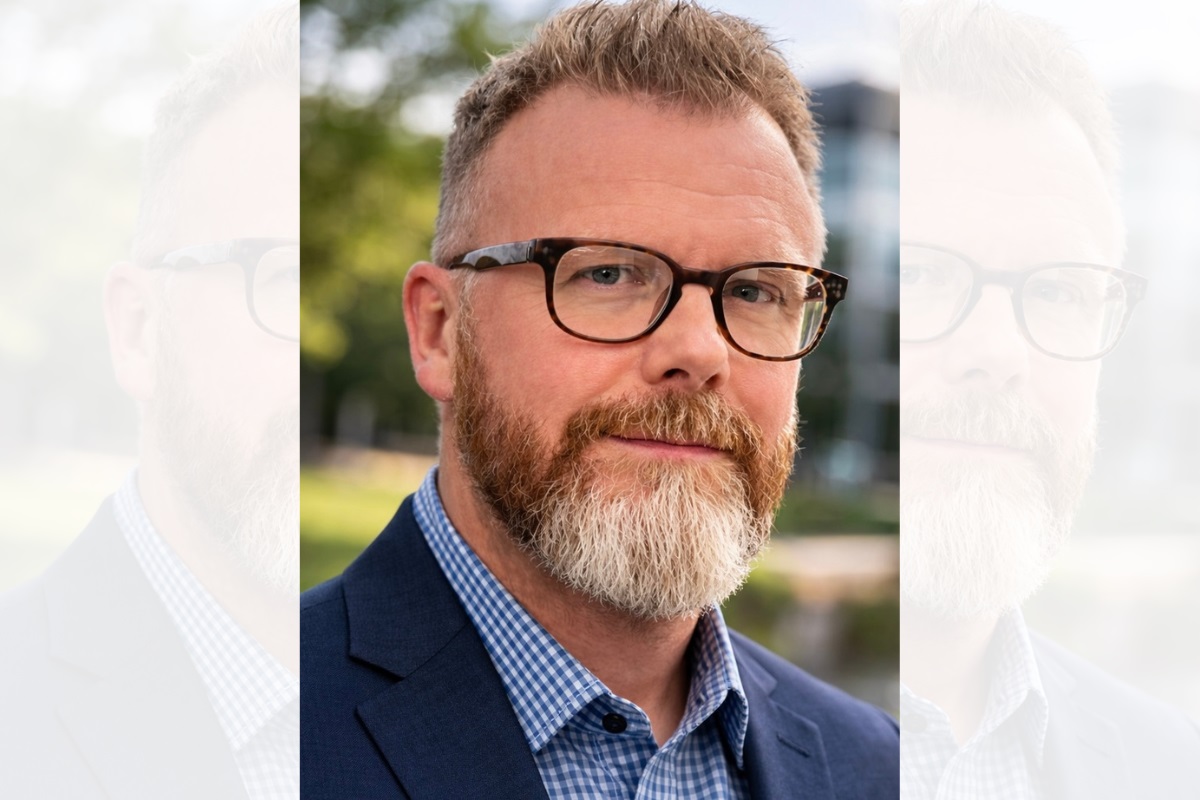
Dr Paul Taylor is Head of the School of Humanities and Social Sciences at the University of Chester. His scholarship focuses on criminology, sociology and mental health, with particular interests in mental health policy, criminal justice and the wellbeing of public service professionals.
Through his research, Paul seeks to bridge academic insight and real-world practice, contributing to debates that shape policy and professional practice.