




Two people sat at a desk whilst talking

The MA in Clinical Counselling provides a robust professional programme of counselling training, designed and delivered in accordance with the person-centred ethos. By combining knowledge of counselling and psychological theory with practical skills and ongoing personal development, our course facilitates students to develop as reflexive, professional and ethical practitioners.

Our course is accredited by the British Association for Counselling and Psychotherapy (BACP), and is one of the few accredited MA courses in a university setting in the UK. This accredited status means the course has gone through a rigorous process to ensure it meets a high standard in relation to the rationale, content, delivery and outcomes. Once students successfully graduate from all components of the course, they can automatically gain entry onto the BACP Register, which is a public record of ‘minimum standard of quality’ in counselling.

The course offers an in-depth exploration and experience of the person-centred approach to counselling. The person-centred approach, developed by Carl Rogers, is part of the group of therapies based on humanistic-existential psychology, and at its core are the themes of personhood and person-centred ways of being, the values of which are reflected in the course design and delivery.

While receiving a comprehensive grounding in the person-centred approach, students will also learn to recognise the theoretical similarities and differences of this to other established approaches. Additionally, students will receive robust training in the ethics, skills and practicalities of working as a counsellor, in person and remotely. 

Accreditations

British Association for Counselling and Psychotherapy Accredited Course

Why You'll Love It

What You'll Study

Modules

This module provides the student with a comprehensive understanding of the basis of person-centred theory and therapy, and how this is applied in a practice setting. It also supports students in developing a reflective practice.

In relation to theory, the historical and philosophical basis of the person-centred approach are outlined which provides a foundation for the theory of personality, including the self concept, and actualising tendency. Following this, the theory of therapy is explored with a focus on the six necessary and six conditions of person-centred therapy. Students are also provided with foundational information about other counselling modalities in order to contextualise person-centred therapy further.

In considering how this is applied in practice, a comprehensive understanding is provided of case management, based on the BACP (2018) Ethical Framework for the Counselling Professions, covering aspects such as contracting, boundaries, assessments, time limited practice, and working with risk. Throughout, the socio-political context of the student, the client, and the therapeutic process are recognised and discussed.

In addition, students are required to commit to reflective practice as a foundation for their future career as a person-centred counsellor. To support the development of this practice, the module provides opportunities for personal development, through scaffolded experiential exercises delivered to the whole group, a experiential weekend, and small groups where exploratory learning takes place. 

This module enables students to develop their counselling practice. In doing so, students apply their theoretical learning alongside observational feedback from tutors and peers. Students will complete a 'fitness to practice' process towards the end of the module, and successful completion of the module will support student progression to Counselling and Professional Practice 2 - placement module. 

The information listed in this section is an overview of the academic content of the course that will take the form of either core or option modules and should be used as a guide. We review the content of our courses regularly, making changes where necessary to improve your experience and graduate prospects. If during a review process, course content is significantly changed, we will contact you to notify you of these changes if you receive an offer from us.

Modules

This module explores both the inner world of the individual, and the external structures and systems of power which contextualise their experience. It encourages students to critically examine how identity, power, and privilege influence the therapeutic relationship and the counselling process. It invites students to deepen their reflective practice and personal development focussing on both personal and systemic biases, and how these can impact client engagement, trust, and the therapeutic process overall. Students will consider how to work ethically and sensitively across difference, with a strong emphasis on promoting equality, respect, and inclusivity in practice, exploring how their increased self-awareness may translate in their counselling practice.

It examines a range of theories and models related to loss and grief, highlighting diverse responses to bereavement and change across different cultural and individual contexts, and explores theories related to attachment and trauma. The module also considers human development across the lifespan, offering insight into how developmental stages might influence psychological wellbeing and presenting issues. In addition, students will engage with more complex aspects of case management, including psychopharmacology, working within a multi-agency team, and working with third parties such as an interpreter or signer. 

In addition, this module also provides opportunities for personal development, through an experiential weekend, and small groups where exploratory learning takes place. 

This module facilitates the application of counselling theory and skills in a professional setting through a supervised counselling placement. Students are required to complete a minimum of 25 client-facing hours in accordance with the BACP requirements, supported by individual and group supervision.

Students are expected to maintain a professional practice portfolio, including supervision records, placement logs, reflective journals and a case study.

The information listed in this section is an overview of the academic content of the course that will take the form of either core or option modules and should be used as a guide. We review the content of our courses regularly, making changes where necessary to improve your experience and graduate prospects. If during a review process, course content is significantly changed, we will contact you to notify you of these changes if you receive an offer from us.

Modules

The module provides students with the opportunity to develop understanding and appreciation for practitioner research. This module facilitates the development of an appreciation of the potential value of counselling research and enhances students’ ability to critically evaluate research studies. It focuses on methodological and ethical research issues and develops skills in research design, data collection and analysis. The module aims to ensure that students have the requisite skills to conduct a small-scale research study and produce a dissertation that meets the requirements of the programme.

This module facilitates the application of counselling theory and skills in a professional setting through a supervised counselling placement. Students are required to complete a placement following the BACP requirements, supported by individual and group supervision - this module facilities the undertaking of 75 client-facing hours. 

Students are expected to develop a professional practice portfolio, including supervision records, placement logs, reflective journals, and case studies. Students will also continue to focus on their personal development.

In addition, this module also provides opportunities for personal development, an experiential weekend, and small groups and whole group sessions where exploratory learning takes place. 

The information listed in this section is an overview of the academic content of the course that will take the form of either core or option modules and should be used as a guide. We review the content of our courses regularly, making changes where necessary to improve your experience and graduate prospects. If during a review process, course content is significantly changed, we will contact you to notify you of these changes if you receive an offer from us.

How You'll Learn

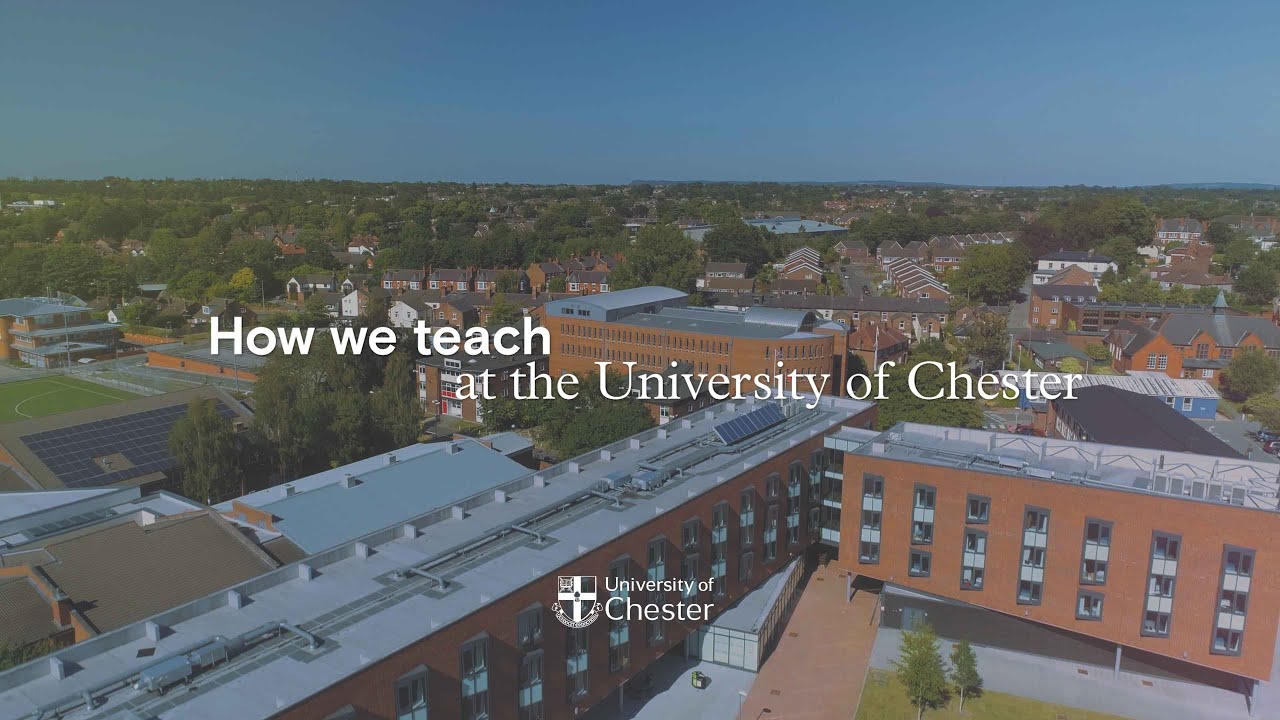
An aerial photograph of Exton Park with the text 'How we teach at the University of Chester'

How we teach at the University of Chester

Teaching

There are a variety of learning methods employed over the course, including interactive seminars, small and large group interactions, residential weekends, practical skills groups (triads), experiential exercises and student presentations.

The course follows a modular structure and is delivered over three years on a part time basis. You can expect to be on campus one full day per week from September-June from 9.00am-4.30pm. The day that you are in is the same day throughout the three years that you are with us. For those starting in September 2026 this will be a Thursday. The only exception to this is during your first week where there is a two-day induction. Induction for the academic year 26/27 is on September 24th and 25th. 

Please note that this is subject to change.

Integral to the course are an away day, experiential weekends, 20 hours of personal counselling, 100 hours of supervised counselling practice in an approved placement plus 50 hours of relevant administration.

Assessment

Assessment is via coursework and oral examination (of 4,000 words or equivalent). Coursework will take the form of essays, presentations, recording and critique of sessions, reports and portfolios.

At the end of Year 1, students are required to submit a Fitness to Practice portfolio to ensure they are at the required level of competence and development prior to commencing placement.

A portfolio is also submitted at the end of Years 2 and 3, which provides an overview of your ethical and professional practice. This portfolio will include reports from the students’ placement and supervisor.

In Year 3, in addition to some to the portfolio requirements, students complete a 15,000-word Research Dissertation on a subject of their choice (with supervisory capacity limits) relevant to counselling.

Your Future Career

Job Prospects 

On successful completion of the course, students can join the register of the British Association of Counselling and Psychotherapy (BACP), and once they have successfully completed a minimum of 450 client hours they can apply to become accredited members of the organisation. Many graduates of the course go on to become professional counsellors, working in such fields as the NHS, charities, mental health/support workers, teaching or private practice, as well as progressing to further study for a PhD or DProf, becoming researchers and academics.

Careers service

The University has an award-winning Careers and Employability service which provides a variety of employability-enhancing experiences; through the curriculum, through employer contact, tailored group sessions, individual information, advice and guidance.

Careers and Employability aims to deliver a service which is inclusive, impartial, welcoming, informed and tailored to your personal goals and aspirations, to enable you to develop as an individual and contribute to the business and community in which you will live and work.

We are here to help you plan your future, make the most of your time at University and to enhance your employability. We provide access to part-time jobs, extra-curricular employability-enhancing workshops and offer practical one-to-one help with career planning, including help with CVs, applications and mock interviews. We also deliver group sessions on career planning within each course and we have a wide range of extensive information covering graduate jobs and postgraduate study.

Beyond The Classroom

An essential component of the training in Years 2 and 3 is an approved practice placement, where students work with clients to gain at least 100 supervised client contact hours and 50 hours of administration. There is a robust Fitness to Practice assessment process in place in Year 1, and completion of it means placement work can commence. This is enriched by the requirement of fortnightly supervision, individual supervision one fortnight and group supervision the next, which is a vital resource for counselling practice.

Students will be responsible for sourcing their own placements, and organisations new to working with the course must be signed off by the tutor, but support and guidance will be made available throughout the process. You will gain genuine experience and insight that will prepare you for your future career.

Entry Requirements

2:2honours degree

Acceptance on the course is subject to an assessment interview. Applicants will also be expected to have the following:

A 2:2 honours degree, professional qualification or equivalent

A minimum intermediate counselling skills qualification at Level 2. Your counselling skills course should require in-person attendance, practical skills and will normally have been completed within a five-year framework. Applicants who completed their level 2 counselling skills qualification over five years ago and those with a degree that contains a module involving counselling skills should contact us for advice.

Applicants must apply for an Occupational Health check.

Personal Suitability

The MA is a demanding course, both personally and academically. While institutional support is available for students to develop their abilities in both those areas, it is ultimately the student’s responsibility to do so. In line with BACP requirements, students are required to possess attributes including self-awareness, maturity, ability to learn from feedback, time management skills, communication skills and ability to develop a helping relationship. Students will be expected to demonstrate these attributes right from interview stage through to graduation and beyond, into professional practice.

Safeguarding / Suitability

All successful candidates who receive an offer of a place for this course and choose the University of Chester as their Firm choice will be required to undergo checks with regards to their suitability to practice.

A couple of months prior to admission to this course, the University will contact you to request that you complete a self-declaration form detailing any relevant convictions or other information that you believe may have an impact upon your ability to undertake work with children or vulnerable adults. You will also receive instructions on how to complete an online application for a Disclosure and Barring Service (DBS) check through the University as a registered body, there will be a charge for this.

Please note that the University does not accept previous DBS checks from other registered bodies or the update service.

For details about the cost of the DBS and for further information, please visit our DBS web pages.

Fees and Funding

£9,630for the full course (2025/26)

Guides to the fees for students who wish to commence postgraduate courses are available to view on our Postgraduate Taught Programmes Fees page. Here you will also find information about part-time fees and project/placement year fees.

Your course will involve additional costs not covered by your tuition fees. This may include books, printing, photocopying, educational stationery and related materials, specialist clothing, travel to placements, optional field trips and software. Compulsory field trips are covered by your tuition fees. 

Course specific additional costs

The course is also demanding financially and in terms of time. In addition to the taught programme, independent study and reflection are required to fully embed into the theory and learning of the course. From Year 2 students will begin a counselling placement (between three and five hours a week, plus admin time), and, in addition, there is the requirement to undertake individual and group supervision sessions and personal counselling. Students will most likely be required to finance their own supervision and will need to absorb the cost of their counselling, textbooks (if deciding to buy their own rather than borrow from the library), experiential weekends, insurance and professional membership fees.

As we cover online and phone therapy (OPT) sessions, students will need good internet connection, suitable technology/devices, technical ability to work online, and a private space to attend online training sessions and/or for OPT sessions if remote client work is required.

The University of Chester supports fair access for students who may need additional support through a range of bursaries and scholarships. 

Full details, as well as terms and conditions for all bursaries and scholarships can be found on the Fees and Finance section of our website.

Who You'll Learn From

Amanda Mcgarry

Senior Lecturer
Amanda McGarry

Prof Rita Mintz

Emeritus Professor
Prof Rita Mintz

Emma Chapman

Senior Lecturer
Emma Chapman

Eleanor Warman

Senior Lecturer
Eleanor Warman

Julie Devonald

Senior Lecturer
Julie Devonald staff profile

Cemil Egeli

Senior Lecturer
Cemil Egeli

Enquire about a course